
AI is rapidly taking over routine, rules-based tasks that used to define “junior” work. In response, major employers are training new hires to think and operate more like managers from day one. That means supervising AI outputs, handling exceptions, communicating with clients and stakeholders, and upholding standards and ethics.
Humans retain an edge where work depends on cross-context judgment, ethical reasoning, interpersonal trust, and adaptive communication, while “AI and automation” primarily reallocate routine steps into toolchains that people supervise. In practice, 2025 work design emphasizes human-moat skills (exception handling, standards enforcement, narrative synthesis, and outcome ownership) layered on top of automated drafting, retrieval, and coordination utilities.
Together, these moves compress the traditional apprenticeship ladder and reward judgment, communication, and responsibility earlier in a career.

Fast Facts: The New “First Job” Is Oversight, Not Data Drudge
- Accounting: You can see the pattern in accounting at PwC, where leaders say entry-level audit work is shifting to AI and new hires will quickly step into oversight and review responsibilities. PwC says AI will perform much of the entry-level audit grind. New hires are being trained sooner for review, skepticism, and client work.
- Courts: Courts in New York have formalized this supervised-AI model with training and tool-approval rules. New York’s interim policy requires AI training and restricts staff to court-approved tools while preserving human judgment.
- Newsrooms: Newsrooms like The New York Times are training staff on internal tools while keeping humans in charge of the journalism. Training staff on tools like Echo for summarizing and editing still keeps humans accountable for output quality.
- Retail: Retailers such as Walmart are upskilling more than a million associates as AI copilots change frontline work. Walmart is rolling out AI tools for 1.5 million associates and partnering with OpenAI on conversational shopping and certification, shifting frontline roles toward coordination and service design.
- Healthcare: Healthcare systems report millions of uses of ambient AI scribes that free clinicians to focus on patient communication. Kaiser Permanente’s physicians used ambient AI scribes more than 2.5 million times in a year, saving about 15–16 thousand hours of documentation and improving patient communication.
- Customer Operations: In India, AI agents are covering most routine chats and calls, moving humans to escalation and journey ownership.
What This Means For Readers
Expect fewer days spent on copy-paste or citation-pull tasks and more time on triage, narrative synthesis, and stakeholder outcomes. Routine, rules-based tasks are shrinking, while work centered on triage, narrative synthesis, and stakeholder outcomes is expanding.
Triage means spotting exceptions early and routing them to the right owner. Narrative synthesis means turning scattered facts into a clear explanation. Stakeholder outcomes mean aligning decisions with what customers, regulators, and colleagues actually need.

From Busywork to Orchestration: How Apprenticeship is Compressing
Accounting Shows the Shift First
PwC’s AI assurance lead describes a training pivot where new auditors quickly learn to review AI-generated work, exercise professional skepticism, and negotiate findings with clients. The foundational mechanics of audit still matter, but grunt-work sampling and tick-and-tie are increasingly machine territory. That pulls the human toward judgment, risk signaling, and client communication much earlier.
What Changes in Practice
- Task mix: Less manual sampling and documentation. More review of AI outputs and exception analysis.
- Skills: Skepticism, control literacy, and narrative explanation to non-experts.
- Outcome: Faster cycles with clearer audit stories for stakeholders.
Customer Operations as a Stress Test
India’s call-center sector is a live case where generative agents now handle the majority of repetitive interactions. Human agents increasingly manage difficult escalations, service recovery, and cross-channel journey design. Training programs are adding AI-coordination skills and quality oversight.
What Changes in Practice
- Task mix: AI resolves FAQs and simple troubleshooting. Humans handle nuance, emotion, and complex fixes.
- Skills: De-escalation, problem framing, and end-to-end ownership.
- Outcome: Higher customer satisfaction when complex needs arise.
Healthcare’s Quiet Documentation Revolution
Ambient AI scribes capture the clinical conversation and draft structured notes. Clinicians validate and edit, then return attention to patients. Large systems report millions of uses and thousands of hours saved, while researchers track effects on accuracy and burnout. Humans stay responsible for clinical judgment and consent.
What Changes in Practice
- Task mix: Less after-hours charting. More explanation and shared decision-making.
- Skills: Reviewing AI notes, correcting context, and confirming patient priorities.
- Outcome: More face time and clearer records with human sign-off.
Roles remain resilient where tasks require non-routine judgment, ethical reasoning, interpersonal communication, physical presence, or creative synthesis. Automation typically reassigns repetitive subtasks to machines while people retain coordination, quality control, and final accountability, which reshapes jobs rather than erasing them.
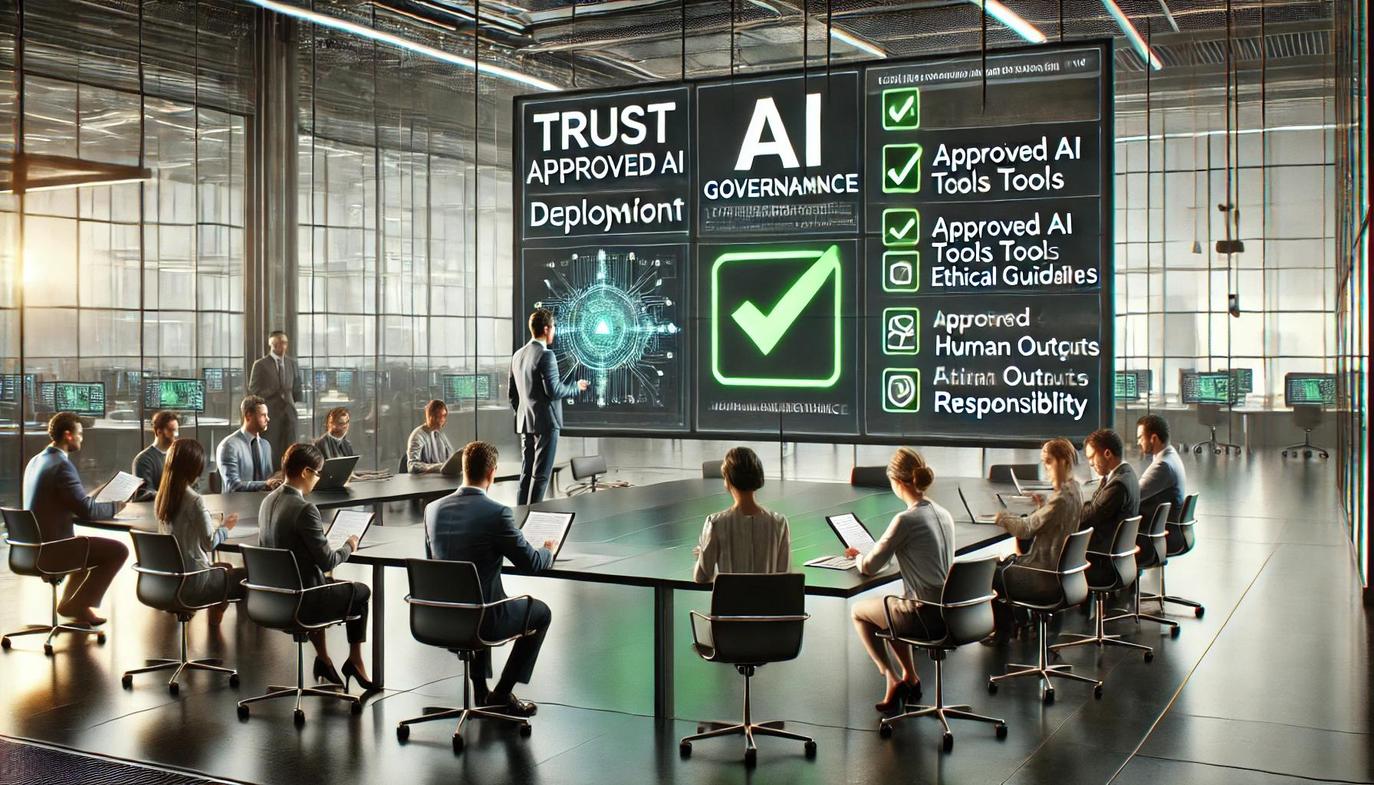
Guardrails Make it Work: Training, Approved Tools, Human Judgment
Clear rules and training turn AI from a risk into an amplifier of human work. The New York State Unified Court System adopted an interim policy that requires initial and ongoing AI training, restricts use to court-approved tools, and forbids putting confidential material into public systems. The policy emphasizes that AI must enhance efficiency without replacing human responsibility or ethical judgment.
Why Governance Unlocks Better Work
- Safety and trust: Approved tools and audit trails reduce privacy and accuracy risks so staff can use AI confidently.
- Skill development: Mandatory training normalizes prompt discipline, verification habits, and bias awareness.
- Model for others: When courts codify supervised-AI practices, firms and agencies can mirror the approach to preserve human oversight.
Case Study Templates You Can Borrow
Newsrooms: Humans in Charge, AI on the Tools
The New York Times trains staff to use internal tools like Echo for summarizing and headline ideation under rules that keep reporters and editors accountable for accuracy and voice. That combination of training and boundaries is a practical blueprint for any knowledge team.
Retail at Scale: Associates with Copilots
Walmart is introducing AI tools for 1.5 million associates and partnering with OpenAI so customers can shop through ChatGPT with Instant Checkout. The company is also building an AI certification pathway. Frontline work shifts from manual keystrokes to coordination, service design, and communication, while managers spend less time on administrivia.
In-House Legal: From Cite-Pullers to Strategy Partners
NRMA’s legal team reports large time savings using Westlaw Precision, Practical Law, and CoCounsel, allowing lawyers to focus on higher-value strategy across jurisdictions. This mirrors the same “junior-to-manager” task shift seen elsewhere.
How To Prepare Your Own Team
- Publish a policy: Define allowed tools, training, verification steps, and when to escalate to a human owner. Use the New York courts policy as a reference for structure.
- Train for judgment: Teach exception handling, bias spotting, and client communication, not only button-clicking.
- Measure what matters: Track time returned to human work and quality outcomes, not only raw automation rates.
Blockchain-verified nano-credentials are tamper-evident records of specific skills issued by a trusted body, stored on a distributed ledger, and checked with a cryptographic signature. They make short learning achievements portable, reduce résumé inflation, and allow employers to verify who issued the credential, when it was earned, and what was actually assessed.

Newsrooms as a Playbook: AI Assists, Editors Decide
The New York Times offers a clear template for responsible AI in journalism. The newsroom trains staff on a suite of internal and approved tools to help with summarizing source material, suggesting SEO headlines, and light editing. Crucially, humans still make all editorial decisions and remain accountable for accuracy, standards, and voice. This is not automation of reporting. It is augmentation with training and guardrails that keeps judgment with editors and reporters.
This policy posture is spreading. Coverage of the Times’ rollout underscores explicit do’s and don’ts, such as prohibiting AI from drafting full articles or bypassing paywalls, while expanding staff education on where AI can safely help. The structure shows other knowledge teams how to adopt AI without losing editorial control.
In newsrooms, durable human strengths include source evaluation, ethics, contextual judgment, and narrative craft. Editors and reporters decide whether evidence supports a claim, how to frame uncertainty, and how to preserve voice and standards. These capabilities anchor trust even when drafting or summarizing steps are assisted by tools.
Retail at Scale: Walmart’s Associate Copilots and Training
Walmart is turning retail into a live laboratory for AI literacy at a massive scale. In June 2025 the company unveiled new AI tools for roughly 1.5 million associates to streamline task management and store operations. The goal is simple. Take routine, time-consuming steps off people’s plates so associates can focus on coordination, communication, and customer outcomes. That is a manager-mindset skill set, even for first-year workers.
The company has also partnered with OpenAI so customers can shop inside ChatGPT with Instant Checkout. That means a conversation can move from product discovery to purchase inside the chat itself. It also means Walmart needs staff trained to triage issues that conversational agents cannot handle, to explain policies clearly, and to manage exceptions with judgment. These are exactly the human tasks that rise in importance as AI takes over repetitive steps.
Across sectors, AI and automation are redefining work by shifting effort from manual execution to oversight and design. Soft skills rise in value, hybrid human-AI roles appear, and frontline environments like retail show how copilots reduce busywork so people can focus on coordination, service recovery, and clear communication.
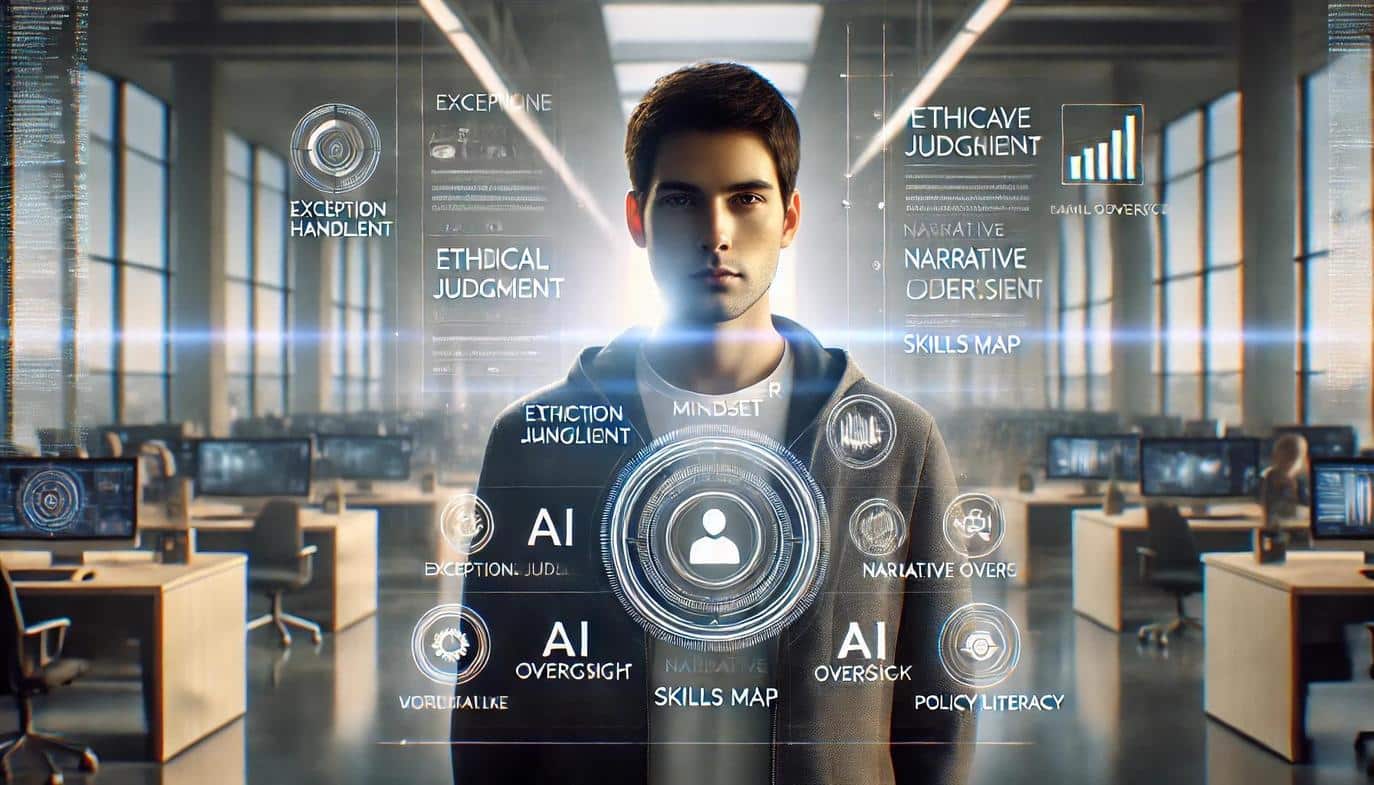
The Manager-Mindset Skills Map
Judgment and Exception Handling
As AI handles routine steps, value concentrates in the edges. People need to recognize when something looks off, decide when to override a tool, and take ownership of the outcome. Accounting’s pivot at PwC and the legal shift inside in-house teams show early movement in this direction.
Editorial and Narrative Synthesis
In newsrooms the work is less about typing speed and more about turning complex facts into clear, responsible stories. The Times’ Echo program illustrates how to use AI to accelerate small steps while keeping the human in charge of meaning, voice, and standards.
Tool Governance and Policy Literacy
You cannot delegate risk management to a model. Teams need explicit rules about approved tools, training, privacy, and verification. Adopting the Times’ approach to training or Walmart’s at-scale enablement is easier when a policy framework already exists.
Blockchain-verified nano-credentials record specific competencies—such as governance, privacy, and safety—by issuing tamper-evident skill attestations with clear criteria, assessment evidence, issuer identity, and time stamps; employers can validate these records cryptographically to confirm who earned what, when, and to what standard.
Communication and Client Confidence
As shopping becomes conversational and knowledge work becomes model-assisted, trust is earned in person. Associates and analysts need to explain decisions, set expectations, and resolve escalations quickly. Walmart’s conversational commerce push makes those communication skills core performance drivers.
Continuous Upskilling
The most resilient workers invest in verifiable learning that signals manager-mindset abilities, including prompt discipline, bias awareness, data privacy, and measurement. The most reliable places to invest time and training are judgment under uncertainty, exception handling, tool governance and privacy, data and prompt engineering literacy, and audience-ready communication. These areas compound because they transfer across roles and become more valuable as systems automate routine steps.

Final Playbook for Readers: How to Future-Proof Your Career in the AI Management Era
Start by reframing your first year on the job. Aim to become the person who supervises AI outputs, spots errors early, and communicates clearly across teams. Look for employers who offer structured training and publish explicit guardrails. That combination lets you practice judgment safely while models handle the repetitive steps. The best examples today come from newsrooms that codify human accountability and retailers that equip associates with copilots.
Build visible proof of your progress. Use micro-credentials and short courses that certify governance, privacy, verification, and exception handling. Add practice in narrative synthesis so you can explain decisions to non-experts. A clear way to signal capability to hiring managers is to pair durable-skill mastery with verifiable evidence. Write concise skill statements, attach artifacts that show the work, capture third-party validations where possible, and keep a running log of real outcomes. This combination turns claims into proof.
The signal is bright and consistent. AI takes on routine tasks. People move toward oversight, triage, and outcomes. The sooner you cultivate the manager mindset, the faster you thrive in an economy where editors decide, copilots assist, and trust is earned face-to-face.


