
Meta is reportedly engineering a photorealistic, AI-driven 3D version of Mark Zuckerberg to ensure staff can engage with a founder-like presence at any moment. This development, surfacing in April 2026, signals a shift where leadership presence becomes a scalable software interface. Developing a photorealistic AI Zuckerberg for employee interaction ensures that a lifelike digital human can remain active across global offices even when the real founder is elsewhere.
Deploying an ‘Executive AI proxy’ creates a practical mechanism for sustaining cultural alignment within distributed teams. Transforming a company founder into a digital human interface offers instant, consistent guidance across thousands of staff members. Such a strategic bet on synthetic executive presence ensures core mission values remain clear as the organization expands.
Meta’s internal infrastructure research showcases the potential of high-fidelity telepresence. Integrating these advanced systems helps the company dissolve communication barriers and simplify daily tasks. Moving toward high-precision software proxies reflects a global shift toward blending human expertise with automated support.

Understanding the Scope of Meta’s Internal AI Zuckerberg Prototypes
Quick Facts: Meta’s Reported “AI Zuckerberg” Project
- Reported purpose: This employee-facing avatar aims to facilitate synthetic leadership interactions through an AI Zuckerberg that feels like direct, personal conversations rather than standard chatbot scripts.
- Training data: The system leverages Mark Zuckerberg’s digital voice and mannerisms to recreate complex decision-making styles instead of simply processing text.
- Development stage: Internal reports highlight an early-stage AI avatar prototype currently facing latency and realism constraints that require further technical polish.
- Technical plausibility: Meta has already published findings on Meta’s high-fidelity Codec Avatars research, which positions lifelike digital humans as the core of future social platforms.
- Strategic context: real-time avatars become more feasible when a company is buying enormous inference capacity, secured through a major Meta AI compute capacity deal, signaling massive long-term inference demand.
Core Functionality: How the AI Executive Proxy Operates Internally
An Executive Proxy, Not a Standard Chatbot
Reports indicate the system functions as a sophisticated Executive AI proxy rather than a basic chatbot with a digital face. Combining a lifelike 3D digital presence with a responsive conversational brain allows the system to answer staff questions almost instantly. Strategic alignment with Meta’s AI-with-AR social presence work suggests a long-term goal of making digital human interaction feel physically present.
The system solves common internal communication bottlenecks. Consider how it transforms routine inquiries:
- On-Demand Answers: Regional leads receive immediate responses to quarterly trade-off questions.
- Zero Wait Times: Staff avoid waiting for scheduled all-hands meetings to get direction.
- Consistent Voice: Every answer maintains the exact style and tone leadership uses during public addresses.
Providing real-time responses ensures organizational agility and strategic alignment remain consistent across every global office.
How it Differs from Internal Productivity Bots
Distinguishing the executive avatar from standard internal productivity bots is vital for understanding its unique role. Meta employees have already been reported to use internal AI assistants for performance reviews, suggesting the company is embedding AI directly into daily employee workflows. Current management trends use AI across workflows for a 5X productivity leap, positioning AI as the default internal operating layer.
Engineering a CEO avatar requires distinct considerations because the interface carries executive authority. Since employees treat definitive guidance as official policy, clear system labeling is just as vital as the AI’s actual speaking ability.

The Technical Architecture Powering 3D Photorealistic Digital Humans
The Four-Part Pipeline for Engineering Photorealistic Likeness
Specialized technical pipelines enable high-fidelity telepresence through a coordinated four-part architecture:
- Likeness Modeling: This phase uses training data to master facial geometry. Utilizing pixel-based digital human reconstruction methods allows Meta to lift realism without placing excessive demands on data centers.
- Voice and Prosody: The voice engine recreates natural pacing, vocal emphasis, and the emotional tone needed for real connection.
- Conversational Logic: An LLM-based agent decides what to say while remaining constrained to official policy.
- Real-Time Rendering: This transport layer ensures stability. Recent breakthroughs in low-latency codec avatar driving enable these 3D models to run efficiently on mobile VR/AR headsets.
Synchronizing these four layers with minimal latency is the only way to ensure synthetic executive presence remains believable.
Why Latency and Timing Make or Break Believability
Think about a video call with a slight audio delay. Even if the words are clear, the entire interaction feels unnatural.
Photorealistic 3D avatars make timing issues glaringly obvious because the human brain detects micro-delays instantly. We instinctively read tiny pauses, mouth movements, and eye contact to tell if someone is truly paying attention.
This is also where research into linking text outputs to realistic facial motion matters. Meta has explored pipelines capable of syncing speech to 4D facial animation to ensure that conversational language matches lifelike physical movements without a hitch.
Why the Digital Human Ecosystem Keeps Advancing
Broader digital human ecosystems are central to this development, leveraging Unreal Engine digital human toolchains that demonstrate how rapidly digital realism is shifting from lab experiments to product categories. As rendering pipelines improve across industries, corporate avatars shift from experimental demos to practical software interfaces.
The Strategic Drivers Behind Meta’s Investment in AI Leadership Infrastructure
The Spend Signals a Long-Horizon AI Buildout
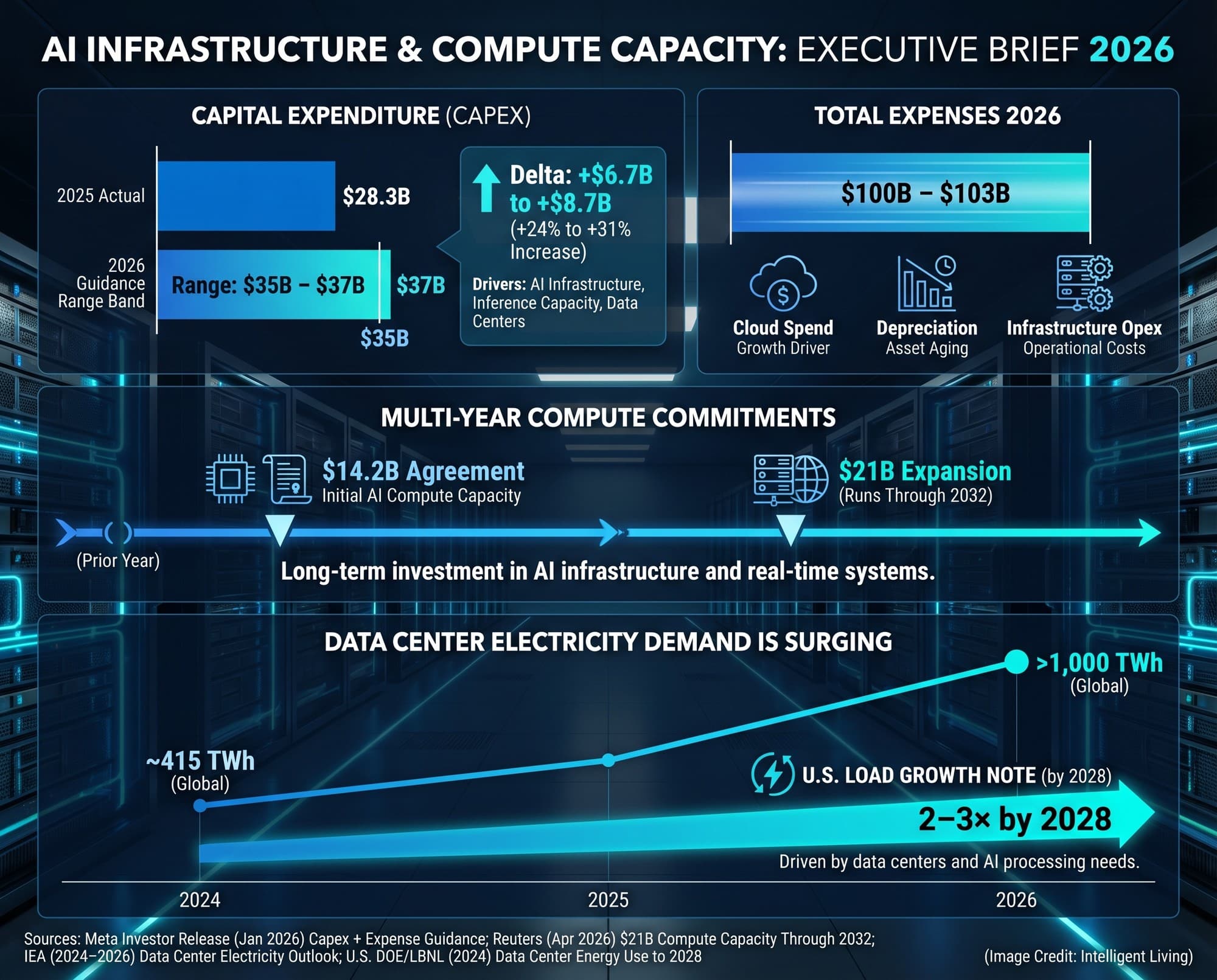
Billions in data center expansion and AI infrastructure spending now drive this aggressive technical push. In January 2026, the company projected massive Meta AI capital expenditures reaching up to $135 billion to fuel future infrastructure. Funding goes toward more than just smart models. It builds the massive power and server space needed to keep these digital humans running smoothly.
Real-Time Avatars turn Compute into a Product Constraint
Physical realities exist behind these headlines. Shifting from a text chatbot to a photorealistic digital human moves the focus toward compute, bandwidth, and cooling requirements.
Consequently, physical bottlenecks now reside within the data center rather than the algorithm itself. Performance is no longer just an algorithmic achievement; it is a full-scale infrastructure commitment.
The Future Applications of Synthetic Executive Presence Across Global Teams
7 Strategic Use Cases for AI Executive Proxies and 3D Avatars
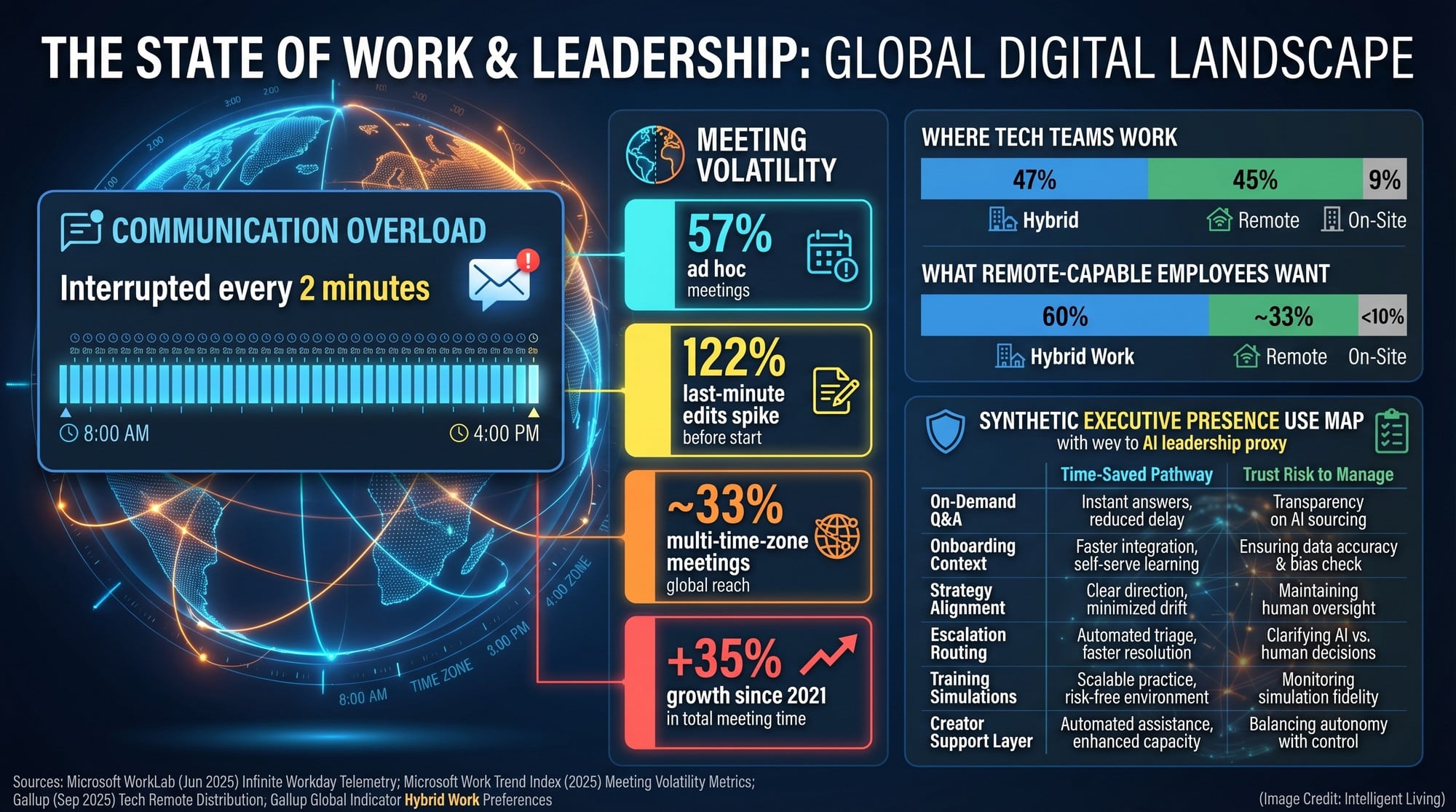
- Always-on Q and A for distributed teams, complementing AI-powered enterprise collaboration platforms to ensure urgent decisions reach distributed teams across global time zones.
- Scalable onboarding that pairs leadership context with automated employee onboarding systems so newcomers ramp up faster without repetitive manual intervention.
- Rapid strategy alignment through replayable, standardized explanations of product direction, which matters when teams ship on different calendars.
- Feedback triage, where routine questions are answered by the avatar and escalations are routed to humans who can weigh nuance.
- Training simulations, enabling managers to role-play scenarios with a consistent executive persona before real conversations happen.
- Creator extensions, where the same pipeline supports always-on presence enabling creator-built AI personas in AI Studio as a support layer for routine fan questions and basic community moderation.
- Product demos that reuse the same pipeline for AI-generated video ad presenters so messaging stays consistent across languages, regions, and time zones without burning out human teams.
Adopting these pathways introduces critical trade-offs. Standardized answers accelerate decision-making but may lack the nuance required for complex or sensitive contexts. This tension reflects the ongoing transformation of workplace automation, where routine tasks move to systems while judgment remains a human priority.
Establishing Trust and Governance in Synthetic Leadership Interfaces
Disclosure and Scope are the First Safety Layer
Establishing trust requires transparent disclosure, explicit consent, and well-defined operational limits. Any avatar carrying executive authority requires clear labeling and an explicit remit. Its output must remain auditable, just like any other high-impact internal system.
Industry leaders often adopt ethical standards for digital likeness. Such frameworks provide a baseline for responsible digital human use when simulating leadership authority.
Precedent Exists, So Expectations will Rise Fast
Corporate communication already features early experiments like the first AI-delivered corporate earnings call, proving how quickly synthetic presence moves from experimental to routine. After seeing a convincing proxy, employees will expect total consistency. The system must not drift in tone, contradict policy, or fabricate answers when uncertainty exists.
Cultural variables also influence adoption. Individual employees may view an executive proxy as a practical tool, whereas others might interpret it as a signal regarding hierarchy and authenticity. Building a tool that feels right depends on being honest about how it works and making sure it adds to human conversation instead of replacing it.

Concluding the Shift Toward Leadership-as-a-Service in the AI Era
Engineering a photorealistic AI executive proxy introduces a significant shift in how organizations communicate at scale. Leveraging corporate supercomputers and massive inference capacity allows Meta to test if scaled leadership presence improves team alignment without eroding human trust. This shift toward ‘leadership-as-a-service’ means a founder’s vision is no longer limited by time or geography.
Entering this era of synthetic leadership shifts the focus from what the avatar says to how human responsibility remains intact.
Clear governance and disclosure act as the essential guardrails. These rules determine if digital humans become helpful colleagues or mere corporate simulations.
Key Questions About the Impact of Meta’s AI Zuckerberg Research
Is the AI Zuckerberg officially confirmed by Meta?
No, reports describe the project as an internal prototype used for employee interaction experiments.
What makes these 3D avatars look photorealistic?
High-fidelity recreations rely on Modular Codec Avatars driven by headset cameras to master facial geometry and micro-expressions in real time.
Why is latency important for AI leadership bots?
Timing is critical because tiny delays in mouth motion or audio fracture the illusion of a real human conversation.
Can other creators use this photorealistic technology?
Meta’s AI Studio direction suggests these tools will eventually reach the creator ecosystem as costs fall.
What are the main safety rules for executive avatars?
Primary guardrails include clear disclosure labels, explicit consent for likeness use, and keeping sensitive decisions in human hands.


