
Scientists from Heriot-Watt University in the UK have achieved a breakthrough for the manufacturing industry. They have managed to weld glass and metal together using an ultrafast laser system. The method could have direct applications in the aerospace, defense, optical technology, and even healthcare fields.
“Being able to weld glass and metals together will be a huge step forward in manufacturing and design flexibility.” – Professor Duncan Hand
Up until this, it has only been possible to weld metals to metals and glass to glass, but not metals and glass together. That is because they require different temperatures to melt and they expand differently in response to the heat. Yet, these scientists have done it!
Various optical materials such as quartz, borosilicate glass, and even sapphire were all successfully welded to metals like aluminum, titanium, and stainless steel using the Heriot-Watt laser system. This impressive system works by providing very short, picosecond pulses of infrared light in tracks along the materials to fuse them together. The new process could transform the manufacturing sector opening doors to numerous new possibilities.

Professor Duncan Hand, director of the five-university EPSRC Centre for Innovative Manufacturing in Laser-based Production Processes based at Heriot-Watt, said:
“Traditionally it has been very difficult to weld together dissimilar materials like glass and metal due to their different thermal properties – the high temperatures and highly different thermal expansions involved cause the glass to shatter.
At the moment, equipment and products that involve glass and metal are often held together by adhesives, which are messy to apply and parts can gradually creep, or move. Outgassing is also an issue – organic chemicals from the adhesive can be gradually released and can lead to reduced product lifetime.
The process relies on the incredibly short pulses from the laser. These pulses last only a few picoseconds – a picosecond to a second is like a second compared to 30,000 years. The parts to be welded are placed in close contact, and the laser is focused through the optical material to provide a very small and highly intense spot at the interface between the two materials – we achieved megawatt peak power over an area just a few microns across.
This creates a microplasma, like a tiny ball of lightning, inside the material, surrounded by a highly-confined melt region. We tested the welds at -50C to 90C and the welds remained intact, so we know they are robust enough to cope with extreme conditions.”
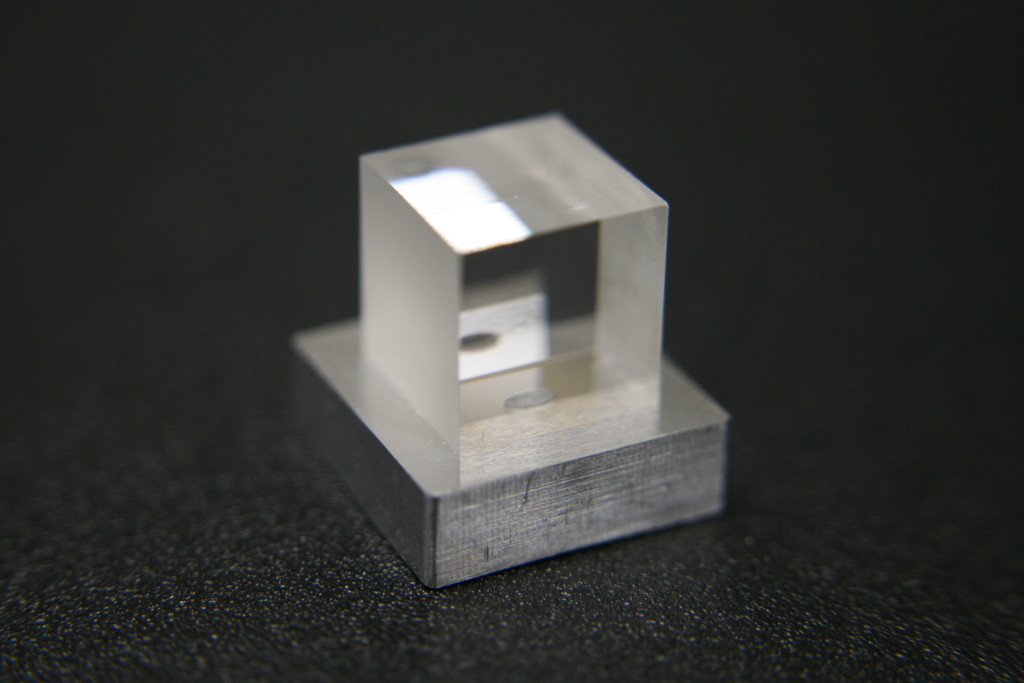
For now, welding remains limited to materials that share similar properties. That is why this new process is being considered a breakthrough. Actually, it has the potential to be revolutionary in manufacturing items because it’s tough to even make aluminum and steel join together! The team is currently working with specialists to develop a prototype laser processing system. They hope to have the method commercialized for manufacturing in the near future.


