
Carbon dioxide emissions from energy continue to rise despite the United Nations recognizing climate change as “the most systemic threat to humankind.” They increased over 40% from 2000 to 2018, and the rise continued even after the 2015 Paris Agreement made it a worldwide aim to limit the increase to 1.5°C compared to pre-industrial levels.
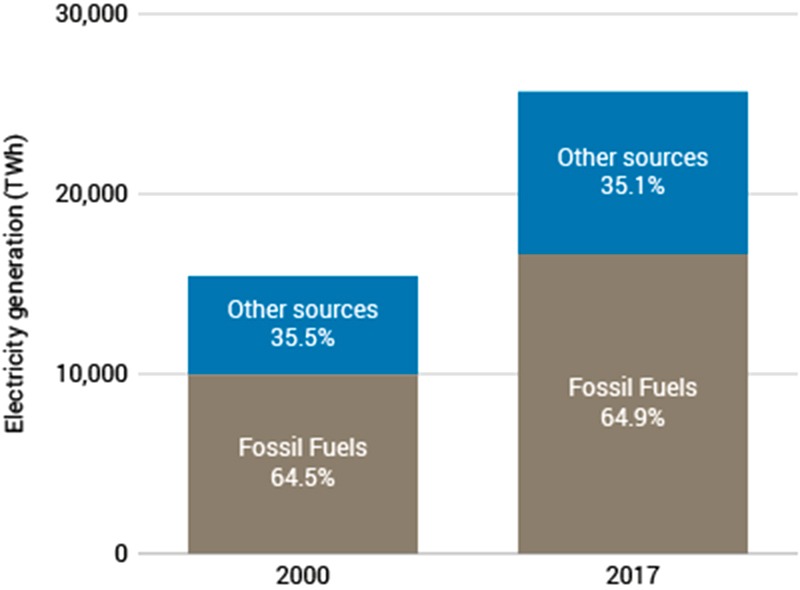
Sure, the amount of electricity generated by solar, wind, and other renewable sources has increased; but, not enough to displace fossil fuels in the mix. Therefore, experts conclude that to achieve the decarbonization necessary to keep climate change at bay, nuclear power needs to play a more prominent role in the transition. Nuclear power plants don’t produce greenhouse gas emissions during operation, and they can be widely deployed in the time frame required.
One of the most common types of electricity-generating nuclear reactors is the boiling water reactor (BWR). It is a light water nuclear reactor that generates electrical power by heating water, which turns to steam that drives a turbine. The world’s first BWR was developed by General Electric (GE) and the Argonne National Laboratory in 1955. Today, the specialist in the design and construction of BWR’s is the manufacturer GE Hitachi Nuclear Energy (GEH).

Now, GEH is expanding its nuclear portfolio with the development of a simplified and smaller version if its licensed Economic Simplified Boiling Water Reactor (ESBWR). This small modular reactor (SMR) is called BWRX-300, and it’s the 10th evolution of GE’s first BWR design and the first and only one under development in America. It’s the company’s most innovative, while at the same time, most straightforward, BWR design yet. GEH aims to reduce plant size by 90% with its new SMR design, which would significantly reduce construction costs. Other benefits include a reduced footprint, factory-built system, established supply chain, and passive safety cooling.

BWR’s have proven themselves to be a safe, reliable, and economical way to provide carbon-free energy. They could help the world achieve climate neutrality. GEH expects the BWRX-300 to enter commercial operations by 2027.
GEH is now focused on reducing the cost to enable the BWRX-300 to compete with natural gas combined cycle power plants to help secure their position as a part of the future power generation mix. The demand for electricity in our modern society and a growing global population will only rise as transport, industrial processes, and domestic heating are increasingly electrified.
To successfully decarbonize the world while providing reliable and affordable electricity will likely require all carbon-free technologies available at our disposal, including nuclear. We can’t wait any longer for new solutions when solutions that work are already available. By achieving harmony between all the possibilities, we can make a cleaner and a genuinely sustainable world worthy of passing on to the generations to come!


