
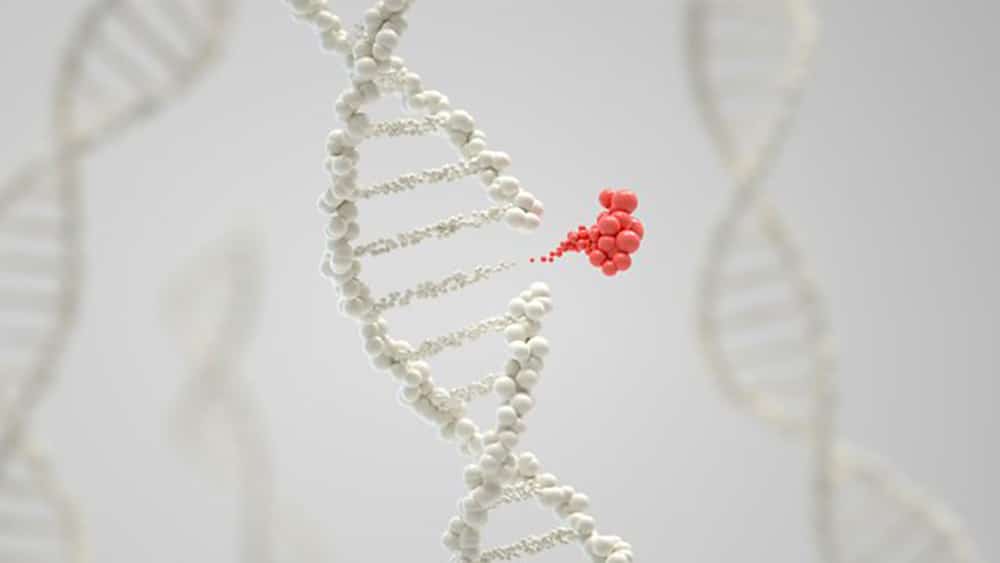
CRISPR is a revolutionary gene-editing tool that uses an enzyme called Cas9 to snip DNA at precise locations. This allows scientists to alter the DNA sequences in cells by swapping in genes or adding sequences of bases. After cutting, the scientists influence how cells’ own machinery repairs the DNA break to result in various changes (edits) to the DNA sequence.
This process of guiding CRISPR to target nearly any DNA sequence in a cell has been prevalent since the system was first documented in the early 2010s. There have been several variations, too. They can even guide CRISPR to target many different sites in a cell in a single experiment.
However, a critical drawback remained: the edits are made all at once. Now, a new gene-editing technique discovered by University of Illinois Chicago researchers allows sequential cuts (edits) to be programmed over time.
Bradley Merrill, the lead author of the study and a UIC associate professor of biochemistry and molecular science, said, “A drawback of currently available CRISPR-based editing systems is that all the edits or cuts are made all at once. There is no way to guide them so that they sequentially take place, one after the other. The ability to pre-program the sequential activation of Cas9 at multiple sites introduces a new tool for biological research and genetic engineering …”
The team’s process uses specially engineered guide RNA molecules, aka “proGuides.” These molecules transport the Cas9 enzyme within the cell and dictate the precise DNA sequence at which it will make its cuts.
The proGuide concept is still in the prototype phase, but the researchers plan to develop it further and are optimistic that other scientists will be able to use the technique soon.
Merrill said, “The ability to pre-program the sequential activation of Cas9 at multiple sites introduces a new tool for biological research and genetic engineering. The time factor is a critical component of human development and also disease progression, but current methods to genetically investigate these processes don’t work effectively with the time element. Our system allows for gene editing in a pre-programmed fashion, enabling researchers to investigate better time-sensitive processes like how cancer develops from a few gene mutations and how the order in which those mutations occur may affect the disease.”
Mainstream genetic longevity therapy and other medical breakthroughs are a step closer now that CRISPR can be used intelligently and sequentially. For a broader look at where the field is heading, see how UC San Diego and the Innovative Genomics Institute are building next-generation genome editing tools for health and climate.


