
CRISPR-based technologies are designed to cure human diseases by repairing the genetic code of their DNA. However, the CRISPR-Cas9 gene-editing system has some issues with off-target edits, which can have grave consequences. Thankfully, researchers from Wenzhou Medical University in China have recently found a mutation of the CRISPR enzyme that’s almost 100 times more accurate than the most commonly used one.
Based on a bacterial defense system, CRISPR’s gene-editing uses a particular enzyme to cut out a section of a pathogen’s DNA and store it for reference. When the pathogen is encountered a second time, the system will recognize it and be better prepared to fight it off.
CRISPR-Cas9 uses this scheme to attain a target’s genome for a specific sequence of DNA, such as one that causes disease, then snips it out, and in some cases, replaces it with a more beneficial sequence.
To accomplish this, the system utilizes a guide RNA that connects to the target sequence, triggering the Cas9 enzyme to cut there. However, this process isn’t always accurate. Some studies have shown that if the sequence is too similar, the guide RNA can mistake it for the target and connect to the wrong section. Editing the wrong DNA is dangerous, as it could potentially cause several problems.
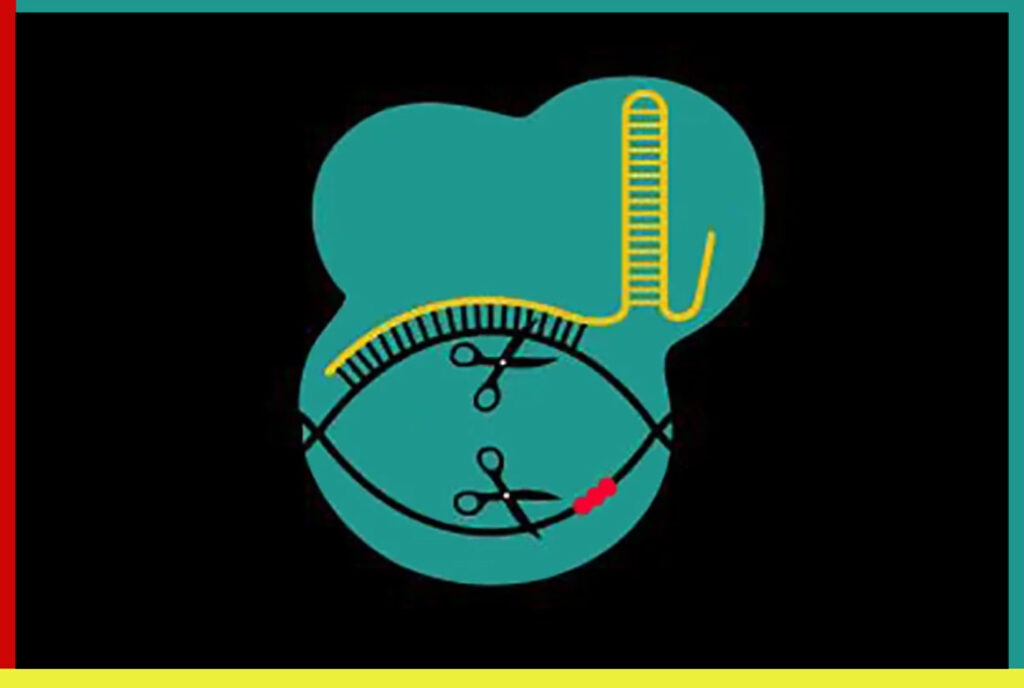
The study, published in the journal PLOS Biology, set out to determine whether there were more precise versions of the enzyme. The team made several different mutations of Cas9, then tested how efficient they were at singling out a target sequence among very similar sequences. One mutation, in particular, was able to filter out mismatches that differed from the target by as little as one base pair, making it 93 times more precise than the original enzyme.
On closer inspection, they discovered why it was so much better. The mutation affected the recognition domain of the enzyme, which weakened the connection between the guide RNA and Cas9. This weaker connection means that it takes a stronger pairing to activate the cut, ensuring that only the correct sequence will work.
Feng Gu, the study’s lead researcher, said:
Avoidance of off-target cleavage is a crucial challenge for the development of CRISPR for medical interventions, such as correcting genetic diseases or targeting cancer cells.
Gu adds that their results pave the way for developing potentially safer strategies for gene editing therapy.


