Space junk is a concerning and growing problem as defunct satellites, boosters, and spacecraft parts build up in low Earth orbit until they deorbit, decay, explode or collide with other objects, fragmenting into smaller bits of waste.
For example, in 2019, India blew apart one of its satellites orbiting Earth, creating hundreds of pieces of debris that threatened to strike the International Space Station at hypersonic speeds.
A recent report by NASA found that at least 26,000 of the millions of pieces of space junk are roughly the size of a softball, at 10 cm and larger. When orbiting along at 17,500 mph, they could utterly “destroy a satellite on impact.” Meanwhile, over 500,000 pieces (the size of a marble) are considered a “mission-ending threat” due to their ability to penetrate protective systems and critical infrastructures like fuel tanks and spacecraft cabins.
Finally, the most common debris (over 100 million pieces) is the size of a grain of salt that could penetrate fuel tanks, erode surface material, crack windows, and puncture a spacesuit – “amplifying the risk of catastrophic collisions to spacecraft and crew.”
In addition, the debris threatens the loss of services we Earthlings rely on, such as GPS systems, telecommunications, and weather forecasting.
According to NASA, cleaning spaceborne garbage — and addressing the risks associated with debris — depend on preventing the buildup of more junk and actively removing it.
In recent years, engineers have put forward various proposals to deal with this, including devices installed on satellites to increase atmospheric drag and experimental capture devices. But, overall, the most promising technology involves end-of-life systems installed in new spacecraft or spacecraft that can engage with aging satellites to deorbit them.
Drag Sail To Prevent The Build-Up Of More Junk
Engineers at Purdue University have developed a space-debris-clearing drag sail dubbed Spinnaker3 to help deorbit its own launch vehicle, preventing it from becoming like the thousands of pieces of space junk in Earth’s lower orbit.
Spinnaker3 is designed to speed up the deorbiting of space garbage up to 400 miles (645 km) high so that it safely burns in the Earth’s atmosphere.
U.S. space vehicles are required by law to deorbit or be sent into the spacecraft graveyard within 25 years of terminating operations. This is typically accomplished by the spacecraft using its thrusters to put it into the disposal orbit. The problem is that these thruster systems and the extra fuel needed for the final course change increase the satellites’ mass, increase costs, and reduce their capabilities.
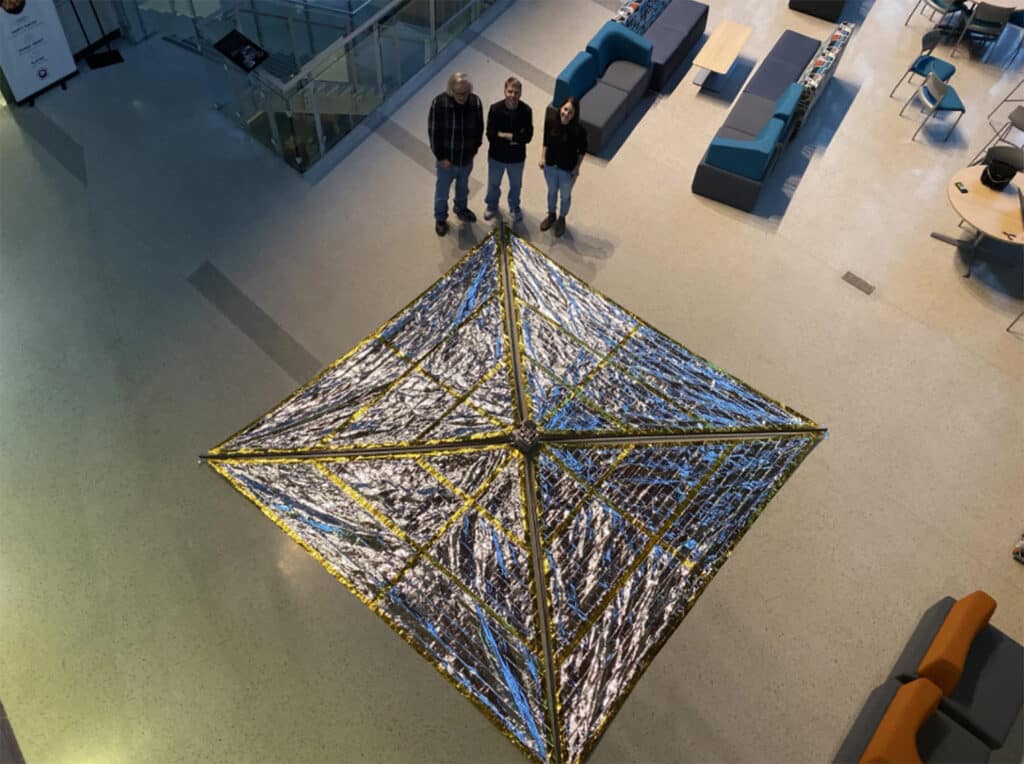

On the other hand, drag sails use atmosphere drag to get the job done, saving fuel and reducing the overall vehicle mass. While drag sails have previously been tested, Spinnaker3 is improved and more efficient, with its 10-ft-long (3-meter) booms that unfurl an 18-sq-m (194-sq-ft) shimmering, fluorinated-polyimide plastic sail. This sail is large enough to deorbit a satellite and also a booster rocket upper stage!
Spinnaker3 is set to launch from Vandenberg Space Force Base, California, in November on a Firefly Aerospace Alpha rocket. It will be one of seven DREAM (Dedicated Research and Education Accelerator Mission) payloads organized by Firefly. Once in orbit, the drag sail will be used to deorbit the Alpha vehicle’s upper stage, at an orbit altitude of 200 miles (322 km), in 15 days instead of the estimated 25 days without the drag sail.
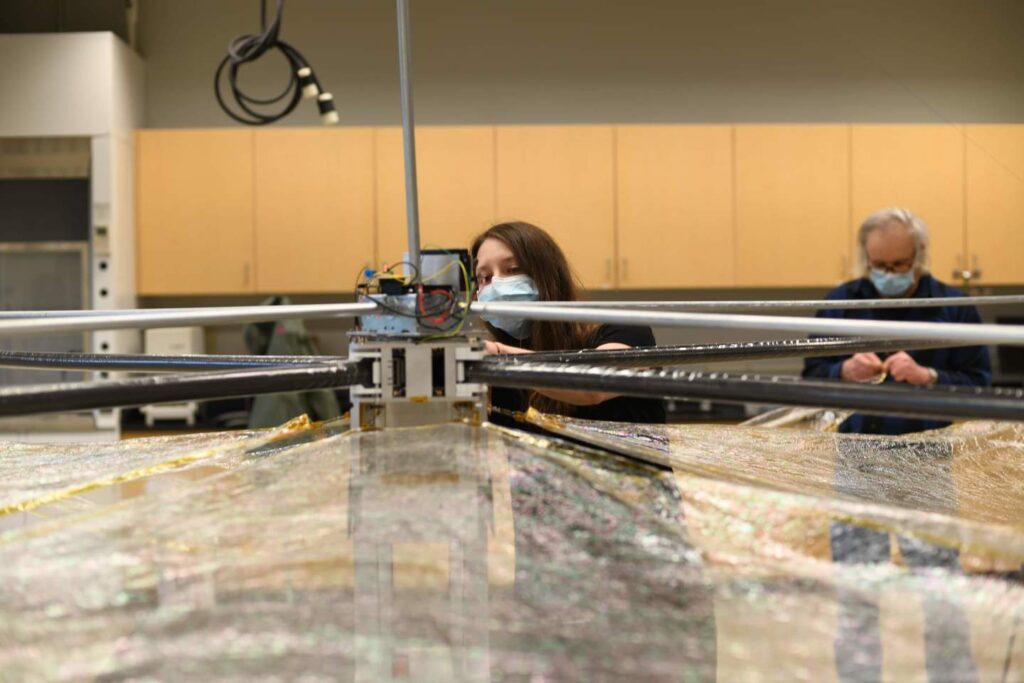

Arly Black, who conducted system testing and performance analysis for Spinnaker3, said:
Lots of things could deorbit on their own in about a hundred years, but that doesn’t do us any good. We want to hasten that deorbiting with a drag sail. Taking into consideration predicted atmospheric conditions for November, the Firefly Aerospace launch vehicle could deorbit on its own at a low altitude of about 200 miles within 25 days. Using Spinnaker3, the deorbiting process could shorten to 15 days.
This animation below demonstrates the deployment of Spinnaker3.
Mission To Remove Space Debris
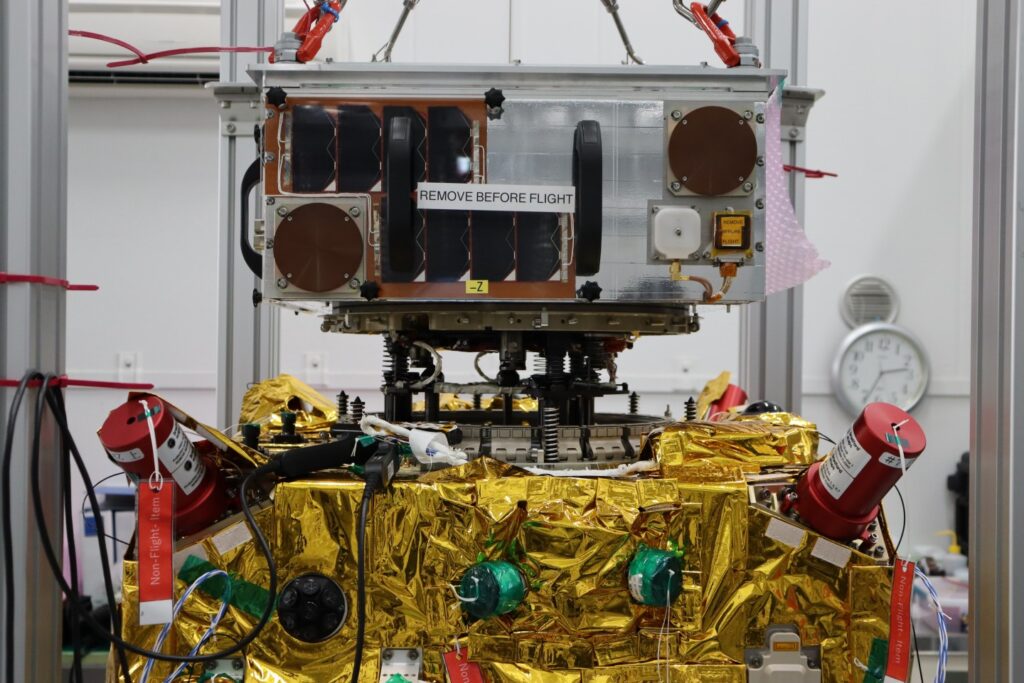
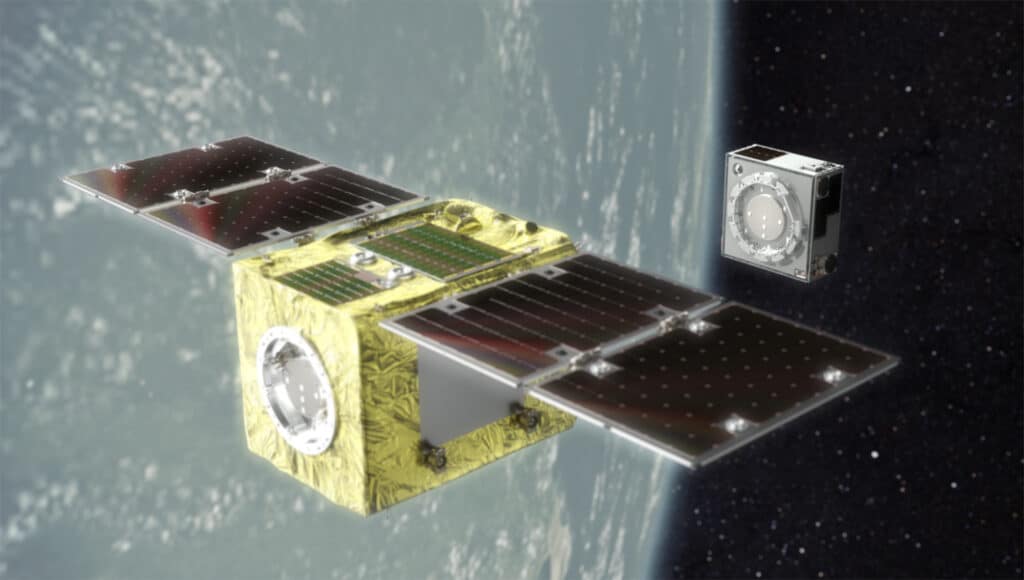
Japan-based Astroscale, a private orbital debris removal company, has validated its magnetic capture system. The system is designed to tackle space debris by capturing dead satellites and pushing them toward Earth to burn up in the atmosphere. The company’s ELSA-d (End-of-Life Services by Astroscale-demonstration) servicer satellite has successfully captured a simulated chunk of space trash in orbit for the first time using this system.
When cleaning space junk, one of the most challenging issues is dealing with satellites and other objects without power and tumbling out of control. This is precisely what Astroscale is targeting with its technology tested by ELSA-d.
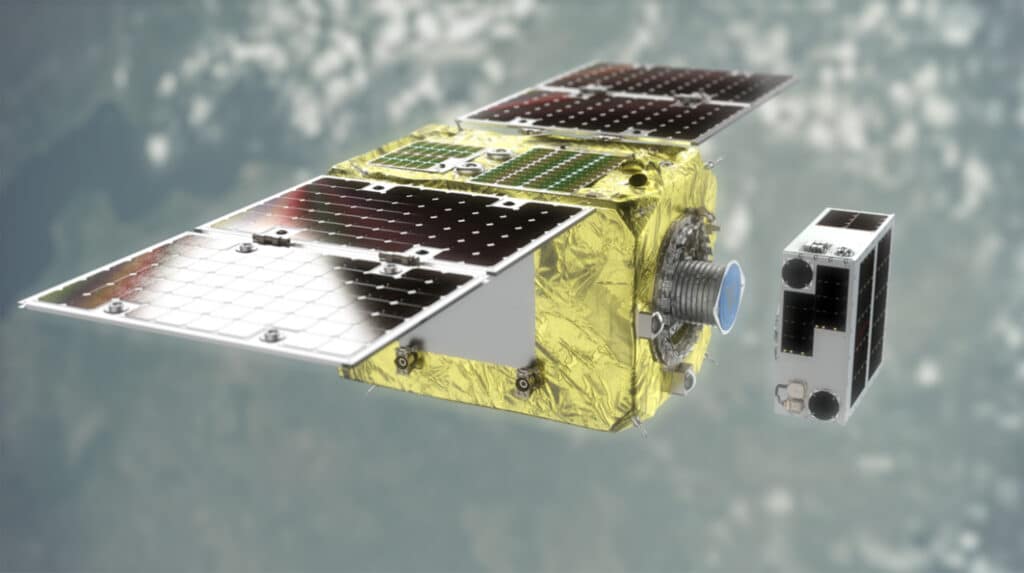

ELSA-d, launched on March 22 from the Baikonur Cosmodrome in Kazakhstan, went into orbit at around 340 miles (550 km.) Astroscale’s Mission Operations and Ground Segment teams thoroughly tested and certified its systems during the release and capture phase. In the test executed on August 25, phase 3a verified its ability to capture another satellite successfully.
The mission is scheduled to move to Phase 3b, where ELSA-d will practice autonomously maneuvering nearby the non-tumbling client before capturing it. Next, phase 4 will capture a tumbling client; then, Phase 5 will see ELSA-D flying around the client and inspecting it. Finally, Phase 6 will involve ELSA-d deorbiting with the client and then moving into Phase 7, where the spacecraft dumps all battery fluids and propellants before hitting the atmosphere.


Nobu Okada, Astroscale Founder, and CEO said:
This has been a fantastic first step in validating all the key technologies for rendezvous and proximity operations and capture in space. We are proud to have proven our magnetic capture capabilities and excited to drive on-orbit servicing forward with ELSA-d.
Watch ELSA-d in action in the video below.
Other Cleanup Devices
The development of other cleanup devices has been in the works for years. For example, in 2016, Japan’s space agency sent a 700-meter (2,296 feet) electrodynamic tether into space to slow down and redirect space junk. In 2018, an experimental cleanup device dubbed RemoveDebris successfully cast a net over a dummy satellite.
The ESA also plans to send a massive claw into space to remove space junk buildup. The agency finalized the mission’s contract to launch and will execute it in 2025. The ClearSpace-1 mission, as it is called, will be the first attempt to capture and dispose of a large chunk of orbiting space garbage.
Swiss startup ClearSpace built the giant claw. The device will grab a piece of space debris the size of a washing machine with a four-armed claw and escort it to a lower orbit, where it will all burn up when entering the atmosphere.
These missions could prove increasingly vital as private space ventures like SpaceX and Amazon continue to clutter low Earth orbit with a “mega-constellation” comprising thousands of satellites.