
The One Billion Trees Programme is how the government of New Zealand plans to plant one billion trees by 2028. The overall objective, apart from more trees, is to deliver improved social, environmental, and economic outcomes for the country, in addition to playing a significant role in moving towards a low emissions economy.
 The program is being led by Te Uru Rākau (Forestry New Zealand) and funded by the Provincial Growth Fund. It has been established to support increased planting of a wide range of both native and exotic species to enhance the lives of all New Zealanders. More trees will provide many benefits to landowners, communities, catchments, regions, and the country, such as:
- Trees optimize land use by improving land productivity.
- Trees improve water quality.
- Trees tackle environmental issues like erosion.
- Trees enhance natural landscapes and provide essential habitats for a range of native species.
- Trees protect the environment by reducing the effects of climate change by absorbing CO2.
- Trees support our wellbeing.
- Trees support New Zealand’s transition to a low emissions economy.
- Trees create jobs, careers for people, and workforce development.
- Overall, trees support Māori values and aspirations.
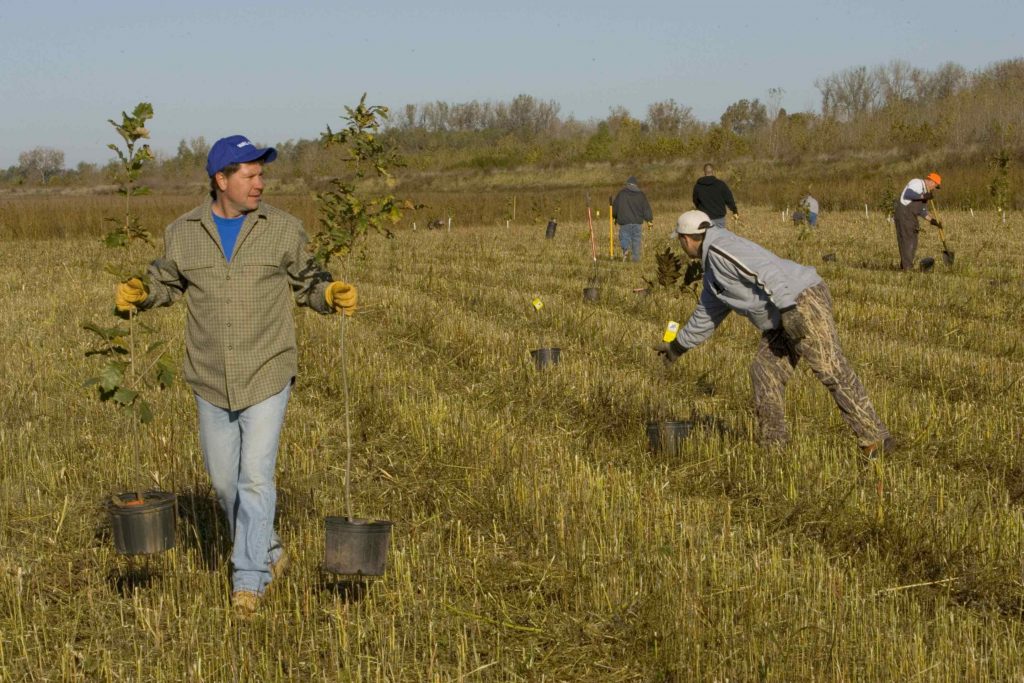 The One Billion Trees Programme was developed by the New Zealand Government to increase current rates of tree planting, and ultimately the number of trees there are in the environment. The government will provide funding to grow and maintain trees through grants. $120 million has been allocated through the One Billion Trees Fund for direct grants to landowners – particularly farmers because the land size requirement to receive money for planting trees is large.
However, the fund is primarily for trees that will remain planted and growing. It does not support whole farm conversions and has a target of planting two-thirds natives. The increased planting of both permanent trees and plantation forests will be supported with a mix of exotic and native tree species.
The government plans to meet its goal by making it easier to plant trees. They will do this by lowering any planting barriers currently faced by landowners and improving incentives to support the right trees, in the right place, for the right purpose. They are also interested in partnering with New Zealanders regarding research, innovation, and sector development initiatives.
 Julie Collins, who heads Te Uru Rākau (Forestry New Zealand), the organization leading the program, says the Government’s goal is ambitious but achievable. He says an additional 230,000 to 430,000 hectares of new forest need to be planted to reach their target, which is only about 3% of New Zealand’s existing grassland area.
Collins said:
Current planting gets us half way. Traditionally the commercial forestry sector has planted about 50 million trees a year. This is mainly the exotic forests that are replanted after they are harvested. On top of this we estimate that between five and ten billion native trees are planted each year by small community groups, local councils and other activities.
There’s a lot of marginal grassland in the back country, much of it is uneconomic for farming or grazing at the moment. There are opportunities there for farmers to convert that land either to regenerate native forests and get carbon credits or to plant manuka for honey. They could also grow pine for cropping.


