
A Pennsylvania healthcare center called Geisinger has artificial intelligence that can predict a patient’s chance of dying within the year with more accuracy than a doctor. However, nobody can explain how it does it.
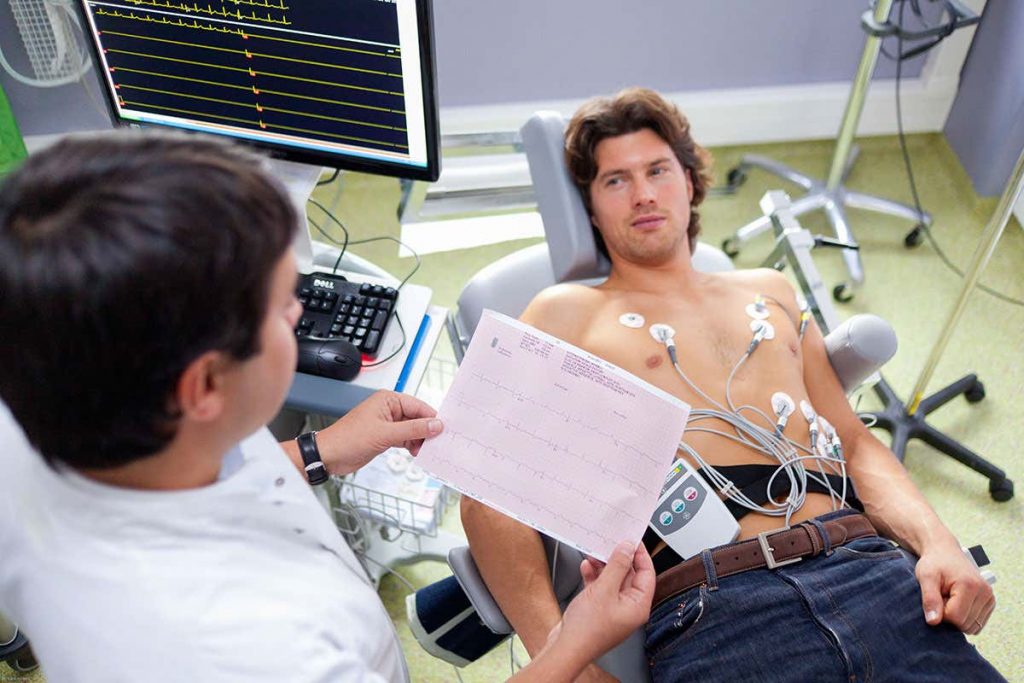
Geisinger’s researchers, led by Brandon Fornwalt, assigned the machine-learning algorithm to calculate the survival chances of heart patients by examining echocardiogram (ECG) results. An ECG is a machine that records the electrical activity of a patient’s heart, measuring voltage over time. It was fed the results from 400,000 patients—a total of 1.77 million ECG results were analyzed—and the program exceeded traditional prediction methods used by medical practitioners. By just looking at heart test results, the AI could predict a person’s likelihood of death even when the test results looked normal to the doctors.
Two versions of the AI were trained. One was given the raw ECG data, while the other was given ECG data as well as patient gender and age. For comparison, the team created a “control algorithm,” which was a system based on ECG features that doctors currently measure, for example, particular patterns from the recordings.
To measure the algorithm’s performance, the team used a metric called AUC. The metric measures how well a model can tell the difference between two groups of people—in this scenario, patients who survived and those who died within a year. The program scored over 0.85 (a perfect score is 1.0, and no distinction is 0.5). Meanwhile, the score received by doctors using the AUC’s current risk scoring model ranged between 0.65 and 0.8.
Fornwalt said, “No matter what, the voltage-based model was always better than any model you could build out of things that we already measure from an ECG.”
There were times when cardiologists reviewed normal-looking ECGs, and they didn’t pick up on the risk patterns, but the AI did. It detected a risk of death even when cardiologists said the ECG was normal. A decade on, the same principle is being aimed at a much more specific target: catching cardiac amyloidosis from nothing more than a photo of an ECG.
Fornwalt said, “That finding suggests that the model is seeing things that humans probably can’t see, or at least that we just ignore and think are normal. AI can potentially teach us things that we’ve been maybe misinterpreting for decades.”
The only downfall of this amazing technology is that it’s uncertain what patterns the AI is picking up, and that makes physicians reluctant to use such algorithms. They worry about making any serious decisions based on the detection of a program whose analysis can’t be explained—even by those who engineered it.


