
In the rapidly evolving world of electric vehicles (EVs), battery technology stands at the forefront of innovation. As car manufacturers race to create longer-lasting, faster-charging, and safer EVs, developments in solid-state batteries are becoming increasingly significant. Among the trailblazers in this field is Samsung, a company renowned for pushing the boundaries of technology. Recently, Samsung unveiled a suite of advanced solid-state batteries promising to revolutionize the EV industry with remarkable capabilities such as up to 621 miles of driving range and ultra-fast nine-minute charging.
These advancements are not just about speed and distance; they also represent a shift towards safer and more reliable energy sources. This article explains what makes solid-state batteries a vital innovation for the future of transportation, exploring Samsung’s contributions and their potential socioeconomic impacts.
Understanding Solid-State Batteries
What are Solid-State Batteries?
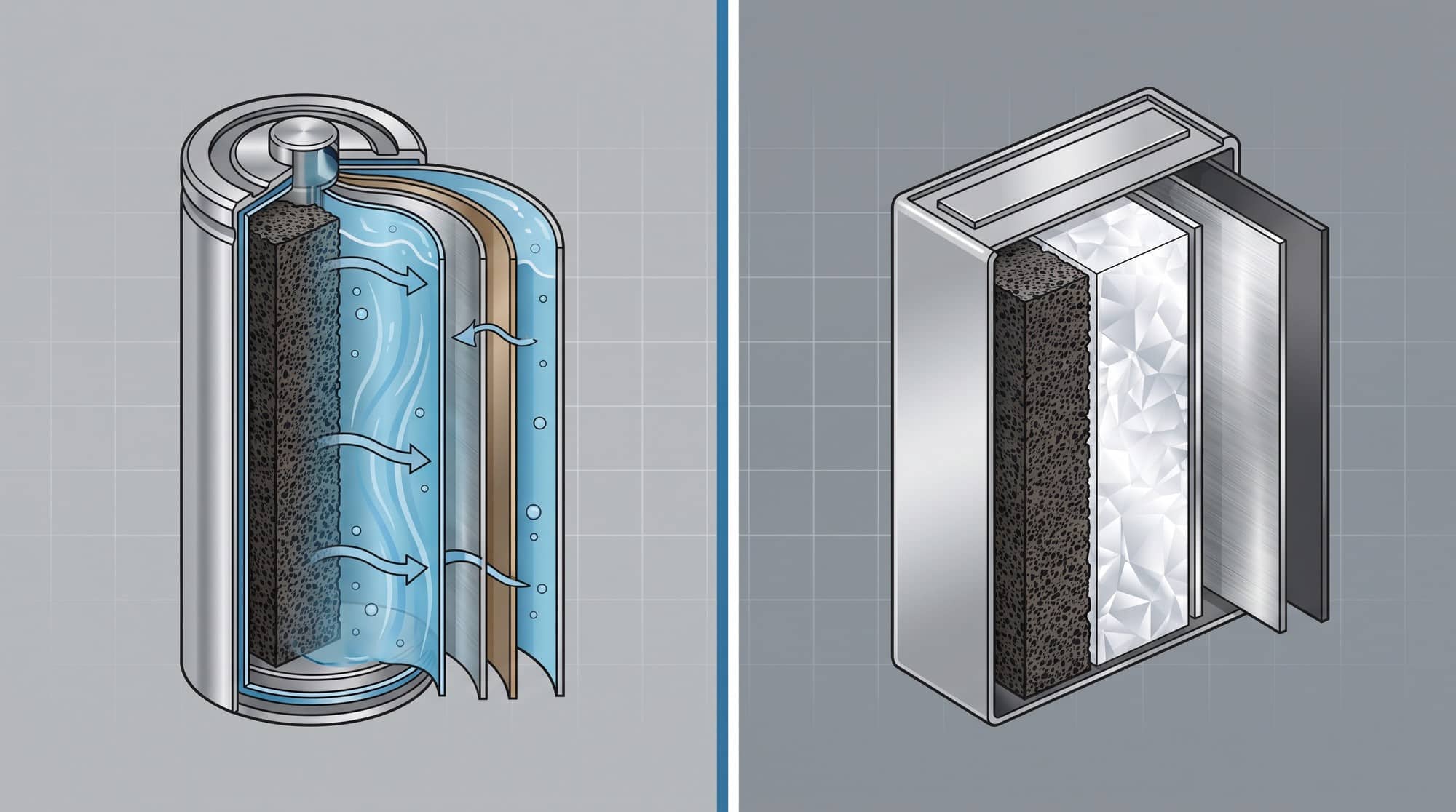
At the heart of modern EVs, batteries serve as the powerhouse that stores and supplies energy for driving. Traditional lithium-ion batteries use liquid electrolytes to facilitate the movement of ions between the battery’s anode and cathode, which are the positive and negative ends. However, these liquid components can pose safety risks, including overheating and fire hazards. Solid-state batteries, on the other hand, replace these liquid electrolytes with solid ones, offering substantial improvements in both safety and performance.
This next-generation battery technology is celebrated for its ability to pack more power into a smaller, lighter form. Samsung’s all-solid-state batteries, which utilize a proprietary oxide solid electrolyte, boast nearly double the energy density of current lithium-ion batteries—500 Wh/kg compared to the standard 270 Wh/kg.
Advantages Over Traditional Batteries
One of the most significant advantages of solid-state batteries is their enhanced safety profile. The absence of flammable liquid reduces the risk of battery fires, a crucial benefit for consumer safety. Moreover, these batteries support faster charging times due to their efficient ion transportation capabilities. Samsung’s innovations have enabled these batteries to reach an impressive charging speed, being able to charge from 10% to 80% in just nine minutes, which is a game-changer for EV owners looking for convenience and efficiency.
Technological Innovations
Samsung’s breakthrough in battery technology is underpinned by extensive research and development. With large investments and a network of global collaborations, including contributions from top universities and industry leaders, Samsung is at the forefront of creating batteries that are more powerful and longer-lasting. The company has been experimenting with advanced materials and designs, such as high-nickel cathodes and innovative anode structures, to enhance battery capacity and longevity.
The Silver-Carbon Breakthrough
At the heart of Samsung’s solid-state innovation lies a 5-micrometer silver-carbon (Ag-C) nanocomposite layer. This breakthrough, detailed in research published in Nature Energy, addresses one of the most persistent challenges in high-density battery development: dendrite formation.
Dendrites are needle-like lithium structures that can grow during charging, potentially piercing the battery separator and causing short circuits. The silver-carbon layer functions as a stabilizing agent, forming a reversible alloy with lithium during charging. This promotes uniform lithium deposition and effectively suppresses dendrite growth—a critical factor in achieving both high energy density and long battery life.
The stability provided by this Ag-C layer enables an “anode-less” architecture. Unlike traditional batteries that use a bulky graphite anode, Samsung’s design begins with just the thin 5-micrometer Ag-C layer. The active lithium metal anode forms in situ (during the charging process) between the solid electrolyte and the current collector. By eliminating the bulk of pre-existing anode material, the cell becomes significantly more compact while achieving a volumetric energy density of 900 Wh/L—roughly double that of conventional lithium-ion cells.
This technological leap translates to tangible performance benefits: a projected 20-year service life compared to approximately 10 years for current lithium-ion batteries, alongside the headline capabilities of 600-mile range and 9-minute fast charging.
Performance Comparison
The following comparison illustrates the dramatic improvements Samsung’s solid-state battery technology offers over current production lithium-ion batteries:
| Feature | Current Lithium-Ion | Samsung Solid-State (Ag-C) |
|---|---|---|
| Anode Material | Graphite | Silver-Carbon Composite |
| Volumetric Energy Density | ~270-450 Wh/L | 900 Wh/L |
| Driving Range | ~300 miles | ~600 miles |
| Charge Time (10-80%) | 30-45 minutes | 9 minutes |
| Projected Lifespan | ~10 years | 20 years |
| Safety Profile | Liquid electrolyte (flammable) | Solid electrolyte (non-flammable) |
In essence, solid-state batteries hold the promise of transforming the automotive landscape by offering safer, more efficient, and environmentally friendly alternatives to traditional batteries. As Samsung continues to refine these technologies—with evaluation partnerships including BMW currently underway—we’re closer than ever to seeing their widespread adoption in electric vehicles around the world.
Samsung’s Pioneering Research in Battery Technology
A Commitment to Research and Development
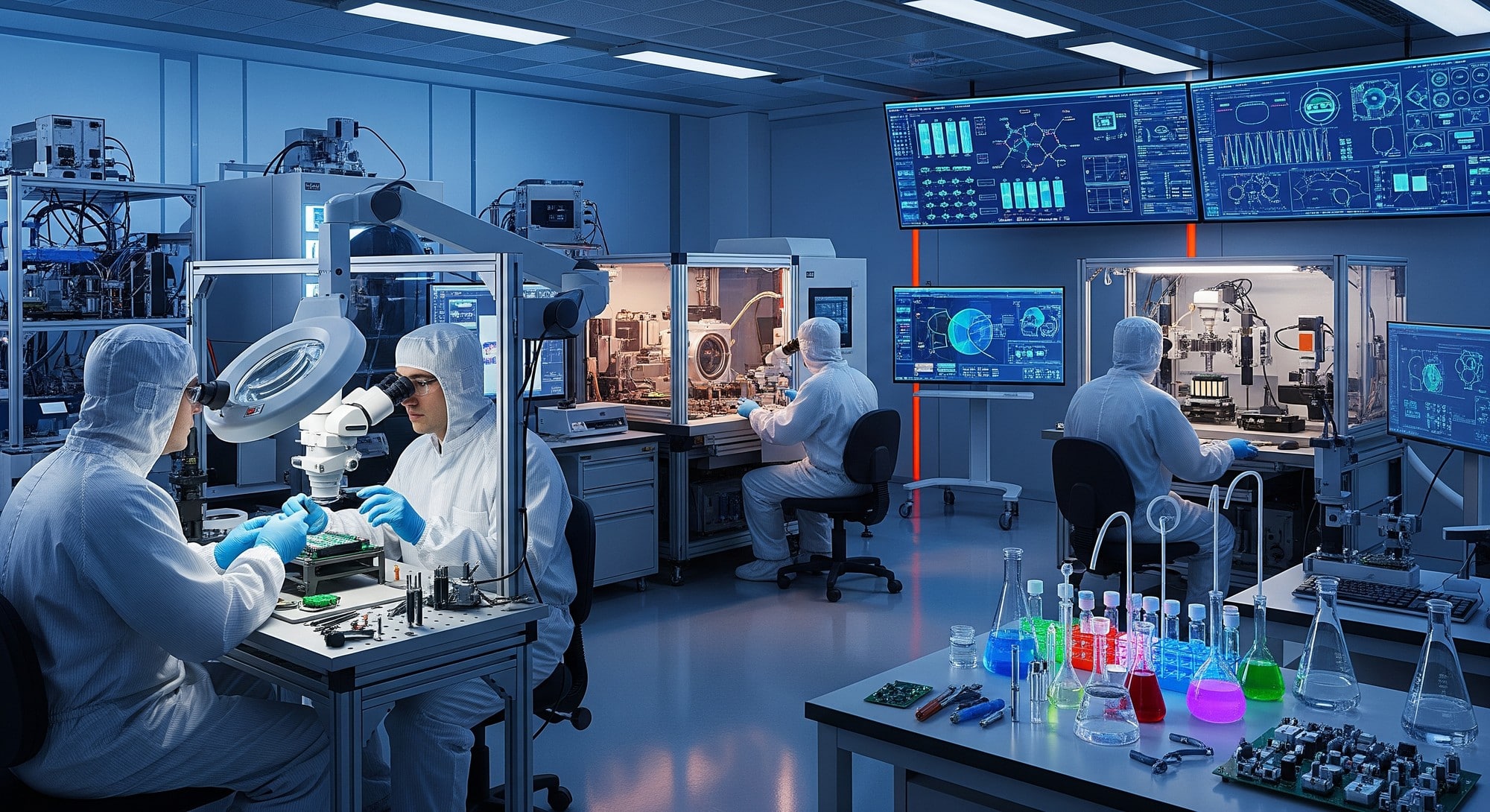
Samsung has established itself as a leader in battery technology through significant investment in research and development (R&D). The company’s robust R&D network extends across the globe, with a focus on developing cutting-edge battery solutions that outperform existing technologies. Samsung SDI, the energy solution division of Samsung, reported an annual R&D spending of over KRW 1.14 trillion, highlighting its commitment to maintaining a competitive edge in the rapidly advancing field of battery technology.
Innovative Battery Materials and Design
At the core of Samsung’s advancements are breakthroughs in battery materials and design. The company has pioneered the use of “pillar-beam” structures in cathodes, a technique that enhances the structural stability and longevity of batteries. This innovation involves using inert potassium ions to support the layer-structured framework, allowing sodium ions to move more freely and efficiently. This not only boosts energy density but also extends the cycle life of the battery, making it a promising avenue for future energy storage solutions.
Additionally, Samsung is exploring advanced anode materials that improve battery charging rates and durability. By blending traditional graphite with hard carbon, Samsung’s researchers have developed a composite carbonaceous anode that significantly enhances charging speed and cycle life. This innovation promises to address one of the critical challenges faced by EVs: maintaining battery health and performance over extended use.
Developing the Next Generation of Batteries
Samsung’s trailblazing efforts in developing all-solid-state lithium batteries are geared towards creating batteries with higher energy capacities and longer life spans. Their research has led to significant improvements, such as the use of a silver-carbon (Ag-C) composite anode to regulate lithium deposition, thereby enhancing the battery’s efficiency and lifespan. This high-performance battery technology, which includes the use of sulfide electrolytes, has demonstrated a stable Coulombic efficiency and long-term cycling stability, paving the way for its practical application in EVs and beyond.
2026 Breakthrough: Pouch-Type Battery for Physical AI
In March 2026, Samsung SDI unveiled a major expansion of its all-solid-state battery roadmap, announcing the development of a pouch-type all-solid-state battery specifically designed for “Physical AI” applications. This represents a significant diversification beyond the company’s original focus on prismatic batteries for electric vehicles.
Expanding Beyond EVs to Humanoid Robots
The new pouch-type form factor addresses the unique requirements of humanoid robots and other robotic platforms:
- Limited space for battery integration — Robots require compact cells with high energy density and extended operating time
- Instantaneous power spikes — Robots generate sudden power demands during movement, making power-output capability essential for safe and efficient operation
- Lightweight design requirements — The pouch form factor supports weight reduction critical for robotic mobility
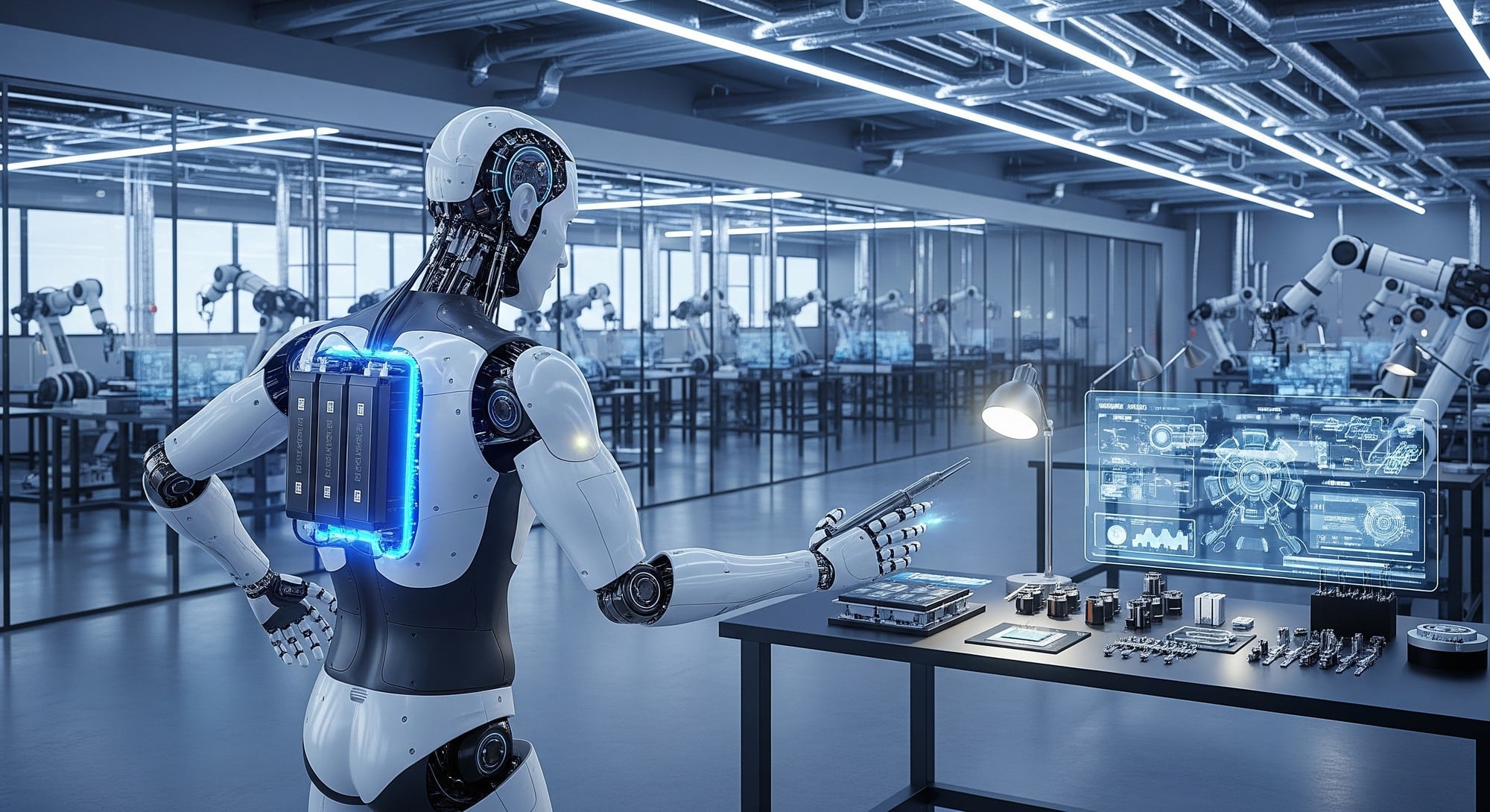
Samsung SDI is developing these all-solid-state batteries to deliver advanced safety and high power output for physical AI applications while adopting the pouch form factor to support lightweight design. This expansion demonstrates Samsung’s strategic vision to diversify its battery technology across multiple emerging sectors, including humanoids, various robotic platforms, aviation platforms, and next-generation wearables.
Samsung Battery Intelligence (SBI)
Alongside hardware innovations, Samsung SDI introduced Samsung Battery Intelligence (SBI), an AI-powered fire prevention and battery health monitoring software system. Unveiled at InterBattery 2026, SBI represents a significant advancement in battery safety technology.
The system is trained using data collected from more than 1,400 ESS (Energy Storage System) sites worldwide. Leveraging proprietary algorithms and internally developed battery status indicators, SBI assesses overall battery health—including status, lifespan, and irregularities—while detecting and predicting potential risks in advance. This predictive capability marks a shift from reactive to proactive battery management, potentially preventing failures before they occur.
AI Data Center Battery Solutions
Recognizing the explosive growth of AI infrastructure, Samsung SDI has developed specialized battery solutions for data centers. The company showcased its U8A1 battery for UPS (Uninterruptible Power Supply) applications, featuring Samsung’s proprietary prismatic form factor combined with LMO (Lithium Manganese Oxide) chemistry.
The U8A1 battery delivers several key advantages for AI data centers:
- 33% improved space efficiency — High energy density design reduces footprint compared to previous solutions
- Active power quality stabilization — Unlike conventional UPS batteries that only operate during outages, the U8A1 stabilizes power during sudden spikes in AI-related demand
- Proprietary prismatic form factor — Combined with LMO (Lithium Manganese Oxide) chemistry for optimal performance
Additionally, Samsung SDI debuted its high-power BBU (Battery Backup Unit) battery solution, installed inside servers to provide immediate backup power during outages, preventing data loss. By directly connecting high-power, high-capacity batteries to servers, the system extends data storage time by more than 50% during power interruptions—a critical capability for AI-driven data centers.
Real-World Applications and Strategic Collaborations in Samsung’s Solid-State Battery Revolution
Collaborating with Automotive Giants
Samsung’s advancements in battery technology have attracted the attention of major automakers worldwide. Samsung has been actively collaborating with leading automotive manufacturers:
- Hyundai — Partnership for next-generation EV integration
- Stellantis — Collaboration on advanced battery technology deployment
- General Motors — Joint development for future EV platforms
- BMW — Evaluation partnership currently underway for solid-state battery testing
These collaborations aim to achieve superior vehicle performance, safety, and energy efficiency, marking a significant step toward the mass adoption of sustainable transportation solutions.
Pilot Programs and Consumer Testing
To ensure the practicality and efficiency of its innovative battery designs, Samsung has initiated pilot programs and provided samples to automotive partners. Feedback from these tests has been overwhelmingly positive, indicating that Samsung’s solid-state batteries are poised to play a critical role in the future of the automotive industry. This approach validates the technology and aligns with Samsung’s strategy to lead the market with dependable and cutting-edge energy solutions.
Addressing Socioeconomic Impacts
The development and eventual widespread adoption of solid-state batteries are expected to have significant socioeconomic impacts. As EVs become more efficient and accessible, there is potential for reduced dependency on fossil fuels, decreased greenhouse gas emissions, and enhanced energy security. Additionally, these advancements promise to stimulate economic growth by creating new job opportunities in battery manufacturing, EV production, and related industries.
By continuing to innovate and collaborate with key players in the automotive sector, Samsung is well-positioned to drive the future of energy storage technology, bringing us closer to a more sustainable and economically viable transportation infrastructure.

Socioeconomic Impact of Samsung’s 600-Mile Range, 9-Minute Charge Solid-State Battery Breakthrough
Transforming the Automotive Industry
Samsung’s innovative advancements in solid-state battery technology are poised to transform the automotive industry significantly:
- Extended range capabilities — Up to 621 miles on a single charge eliminates range anxiety
- Rapid charging — Nine-minute charging times rival conventional refueling
- Increased EV adoption — More appealing consumer proposition drives market growth
- Reduced fossil fuel dependence — Decreased reliance on oil for transportation
- Lower carbon emissions — Contributing positively to environmental sustainability goals
The potential for rapid charging and extended driving ranges makes EVs a feasible option for a broader audience, including those who might have previously been hesitant due to range anxiety or long charging times. By enhancing these key aspects, Samsung’s technology supports a smoother transition from internal combustion engines to electric, aligning with global environmental goals and reducing the automotive industry’s overall carbon footprint.
Economic Impact and Employment Opportunities
The development and deployment of advanced solid-state batteries are likely to create numerous economic opportunities:
- Job creation in battery manufacturing — Demand for skilled labor in production facilities
- EV production growth — Expanded workforce needs for electric vehicle assembly
- Ancillary industry expansion — Growth in supporting services and supply chain industries
- Regional economic development — New industrial hubs emerging in areas where battery production takes root
- Clean technology investment — Stimulated investments in supporting infrastructure and green technologies
Additionally, the shift towards more energy-efficient and sustainable transportation solutions has the potential to stimulate investments in clean technologies and infrastructure, further driving economic growth. Countries that embrace these innovations early may benefit from a competitive advantage in the emerging green technology market.
Enhancing Energy Security and Sustainability
The move towards solid-state battery technology enhances energy security by reducing reliance on volatile global oil markets. As EVs become more prevalent, the demand for alternative energy sources will drive advancements in renewable energy technologies, contributing to a more diversified and resilient energy supply network. Samsung’s efforts, therefore, contribute not only to technological advancement but also to broader socioeconomic shifts towards sustainable living.
Implications for Silver Demand
The development of Samsung’s silver-carbon solid-state battery technology signals a potential expansion of silver’s role in the automotive supply chain. While silver is currently used in EVs primarily for its conductivity in contacts, switches, and electronic components, Samsung SDI’s architecture introduces silver as a functional component within the battery cell itself—a structural rather than peripheral application.
The 5-micrometer silver-carbon layer that enables the anode-less design represents a new category of industrial silver demand. As Samsung SDI progresses toward its 2027 production target, and should other battery manufacturers pursue similar silver-enabled chemistries, the implications for high-purity silver demand in the automotive sector could be material. This development adds another dimension to the growing industrial uses of silver, complementing existing demand from solar panels, electronics, and other clean energy technologies.

Envisioning A Future with Samsung’s Solid-State Battery Innovations
Samsung’s Roadmap for Battery Technology
Looking ahead, Samsung has outlined an ambitious roadmap for the development of its battery technologies. The company has confirmed its target to mass-produce all-solid-state batteries by the second half of 2027, initially targeting high-end, super-premium electric vehicles. This timeline was reaffirmed at InterBattery 2026, where Samsung showcased working samples of its solid-state technology.
Samsung aims to further enhance these technologies by integrating advanced materials like high-nickel cathodes, which improve energy capacity and battery life. Already, the company has developed an award-winning 700Wh/L high-energy prismatic battery that enables up to 800 kilometers (nearly 500 miles) of driving range on a single charge. As the company with the largest portfolio of prismatic battery patents, Samsung SDI continues to push the boundaries of what’s possible in energy storage technology.
Expanding Applications Beyond EVs
While the current focus is on revolutionizing the EV market, the potential applications of Samsung’s solid-state batteries extend far beyond. These batteries can be leveraged in a variety of sectors, including consumer electronics, aerospace, and renewable energy storage systems. With high energy density and improved safety features, Samsung’s innovations could redefine how energy is stored and used across different industries.
Building a Sustainable Future
Samsung’s innovations in battery technology promise to change the face of transportation and play a crucial role in building a sustainable future. By pushing the boundaries of what’s possible in energy storage, Samsung is poised to lead the way in creating a cleaner, more efficient energy ecosystem. As technologies continue to evolve, the potential for new applications and greater efficiencies grows, bringing us closer to realizing a sustainable energy landscape.

Frequently Asked Questions
How does the silver-carbon layer prevent dendrites?
The silver-carbon (Ag-C) nanocomposite layer functions as a stabilizing agent that forms a reversible alloy with lithium during charging. This promotes uniform lithium deposition across the anode surface, effectively suppressing the formation of dendrites—needle-like lithium structures that can grow during charging and cause short circuits. The 5-micrometer layer is thin enough to maintain high energy density while providing the stability needed for safe, long-term operation.
When will Samsung’s solid-state batteries be available?
Samsung SDI has confirmed mass production will begin in the second half of 2027. The company is initially targeting high-end, super-premium electric vehicles, with evaluation partnerships—including BMW—already underway. Samsung unveiled working samples of its solid-state battery technology at InterBattery 2026, demonstrating significant progress toward commercialization.
What is the difference between pouch and prismatic batteries?
Prismatic batteries are rigid, rectangular cells typically used in electric vehicles due to their efficient packing and structural integrity. Pouch batteries use a flexible, foil-like pouch packaging that allows for more versatile shapes and lighter weight. Samsung SDI is developing both: prismatic solid-state batteries for EVs and pouch-type solid-state batteries for emerging Physical AI applications like humanoid robots, where space constraints and weight reduction are critical.
How does the 9-minute charging work?
The 9-minute charging time (10% to 80%) is enabled by the solid electrolyte’s superior ion conductivity compared to liquid electrolytes. Without the resistance limitations of traditional lithium-ion batteries, solid-state batteries can accept much higher charging currents without overheating. Combined with the efficient ion transportation of Samsung’s proprietary oxide solid electrolyte and the advanced thermal management of the cell design, this allows for ultra-rapid charging while maintaining safety and battery longevity.
What applications beyond EVs will benefit from this technology?
Beyond electric vehicles, Samsung’s solid-state battery technology is being developed for Physical AI applications including humanoid robots, aviation platforms, and next-generation wearables. The company is also deploying battery solutions for AI data centers, including UPS (Uninterruptible Power Supply) systems and BBU (Battery Backup Units) for servers. The high energy density, safety profile, and compact form factor make solid-state batteries suitable for any application requiring reliable, high-performance energy storage.
Revolutionizing Mobility: Impact of Samsung’s Solid-State Batteries
Samsung’s advancements in solid-state battery technology represent a significant leap forward in the quest for more efficient, safer, and environmentally friendly energy solutions. With the promise of extended driving ranges, rapid charging capabilities, and enhanced safety features, these next-generation batteries are set to revolutionize the electric vehicle industry and beyond.
Looking Ahead
The journey towards widespread adoption of solid-state batteries is not without its challenges. However, the potential benefits—ranging from economic growth and job creation to enhanced energy security and environmental sustainability—make this pursuit an exciting and worthwhile endeavor. As Samsung continues to innovate and lead the charge, the future of battery technology promises to meet and exceed our current expectations for what’s possible in energy storage and consumption.
Samsung’s solid-state battery technology is more than just an innovation; it is a keystone in the foundation of a future powered by clean, efficient, and sustainable energy solutions. The road ahead is bright, with possibilities that extend well beyond the automotive industry, promising a new era of technological advancement and environmental stewardship.


