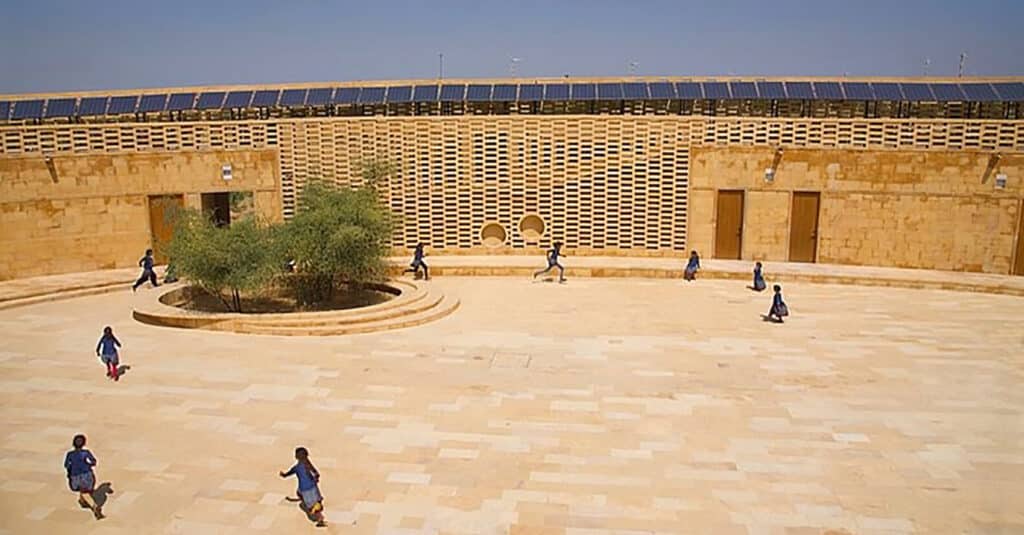
An architectural wonder, located in the middle of the Thar Desert in rural India, has taken shape in Kanoi village, intending to educate and empower young girls. The Rajkumari Ratnavati Girls’ School comprises locally sourced yellow sandstone and does not need air conditioners.
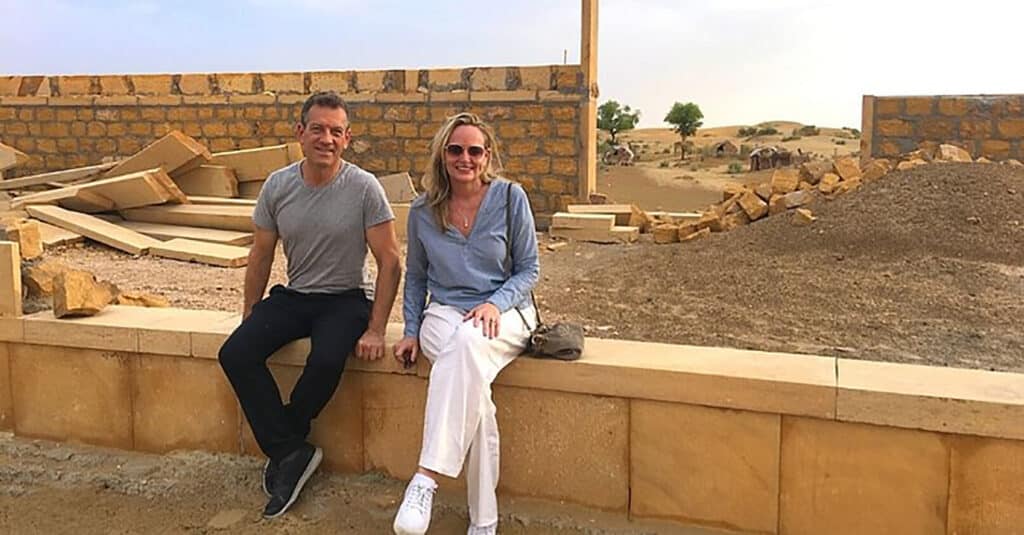
The new sustainable school was conceptualized by CITTA founder Michael Daube and designed by New York architect Diana Kellogg. The school will be part of a larger complex called the GYAAN Center, including a women’s cooperative and exhibition space and marketplace.
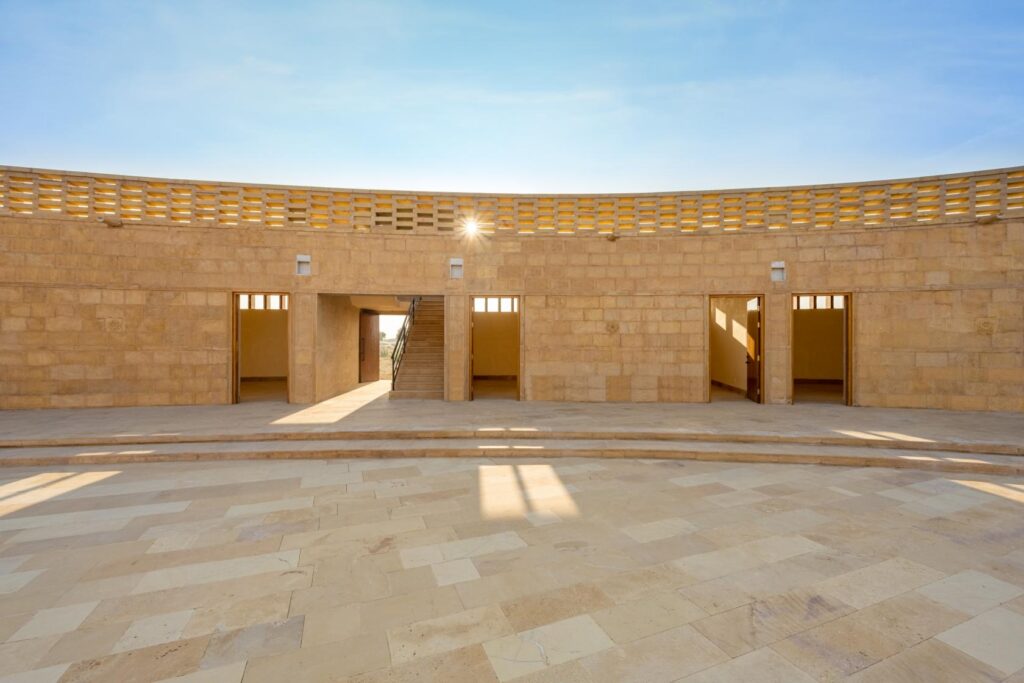
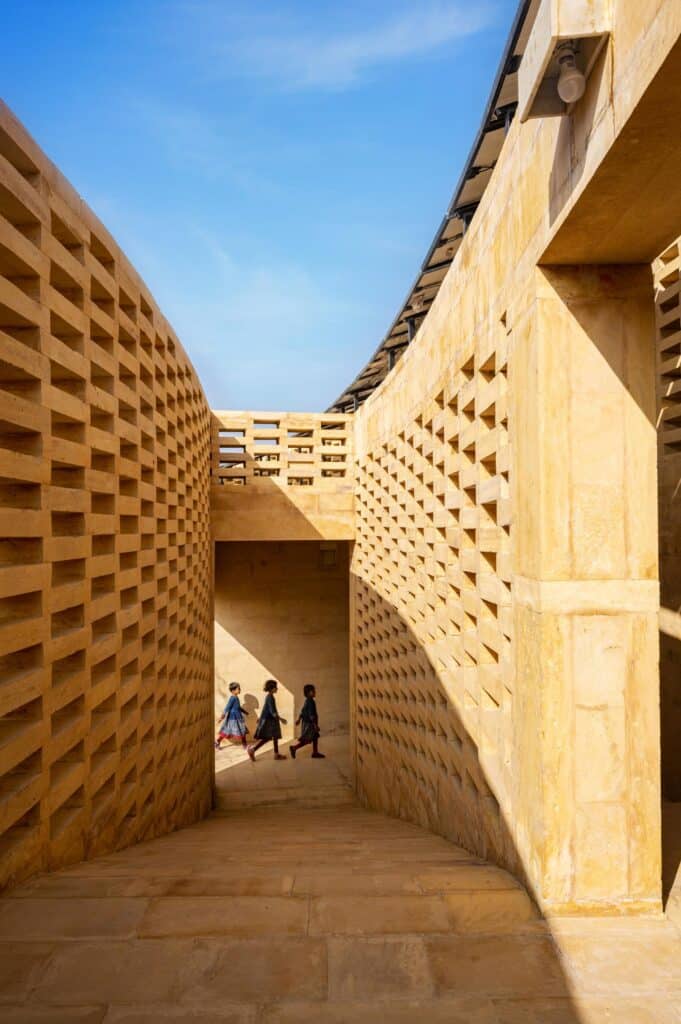
The school is visually impressive, with an oval-shaped structure built using hand-carved local sandstone that blends seamlessly in the desert landscape. The construction involved only local labor, of which many of the families of the girls that will attend the school participated. In addition, local ancient water harvesting systems are employed to recycle gray water and maximize rainwater use.
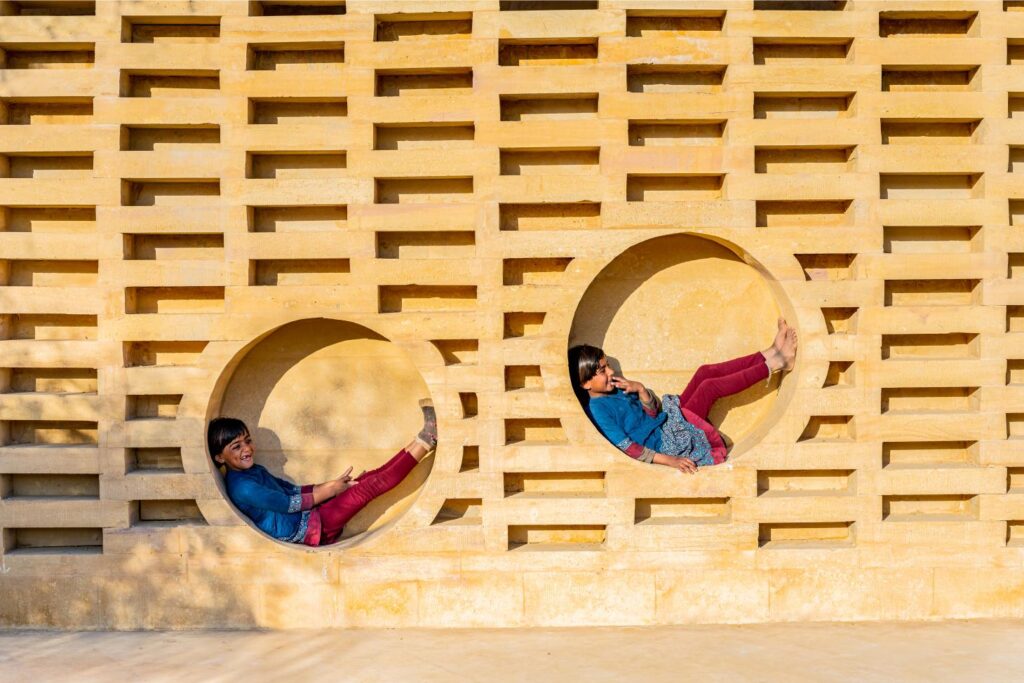
The furniture was also handcrafted out of rosewood with a traditional Charpai woven seating. Inspired by Jallis (the screen walls traditionally used in India for privacy), the school features permeable walls that enable the air to circulate while creating shade. Finally, Indian fashion designer Sabyasachi Mukherjee made the student uniforms to complement the new building.
Kellogg explained:
Effective design is a process requiring a deep understanding of the history of a place – its culture, its topography, and its vernacular. I wanted to create a building about light and community – a structure that resonates with the soul of its people and enforces the natural energies to nurture and heal the women and girls.
The GYAAN Center will include:
- The Rajkumari Ratnavati Girls’ School
- The Medha – a performance and art exhibition space with a museum and library
- The Women’s Cooperative – a space for local artisans to teach women weaving and embroidery techniques from the region

The ultimate goal is for the complex to improve the lives of the local community in an area where female literacy barely reaches 36%.
The project was funded by CITTA, a non-profit organization known for ‘supporting development in some of the most economically challenged, geographically remote or marginalized communities in the world.’ The school is slated to open in July 2021 and accommodate around 400 girls from kindergarten to year ten.