
During the first quarter of this year, Scotland produced a record amount of renewable energy! The country generated enough power from renewable sources to supply almost nine out of 10 homes. That is a total of 8,877-gigawatt hours (GWh) of green electricity to be exact, which is 17% more than in the same period of 2018. The Scottish Government said the amount of renewable energy generated was enough to power around 88% of Scottish households for a year!
Figures from the UK Department for Business, Energy and Industrial Strategy (BEIS) show that the bulk of this power – 5,792 GWh – came from onshore wind farms. The data also shows That Scottish renewable energy capacity grew from 10.4 gigawatts (GW) in March 2018 to 11.3 GW in March 2019. Furthermore, electricity exports from Scotland were also at their highest since the last three months of 2017, rising to 4,543 GWh. That amount of energy is enough to power more than 1.1 million homes for a year.
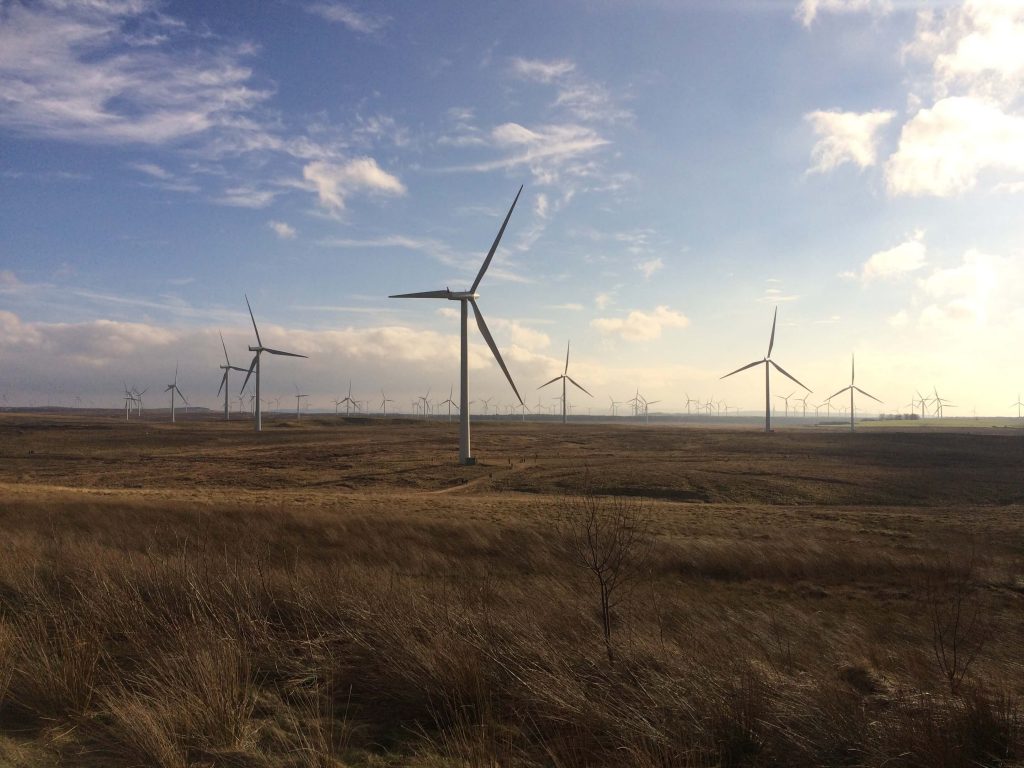 Throughout the UK the numbers are steadily rising. The amount of electricity produced from renewable sources has increased from 28.5 terawatt hours (TWh) to 31.1 TWh. Renewable sources include hydropower, biomass, and solar power.
The sector is going from “strength to strength,” proclaimed Energy Minister Paul Wheelhouse. He said:
These figures show Scotland’s renewable energy sector continues to go from strength to strength. Last year we were able to meet the equivalent of almost 74% of our electricity demand from renewable sources, and the first quarter in 2019 shows that positive trend continues.
We are seeing the growing importance of offshore wind, with capacity and generation both continuing to rise – with further projects under construction. I am delighted that installed capacity grew by 9.1% to reach a record 11.3 GW by March this year.
Despite damaging policy changes from the UK Government, particularly the inexcusable removal of an effective route to market for onshore wind, the Scottish Government continues to provide strong support for Scotland’s renewable energy sector. Generation and infrastructure investment continues, not least because of the importance in preventing the damaging impacts of climate change.
Robin Parker, WWF Scotland’s climate and energy policy manager, added:
We’re in the grips of a climate crisis and renewables will continue to play a vital role in powering the country, creating jobs and reducing climate emissions. In order that Scotland reaches its full potential and can provide the rest of the UK with plentiful and cheap renewable electricity, the UK Government needs to unlock support for cheap, popular and effective renewables like onshore wind.


