
Maintaining a tidy home with children may seem like a constant challenge, but it’s an achievable goal. By exploring practical strategies for household order, you can create a more peaceful environment while teaching your kids valuable life skills.
This guide focuses on three key areas: effective decluttering, simple family systems, and consistent routines that work for everyone. These simple yet effective strategies will help you transform your home into a more harmonious space and stay organized with kids.

Mastering Decluttering and Space Management
While keeping a home organized with kids can feel challenging, a few smart strategies can help you create a clutter-free environment that works for the whole family.
Labeling And Categorizing Items
Clear labelling is key to maintaining order in your home. Use picture labels or custom labels for kids who can’t read yet. This makes it easy for them to know where things belong and encourages independence in cleaning up.
Group similar items together in bins or baskets. For example, keep all art supplies in one container and building blocks in another. This system makes it simple for kids to find what they need and put things back where they belong.
Strategies For Regular Purging
Make decluttering a regular habit by setting aside time each month to go through your belongings. Ask yourself, “Have we used this in the past year?” If not, it might be time to let it go. Get your kids involved by turning it into a game – who can fill their donation box first?
Around holidays and birthdays, do a pre-gift purge. This helps make room for new items and teaches children about giving to others. Create a “one in, one out” rule to maintain balance in your home.
Limiting Toys And Belongings
Limiting the number of toys can be surprisingly beneficial. Too many options can overwhelm children and make cleanup a nightmare. Try rotating toys – keep some out and store others away. Swap them every few weeks to keep things fresh and exciting.
Involving your kids in choosing which items to keep teaches them valuable decision-making skills and helps them understand the importance of their possessions. Focus on quality over quantity, selecting toys that encourage creativity and have multiple uses.
Minimizing Sentimental Clutter
Managing sentimental items can be challenging, especially when it comes to your children’s creations. Instead of keeping every drawing or crafting project, choose a few favourites to display and photograph the rest. Create a digital album to preserve memories without taking up physical space.
For special mementos, designate a memory box for each family member. When it’s full, it’s time to review and decide what to keep. This teaches your kids to cherish memories without holding onto every physical item.
Building Simple and Effective Family Systems
Creating simple systems that your kids can help maintain is a great way to keep your home organized. By involving the whole family, you’ll not only teach valuable life skills but also make the process more manageable for everyone.
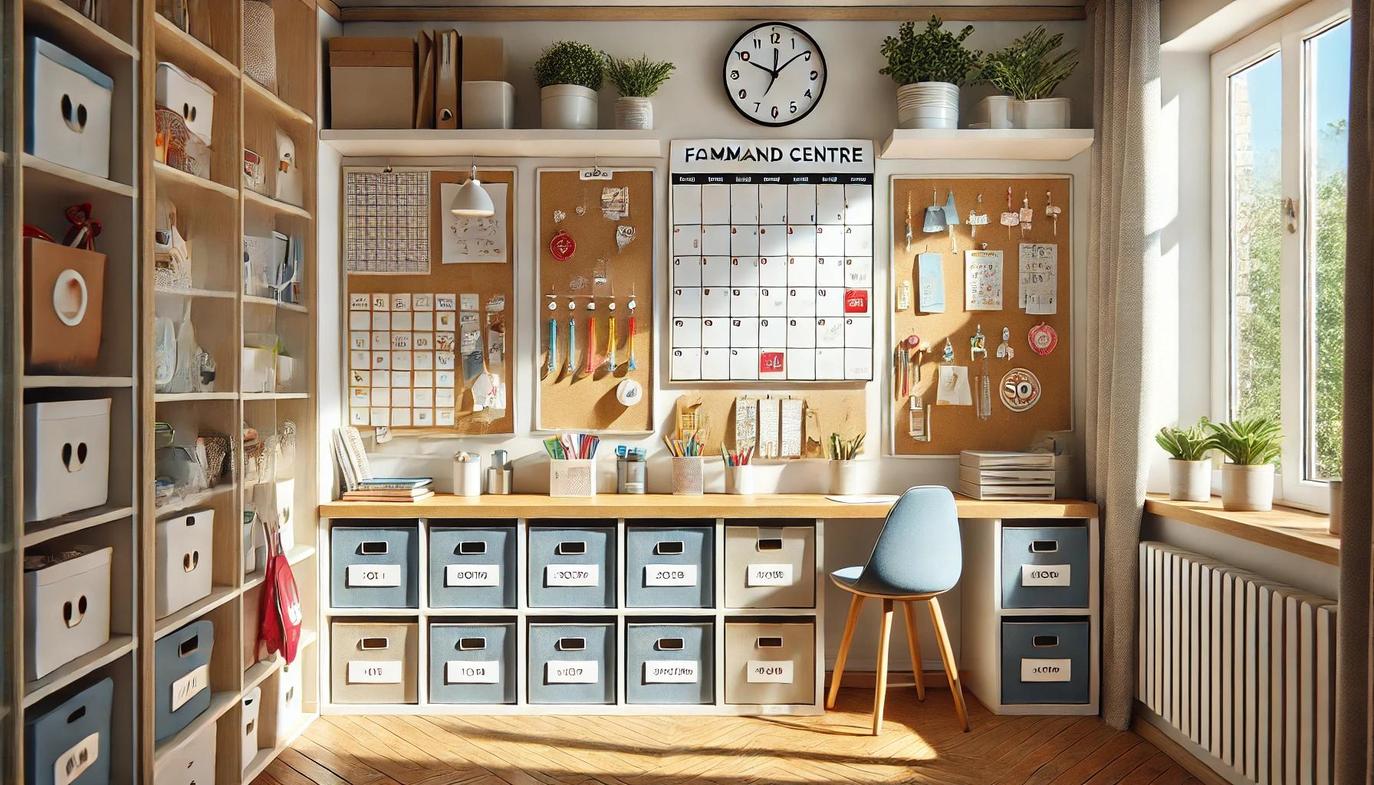
Creating A Family Command Centre
A family command centre is a highly effective tool for managing schedules and reducing clutter. To set one up, start by choosing a central location in your home, such as the kitchen or entryway.
To make your command centre effective, include these key elements:
- A Large Calendar: For tracking appointments and family activities.
- A Bulletin Board: For important notes, reminders, and schedules.
- Storage Solutions: Bins or folders for incoming papers and school supplies.
- Personal Cubbies: Consider adding individual spaces for each family member to keep their personal items organized.
Using Shared Calendars and To-Do Lists
Shared calendars and to-do lists are excellent tools for family organization. Digital options like Google Calendar or Apple’s Family Sharing allow everyone to access and update schedules from their devices. For a more tactile approach, try a large wall calendar or whiteboard in your command centre.
Encourage all family members to add their commitments and check the calendar regularly. To-do lists can be managed similarly, with digital apps or a physical board where tasks are assigned and checked off.
Incorporating Visual Aids and Timers
Visual aids and timers can be incredibly helpful for children in understanding and managing their responsibilities. Create colourful charts or schedules that outline daily routines, chores, or homework time. Use pictures for younger children who can’t read yet.
Timers can help kids stay focused on tasks and understand time management. For example, set a 15-minute timer for cleanup time before dinner, turning the task into a fun and motivating challenge.

Establishing Consistent Routines
Consistent routines are key to maintaining family organization. Start by identifying the most challenging times of day, such as mornings or bedtimes. Create step-by-step routines for these periods and display them visually.
For instance, a visual morning routine might include:
- Wake up
- Make the bed
- Get dressed
- Eat breakfast
- Brush teeth
- Pack backpack
Be patient as your family adjusts to new routines, and celebrate small successes along the way.
Managing Chores According To Age
Assigning age-appropriate chores helps children develop responsibility and contributes to overall family organization. Here are some age-appropriate chore ideas to get you started:
- Ages 3-5: Simple tasks like putting their own toys away, placing napkins on the table, or putting their dirty clothes in the hamper.
- Ages 6-8: More complex chores like feeding pets, helping with laundry (e.g., folding towels), or wiping down the table after meals.
- Ages 9-12+: Taking on more responsibility, such as vacuuming common areas, doing their own laundry, or preparing simple snacks.
Make chore time more engaging by using a reward system or turning tasks into games.

Creating a Harmonious Home Through Organization
Staying organized with kids is not about achieving perfection but about creating functional, peaceful systems that reduce stress for the entire family. By focusing on consistent decluttering, establishing simple family routines, and getting everyone involved, you can transform your home into a more harmonious space. These strategies not only help maintain order but also teach children invaluable life skills like responsibility and decision-making.
Remember to be patient throughout this process and acknowledge every small step of progress. A well-organized home provides a calming backdrop for family life, allowing you to spend less time cleaning and more time creating memories together. With these simple tips, you are well on your way to building a tidier, happier household.
Top Questions About Family Organization
How Do I Get Started When Everything Feels Overwhelming?
When you feel overwhelmed, the best decluttering tip is to start small. Focus on one area, like a single drawer or shelf, and set a 15-minute timer. This approach makes the goal to stay organized with kids feel more manageable. Sorting items into “keep,” “donate,” and “discard” piles is a simple but effective first step toward creating order.
What Tools Are Best for Schedules and Reminders?
Effective family systems rely on the right tools. For managing schedules, a digital shared calendar is excellent, while a physical whiteboard in a family command centre is a great visual hub. For daily tasks, visual aids like chore charts are perfect for younger children, helping them track their responsibilities and build consistent family routines.
How Can I Keep My Kids Motivated to Help?
To keep kids motivated, turn kids’ chores into a fun game. A reward system, like a sticker chart, can be very effective for tracking progress on age-appropriate chores. Involving them in the process not only helps with home organization but also teaches them valuable life skills and a sense of ownership over their space.

