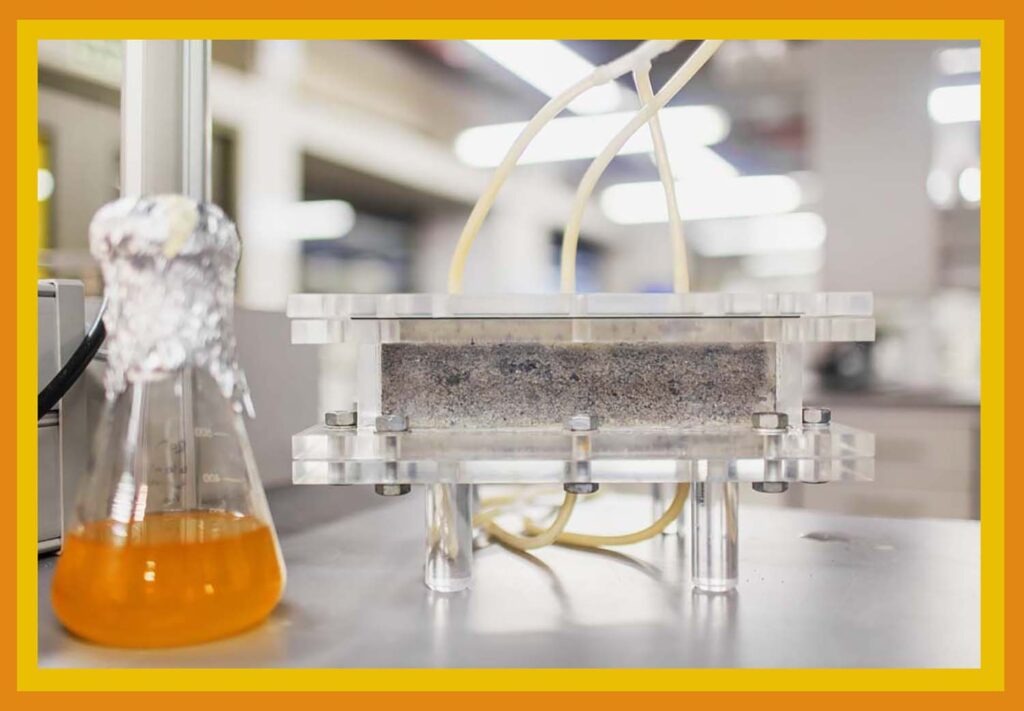
Over the years, scientists in America have explored the concept of using synthetic urine-based substances to produce building materials. In 2018, University of Cape Town master’s student Suzanne Lambert developed a zero-waste method of making urine-based bricks using collected human urine for the first time.
The process of creating the bio-bricks, called microbial carbonate precipitation, involves loose sand that’s colonized with bacteria. The natural process is similar to the way seashells are formed. The bacteria produce an enzyme known as urease, which breaks down the urea in urine, creating calcium carbonate via a complex chemical reaction. This process hardens the sand into any shape, such as a concrete column or a rectangular brick.


Engineering environmentally sustainable building materials such as the bio-brick is vital for a greener future. Unlike standard bricks that entail a kiln that reaches past boiling temperatures of 2552°F (1400°C), producing CO2, the bio-brick is made at room temperature and can be modulated to fit a specific size, shape, or strength.
Dr. Dyllon Randall, Lambert’s supervisor, explained:
If a client wanted a brick stronger than a 40% limestone brick, you would allow the material to make the solid stronger by ‘growing’ it for longer. The longer you allow the bacteria to make the cement, the stronger the product is going to be. We can optimize that process.
The zero-waste method of creating the bio-brick produces essential by-products, including potassium, nitrogen, and 97% of the urine’s phosphorus, converted into calcium phosphate. These three substances can then be recycled and repurposed to make commercial fertilizers.
Randal refers to urine as ‘the liquid gold of wastewater’ in his review paper published in Environmental Chemical Engineering.