
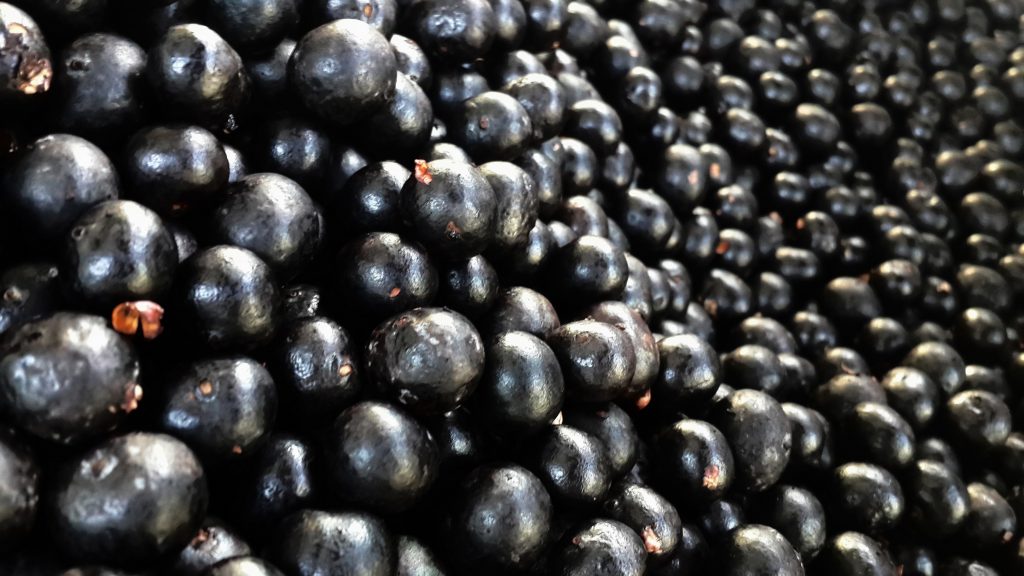
Aҫaí is a grape-like fruit native to Brazil. The high antioxidant content it contains has made the fruit quite popular all over the world in recent years. Some consider it a ‘superfood.’
Traditional healers in Brazil, however, have long used the berries to treat malaria symptoms. Taking this into consideration, a group of researchers wanted to find out more about the effects of aҫaí on malaria so they experimented on mice feeding them aҫaí berry extracts. The results revealed that aҫaí berry extracts can reduce parasites in the blood and prolong the survival of infected mice. The research has been published in ACS Omega.
Researchers have been actively searching for new malaria treatments because the parasite that causes malaria is developing resistance to many antimalarial drugs, including the mainstay, chloroquine. Despite humanity’s best efforts to eradicate malaria, millions of people are still getting infected yearly. According to the World Health Organization, the disease struck more than 200 million people in 2017!
Clearly, something new had to be thought up and so Susanne Mertens-Talcott, Fabio Costa and colleagues became creative in their hunt for a solution. Antibiotics weren’t working, so why not look for a cure elsewhere? If aҫaí worked to help soothe symptoms, maybe there’s a compound in it that can be extracted to make medicine.
What makes the berry so potent is high levels of antioxidants whose activity arises mainly from polyphenols — compounds that have been linked to health benefits such as weight loss, cardiovascular disease prevention and decreased cancer risk.
To see whether polyphenols in the berries were responsible for the therapeutic effect against malaria symptoms, the researchers extracted them from the berries and then treated malaria parasite cultures growing in a Petri dish with the extracts. What they found was that a class of polyphenols called nonanthocyanin phenolics inhibited the growth of both chloroquine-resistant and chloroquine-sensitive parasites.
Taking this knowledge further, they then orally administered aҫaí polyphenols to malaria-infected mice to see if it would have the same effect within a body. It did! Compared with untreated mice, the treatment reduced the parasitic load in the mice’s blood by 89.4%. Also, none of the untreated mice lived but all of the mice given polyphenols survived for more than 15 days. The researchers say that the aҫaí extracts appeared to interfere with the parasites’ protein homeostasis – or the balance between protein production and degradation.


