
Taking stock of our ocean plastic pollution is a massive order, with millions of tons of plastic washing into the ocean each day and broken down into tiny fragments that are difficult to track down. University of Barcelona (UB) researchers have developed a solution to simplify that task – an algorithm that can identify and quantify marine litter via aerial imagery.
They plan to combine this algorithm with drones to scan the ocean and assess the damage autonomously. This useful tool will improve current tracking marine litter distribution methods, which involves surveying the damage from boats and planes.
The UB team used deep learning methods to analyze over 3,800 aerial images of the Mediterranean off Catalonia, Spain. These photographs were used to train the algorithm, while neural networks improved its accuracy over time – leading to the creation of an AI tool that could reliably detect and quantify plastic floating on the waters’ surface. The findings are published in Environmental Pollution.
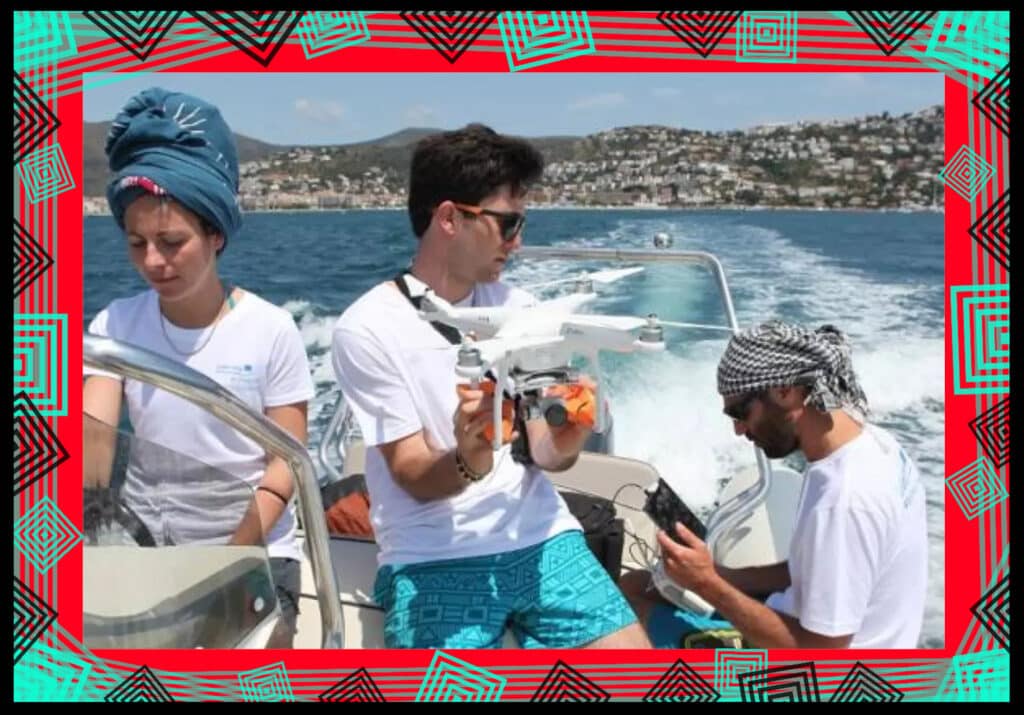
Odei Garcia-Garin, a member of the team, said:
The great number of images of the marine surface obtained by drones and planes in monitoring campaigns on marine litter – also in experimental studies with known floating objects – enabled us to develop and test a new algorithm that reaches an 80% of precision in the remote sensing of floating marine macro-litter.
The tool can sort through images individually or into different segments, counting the litter in each section to estimate density. The tool is available to professionals in the field via an open-access web app, but the team plans to develop a version that will work with drones to automate the process fully.
Garcia-Garin added:
Automatic aerial photography techniques combined with analytical algorithms are more efficient protocols for the control and study of this kind of pollutants.
The Ocean Cleanup Project is also doing its part to scan the ocean for debris via infrared. Their research vessels and aircrafts fitted with sensors and imaging systems have ventured into the Great Pacific Garbage Patch to harvest tons of plastic. The project involves them recycling all the collected trash. The Ocean Cleanup crew has already produced sunglasses from their first load of plastic waste gathered from the ocean during a pilot test in 2019.


