
Experts have questioned the safety of artificial sweeteners for decades, with several studies concluding that sugar substitutes could cause health problems, from cancer to brain damage. For example, previous studies found that aspartame causes leukemia in mice exposed to it from before birth. Three other independent studies found aspartame causes cancer in mice. Acesulfame-K, cyclamate (available in Canada), and saccharin are also risky.
One of the latest studies found that some of the most used artificial sweeteners make the previously healthy bacteria in our gut go diseased and invade our intestinal walls, causing severe health issues. So, while too much sugar is bad for your health, the alternative isn’t any better.
Dr. Havovi Chichger, lead author of the paper and senior lecturer in Biomedical Science at the UK’s Anglia Ruskin University (ARU), said in a press release:
There is a lot of concern about the consumption of artificial sweeteners, with some studies showing that sweeteners can affect the layer of bacteria which support the gut, known as the gut microbiota.
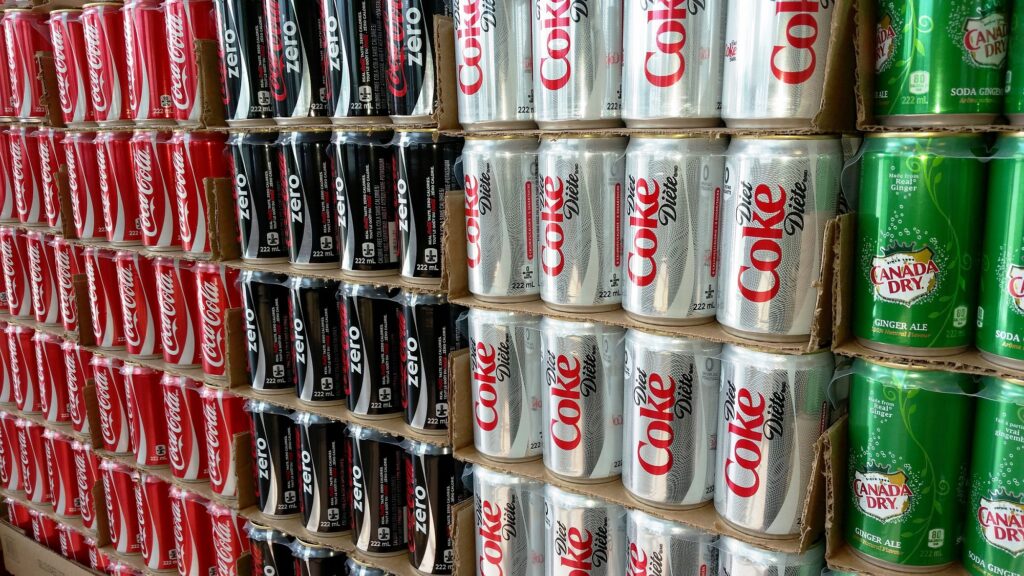
The artificial sweeteners saccharin, sucralose, and aspartame cause two types of gut bacteria – E. coli (Escherichia coli) and E. faecalis (Enterococcus faecalis) – to turn pathogenic, enabling them to latch onto, take over, and kill Caco-2 cells (the epithelial cells that line the walls of the intestines). All it took was a concentration equal to two diet soft drink cans.
All three sweeteners also increased biofilm formation. Bacteria in biofilms are more likely to secrete toxins and express virulence factors (molecules that can cause disease). They’re also less sensitive to antimicrobial resistance treatment.
When pathogenic gut bacteria attack the intestinal walls, they can cross through, enter the bloodstream, and congregate in the spleen, lymph nodes, and liver. For example, if E. faecalis bacteria traverse, they can cause various infections, including septicemia (blood poisoning).
This molecular research, led by researchers from ARU, is the first to show how some sugar substitutes can induce a pathogenic effect on gut bacteria. Previous studies revealed that they could also change the number and type of bacteria in the gut.
Dr. Chichger said:
Our study is the first to show that some of the sweeteners most commonly found in food and drink – saccharin, sucralose, and aspartame – can make normal and ‘healthy’ gut bacteria become pathogenic. These pathogenic changes include the greater formation of biofilms and increased adhesion and invasion of bacteria into human gut cells. These changes could lead to our gut bacteria invading and causing damage to our intestine, which can be linked to infection, sepsis, and multiple-organ failure.
We know that overconsumption of sugar is a major factor in the development of conditions such as obesity and diabetes. Therefore, we must increase our knowledge of sweeteners versus sugars in the diet to understand the impact on our health better.

In conclusion, diet sodas might be the less healthy choice over original soda with actual sugar – although neither is the best choice of all. However, more research is needed to know more.
So, in the meantime, skip the diet drinks and foods with artificial sweeteners and choose a safe sugar substitute when you want to sweeten things up. The three safest ones are erythritol, xylitol, and neotame.
Erythritol occurs naturally in some fruits in small amounts. It’s about 60 to 70% as sweet as conventional table sugar but provides the bulk and “mouthfeel” of sugar, unlike the high-potency sweeteners like stevia.
Xylitol is a naturally occurring sugar alcohol in birch and some other plants. It’s about as sweet as table sugar and provides the bulk and “mouthfeel” of sugar.
Both erythritol and xylitol are suitable for baking, but xylitol is better if you want to match the sweetness level of white processed sugar closely.

There’s even xylitol from discarded corn cobs – a sugar developed by a young chemical engineer named Javier Larragoiti that’s healthy and helps reduce food waste. He initially decided to dedicate his studies and time to establish a safe and acceptable alternative to help his father, who was diagnosed with diabetes.
Children, above all, should only consume these healthier options because their bodies are still developing, and they have longer to manifest cancer, a disease with a long latency period. Also, pregnant women should avoid consuming artificial sweeteners. Two Scandinavian studies linked artificially sweetened beverages to pre-term baby delivery.
If you’re eager to cut down your sugar cravings, researchers at Massey University, led by Associate Professor Ajmal Ali, trialed a mint product that significantly decreases the pleasantness and, therefore, the desire for eating sugar-rich foods. The mint contains gymnemic acids – a compound from the Gymnema Sylvestre plant, which reduces sugar cravings by suppressing the taste responses to sweet compounds.
Plus, Gymnema has been found to have other health benefits too. It is an anti-inflammatory, can lower “bad” LDL cholesterol and triglyceride levels, and has anti-diabetic properties.
Most processed, packaged foods and drinks contain sugar. It plays a significant role in obesity; according to the CDC, it affects 93 million adults in the US alone. It’s so hard to avoid both sugar and artificial sweeteners! Thankfully, there are scientists continually coming up with innovative new solutions.


