
Brick manufacturing has evolved significantly, with various machines developed to meet diverse construction needs. Understanding the operational mechanics behind each type of brick machine—manual, semi-automatic, and fully automatic—reveals their transformative impact on the construction industry. Each type caters to specific production demands, from small-scale, hands-on projects to high-capacity, automated setups essential for larger undertakings.
These machines enhance production speed and improve the durability and quality of bricks, supporting sustainable construction solutions that align with modern standards. As construction requirements advance, so too does brick machine technology, continually shaping the efficiency, quality, and sustainability of building practices across the industry.
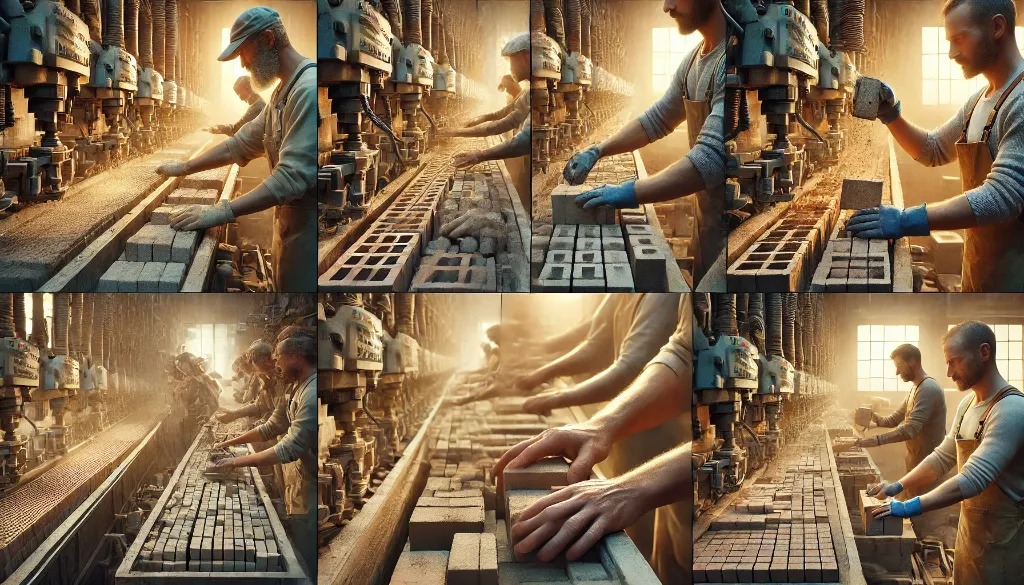
How Do Different Brick Machines Operate?
Brick machines operate through distinct mechanisms determining their automation level, production capacity, and brick types.
Manual Brick Making Machines
Manual brickmaking machines represent the simplest and most economical option. Operators manually prepare the mortar, transfer it to the machine, and collect the dried bricks. The components include a hopper for holding the sand or clay mix, a roller for compressing the material, and a molding board for forming the bricks. A single person typically operates these machines, but the production capacity is limited to a few hundred bricks per hour.
Semi-Automatic Brick Making Machines
Semi-automatic brickmaking machines, like those offered by Lontto Brick Machine, incorporate greater automation compared to manual options. Operators still participate in loading and unloading materials, but operational efficiency increases significantly, allowing production rates of up to 700 bricks per hour. These machines feature configurations such as single-hopper and double-hopper models, enhancing their output capabilities while retaining a level of human oversight during operations.
Fully Automatic Brick Making Machines
Fully automatic brick making machines offer high levels of efficiency and precision. Equipped with advanced technology, these machines streamline the entire brick production process. Operators set parameters, and the machine handles mixing, forming, and curing without further human intervention. These machines produce various types of bricks, catering to large-scale projects with substantial production demands.

Types of Brick Machines
Brick machines operate using different methods to produce various types of bricks suited for specific construction needs. The main types of brick machines include clay brick machines, fly ash brick machines, and concrete brick machines.
Clay Brick Machines
Clay brick machines use the stiff extrusion method to produce clay bricks. They work by extruding clay mixtures into specific shapes. The extrusion process requires less water, resulting in improved product quality and reduced energy costs for drying. After extrusion, bricks are often placed directly on kiln cars for efficient drying and firing. This method allows for higher stacking without distortion during the drying phase. Equipment used in these machines is typically made of heavy-duty components, including ductile iron frames and high chrome alloy-wearing parts, ensuring durability.
Fly Ash Brick Machines
Fly ash brick machines utilize fly ash as a principal raw material derived from coal combustion. These machines employ either manual or automatic systems to shape the mixture into bricks. The production process includes mixing fly ash with water, lime, gypsum, and sand to create a slurry, which is molded into bricks. The curing process involves steam or ambient curing, resulting in rapid strength gain and minimal shrinkage. Fly ash bricks exhibit high thermal insulation and are environmentally friendly, as they utilize waste materials in their production.
Concrete Brick Machines
Concrete brick machines manufacture bricks from a mixture of cement, aggregates, and water. These machines generally operate automatically, utilizing a variety of molds to produce different brick types. The mixing and pouring process ensures uniformity in brick composition. After molding, the bricks go through a curing process, often with a steam chamber, to improve strength and durability. Concrete bricks offer exceptional compressive strength, making them ideal for load-bearing structures. These bricks also bring versatility, as the machinery used in production can create a range of shapes and sizes, including both solid and hollow options.

Operating Mechanisms in Brick Machines
Brick machines utilize distinct operating mechanisms to transform raw materials into bricks. Understanding these mechanisms provides insight into their functionality and production capabilities.
Pressing Methods
Pressing methods involve applying high pressure to a mixture of materials, forming bricks by compacting them into shape. These machines typically use hydraulic systems for efficient operation. Hydraulic cylinders generate the necessary force, pressing the raw materials within molds. The consistency of the pressed bricks largely depends on the pressure applied and the duration of the pressing process. High-quality components, like reliable hydraulic valves and pumps, significantly improve the machine’s performance and the overall quality of the bricks produced.
Extrusion Techniques
Extrusion techniques employ a different approach by forcing raw material through a die to create continuous shapes. Clay brick machines commonly utilize this method, which entails mixing the clay with water to achieve the right consistency. A screw or auger within the machine moves the mixture towards the die, which shapes it into long columns before cutting them into individual bricks. This method efficiently produces uniform bricks while minimizing waste by using raw materials. The extrusion process enhances brick durability and ensures optimal density in each piece.
Efficiency and Performance of Brickmaking
Efficiency and performance are critical elements in brickmaking operations. They directly affect production rates and output quality.
Speed of Production
The speed of production varies significantly among different types of brickmaking machines. Hydraulic presses can produce multiple bricks simultaneously, typically ranging from 600 to 2,000 bricks per day, depending on the machine’s capacity and operational parameters. Extruder machines excel in this aspect, offering the highest production speeds and capable of exceeding 2,500 bricks hourly in large-scale operations. Vibro compression machines also improve production rates by rapidly compacting mixtures, resulting in output levels between 1,000 to 5,000 bricks daily, contingent on settings and materials used. Each machine type optimizes efficiency through specific mechanisms, reflecting the scale and requirements of construction projects.
Quality of Output
Quality of output plays a vital role in determining the durability and performance of the finished bricks. Hydraulic presses produce bricks with higher strength and lower porosity due to effective compaction. This results in bricks that withstand intense pressure and environmental conditions. Extruders maintain consistent shape and density in bricks, minimizing defects and ensuring uniformity across batches, which is crucial for large-scale construction. Vibro compression machines improve output quality by using vibration to achieve dense brick formations, leading to excellent thermal properties. The effectiveness of each machine type depends on material quality, precision settings, and maintenance practices, affecting the overall integrity of the bricks produced.
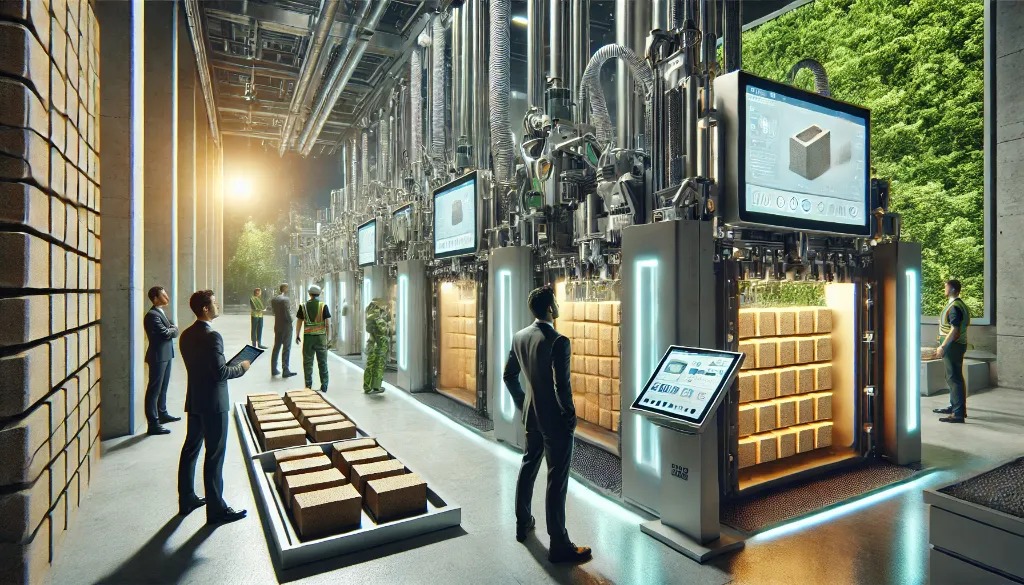
Advancements in Brick Machine Technology: Enhancing Efficiency and Quality in Construction
Recognizing how various brick machines operate highlights their considerable impact on the construction industry. Each machine type provides distinct benefits tailored to specific production needs, ranging from manual machines’ straightforward functionality to fully automatic systems’ sophisticated capabilities. This choice of equipment plays a crucial role in determining production efficiency and the quality of the final products.
The range of mechanisms used in brickmaking enhances production speed and ensures the durability of the bricks produced. As construction requirements grow and change, innovations in brick machine technology continue to advance. Adopting these advancements is vital for delivering sustainable, high-quality building solutions that meet the standards of today’s market.

