Plastic waste is in our oceans and rivers, ocean slicks, the guts of coral and sea turtles, in human organs, mountains, Arctic snowfall, and even rocks – forming ‘plasticrust.’ Now, scientists find plastic is contributing to air pollution in Indian cities too.
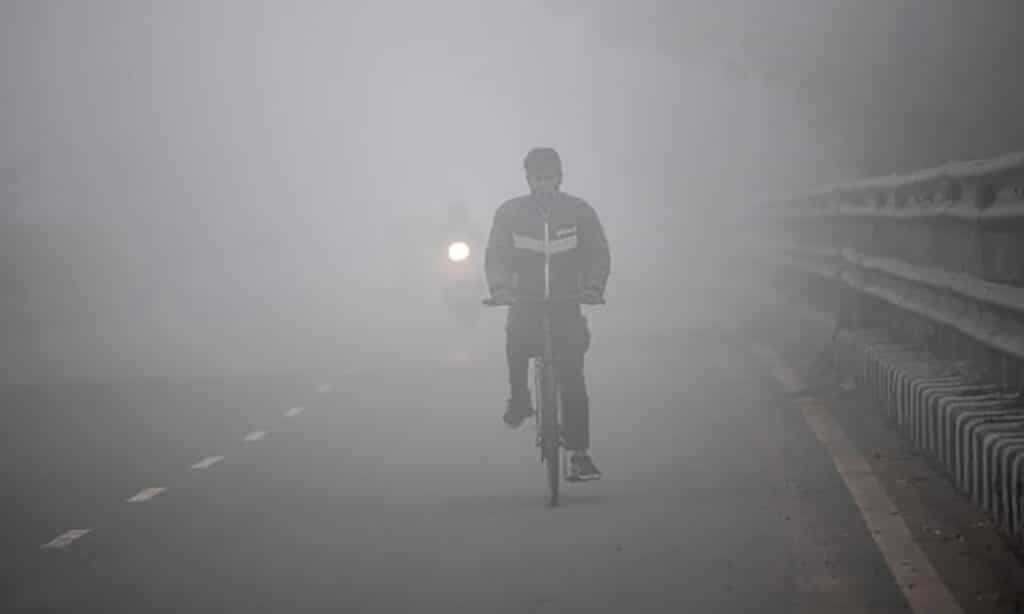
Delhi has always been more susceptible to thick smog versus other polluted cities like Beijing. This has puzzled scientists for years, until now. New research has linked this smog to tiny chloride particles in the air that help form water droplets. Worldwide, chloride particles are largely found near coasts due to sea spray, but the air over inland India and Delhi contains much more than anticipated.
Initially, the chloride was thought to come from illegal factories around Delhi that recycle electronics and use potent hydrochloric acid to clean and process metals. These are still a significant part of the problem, but new data reveals another considerable source.
Scientists examined other pollutants that increased simultaneously as the chloride particles and found that the chemical fingerprint matched plastics’ burning. These significant amounts of chloride are estimated to account for around 50% of Delhi’s smog events.
In low-poverty countries, approximately 90% of waste winds up in the open landfill or is burned in the open air. When plastic is set on fire, it creates large amounts of black smoke due to its oil-based origins. Using data on the contents of trash worldwide, scientists from Imperial and King’s College in London have estimated that the soot produced from open waste burning has a global warming impact comparable to between 2% and 10% of CO2’s global emissions.
Burning plastic also produces copious amounts of dioxins and other highly toxic pollutants that can stick around in the food chain. While waste incinerators in Europe and the UK do all they possibly can to reduce these toxic emissions, there are no protections when waste is burned in the open or at home.
Additionally, the extra chloride could encourage chemical reactions between different air pollutants, adding to the ground-level ozone across India. This is estimated to reduce some Indian crops’ yields by 20% to 30%.
Global plastic production and use need to change to eliminate plastic pollution, and better waste management needs to be a top priority.