
In today’s world, where we increasingly seek eco-friendly and sustainable solutions, banana fibers have emerged as a remarkable alternative for various industrial applications. Moving beyond the kitchen and onto the factory floor, banana fibers are making waves in the materials science community due to their potential to revolutionize multiple industries. By exploring the origin, characteristics, and potential of banana fibers, we can truly appreciate the capabilities of this natural wonder.
In recent years, the demand for sustainable materials has amplified the interest in polymers made of banana fibers, positioning them as a frontrunner in eco-friendly innovation. These robust yet lightweight fibers minimize waste by utilizing the banana plant’s pseudostem and contribute significantly to reducing the carbon footprint across industries. As researchers continue to unlock their potential, banana fibers promise to usher in a new era of biodegradable solutions that are both economically and environmentally viable.

Banana Fiber Waste is Strong and Biodegradable
What are Banana Fibers?
Banana fibers, derived from the pseudostem of the banana plant, are the latest innovation in sustainable materials. Unlike the fruit we commonly enjoy, these fibers are extracted from the trunk-like part of the banana plant, which has long been viewed as agricultural waste. By utilizing this by-product, not only do we minimize waste, but we also tap into a renewable resource that offers substantial environmental benefits.
Unique Properties of Banana Fibers
Banana fibers possess unique characteristics that make them exceptionally appealing for industrial use. They are not only strong and durable but also biodegradable, which means they break down naturally without harming the environment. This is particularly important in today’s world, where reducing plastic waste and minimizing our carbon footprint is paramount. Additionally, banana fibers are lightweight yet robust, providing strength without the load, which is a significant advantage in applications like automotive parts or construction materials.
How are Banana Fibers Extracted?
The extraction process of banana fibers is both fascinating and crucial to understanding their sustainable nature. It involves mechanically stripping the fibers from the pseudostem of the banana plant. This is done without the use of harmful chemicals, making the process environmentally friendly. Once extracted, the fibers are cleaned and dried, which prepares them for integration into various composite materials. This method conserves resources and capitalizes on what would otherwise be agricultural waste.
Comparison with Other Natural Fibers
When compared to other natural fibers such as flax, hemp, and coconut, banana fibers offer significant advantages. While each type of fiber has its strengths, banana fibers stand out due to their superior tensile strength, which measures how much pulling force the fiber can withstand before breaking. They are also more moisture-resistant than other fibers, which enhances their durability and versatility in different environmental conditions. Unlike synthetic fibers, banana fibers don’t contribute to microplastic pollution, offering a cleaner alternative that aligns with sustainable development goals.
Unleashing the Potential of Banana Fibers
Understanding the intricacies of banana fibers and the processes involved in their extraction allows us to appreciate their potential fully. These fibers aren’t just a promising alternative; they are a testament to how innovative thinking and sustainable practices can transform waste into valuable resources. As industries continue to explore eco-friendly materials, banana fibers present a remarkable blend of strength, sustainability, and economic feasibility, paving the way for a greener future.

Banana Fiber in Automotive Applications
As the world steers towards sustainability, the automotive industry has become a significant player in driving eco-friendly innovations. One of the standout advancements in this sector is using banana fibers in vehicle manufacturing. These fibers, once overlooked, are now paving the way for greener automotive solutions by offering a compelling alternative to traditional materials like metal and plastic.
Reinventing Vehicle Parts with Banana Fibers
Banana fibers are increasingly being used in the creation of lightweight and robust vehicle components. Researchers and manufacturers are exploring the use of banana fibers for their ability to reinforce composite materials used in automobiles. By harnessing the strength of banana stems, engineers are developing parts like interior panels and structural components that are both lighter and more environmentally friendly than conventional options.
The potential of banana fibers in automotive applications is supported by collaborations such as those between the University of Maine System and Oak Ridge National Laboratory (ORNL). These initiatives focus on reducing the reliance on resource-intensive materials like glass fibers and metals, which have a large carbon footprint.
Banana fibers offer superior tensile strength and flexibility compared to many traditional materials, making them ideal for demanding automotive applications. This not only leads to enhanced vehicle performance but also plays a crucial role in reducing overall vehicle weight, which can significantly boost fuel efficiency and lower emissions. With ongoing research and development, the integration of banana fibers is set to transform automotive designs, paving the way for greener, more sustainable transportation solutions.
Advantages of Using Banana Fibers in Vehicles
One of the main attractions of banana fibers in vehicle manufacturing is their ability to provide strength without adding excessive weight. This characteristic is key in the automotive industry, where reducing vehicle weight can significantly improve fuel efficiency and reduce emissions. Furthermore, banana fibers’ natural properties allow them to withstand higher impact forces, making them suitable for safety-critical applications.
Beyond their strength and lightness, banana fibers contribute to sustainability. They are a renewable resource that decomposes naturally after their lifecycle, unlike synthetic fibers, which often end up as non-biodegradable waste. This not only lowers the environmental impact of the automotive industry but also supports a circular economy by turning agricultural waste into valuable resources.
Additionally, the versatility of banana fibers enables their use across multiple components within a vehicle, ranging from lightweight frames to interior trim. This adaptability helps manufacturers meet stringent sustainability standards while maintaining high performance and safety thresholds. As industries aim for carbon neutrality, the broad adoption of banana fibers in automotive manufacturing represents a proactive stride toward a more sustainable future.

Making Banana Fiber into Formidable Car Parts
While the prospects of using banana fibers in automotive applications are promising, there are still challenges that need addressing. Understanding these hurdles and the solutions being implemented is crucial for the widespread adoption of this innovative technology.
Handling Moisture Absorption
One of the primary challenges in utilizing banana fibers is their tendency to absorb moisture. This trait can affect the mechanical properties of banana fibers, leading to issues like swelling and reduced strength. To combat this, researchers are exploring various treatments that enhance the fibers’ water resistance. This includes modifying the surface of the fibers to create a barrier against moisture, thus ensuring the material’s durability in varying weather conditions.
Research into these treatments has shown promise, with methods such as coating fibers with hydrophobic substances and utilizing advanced polymer blends proving particularly effective. These innovations preserve the structural integrity of banana fibers and extend their lifespan under various environmental conditions. As these technologies advance, they promise to unlock even broader applications for banana fibers, enhancing their role in sustainable manufacturing.
Enhancing Mechanical Properties
For banana fibers to match the performance of traditional automotive materials, their mechanical properties must be optimized. This involves improving the tensile strength (the force required to pull something to breaking point) and elasticity (the ability to return to original shape after being stretched). Researchers are developing composite matrices—frameworks into which the fibers are infused—that can better distribute stress and mitigate wear over time.
Innovative techniques, such as the use of nanotechnology, are also being employed. By integrating nanoparticles into the fiber matrix, industries are enhancing the composite’s thermal stability and mechanical performance, making banana fibers a viable option for high-performance components.
These composite structures improve the resilience of banana fibers under physical stress and enhance their ability to withstand fluctuating temperatures, a critical factor in automotive applications. Furthermore, the integration of banana fibers in hybrid composites with other natural or synthetic fibers can leverage the benefits of each material, creating superior products ready for various industrial challenges. As these technologies continue to evolve, banana fibers are poised to become a cornerstone in the development of eco-friendly and high-utility materials.
Overcoming Processing Challenges
The processing of banana fibers demands specific technological adaptations to ensure that they retain their beneficial properties. Unlike typical synthetic materials, banana fibers require more careful handling to prevent damage during manufacturing. Advanced methods like extrusion and compression molding are being refined to better accommodate the unique characteristics of these fibers. These methods allow for the creation of components that maintain the integrity and performance of banana fibers.
Mastering these processing techniques is essential for scaling up the production of banana fiber-based materials and integrating them into mainstream manufacturing. Continuous innovation in machinery and processing protocols can help streamline the transformation of raw banana fibers into industrial-grade materials, making the production process more cost-effective and efficient. As researchers perfect these technologies, they are laying the groundwork for banana fibers to be a pivotal player in both current industrial applications and future technological advancements.
By addressing these challenges through innovative solutions, the automotive industry is not only advancing the capabilities of banana fibers but also paving the way for their broader application across various sectors. As these solutions mature, banana fibers are poised to become a staple in sustainable manufacturing, driving us toward a greener future.
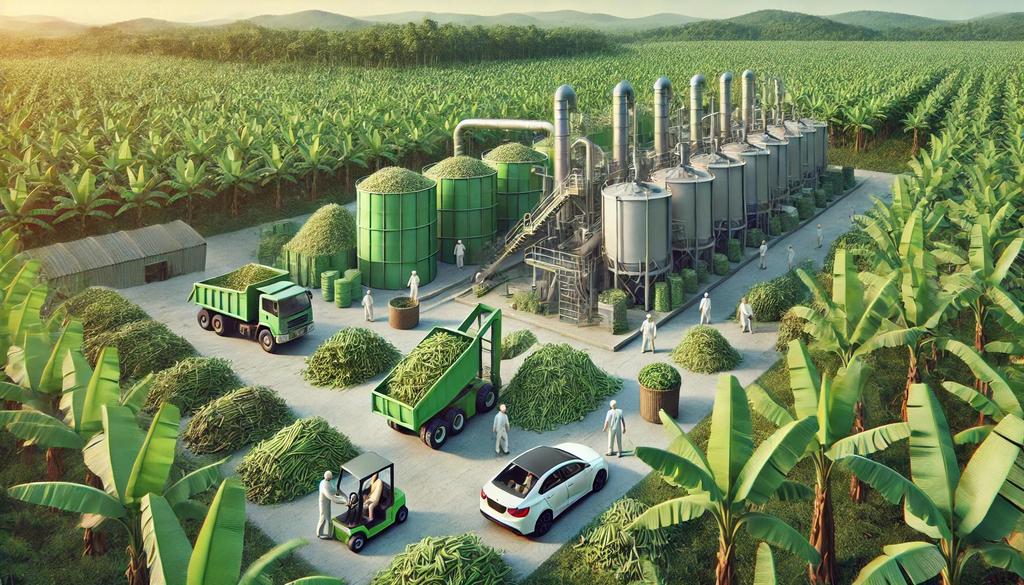
Using Banana Fiber Waste Promotes Green Practices
When it comes to creating a sustainable future, both environmental health and economic viability are crucial. Utilizing banana fibers in various industries offers promising solutions to address both aspects. As companies search for eco-friendly and cost-effective solutions, banana fibers stand out as a shining example of how we can align environmental responsibility with economic growth.
Reducing Carbon Footprint
Banana fibers are a renewable resource composed of biodegradable materials that break down naturally, leaving no environmental footprint. Unlike traditional materials like fiberglass or metals, which have substantial carbon emissions involved in their production and disposal, banana fibers offer a sustainable alternative that helps reduce greenhouse gas emissions. Using what was once considered agricultural waste, these fibers provide a dual benefit of waste reduction and resource efficiency.
Promoting Circular Economy
One of the key elements of a sustainable economy is the transition to a circular model, where waste is minimized and materials are reused, remanufactured, and recycled. Banana fibers exemplify this principle by turning the often-discarded banana plant pseudostem into valuable raw material. This transformation not only supports waste reduction but also promotes recycling and reusability. As industries adopt banana fibers, they contribute to a circular economy that values resource conservation and ecological balance.
Cost Benefits and Economic Opportunities
Economic benefits are an attractive aspect of adopting banana fibers. The fibers provide a cheaper alternative to synthetic and metal components, potentially reducing production costs in industries like automotive and construction. Additionally, because banana plants are widely cultivated globally, the use of fibers supports local economies by creating new markets and job opportunities in the agriculture and manufacturing sectors. This fosters economic resilience and community development, creating opportunities for sustainable business practices and partnerships.
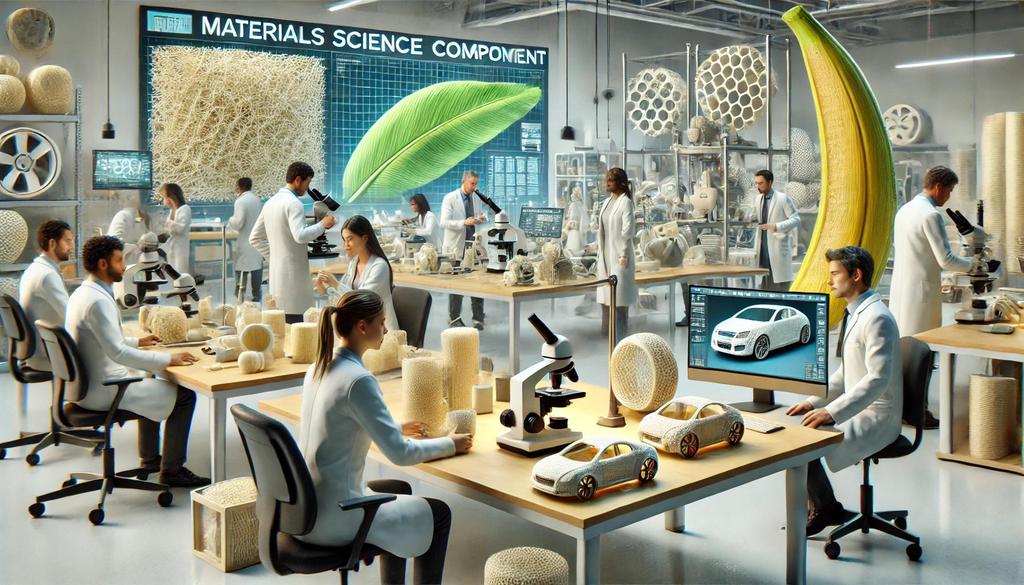
Future Prospects for Banana in Material Science
As innovation in material science progresses, banana fibers are poised to lead the charge toward sustainable manufacturing solutions across various industries. Their benefits and versatility open doors for further research and applications that could revolutionize how we approach sustainability.
Expanding Applications Beyond Automotive
While the automotive industry currently leads in using banana fibers, their potential applications extend far beyond. Researchers are exploring these fibers for use in sectors like aerospace, construction, and even consumer electronics. Their lightweight yet durable nature makes them ideal for crafting strong, resilient, and environmentally friendly products across these industries.
In the aerospace sector, the use of banana fibers can contribute to the development of fuel-efficient aircraft parts that reduce overall weight and increase load capacity without sacrificing strength. Similarly, in construction, banana fiber composites can enhance building materials, offering improved sustainability and longevity for urban infrastructures. As consumer electronics push towards more sustainable practices, incorporating banana fibers could revolutionize product design by introducing biodegradable components, thereby reducing electronic waste significantly.
Advancements in Processing Technologies
To fully harness the potential of banana fibers, ongoing advancements in processing technologies are essential. Techniques like nanotechnology and advanced composite manufacturing are being refined to enhance the fibers’ properties and broaden their applicability. Through scientific innovation, we are not only improving the quality of banana fiber-based materials but also expanding their uses in fields that demand higher performance standards.
Manufacturers can optimize production parameters by integrating machine learning and AI into processing systems, ensuring each batch of banana fibers meets high-performance criteria tailored for specific applications. Additionally, cutting-edge technologies like 3D printing are enabling the creation of complex banana fiber structures, pushing the boundaries of what’s possible in product design and material properties. This wave of innovation not only boosts the efficacy of banana fibers but also paves the way for customized solutions across a myriad of industries, from sustainable packaging to advanced medical devices.
Research Opportunities in Sustainability
The eco-friendly characteristics of banana fibers make them a focal point for future research into sustainable materials. Scientists continue to explore new ways to improve fiber extraction processes, enhance mechanical properties, and develop composites that meet specific industrial needs. As research progresses, we can anticipate a surge in innovative applications that further embed sustainability into our daily lives, from eco-conscious consumer goods to green building solutions.
Collaborative efforts between academia and industry are accelerating the development of hybrid materials that combine banana fibers with other sustainable resources, optimizing their ecological benefits while boosting performance. Researchers are also focusing on lifecycle assessments to quantify the environmental impact of banana fiber products, ensuring that they truly offer a greener alternative throughout their lifespan. As global initiatives push for reduced carbon footprints, banana fibers are increasingly seen as a viable component in achieving sustainable development goals.

Banana Fibers Leading the Way to Transformative Eco-Innovation
In the quest for sustainable innovation, banana fibers represent a remarkable victory for both environmental stewardship and economic pragmatism. They embody the principles of a circular economy, offering a renewable and biodegradable alternative to traditional materials that often harm our planet. As industries continue to seek out greener solutions, the potential of banana fibers cannot be overstated.
These fibers are more than just a sustainable resource; they are a testament to the remarkable capabilities of nature when paired with human innovation. By turning agricultural waste into a valuable material, we support ecological health and enhance economic stability. As our world moves forward, embracing technologies that harness the power of banana fibers will be crucial for achieving truly sustainable development.
The future shines brightly on the horizon with endless possibilities for banana fibers, from transforming how industries create and consume to advancing our collective understanding of sustainable materials. This humble fiber just might hold the key to a greener, more sustainable world for generations to come.


