
A surprising announcement was made at the United Nations General Assembly in September by President Xi Jinping: China is committing to achieve carbon neutrality before 2060. The pledge means the nation’s next five-year plan (2021-25) could be the most crucial document in global energy market history. The targets outlined in that report will be critical to reaching the long-term goal. It’s expected to be unveiled in March at the meeting of the National People’s Congress.
Gavin Thompson, Wood Mackenzie’s Asia-Pacific vice-chairman for energy, said:
China’s upcoming 14th five-year plan has the potential to be the most important document in the global energy market history. Increased investment in wind, solar, electric vehicles, and battery storage technology deployment will almost certainly feature, and we can expect support for green hydrogen and carbon capture technology.

China’s aim to reach net-zero carbon emissions within four decades would require an unprecedented transformation, given the country’s colossal contribution to global emissions and hefty dependence on fossil fuels. China is the world’s biggest emitter of CO2, accounting for almost 30% of global greenhouse gas emissions. Meanwhile, coal, oil, and natural gas account for about 85% of its energy mix, according to BP’s 2019 Statistical Review of World Energy. So, if the goal is delivered, the world would see the most significant reduction in projected global warming of any climate commitment yet, says research consortium Climate Action Tracker.
The Chinese president proclaimed as he called for a “green recovery” from the coronavirus pandemic:
China will scale up its intended nationally determined contributions [under the Paris climate agreement] by adopting more vigorous policies and measures.
According to consultancy firm Wood Mackenzie, the pledge could require over US$5 trillion of investments in renewable power generation capacity. The country is the global leader in manufacturing electric vehicles and the largest investor in renewable energy.
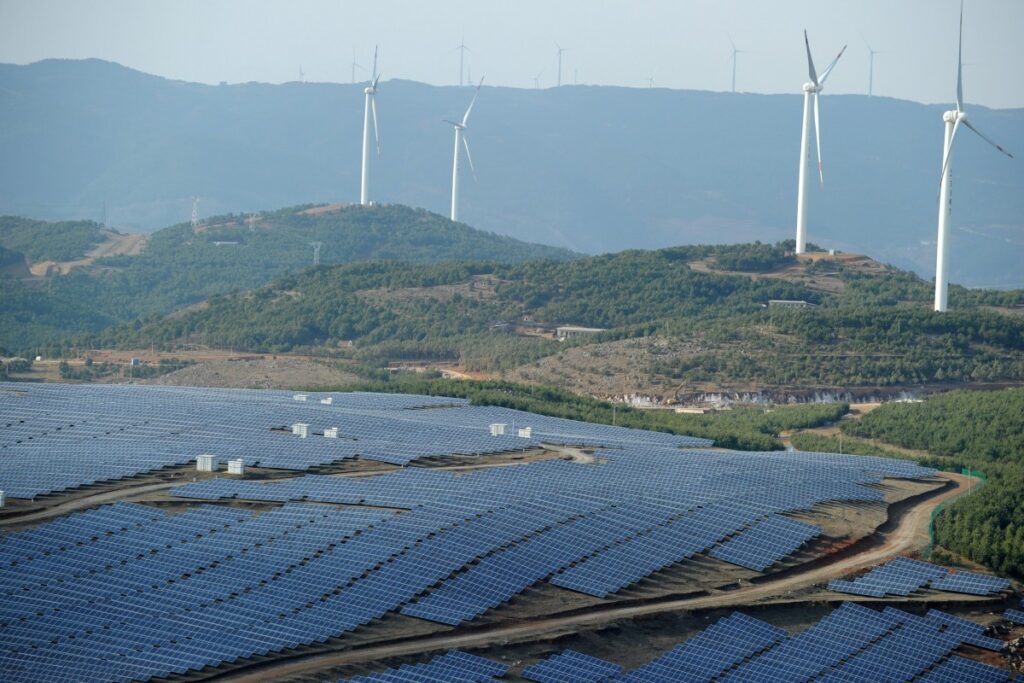
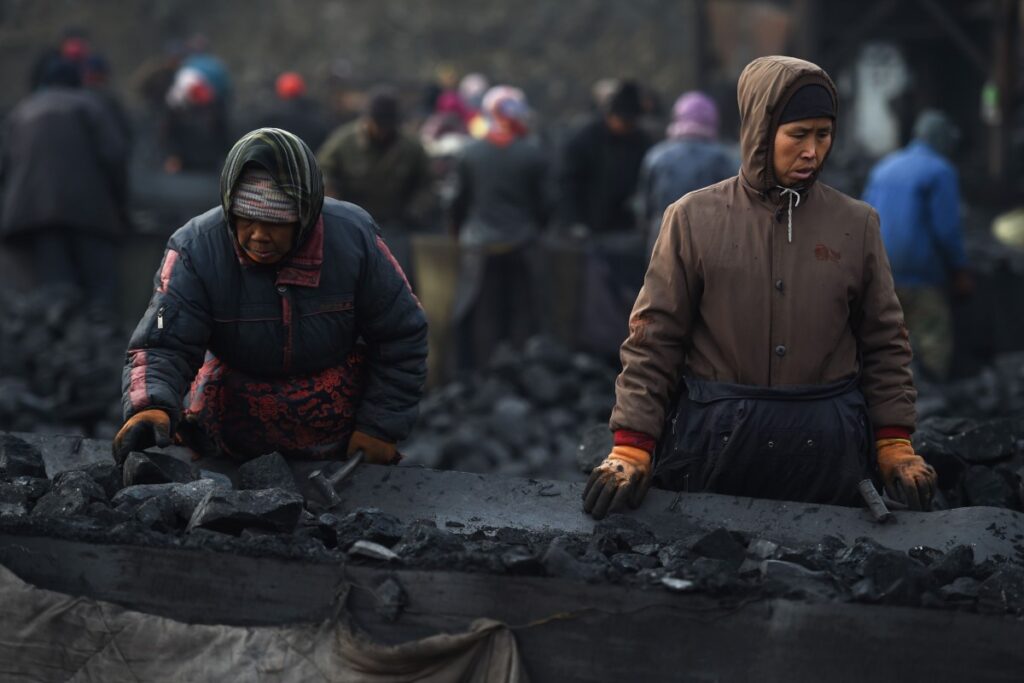
Naturally, a crucial factor of the transition would require that China loosens its reliance on coal. Even now, there has been a surge of new coal-fired power plant approvals as a solution to help the economy rebound from the COVID-19 crisis. And not only is it the world’s biggest consumer of the commodity, but it’s also the largest financer of coal energy abroad. However, it will have to halve its coal use (at least) if it intends to reach carbon neutrality.
Prakash Sharma, Woodmac’s Asia-Pacific head of markets and transitions, said:
The most challenging part of the shift is not the investment or magnitude of renewable capacity additions but the social transition that comes with it. Halving coal capacity will result in the loss of coal mining jobs, affecting provinces that depend on its revenues and employment generation.
Given China’s large, heavy industry and machinery sector, it is crucial that China masters the use of CCS … to offset the remaining emissions. Without it, China’s pledge to become carbon-neutral is nearly impossible.
Li Shuo, Greenpeace East Asia’s senior climate and energy policy officer, is skeptical. He said:
Xi’s pledge will need to be backed up with more details and concrete implementation. By how much earlier can China peak its emissions? How to reconcile carbon neutrality with China’s ongoing coal expansion? These are hard questions that demand a better response from Beijing.
But [the commitment] will certainly help turn a challenging year for the environment around and mark it as the beginning of a reinvigorated round of global climate efforts.
Regardless, Thompson is still hopeful. He believes that China can transform just by acknowledging how the country has changed its economy over the past 40 years. He said:
Of course, big questions remain. But if any country can achieve such ambitious goals, it will be China. Strong state support and coordination have proven extremely effective at reaching economic goals; if this is now directed towards climate change, then China is capable of transforming its carbon emissions trajectory over the coming four decades in exactly the same way it has transformed its economy over the past 40 years.
No matter what, emissions must start to fall drastically this decade to hold the planet within the 2°C threshold. This means no more carbon emitted than can be sequestered from the atmosphere by mid-century. China is one of the make-or-break-nations in this fate for sure.


