
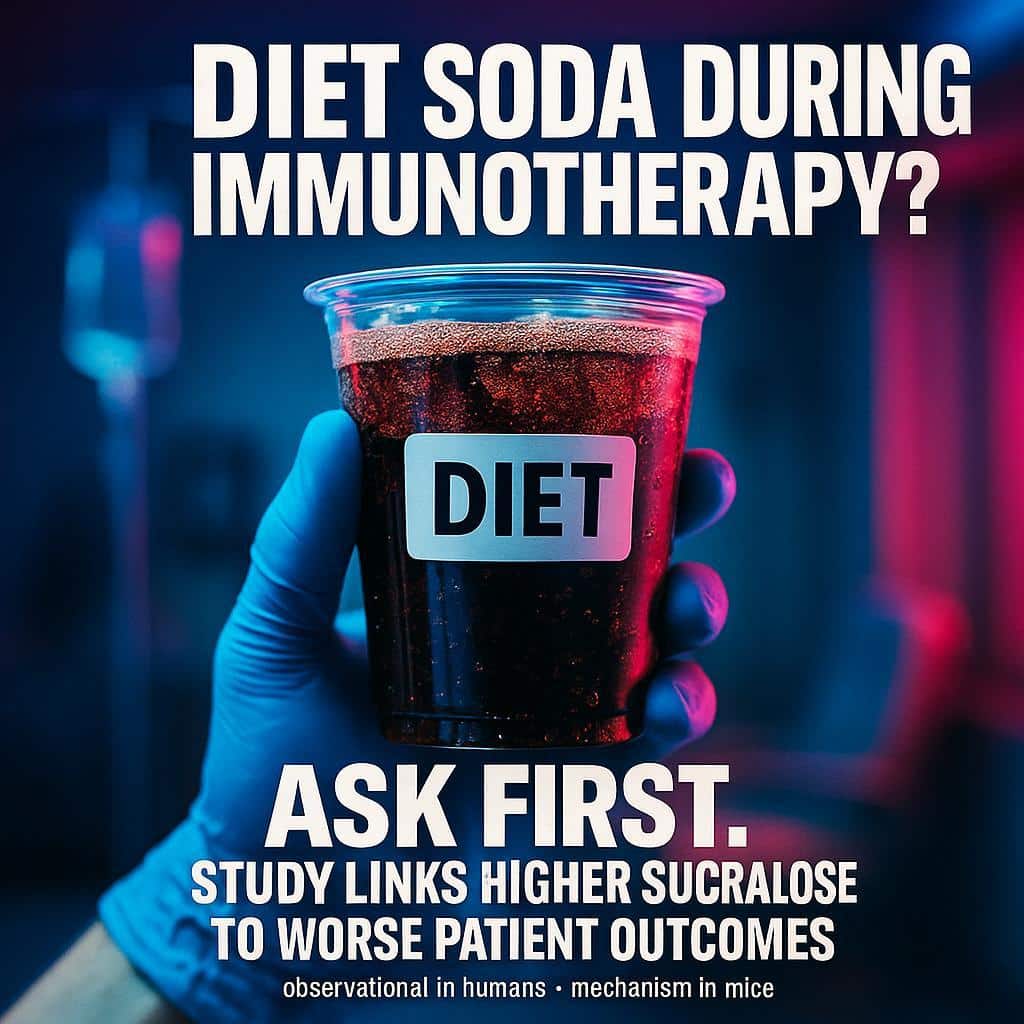
Could a common ingredient in diet drinks and sugar-free foods be undermining advanced cancer treatments? New research into sucralose and immunotherapy suggests a startling link. A 2025 peer-reviewed study found that patients consuming high levels of this nonnutritive sweetener experienced significantly poorer outcomes when receiving immune checkpoint inhibitors. This finding raises urgent questions about the hidden impact of dietary choices on oncology nutrition and the effectiveness of frontline cancer therapies.
The investigation didn’t just identify a correlation; it traced a precise mechanistic path. In laboratory models, exposure to sucralose was shown to disturb the gut microbiome, which subsequently caused a significant reduction in the amino acid arginine. This aspect is the key: T-cells, the primary weapon of immunotherapy, require arginine to function. The study found that this sucralose-induced arginine deficit led directly to weaker T-cell activity, effectively blunting the treatment’s power and providing a plausible mechanism for the poorer patient outcomes.

A New Conflict: Sucralose and Cancer Therapy
The complete technical record is available in an open-access paper in Cancer Discovery, which details both the human cohort findings and the laboratory evidence that form the foundation for this article’s claims.
Recent science news coverage has also summarized the combined human and mouse evidence, flagging the same arginine pathway. A concise overview from Reuters, for example, is available for a general audience.
The University of Pittsburgh research team emphasized that supplementation strategies require careful testing in patients before establishing clinical conclusions, particularly since all positive rescue data so far are from animal models.
Understanding ADI Versus On-Treatment Interactions
Because many readers rightly ask how “safe to eat” benchmarks apply during cancer therapy, this article also explains what an Acceptable Daily Intake (ADI) defines and why a population-level safety number does not automatically preclude therapy-specific interactions. The sections below reference both the U.S. Food and Drug Administration and the European Food Safety Authority for regulatory context.
Linked reporting is also available where it helps frame the broader diet–microbiome landscape. For instance, research has explored how certain sweeteners can disrupt microbial behavior, which offers useful background as you evaluate new findings. We also highlight stories on antibiotics and exercise, which illustrate other exposures with known microbiome effects.

The New Signal: Sucralose and Immunotherapy
The Connection Between Humans and Preclinical Pathways
First, patients with melanoma or non-small cell lung cancer who reported higher sucralose intake tended to have worse responses to immune checkpoint inhibitors, including lower response rates and shorter progression-free intervals.
Second, controlled experiments in mice linked sucralose exposure to a decrease in arginine availability within the tumor microenvironment, thereby impairing T-cell function upon which these medications depend.
Together, these lines of evidence create a coherent hypothesis that requires human intervention trials before any clinical practice changes.
What The Patient Cohorts Show
The clinical portion evaluated people receiving immunotherapy and used detailed food-frequency questionnaires to estimate sweetener intake. Higher sucralose consumers showed poorer outcomes on measures such as objective response and survival.
Observational designs cannot eliminate all confounding; therefore, the authors adjusted for key covariates and treated the findings as associative rather than causal. Independent health reporting clarified these associative findings for general readers, which can help patients and families interpret the data in context.
Dietary choices during treatment must be contextualized, as other variables can also influence the gut ecosystem linked to immunotherapy performance. Prior coverage has highlighted research connecting pre-treatment antibiotics with poorer outcomes, a reminder that multiple inputs can alter the microbiome in different directions.
The Mechanism In Mice: Microbiome → Arginine → T Cells
In mouse models, sucralose exposure altered microbial pathways that process arginine, a nutrient T cells need to multiply and function effectively. The resulting arginine shortfall correlated with signatures of T-cell exhaustion and weaker tumor control. When researchers restored arginine availability, immune cells recovered function, and checkpoint therapy became effective again. This mechanistic story fits with earlier work showing that high sucralose loads can restrain T-cell proliferation in mice, which strengthens biological plausibility even though it does not predict dosing or outcomes in people.
Prior reporting on exercise also provides additional context, as physical activity is another known modulator of microbiome health. Routine physical activity has been associated with beneficial changes in gut bacterial composition, which is one reason clinicians often recommend exercise plans tailored to a patient’s energy and safety limits.
Supplements In Context (Preclinical Only)
Arginine and its precursor citrulline restored therapy responses in mice exposed to sucralose, but this translation to humans remains unproven. The University of Pittsburgh research team has publicly noted that supplementation strategies should be evaluated in rigorously designed trials before any recommendations are made in clinics. Until these trials conclude, animal data generates a promising hypothesis about supplementation, not a validated patient strategy.
Readers who prefer to reduce reliance on high-intensity sweeteners in everyday life sometimes look to alternatives. An overview of allulose can help you compare options for regular use. This low-calorie sugar has been studied for metabolic benefits, but that choice remains a personal one to discuss with a care team, especially when active treatment is involved.
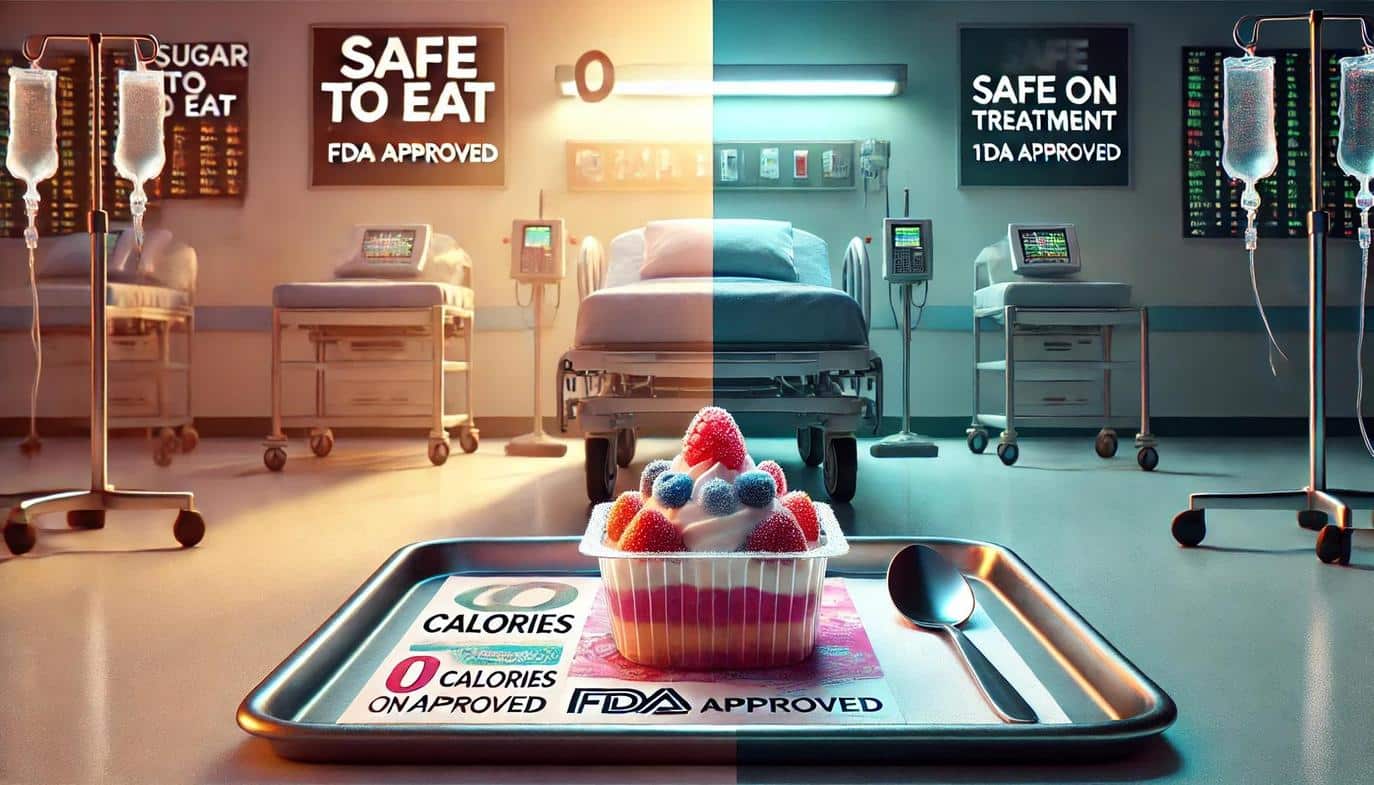
“Safe to Eat” Isn’t “Safe on Treatment”
Many consumers see an Acceptable Daily Intake and assume it answers every safety question. ADI is a population-level toxicology benchmark estimating a lifetime daily intake that poses no appreciable risk for the average person. It does not evaluate how a food ingredient might interact with specific medicines or disease states.
For sucralose, the FDA lists an ADI of 5 milligrams per kilogram of body weight per day, a number widely cited in consumer education materials. In Europe, the European Food Safety Authority historically set a higher ADI of 15 milligrams per kilogram per day and maintains a topic hub that explains how sweeteners are assessed within the broader food additive system.
Two Lanes Of Evidence You Should Not Mix Up
One lane addresses long-term population safety, which is where ADI belongs. The other lane concerns on-treatment interactions, such as the microbiome-arginine pathway highlighted by the new study. These two lanes can point in different directions without contradicting each other. An ingredient can meet population-level safety criteria and still require caution during a specific therapy. Oncology nutrition consults and individualized discussions with clinicians are essential for this reason.
Research has also explored how sweeteners can negatively alter microbial behavior. We have also explored lifestyle factors that may support a healthier gut environment.
Practical Takeaways Without The Hype
The new research on sucralose provides an important, evidence-based hypothesis, but it is not yet a clinical directive. For patients currently on immunotherapy, navigating these findings requires separating the preclinical mechanism from the immediate, practical steps.
- The new findings are important but preliminary for clinical decision-making, as the strongest causal evidence currently comes from animals.
- If you use sucralose regularly and are receiving immunotherapy, raise the topic with your oncology team and ask whether a dietitian consult could help you plan alternatives that fit your treatment plan.
- Be cautious about self-supplementation. Arginine and citrulline improved outcomes in mice, which justifies clinical trials rather than immediate adoption by patients.
- Consider broader gut-friendly habits that have independent evidence supporting them, such as building fiber-rich meals or maintaining an activity plan that suits your energy and safety needs.
- Reporting on antibiotics before immunotherapy provides a useful reminder that other exposures can matter as well.
- Keep an eye on ongoing research and updates from the same laboratories.
- ScienceDaily’s summary offers a plain-language on-ramp if you are sharing this topic with family members who prefer a quick read.
Ultimately, these takeaways should be used to facilitate a shared discussion with your oncology team. This allows you to personalize your nutrition strategy based on the most current data and your specific treatment plan.

Questions to Bring to Your Care Team
Use these prompts to start a practical, evidence-aware conversation with your oncology team. They are not medical advice and should be tailored to your treatment plan.
About My Current Intake
- How often am I consuming sucralose in drinks or foods, and does this frequency raise concerns during checkpoint therapy?
- Would you recommend reducing or replacing sucralose while I am on treatment, and if so, what alternatives fit my plan?
- Can I meet with a registered dietitian to build a simple, fiber-forward plan that supports gut health?
A background explainer on high-fiber patterns can help frame options for daily meals.
Treatment Context and Interactions
- Which immune checkpoint inhibitors am I receiving, and are there known nutrition considerations for these medicines?
- I recently used antibiotics. Does that timing matter for my therapy or for any diet decisions we are discussing?
- Are there any clinic-approved approaches for supporting a healthy microbiome during treatment?
Supplements and Trials
- Are there clinical trials here or nearby that are studying arginine or citrulline in patients on immunotherapy?
- If a trial is available, what eligibility criteria, monitoring, and potential risks should I understand first?
- Outside a trial, should I avoid self-supplementation while we wait for clinical data, and what signs would trigger a different approach?
Monitoring and Follow-Up
- Would a simple food and beverage log help us personalize decisions at my next visit?
- Which symptoms or lab values should I track or report that might relate to nutrition during therapy?
- Can our care team coordinate nutrition guidance with my overall treatment calendar so changes are easy to follow?
What’s Known Versus Unknown (Comparison Table)
| Evidence Type | What the Research Shows | What it Does Not Establish Yet | How to Interpret Today |
|---|---|---|---|
| Human observational data in immunotherapy cohorts | Higher reported sucralose intake is associated with poorer response and survival measures | Causation, safe thresholds, and patient‑level rules | Treat as an important signal to discuss with clinicians; decisions should be individualized |
| Animal mechanism studies (mice) | Sucralose exposure shifts microbial pathways that reduce arginine availability and weaken T‑cell function | Exact human dose translation and direct prediction of clinical outcomes | Supports biological plausibility; encourages careful human trials |
| Supplement rescue in mice | Arginine or citrulline restored checkpoint therapy effectiveness after sucralose exposure | Proof of benefit or safety in patients, optimal dosing, and who would benefit | Do not self‑supplement outside trials; watch for clinical protocols |
| Regulatory ADI benchmarks (FDA, EFSA) | Population‑level safety limits for lifetime daily intake | Guidance for on‑treatment interactions or oncology‑specific decisions | ADI can coexist with therapy‑specific caution; ask how it applies to your case |
| Short‑term human sweetener studies | Mixed effects on metabolism and microbiome depending on design | Relevance to cancer treatment outcomes and long‑term use during ICIs | Interpret carefully; these studies do not answer therapy questions on their own |
| Clinical practice guidance | No consensus recommendations specific to sucralose during ICIs yet | Standard of care directives for patients | Use shared decision‑making with your team and consider dietitian support |
Final Takeaways: Navigating Diet and Immunotherapy
The research on sucralose and immunotherapy highlights a crucial distinction: population-level safety (ADI) does not guarantee compatibility with specific medical treatments. Observational data link higher sucralose intake with poorer immunotherapy outcomes. Preclinical models present a credible explanation: a disturbance of the gut microbiome resulting in arginine deficiency and impaired T-cell functionality. This evidence is associative, not yet causal, but it provides a strong basis for a conversation with a care team.
Patients and families can best utilize this information as a tool for collaborative decision-making. The most practical step is to review your sucralose intake with an oncology dietitian and discuss personalized alternatives that support your treatment goals. While supplementation trials for arginine are pending, the immediate focus can be on gut-friendly habits and clear communication with your clinical team. This ensures your diet actively supports, and never complicates, your care.

Frequently Asked Questions About Sucralose and Cancer Treatment
Is It Safe to Use Sucralose During Immunotherapy?
Current research suggests caution. Observational studies have associated high sucralose intake with poorer outcomes for patients on immune checkpoint inhibitors. While this is not yet a causal link, it is a significant signal to discuss with your oncologist or a registered dietitian.
Why Would Sucralose Affect T-Cells?
Preclinical models in mice suggest a specific pathway: sucralose may alter gut bacteria, which in turn reduces the availability of arginine. Arginine is a critical amino acid that T-cells need to function effectively. A lack of arginine is linked to T-cell exhaustion, a state of dysfunction that weakens the immunotherapy response.
Should I Start Taking Arginine Supplements?
No, self-supplementation is not recommended. The data showing arginine supplementation can “rescue” the T-cell response comes from animal models. Human clinical trials are needed to determine if this strategy is safe or effective for patients. Always consult your care team before starting any new supplement.
What is the Difference Between ADI and On-Treatment Safety?
An Acceptable Daily Intake (ADI) is a regulatory benchmark for the general population, estimating a safe lifetime exposure. It does not account for specific drug interactions. A food ingredient can be “safe” for general consumption but still interfere with a specific medical therapy, which is the concern highlighted by this new research.


