
When a lightning strike hits a stretch of sand, it leaves behind a hard, glassy tube formed in a split second—a natural phenomenon that proves electric sand is more than just a cinematic concept. This rare transformation of loose silica into a solid mass is actually a window into the future of low-carbon concrete. It raises a compelling question: can we harness this same power to fundamentally reshape how we build our world?
The real excitement isn’t about stacking buildings with electrified sand blocks. Instead, the focus is on whether electrified materials science can drive the cement decarbonization needed to clean up one of the planet’s most carbon-heavy industries. Moving from the curiosity of lightning glass to a scalable low-carbon concrete infrastructure isn’t a gimmick; it’s a blueprint for how smarter chemistry and renewable power will soon redefine our built environment.

Essential Facts on Electric Sand and Low-Carbon Concrete
Studying the interaction between raw energy and the earth allows us to better predict the evolution of industrial systems. These findings highlight the potential for merging ancient physics with modern infrastructure.
- Lightning can fuse silica grains into hard, glassy tubes, proving that electricity can rapidly solidify sand.
- Cleanup technologies can use electric current to melt soil and cool it into a durable glass-like mass.
- Industrial producers already rely on electric fusion to make fused quartz and specialty silica products.
- The real climate issue in concrete is that cement drives a large share of the material’s global carbon footprint.
- Fast electric densification methods hint at shorter manufacturing routes for future mineral building products.
A clear pattern emerges from these data points. If we can manipulate minerals at a granular level, we can significantly reduce the energy needed for traditional manufacturing. This shift represents the first step toward a more circular and electrified construction model.
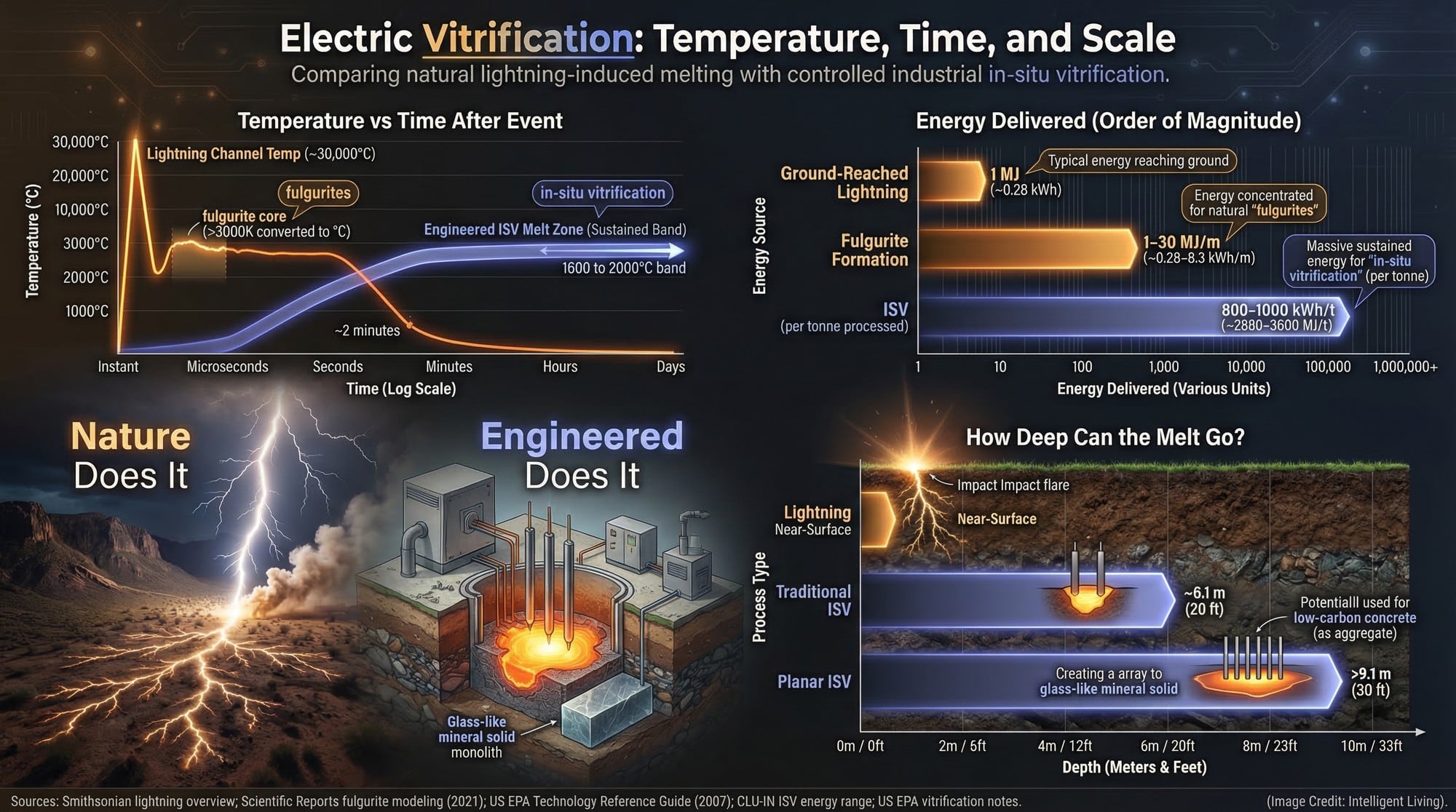
How Electricity Vitrifies Sand: Nature and Engineered Methods
Lightning Already Did It
Formation and Structural Properties of Natural Fulgurites
A lightning bolt is nature’s most dramatic materials experiment. When it strikes dry sand, the energy is intense enough to melt silica grains and freeze them back into hollow, glassy fulgurites created through intense thermal energy. For a general reader, that is the cleanest proof that electricity can turn loose sand into a solid object.
The Physics of Melting Silica into Amorphous Glass
Crucial to this process is the realization that lightning-fused sand is chemically closer to glass than conventional stone. Because sand is silica-rich, rapid melting and cooling produce an amorphous solid instead of a structured crystal. Simply put, the result is a stony mass that shares more DNA with hardened glass than traditional sandstone or granite.
A simple real-world comparison helps. After a violent summer storm, a person walking a dune line might notice a twisted tube jutting out of the sand. Most would assume some kind of pipe was buried there.
Such confusion makes the science easy to picture. The result looks manufactured even though nature did it first.
Limitations of Natural Fulgurites in Modern Building
These examples prove that electricity vitrifies silica, yet a lightning-made tube cannot replace structural concrete, reinforced masonry, or engineered stone without a lot of additional design. While lightning serves as a natural proof of concept, duplicating this effect requires controlled industrial environments.
The Engineered Version: Turning Earth into Glass With Electricity
In Situ Vitrification for Environmental and Material Control
Engineers have already built a controlled version of the lightning trick. In environmental remediation, practitioners use in situ vitrification to melt soil into a glass-like mass by placing electrodes directly into the ground.
A targeted electrical current heats the earth until it cools into a dense block. While the original purpose was pollution control, it proves that electricity can transform loose granular material at a meaningful scale.
Electric Fusion Techniques for High-Purity Technical Glass
Producers of specialty materials already utilize electric fusion of high-purity silica to create fused quartz and technical glass for industrial applications. Specialized equipment turns the idea from a natural curiosity into a repeatable industrial practice.
An operator on a cleanup site once described vitrified ground as looking like the earth had been switched off and recast overnight. That image lands because it captures what electric melting really does. A loose, dusty surface becomes a hard mass with an entirely different structure.
Future Implications for Builders and Sustainable Architecture
Electricity already changes mineral materials in deep ways. The pressing question is whether these transformations can achieve the affordability, speed, and structural utility required to solve modern construction challenges.
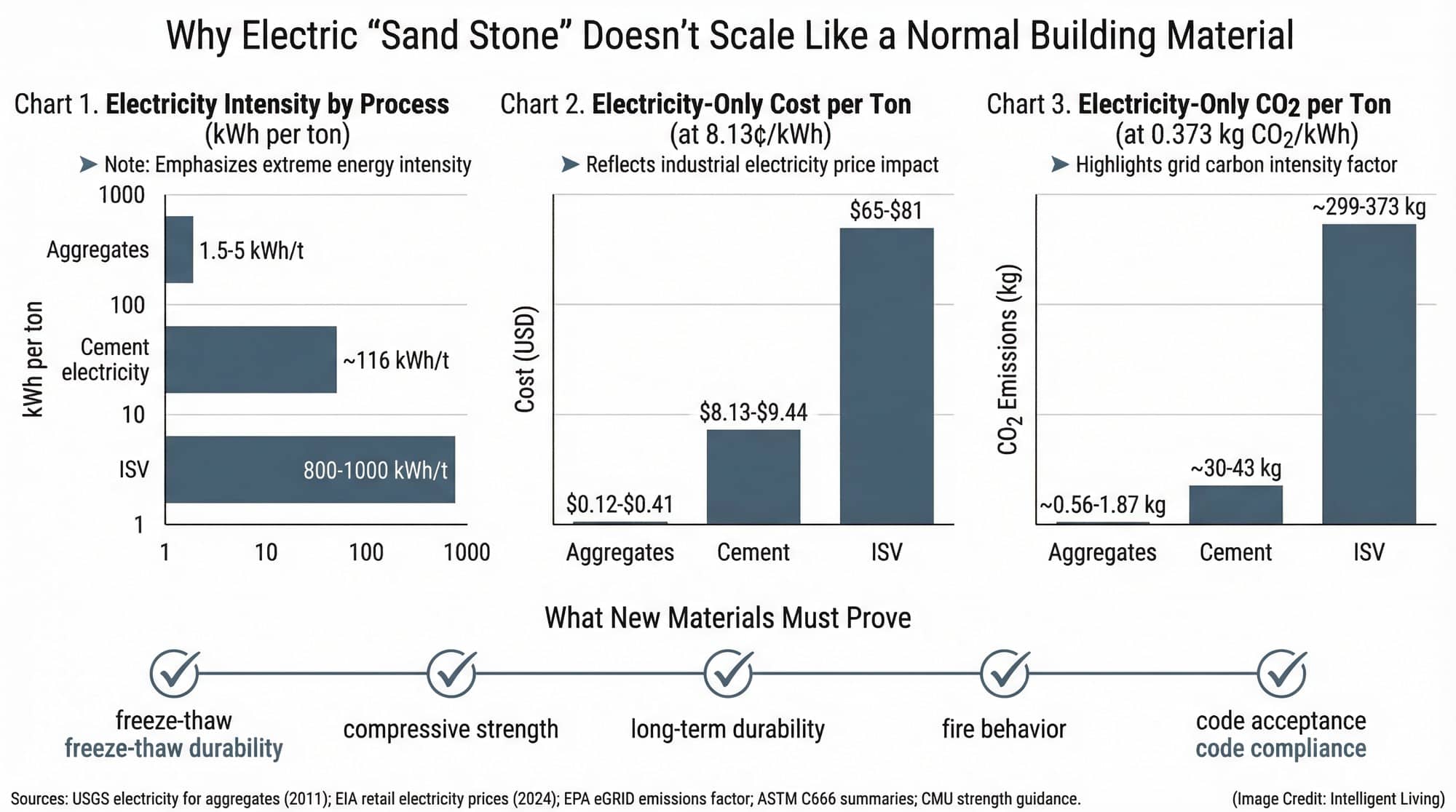
Economic and Technical Barriers to Scalable Electric Stone
So Why isn’t Electric Sand Stone Everywhere Already?
Energy Demands and Economic Constraints of Silica Melting
Melting silica takes a lot of energy. Lightning delivers that energy in a burst that people never have to pay for, but industry has to buy electricity, build equipment, and control the process safely. High overhead and operational complexity keep vitrified sand relegated to a niche concept rather than a mass-market alternative for standard aggregate or masonry.
Safety Standards and Compressive Strength Requirements
Construction is a conservative field for good reason. Materials need verified compressive strength, freeze-thaw durability, fire behavior, and long-term performance data before they become standard practice. A contractor deciding between a familiar concrete block and a new electrically fused mineral product will almost always choose the material with decades of code history behind it.
Prioritizing Cement Decarbonization Over Sand Modification
While high-concept innovations like electric stone capture public imagination, the most significant industrial opportunities often reside in less visible sectors. In most concrete, sand is not the main climate problem. Cement is.
Cement Production: The Core Driver of Concrete Emissions
Concrete consists of aggregate, water, and cement paste. Although gravel and sand dominate the material’s volume, the environmental burden rests almost entirely within the binder. A widely cited estimate shows that cement production emissions account for roughly 7 to 8 percent of global carbon dioxide output, which is why the industry’s climate story cannot be understood through sand alone.
That footprint comes from two places at once. Factories burn fuel to reach the extreme temperatures needed for clinker production. Simultaneously, the chemistry of heating limestone releases additional CO2 before the final cement is even blended or shipped.
When readers ask what electric stone could mean for concrete, the answer is clear. The bigger story is not just electrified sand. It is whether electricity can help cut the emissions tied to cement. Industry leaders are therefore focusing on blends that minimize fresh clinker to achieve immediate low-carbon milestones. Mixes such as hybrid waste concrete, which combines supplementary materials with recycled plastics, demonstrate how design choices can reduce impacts immediately.
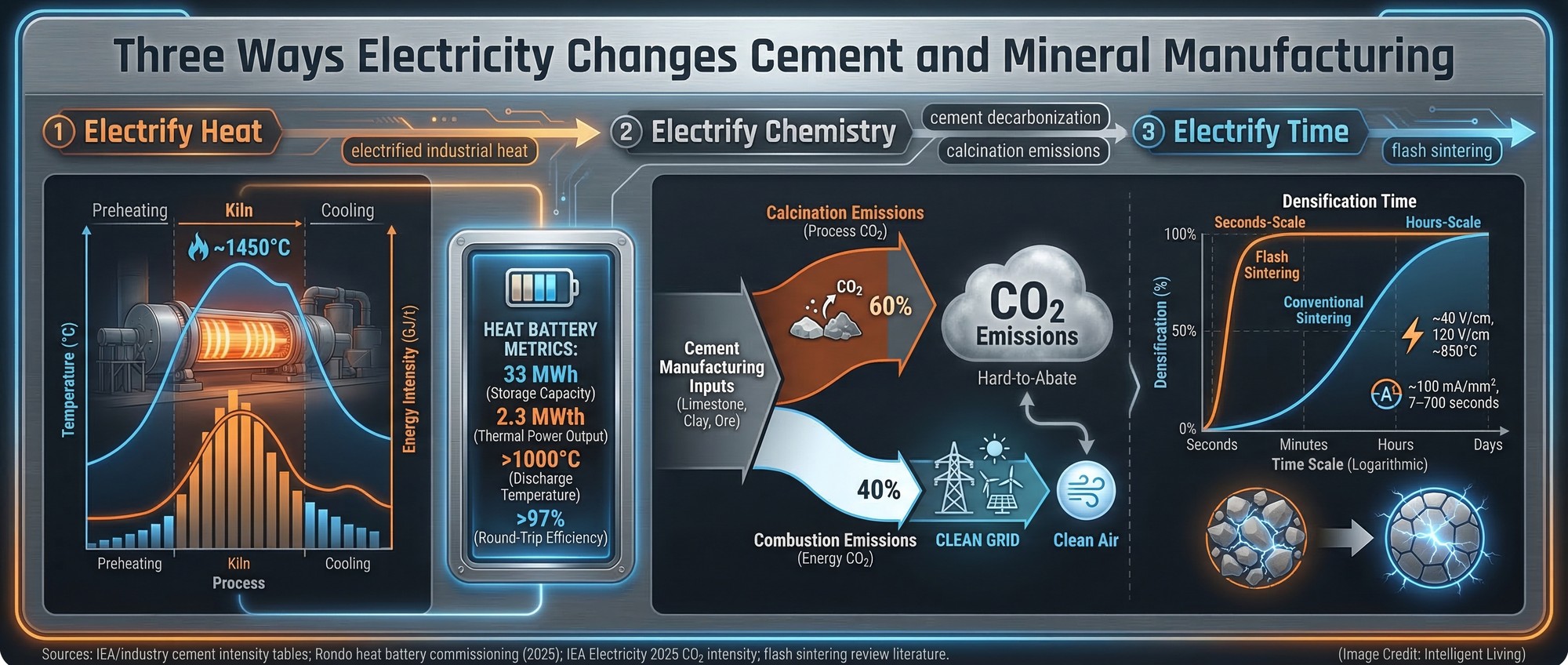
Electricity’s Role: Decarbonizing Cement and Fast-Track Manufacturing
Electrifying Heat for Sustainable Cement Production
Replacing Fossil Fuels with High-Temperature Electric Heat
A primary strategy involves a direct swap: replacing fossil-fuel combustion with high-efficiency electric heating. Cement plants need steady, high-temperature energy. However, supplying this from intermittent renewable power alone is difficult.
Industry experts focus on heat storage to solve this problem. Early deployments of industrial heat batteries linked to cement operations show a realistic path for heavy industry to transition to steady thermal energy.
Electrochemical Pathways to Lower Carbon Cement Recipes
The more radical route is to use electricity not just as a heat source but as a chemical driver. Some emerging electrochemical cement pathways replace extreme kiln heat with electrical current, effectively rewriting the recipe rather than just upgrading the oven.
Recognizing this distinction is critical because while fuel switching is valuable, fundamental chemical shifts address both energy consumption and process-related emissions simultaneously. It is still early, but the field is widening through green cement innovations built around alternative binders and cleaner chemistry.
Stone in Seconds: The Future Factory Idea
Electricity may also change how solid materials are manufactured in the first place. Research on flash sintering shows how an electric field can rapidly densify ceramic powders in seconds.
Think of this mechanism as volumetric heating. Instead of slowly baking a material from the outside, electricity can trigger fast, concentrated energy delivery through the material itself. Entire skyscrapers will not be made this way anytime soon, but specialty parts, repair materials, or prefabricated mineral components could eventually be made with shorter processing times and tighter control.
A lab technician once compared the process to watching dust suddenly decide to behave like a solid. That description is not technical, but it captures the sensation. The transformation is fast enough to feel almost unreal even though the science is well documented.

Scalable Solutions for Reducing Concrete Carbon Footprints
Scalable construction improvements typically emerge from a combination of smaller, coordinated successes. Electric sand makes a powerful headline, but cleaner construction will probably advance through many smaller wins working together.
Upgrading Industrial Waste into Concrete Additives
Electricity excels at transforming carbon-heavy waste into high-performance additives, exemplified by flash Joule heating that turns tire waste into graphene for stronger concrete. Optimized mixes can often deliver the same performance with less material.
Extending Service Life Through Material Durability
Improved durability serves as a potent climate lever; by minimizing cracking and extending service life, these materials compound emissions savings over several decades. Self-healing concrete deserves attention for its ability to repair microcracks while extending the functional lifespan of infrastructure using specialized self-healing concrete.
Broadening the Scope of Alternative Mineral Binders
Alternative binders and mineral substitutions also broaden the picture. New research explores olivine-based concrete designed to absorb carbon during the curing process. Another path uses biogenic limestone made by microalgae as a substitute for mined limestone filler as a replacement for traditional mined filler. These directions point toward a future where concrete chemistry is far more diverse than the Portland cement model we often assume is permanent.
Circular Recovery and Material Demolition Feedstocks
Even circular material recovery is starting to look more serious. New work focuses on utilizing recycled concrete fines as lower-carbon cement feedstock. Such advances suggest that yesterday’s demolition waste could become part of tomorrow’s binder supply rather than being dumped.
Experiments in recycled concrete strengthened with wood-derived binders reinforce this shift toward circular construction. These projects push circular construction far beyond simple reuse.
A consistent theme connects these advances. The fastest gains will likely come from making concrete cleaner, stronger, more durable, and more circular long before electrified sand blocks become routine building products.
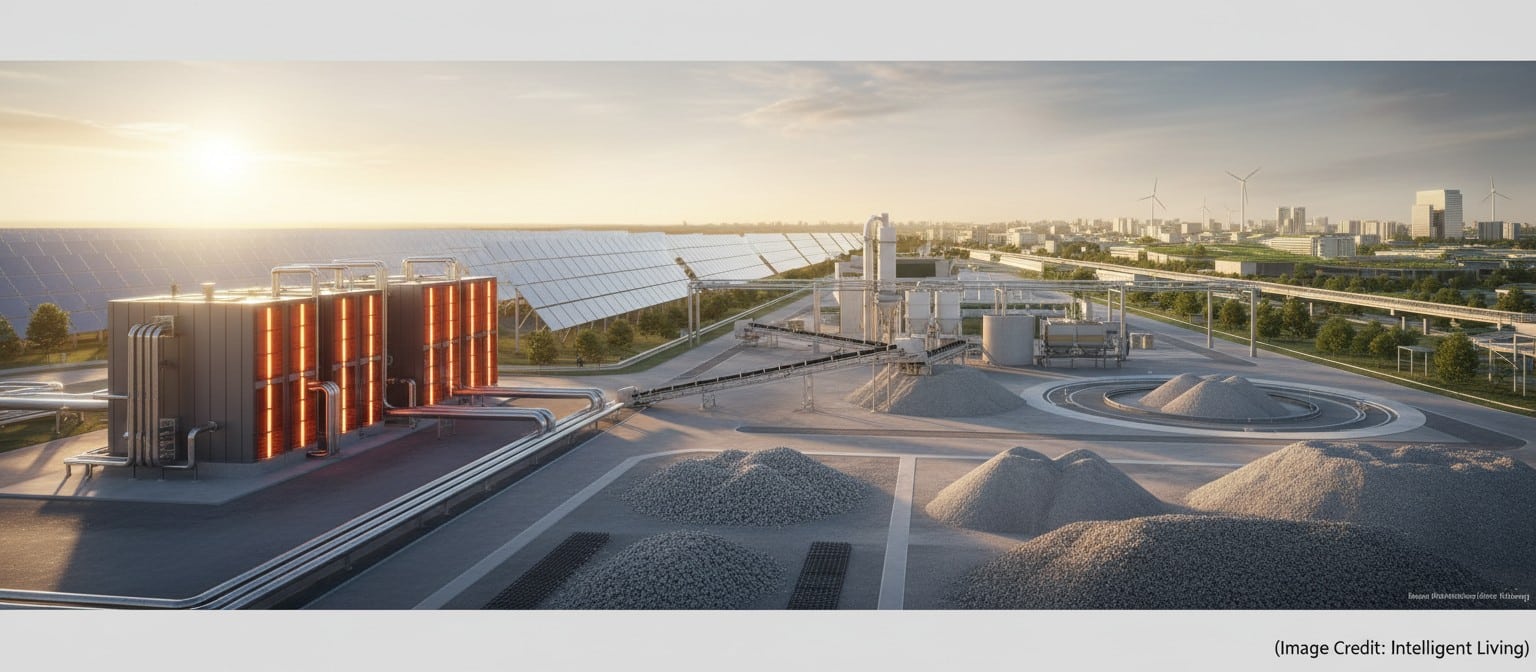
The Multi-Faceted Strategy for Low-Carbon Construction
While the idea of turning sand into stone with a single electrical charge is captivating, the real revolution in construction will be a combined effort. Nature proves the physics of electric sand through fulgurites, and industrial electric fusion shows we can scale the process. However, the path to a sustainable future relies on a diverse portfolio: integrating cleaner industrial heat, evolving cement chemistry, and utilizing circular mineral waste.Harnessing electric sand and low-carbon concrete technologies can revolutionize construction through cement decarbonization and cleaner industrial heat.
The future of our infrastructure doesn’t hinge on a single miracle invention but on a system that becomes smarter and more electrified from the inside out. For builders and architects, the true opportunity lies in this transition toward low-carbon concrete and efficient materials. We are moving away from the static methods of the past and toward a construction model that is as dynamic and innovative as the natural lightning that first showed us what was possible.
Electric Sand and Low-Carbon Concrete FAQ
Is electric stone actually stone or glass?
It usually behaves more like glass. When silica melts and cools rapidly, it forms an amorphous solid rather than the crystalline structure found in natural rock.
Can we use desert sand for construction with this method?
Technically, yes, but energy costs and strict structural standards currently keep this as a specialized solution rather than a replacement for standard aggregates.
Why is cement the main focus for carbon reduction?
Cement production is the carbon hotspot because the chemical process of heating limestone and the fossil fuels used in kilns drive nearly 8% of global emissions.
How does electricity make cement cleaner?
Electricity can replace fossil fuels for high-temperature heat and power electrochemical pathways that bypass the traditional carbon-heavy kiln recipes.
What is the most practical low-carbon concrete solution today?
The immediate gains come from using lower-clinker mixes, recycled mineral additives, and industrial heat batteries to decarbonize the manufacturing process.


