
For now, taking hostages, torturing prisoners, or enlisting child soldiers are considered war crimes, but harming the environment may soon be on the list too. 24 prominent scientists from around the world signed an open letter and had it published in the journal Nature. The letter calls for a new Geneva Convention that would hold governments responsible for the environmental damage their militaries inflict in war zones. “We call on governments to incorporate explicit safeguards for biodiversity,” the letter says. “And the military industry must be held more accountable for the impact of its activities.”
The scientists have chosen the time to voice their demands wisely. They published the letter to publicly making the case for adopting a new Geneva Convention right before UN’s International Law Commission – a week-long meeting to explore how it might expand on the 28 principles already in place to keep nature safe during war. The UN could then include the demand as part of that effort.
There’s also the fact that it’s become increasingly clear that our planet is facing an urgent biodiversity crisis. The UN just wrote up a report announcing that 1 million species – from plants to birds to mammals – are now at risk of extinction. The species are vanishing at a rate “tens to hundreds of times higher than the average over the last 10 million years” because of human activities — like war.
 War takes a brutal toll on wildlife but nations are often too busy thinking about the human costs of the conflict to spare much thought for the cost to the natural world. Yet, war is absolutely devastating to the environment as much as it is to the people. For example, in Africa, the number of elephants can decline by 90% during war. Like when Mozambique underwent a 15-year civil war, their national park lost 90% of its wildlife.
José Brito of the University of Porto, who signed onto the letter in Nature, said:
The impacts of armed conflict are causing additional pressure to imperilled wildlife from the Middle East and north Africa. Global commitment is needed to avoid the likely extinction of emblematic desert fauna over the next decade.
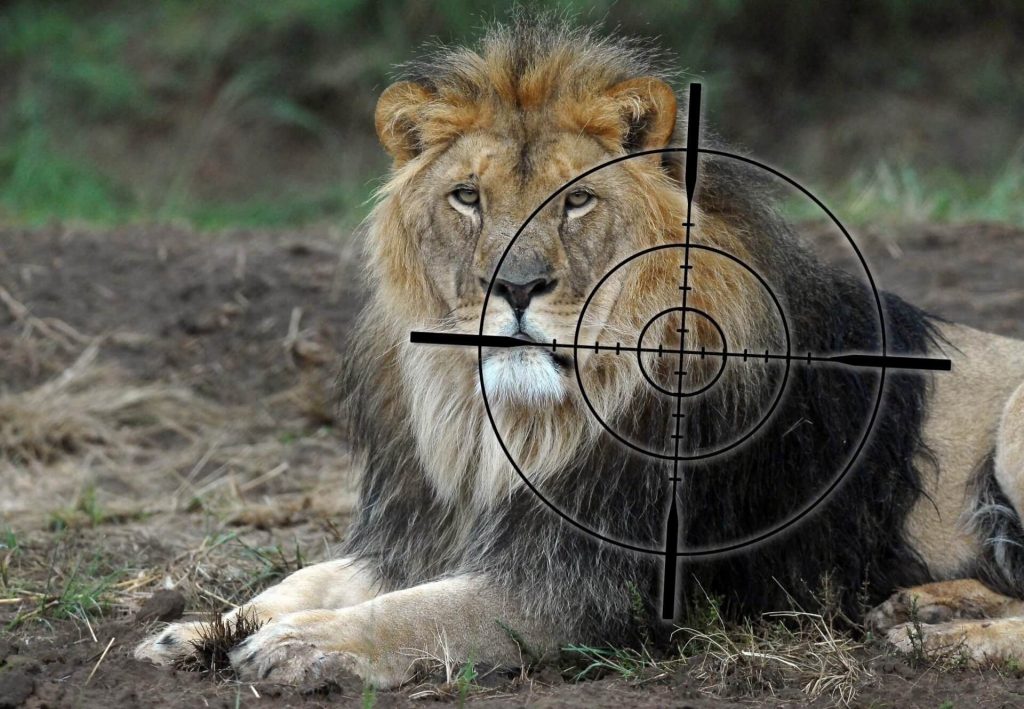
Part of the reason for this (apart from not having the wherewithal to make conservation a priority) is that more guns spread across a country in wartime, enabling more illegal hunting. Therefore, included in the letter, the signatories want international law to protect wildlife, including on nature reserves, and to better control the spread of firearms used to hunt animals.
 Calls for a new legal instrument that would hold governments criminally responsible for wartime environmental damage is nothing new. It’s actually been around for two decades! As The Guardian reports:
Work in this field began in the 1990’s after the Iraqi military set fire to more than 600 oil wells during a scorched-earth retreat from Kuwait in 1991, but the idea dates back at least to the Vietnam war, when the US military used Agent Orange to clear millions of hectares of forest with dire consequences for human health and wildlife.
More recently, the effects of conflict have been evident in the Sahara-Sahel region, where collapsing populations of cheetahs, gazelles and other species have been linked to the spread of guns following Libya’s civil war. Battles in Mali and Sudan have resulted in a rise in the number of elephant killings.
Nevertheless, the number of Geneva Conventions has remained stuck at four with the calls for the addition of a fifth Convention to protect the environment being ignored. Yet, Sarah Durant from the Zoological Society of London, another signatory, remains optimistic especially now as the notion that nature deserves its own legal rights has been gaining ground in recent years. In an interview with the Guardian she said:
The brutal toll of war on the natural world is well documented, destroying the livelihoods of vulnerable communities and driving many species, already under intense pressure, towards extinction. We hope governments around the world will enshrine these protections into international law. This would not only help safeguard threatened species, but would also support rural communities, both during and post-conflict, whose livelihoods are long-term casualties of environmental destruction.


