
Choosing between a gaming phone and a handheld Windows PC is a lifestyle decision, not just a spec-sheet showdown. It is a choice that blends battery endurance, comfort, noise, portability, and the types of games you play into your daily routine. If your day is full of short play sessions, a bright phone display that slips into a pocket feels perfect. If you want to dive into full PC libraries and mods on the couch, a handheld rig makes more sense.
This comparison is grounded in data from primary sources, including official specifications, platform documentation, and benchmark testing guidance from device owners. We also weave in context on how mobile play has evolved and how to set up home gear that complements your choice.
A quick map of our comparison set:
- Phones:
- ASUS ROG Phone 9 Pro
- Samsung Galaxy S25 Ultra
- REDMAGIC 10 Pro
- Handheld PCs:
- ASUS ROG Ally X
- Steam Deck OLED
- AYANEO KUN
For those new to this hardware space, some context is helpful. Mobile gaming has shifted from lightweight browser experiences toward richer, device-optimized apps, which changed expectations for performance, input, and battery behavior. A primer on the mobile gaming evolution from browser to app is useful to understand why modern phones punch so far above their weight.
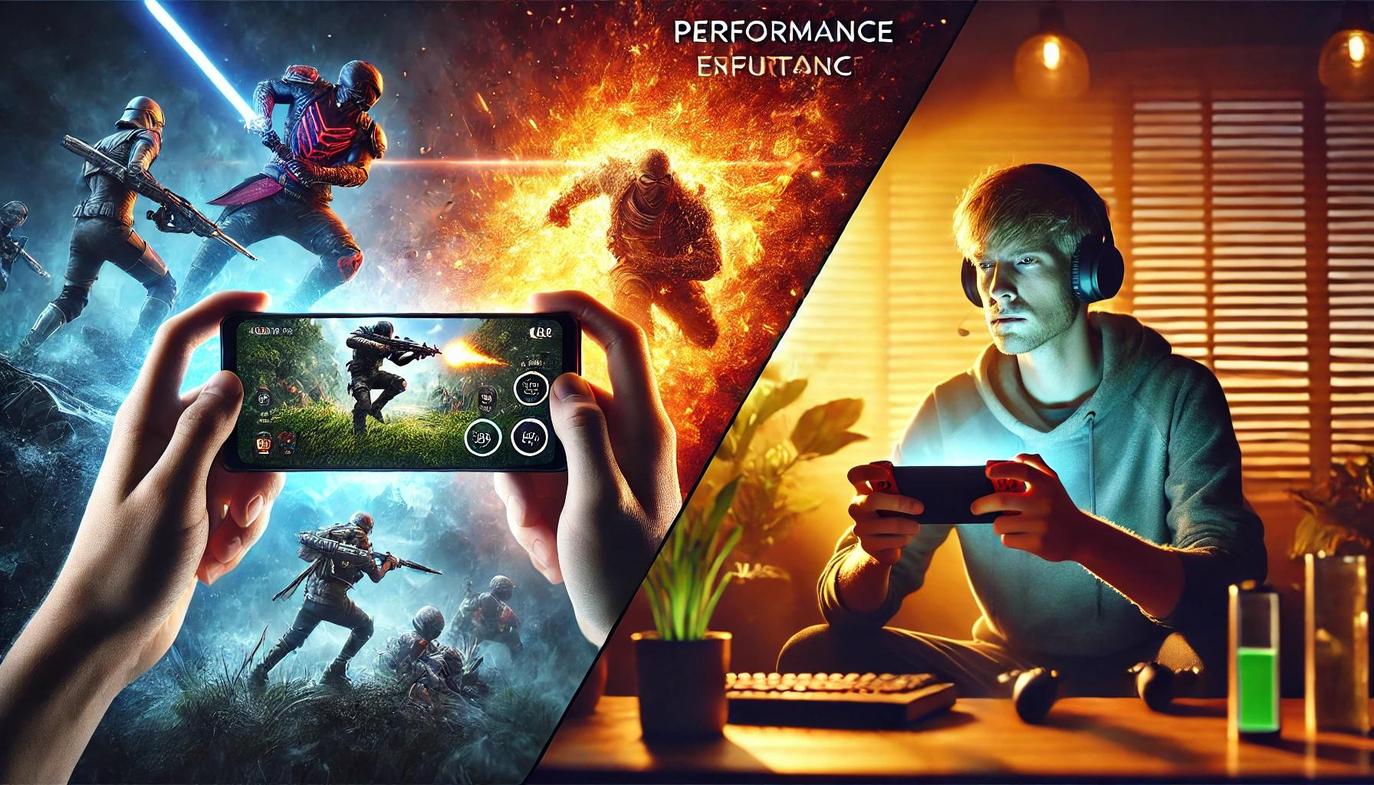
Sprinting for Performance vs. Running a Battery Marathon
A Simple Decision Framework
It is helpful to think of the core trade-off in simple pairs. A performance sprint delivers the fastest, most flexible experience in shorter bursts that you can shape with settings and power targets. In contrast, a battery marathon prioritizes the longest unplugged sessions with the least amount of friction. A gaming phone is the easy win if your day includes long commutes and quick breaks. A handheld rig earns its keep if your nights include couch sessions with Steam or Xbox PC.
Profiles With Clear Recommendations
Commuter and Traveler
Pick a gaming phone with a large battery and high-brightness AMOLED. Add a compact controller for better aim and comfort. Rapid charging capabilities allow for convenient battery top-ups during short breaks. A model like the REDMAGIC 10 Pro is built for this pattern with an active fan and rapid charging.
Couch Player and Library Explorer
Choose a Windows handheld PC if you want PC libraries, mods, and emulators within clear legal boundaries. The ROG Ally X brings a large battery and high-refresh screen, while the Steam Deck OLED offers a vivid HDR-capable display that looks excellent in darker rooms.
Cloud-First Minimalist
Either format works. A phone with a stable connection and a nice controller feels effortless. A handheld PC gives you more ports and desktop apps to manage streaming and capture.
Creator and Tinkerer
Go PC handheld. NVMe upgrades, controller remaps, and power-profile tools are part of the fun. Devices like AYANEO KUN offer large batteries and high TDP ceilings for experimentation.
Closing Guidance You Can Use
Match the device to the longest part of your day. If you mostly play out in the world, the battery marathon matters more. The performance sprint pays off if you mostly play at home. When you are ready to make a space for whichever route you choose, pull ideas from gaming industry innovation and home gaming hubs.
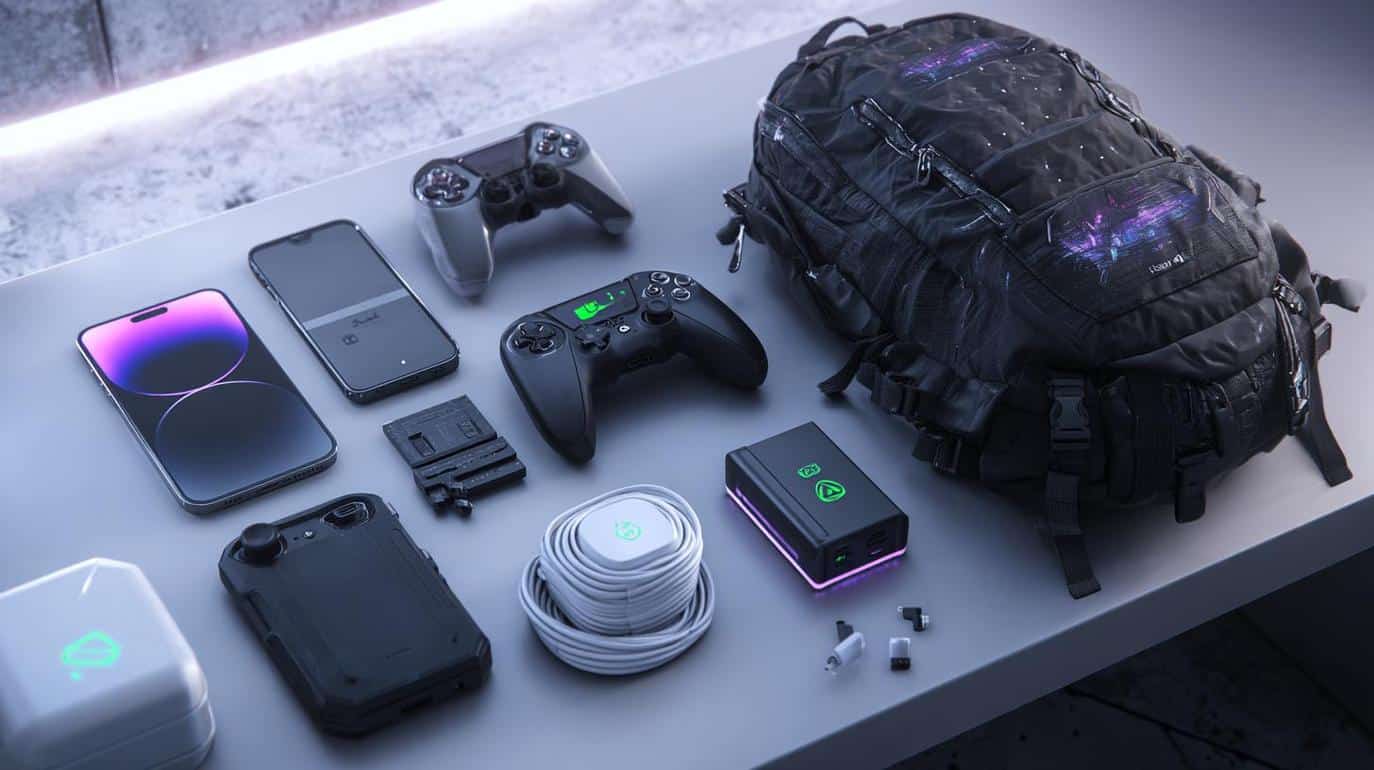
The Simplicity of One Device vs. The Power of a Dedicated Rig
What You Carry, What You Gain
The choice between a one-device life and a dedicated rig comes down to a simple trade-off between portability and power:
- Gaming Phone: A single, pocket-friendly device that seamlessly integrates high-performance gaming with essential daily tasks like calls, photos, and work.
- Handheld PC: A second, bulkier device that offers unparalleled desktop-class flexibility, providing access to full Windows PC libraries, modding, and extensive customization.
The ASUS ROG Ally X is a good example of the latter, with a large battery and a Windows stack that runs Steam, Xbox PC, and modded titles, while the REDMAGIC 10 Pro shows how a gaming phone can stay light, bright, and cool with an internal fan and fast charging.
What You Can Play, Where You Can Play
Handheld PCs run the same PC games you would install on a laptop, including titles from Steam and Xbox PC, with Xbox backward compatibility on PC now bringing classic console titles to the platform as well. They also support peripherals, modding, and community fixes. Phones shine with Android titles and can stream higher-end games through cloud services.
Comfort, Controls, and Noise
Phones win on pocket comfort and can feel great with a compact clip-on controller. Gaming phones like the ROG Phone 9 Pro add capacitive shoulder inputs and tuned touch response, which helps before you add any hardware. A phone like the Galaxy S25 Ultra with a large vapor chamber and high-refresh AMOLED is a strong everyday choice if you prefer a quieter experience without compromising brightness outdoors.
Handheld PCs are built with sticks, triggers, and larger grips by default. Systems like the ROG Ally X and AYANEO KUN use active cooling, so expect audible fans in heavy scenes. The trade is steadier performance over longer sessions. For OLED comfort and color accuracy on the PC side, Steam Deck OLED is designed for long viewing with deep contrast.
Cost of Ownership and Daily Friction
The daily friction and long-term costs differ significantly between the two approaches:
- One-Device Life (Phone): This approach minimizes clutter with fewer chargers and a lighter bag. It also consolidates costs, creating a single bill for device upgrades and potential repairs.
- Dedicated Rig (Handheld PC): This option introduces more to manage, requiring a separate charger, case, and often a dock. In return, it provides storage upgrade options, wider controller compatibility, and PC utilities that optimize performance and battery life.
For connection to a console, an Xbox family guide can help map where each device fits if you plan to pair a handheld PC with a console at home. For Sony’s side of the equation, our complete guide to PlayStation consoles walks through all five home console generations, handhelds, and VR hardware.
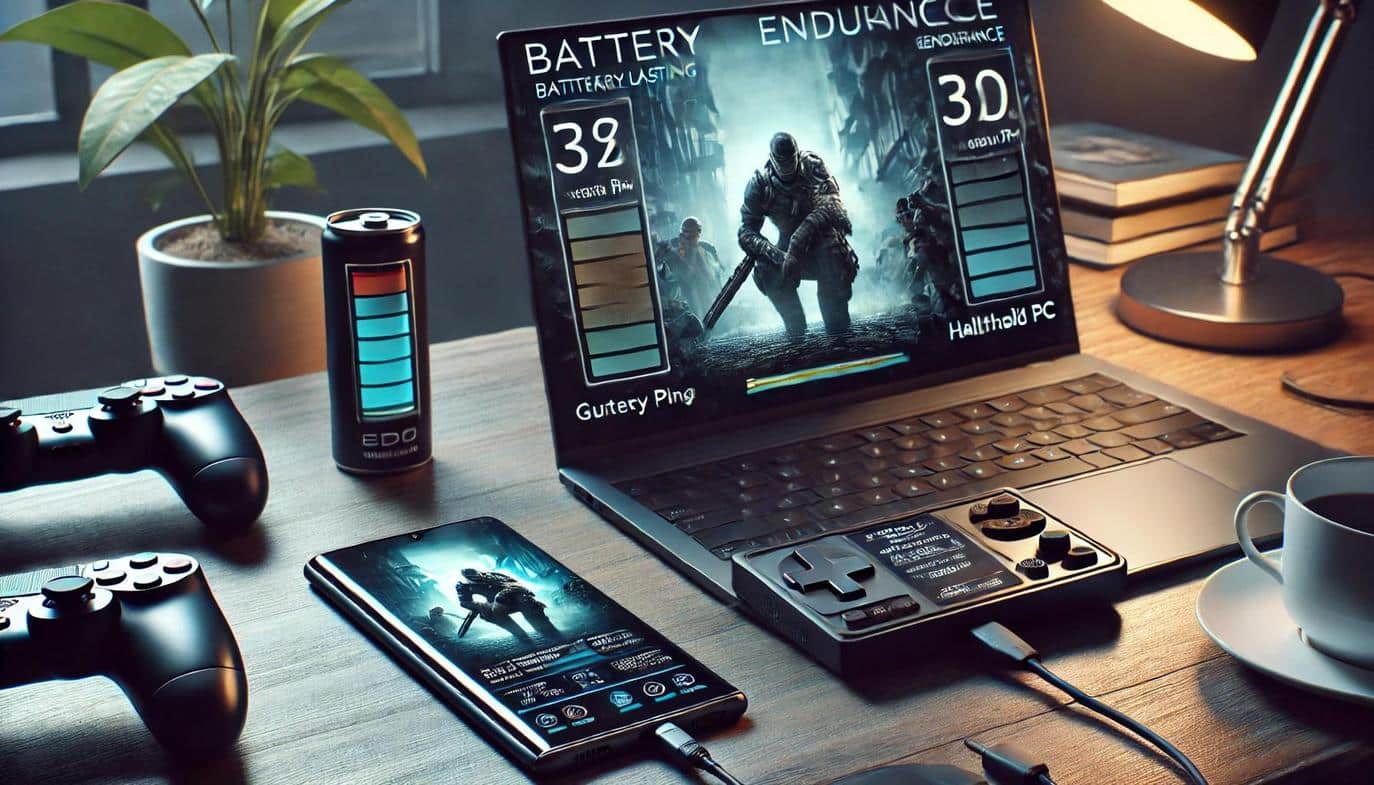
Unpacking Battery Life: Which Device Truly Lasts Longer?
A device’s practical battery life is the ultimate measure of its daily usability. Phones quote capacities in mAh, while PCs quote watt-hours (Wh). To compare them in plain language, think of Wh as the size of the energy tank and mAh as how much charge a phone battery holds at its voltage. Displays, frame rate, processor power targets, and the operating system’s overhead then decide how quickly that tank drains.
The Handheld PC Side: Bigger Tanks With Hungrier Systems
- ASUS ROG Ally X increases its battery to 80 Wh, a major jump intended to improve session length. However, because Windows and x86 APUs are power-hungry at high-performance presets, real-world endurance still depends heavily on the game and TDP settings.
- Steam Deck OLED lists a 50 Wh pack and advertises a 3 to 12 hour window depending on workload. The OLED screen and platform efficiency uplift help stretch lighter titles much further than older LCD units, but heavier 3D games still compress that range.
- AYANEO KUN carries a very large 75 Wh battery and can run at modest or very high TDPs. That headroom is great for performance tuning, but higher TDPs pull down run time quickly.
The Phone Side: Smaller Tanks, Smarter Sip
- REDMAGIC 10 Pro pairs a 7050 mAh dual-cell battery with 80 to 100 W fast charging and a 1.5K 144 Hz AMOLED panel that can hit about 2000 nits. While the bright screen consumes energy, the underlying ARM platform and Android operating system are inherently more energy-efficient for gaming workloads than a power-hungry Windows handheld running at a high TDP.
- Samsung Galaxy S25 Ultra uses the latest Snapdragon variant for Galaxy with a large vapor chamber and regional spec options for capacity and charge rate. Its platform efficiency and long software support window are critical for anyone intending to keep a single device for several years.
- ROG Phone 9 Pro focuses on gaming endurance with a performance-tuned Snapdragon 8 Elite and the typical ROG battery and cooling emphasis. Exact battery and charging details vary by SKU; we cite the spec page for verified dimensions and platform data.
Practical Ways To Stretch Any Battery
- Enable adaptive refresh rates on both phones and handhelds, and manually lower the rate when high frames are not needed.
- Lower brightness when indoors.
- Use OLED-friendly habits like dark mode on phones.
Learning more about eco-friendly phone habits explains why dark UI and sensible charging reduce both energy use and long-term battery wear.
Bottom Line On Endurance
A modern gaming phone usually lasts longer between charges for quick sessions and long commutes, especially with large 6000 to 7050 mAh batteries and rapid charging.
Conversely, a handheld PC’s larger watt-hour capacity is better suited for long couch sessions at higher fidelity. But without careful performance tuning, demanding 3D games and high TDP settings will still restrict many players to a two- to three-hour window. Use that context to decide which style better matches your daily routine.
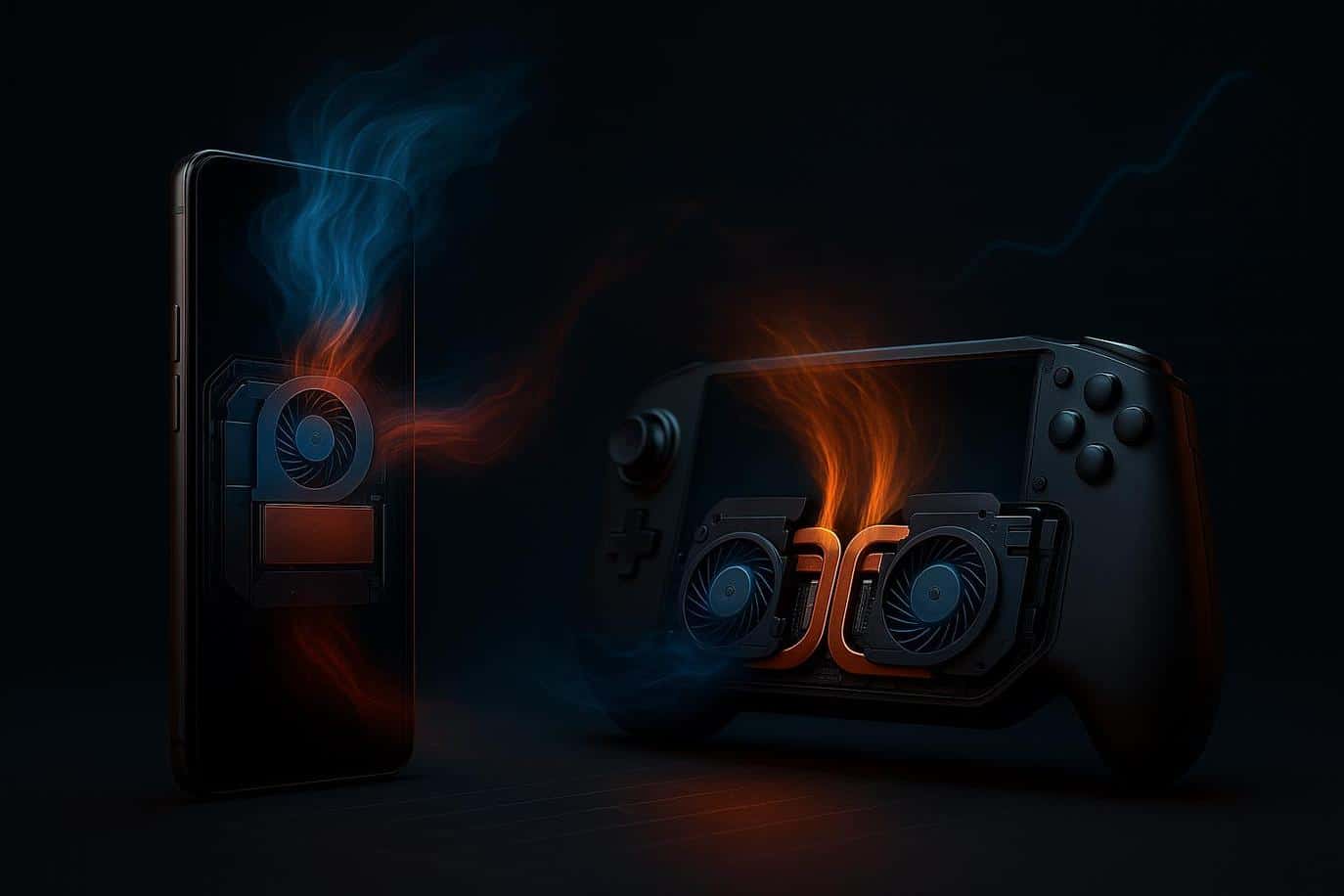
Sustained Performance and Thermals: Cooling, Stability, and Noise
While peak performance numbers make for good marketing, it is the sustained performance over a long session that defines the actual user experience. That is why we look at cooling hardware and long-duration behavior rather than short bursts.
Why “Stress Tests” Matter
UL’s 3DMark Wild Life Extreme Stress Test loops a demanding scene for about twenty minutes to show how devices hold up under heavy, sustained load. It mirrors longer mobile play loops and highlights thermal throttling or excellent cooling design. It measures the device’s stability over a long, demanding road, not just its speed in a short sprint.
Phone Cooling Designs That Fight Throttling
- REDMAGIC 10 Pro uses an ICE-X thermal stack with a vapor chamber, liquid metal interface, and an internal fan to push heat away from the SoC. That active airflow is unusual for a phone and is a key reason it can maintain higher clocks longer than thin, passively cooled designs.
- ROG Phone 9 Pro combines the Snapdragon 8 Elite with GameCool engineering and external accessory support, including bolt-on coolers that further improve stability during long sessions.
- Galaxy S25 Ultra emphasizes a larger vapor chamber and platform-level optimizations, which helps sustain performance quietly for a phone that also has to be an everyday camera and productivity device.
Handheld PC Thermals And Fan Noise
- ROG Ally X features a redesigned chassis and dual-fan Zero Gravity thermal approach. The goal is to maintain stable clock speeds at common TDP presets without harsh fan noise, though audible fans are still expected under load in such a compact Windows PC.
- Steam Deck OLED benefits from platform efficiency and a cooler-running OLED panel, which indirectly reduces thermal load and noise for some titles, though absolute performance targets are lower than Z1 Extreme handhelds.
- AYANEO KUN advertises up to 54 W TDP headroom. That level of power creates significant thermal and acoustic demand, offering performance flexibility at the cost of louder fan noise at high presets.
Bottom Line On Stability
The choice on stability comes down to your tolerance for noise versus your demand for fidelity:
- Gaming Phones: Devices with robust vapor chambers or internal fans now offer excellent sustained performance for mobile-resolution gaming, providing the quietest path to consistent frame pacing.
- Handheld PCs: These rigs are necessary for achieving higher-fidelity PC targets but require active management of fan profiles and TDP settings to balance performance, heat, and noise.
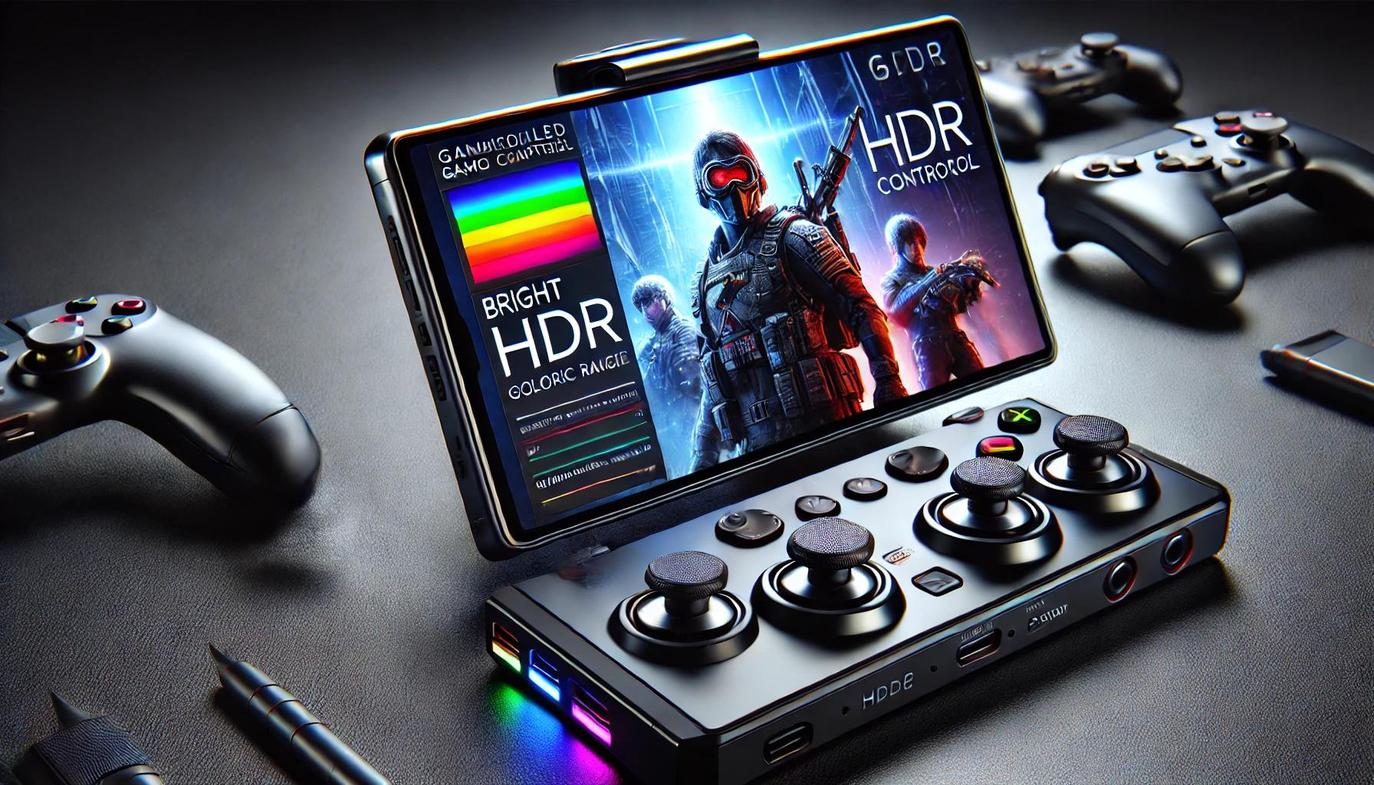
Displays & Controls: Seeing Clearly, Aiming Precisely
The quality of a device’s display and controls directly shapes player comfort and skill, making the right combination essential for enjoyable long sessions.
Phone Displays: Bright, Fast, And Pocketable
- REDMAGIC 10 Pro uses a 6.85 inch AMOLED at 1.5K resolution, 144 Hz refresh, and around 2000 nits peak for outdoor visibility. The under-display camera keeps the panel uninterrupted, which is great for immersive play.
- Galaxy S25 Ultra offers a large, high-refresh AMOLED with the usual Samsung strengths in brightness and color control, useful for HDR mobile titles and media.
- ROG Phone 9 Pro adds gaming niceties like AirTriggers and tuned touch response, which can help in shooters and racers before you even attach a controller.
Attachable pads or clip-on controllers can elevate phone play further. If you plan to sit down at home and expand your setup, smart devices for home gaming hubs cover lighting, audio, and accessories that make a phone or handheld feel like a living-room rig.
Handheld PC Displays: Bigger Canvas, Built-In Sticks
- Steam Deck OLED steps up to a 7.4 inch HDR-capable OLED up to 90 Hz, which is a serious comfort upgrade for color, contrast, and motion clarity.
- ROG Ally X keeps a 7-inch 1080p 120 Hz panel that pairs well with its stronger APU for esports titles, plus Hall-effect sticks and modern ergonomics.
- AYANEO KUN goes large with an 8.4 inch 1600p IPS screen. The extra space and weight provide significant advantages in text legibility for strategy games and desktop use, though it comes at the cost of pocketability.
Bottom Line On Comfort And Control
Phones win in brightness and pocket convenience, and they become formidable with a small controller. Handheld PCs win on built-in sticks, triggers, and larger canvases that reduce eye strain and improve precision.
Long-Term Value: Updates, Upgrades, and Sustainable Gaming
Software Support vs. Hardware Upgrades
Longevity extends beyond raw specs; modern phones increasingly offer long-term OS and security updates, which reduces e-waste and lowers the total cost of ownership by keeping a single device useful for years. Handheld PCs excel at hardware longevity through upgrades. The ROG Ally X accepts NVMe storage, and boutique devices like the AYANEO KUN offer large batteries and high-end I/O that age gracefully for emulation and indie libraries even as newer AAA titles demand more.
Repairability, Batteries, and Accessories
Maintaining a healthy battery is the most critical factor in a device’s long-term usability. Phones offer fast top-ups and can maintain capacity for many cycles with good charging habits. Handheld PCs start with more watt-hours but also run hotter and louder under load, which makes battery care and ventilation important.
Simple habits help both. Lower display brightness indoors, avoid unnecessary background apps, and use dark mode on OLED screens.
Resale Value and Total Footprint
Phone resale value benefits from wide demand and long update policies. PC handhelds can hold value through their upgrade paths, especially if you keep the storage fast and the chassis clean. Either way, a longer lifecycle reduces manufacturing impact per year of use, which is the simplest sustainability win most buyers can control.
Circular Choices You Can Make Today
Extend your device’s lifecycle by adapting its role as your needs change. If you outgrow a phone for primary gaming, repurpose it as a dedicated streaming screen or smart-home controller. If a handheld PC no longer meets AAA gaming demands, it can serve as an excellent indie and retro machine by running a lightweight, low-TDP profile.

Which Device Is Right for You? Recommendations By Play Style
Commuter Or Traveler Who Plays In Short Sessions
Choose a gaming phone with a large battery and fast charging if you need bright outdoor visibility, long unplugged time, and pocket convenience. The REDMAGIC 10 Pro combines a 1.5K 144 Hz AMOLED rated up to about 2000 nits with a 7050 mAh dual-cell pack and supports up to 100 W quick charging. The internal fan in the ICE-X cooling stack helps sustain performance during longer mobile play. Use a compact clip-on controller to improve precision without adding much weight. REDMAGIC 10 Pro specs confirm the display, battery, charging, and cooling highlights.
All-Purpose Phone Owner Who Wants Great Games And Great Photos
Pick a mainstream flagship with strong sustained performance and long support. The Samsung Galaxy S25 Ultra offers a high-refresh AMOLED display and a large vapor chamber for thermal stability, backed by Samsung’s long software support approach for extended longevity. This is a smart choice if you want one device for camera, productivity, and gaming. See Samsung’s official specifications for regional details.
Competitive Mobile Gamer Who Wants Shoulder Inputs And Accessories
Choose a gaming-first phone with a mature accessory ecosystem. The ASUS ROG Phone 9 Pro includes GameCool engineering, AirTrigger shoulder inputs, and high-end SoC and memory options. This design focuses on touch response, sustained clocks, and add-on coolers or controllers that reduce throttling in long sessions. Review the official spec sheet for processor, RAM, storage, and dimensions.
Couch Player Who Wants PC Libraries And Mods
A handheld Windows PC fits best if your priority is full PC games, modding, and desktop utilities. The ASUS ROG Ally X pairs the Ryzen Z1 Extreme APU with up to 24 GB of LPDDR5X memory and Windows 11, plus a redesigned dual-fan thermal system for steadier clocks at common TDP presets. It also supports roomy NVMe storage for large libraries. Check ASUS’s overview for platform and cooling details.
OLED Enthusiast Who Values Color, Contrast, And Efficiency
The Steam Deck OLED delivers an HDR-capable OLED at up to 90 Hz, a larger battery than the LCD model, and an efficiency uplift that extends playtime for lighter titles. Valve’s OLED page cites a 30 to 50 percent battery life improvement, which is meaningful for unplugged sessions.
Creator, Tinkerer, Or Benchmark Explorer
Pick a boutique handheld with a huge battery and high TDP headroom. The AYANEO KUN lists a 75 Wh battery and advertises up to 54 W performance release for experimentation. That flexibility allows aggressive tuning for tests or high-fidelity targets, with the tradeoff of more heat and fan noise at the top end. See AYANEO’s product page and technical article for battery capacity and headroom claims.
Building A Simple Home Setup Around Any Choice
You can create a clean living room setup with smart lighting, compact speakers, and a controller dock whether you land on a phone or a handheld PC. For ideas that match different budgets and spaces,


