
An addressable fire alarm panel can tell a receptionist which detector has picked up smoke, right down to the one outside the second-floor meeting room. On that same landing, the spare chairs from an evening event might be stacked two deep. The panel can work exactly as designed while everyone leaving the floor has to squeeze past the chairs. The detection system tells the building where a fire is. It does not clear the route out.
Why the fire door stays open
Some office fire doors are fitted with a magnet that holds them open while people come and go. When the alarm sounds, the magnet releases. The closer can then pull the door into its frame and help protect the stairs from fire and smoke. A box of printer paper left in the swing of the door can defeat that arrangement even when the electrics work perfectly. The mechanism is described in the Home Office fire safety guide for offices and shops.
Employers can use online fire awareness training to teach staff why these doors matter. During induction, take a new starter along on a delivery round. Show them where a trolley can stand while they unload it and who to tell if the door catches on the carpet. If every delivery ends with someone propping open the same door, watch one arrive. There may be nowhere else to put the boxes.
When a spare socket becomes a charging point
An office adds cycle parking, and a few commuters start coming in by e-bike. The nearest socket happens to be beside the back stairs. Without anyone making a decision about charging, the landing can become the obvious place to plug in. A battery fire there could cut off that staircase.
Ask riders where they leave their bikes and batteries, particularly on wet days when the outside racks are less appealing. Use that information in the fire risk assessment. If charging is allowed, agree a suitable place and tell tenants where it is. Someone deciding whether to ride to work needs to know the arrangements before they turn up with a flat battery. London Fire Brigade’s guidance for building managers explains the risks of charging or storing e-bikes on escape routes, including in buildings where the stair is the only way out.

Inside a soundproof meeting pod
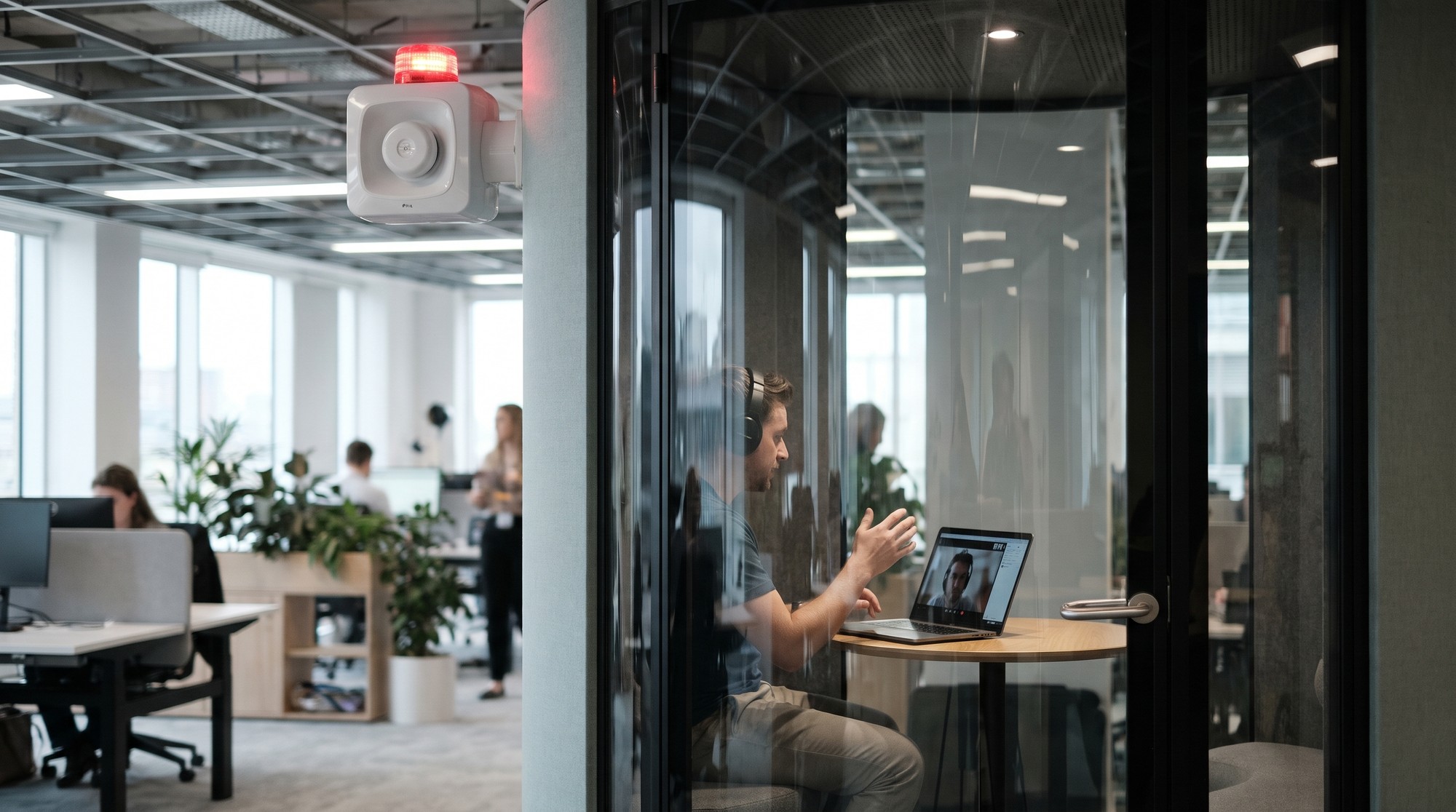
When an office buys a meeting pod, somebody usually stands outside it to find out how much of a private call they can hear. There’s another reason to try the door shut. Will the person inside notice the fire alarm while they’re on a video call? A receptionist who heard the weekly test clearly at the front desk can’t answer for the colleague wearing a headset at the other end of the floor.
Tell the person responsible for the alarm where the pod will go and have a competent specialist check the warning reaches its occupants before it comes into use. A tenant planning several booths may be able to change their position or design before placing the order. Once they’re installed and the meeting calendar is full, a problem is harder to put right.
Ask deaf and hard-of-hearing colleagues how they receive a warning in the different rooms they use. A flashing beacon or a vibrating pager linked to the alarm may suit them. Agree how visitors will receive a warning too, including someone waiting alone for an interview. The Home Office guidance on evacuation for disabled people describes the options. Personal emergency evacuation plans, the arrangements a building agrees with each person who needs help, work best when they are agreed before an incident rather than during one. These questions matter most in buildings where the same stair serves as the only protected route for everyone, which is why fire safety measures in high-rise buildings rely so heavily on keeping that route usable.
The people still upstairs after six
A door-entry log can help account for people, provided you understand what it records. If a building logs arrivals only, a surveyor who left at four may still appear on the list. A guest who came in with their host might never appear at all. Agree how hosts will account for visitors and how anyone with information about a missing person can pass it to the fire and rescue service from a place of safety.
Evening events deserve a look at the staffing rota. A colleague who has agreed to help someone evacuate may finish two hours before the event ends. Check the arrangements with the person who needs assistance and with the people due to be on site. Staff taking on evacuation duties can work through Fire Warden Training online, then practise their part with the tenants who share the stairs.
When everyone blames the toaster
After a couple of evacuations during breakfast, the office kitchen can acquire a reputation. Someone hearing the alarm at nine on Monday may look up from their desk to see whether anyone else is moving. The timing tells them very little about where this alarm started. Everyone should follow the building’s evacuation procedure when the evacuation signal sounds.
After the all-clear, find out what actually set it off. Record the detector location and time, then ask the people who were there what was happening. In a shared building, three tenants might each describe an alarm as a one-off. Put their accounts together and the building manager may find that the same detector has activated several times since a cafe opened downstairs.
Give the alarm maintainer those details so they can investigate the cause. Once the issue is resolved, tell staff what was found and what’s been done. The tenant who took the trouble to report the first incident deserves to hear whether anyone followed it up. Where alarms are repeatedly set off by cooking, the answer often lies in the kitchen layout or the detector type rather than in staff behaviour. Getting a false-alarm problem under control also protects the credibility of every future evacuation.
What to check at the next drill
Ask the event organiser who would call the fire and rescue service if someone saw smoke after reception had closed. A monitored alarm can send a signal to a receiving centre, but that does not by itself guarantee a crew is on its way. London Fire Brigade’s policy on automatic alarms explains how this can happen at commercial premises. Rehearse who would make the call and give the address. In a real fire, call 999 from a place of safety.
At the assembly point, ask people where they hesitated. Someone who stopped outside the final exit may tell you that the arrow points towards a gate nobody uses any more. Walk that part of the route with them. If a sign needs moving or a gate needs attention, give the job to someone who can put it right. Ask the person who flagged the problem to try the route again once it’s fixed.

