
When an eco fashion brand invests in more responsible fabrics, production, and packaging, the small details deserve attention too. Woven labels and care labels are part of the garment experience: they identify the brand, communicate essential information, and remain with the item throughout its useful life. For how woven and printed labels compare on durability, the guide to woven labels goes into detail.
A label may use only a small amount of material, but it still contributes to the product’s comfort, quality, and overall design. Thinking carefully about label construction, material information, certification, and end-of-life considerations can help a clothing business make choices that are consistent with its wider sustainability goals.
1. Treat Labels as Part of the Garment Design
Labels are often planned late in product development, after the fabric, silhouette, and colours have been chosen. A better approach is to consider them alongside the rest of the garment. Their size, placement, texture, and construction affect how a customer experiences the finished piece.
A label that feels scratchy or bulky can undermine an otherwise comfortable garment. A label that is too small or poorly organised may make brand and care information difficult to read. Selecting a suitable label early gives designers time to balance appearance, function, and comfort.
For an eco fashion brand, this also creates an opportunity to review the label’s material and production details rather than treating it as an afterthought.
2. Understand the Difference Between Woven and Printed Labels
Woven labels form their design through threads interlaced on a loom. The logo, lettering, or pattern becomes part of the woven structure. They are often chosen for brand labels that need a defined texture and a finish that can withstand repeated handling.
Printed labels apply ink or another printing process to a label material. They can be useful for designs with gradients, very fine colour transitions, or information that requires a different surface treatment. The best option depends on the artwork, intended use, comfort requirements, and expected care conditions.

Durability is not determined by one factor alone. Material, construction, printing or weaving quality, washing conditions, and how the label is attached all influence performance. A supplier’s samples and product specifications are more useful than broad assumptions about every label in a category.
3. Ask What the Label Is Made From
Sustainability claims should begin with clear material information. Ask the supplier to identify the fibres and components used in the label, including any backing, adhesive, or finishing treatment. Do not assume that a label is recycled, biodegradable, or lower-impact simply because it is described as eco-friendly.
If a supplier offers a specific material option, request documentation that identifies its composition and explains what the claim covers. For example, a recycled-content claim should be supported by appropriate supplier information or certification relevant to the product.
It is also worth considering how the label interacts with the garment. A label made from one material may be attached to a garment made from another, which can affect sorting and recycling at the end of the product’s life. Clear material information helps brands make more informed decisions and communicate accurately with customers.
4. Understand OEKO-TEX STANDARD 100
OEKO-TEX STANDARD 100 is a product-testing and certification system focused on harmful substances in textile products. It can be relevant when evaluating labels and other textile components that come into contact with skin.
However, it is important to describe the certification accurately. It does not automatically mean that a product is made from recycled materials, is biodegradable, or has a low carbon footprint. It addresses tested substances under the certification’s criteria.
If a supplier states that a label is OEKO-TEX STANDARD 100 certified, ask which product or component is covered and request current supporting details. Brands should verify the scope and validity of any certification before including it in marketing or product information.
This careful approach helps an eco fashion brand avoid vague claims and gives customers clearer information about what a certification actually demonstrates.
5. Make Care Labels Clear and Useful
Care labels are essential because they tell customers how to wash, dry, iron, and maintain a garment. Clear instructions can help people care for clothing correctly and may reduce avoidable damage that shortens a garment’s useful life.
Keep the information readable and organise it in a logical order. Use recognised care symbols where appropriate, check that translations are accurate for each market, and make sure the label has enough space for required fibre composition and other applicable information.
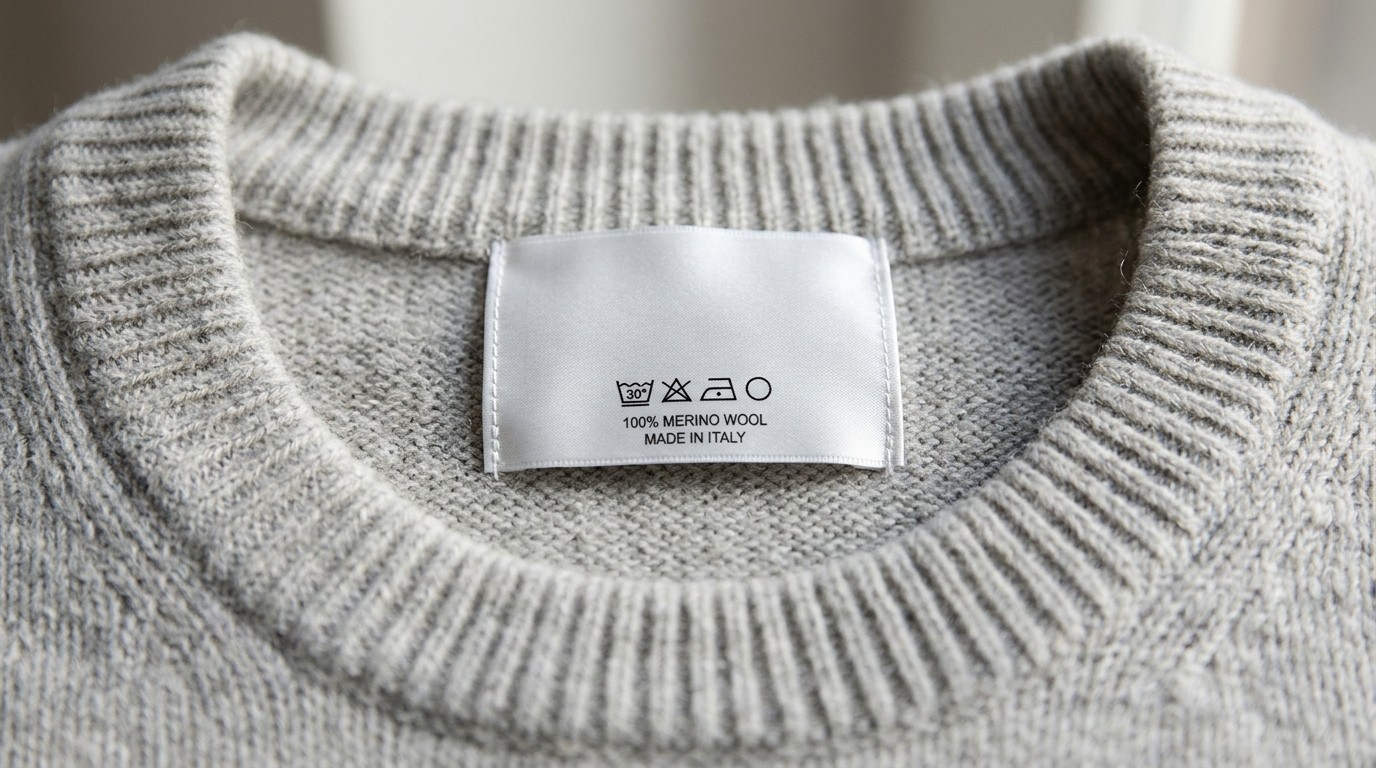
Care information should reflect the garment’s actual materials and construction. Incorrect or overly general instructions can cause confusion and may lead customers to use a cleaning method that damages the item.
Before production, review a physical or digital proof at its actual size. Small text that looks clear when enlarged on a screen may be difficult to read once the label is sewn into a garment.
6. Consider Comfort, Placement, and Longevity
A sustainable garment should be designed for continued use, and its labels should support that experience. Consider where the label will sit, whether its edges could irritate skin, and whether its dimensions suit the garment.
Neck labels, side-seam labels, and care labels have different purposes and may need different constructions. A soft finish may be important for a label that touches the neck, while a care label needs enough space for instructions and fibre details.
Longevity also matters. A label that frays, fades, or becomes unreadable quickly can make a garment feel less durable. Ask for samples and test them under realistic handling and care conditions before committing to a large order.
7. Choose Suppliers and Claims Carefully
A responsible sourcing process involves asking specific questions rather than relying on broad environmental language. Request material specifications, certification details where relevant, sample options, minimum order quantities, and information about production and finishing.
Keep records of the claims you intend to make and the documents that support them. If you cannot verify a statement about recycled content, organic fibres, chemical testing, or environmental impact, leave it out of product copy until reliable evidence is available.
This is especially important for small brands. Accurate, modest claims are more credible than sweeping promises that cannot be substantiated.
Conclusion
Labels may be small, but they are part of the garment’s identity, comfort, and long-term usability. By reviewing label materials, comparing woven and printed construction, checking certification details, and making care instructions easy to understand, clothing brands can make more considered choices.
Sustainability is not established by a label alone. It comes from transparent sourcing, thoughtful design, durable products, and claims that can be supported. Treating labels as an important part of garment development helps an eco fashion brand create a more consistent and trustworthy product experience.


