
Most headlines promise a winner between homeschooling, private schooling, and public schooling. Real research tells a different story. Outcomes shift with family context, structure, and socioeconomic background. This analysis applies a researcher’s lens to academic performance, social development, and career outcomes.
We aim to replace sector loyalty with evidence. We draw on large international assessments and independent reviews so claims are traceable and transparent. Recent OECD analyses separate raw scores from family background (see the equity in education in the PISA 2022 overview for details). This helps readers understand how socioeconomic status alters comparisons between public and private schools.
As measures of human ability evolve in an AI‑saturated world, it helps to keep a clear view of what tests capture. Research on how AI is already reshaping our sense of intelligence and testing sets expectations for what scores will actually mean over the coming decade.

The Debate Is Loud, but Data Points Are Messy
Public conversations often rely on polarized claims. While most advocate narratives contain some truth, they often omit crucial details about sample selection and measurement methodology.
A clear example is the headline that homeschoolers score 15 to 25 percentile points higher than public‑school averages, which appears often in advocacy literature. Those numbers usually come from voluntary testing programs and self‑selected families who are already more advantaged. This means averages cannot stand in for all homeschoolers and must be read as descriptive rather than causal. Organizations like NHERI themselves document where sample sources and caveats are summarized for non‑specialists.
On the private–public side, raw international test comparisons often show private schools ahead. The gap narrows when analysts control for socio‑economic background and school composition. Policy briefs such as OECD’s “How Do Public and Private Schools Differ in OECD Countries?” are useful as primers on selection effects long before we argue about curriculum at the classroom level. That brief explains how enrollment patterns shape average scores across sectors.
Families weigh day-to-day trade-offs differently. A breakdown of homeschooling versus traditional school outcomes in 2025 puts these statistics into a lived context regarding time, stress, and resources.
Key Findings: Separating Myth from Measurement
- Comparing sectors without context is misleading. Much of the apparent private‑school advantage shrinks after adjusting for socio‑economic status, according to OECD readings of PISA 2022, which analyze performance gaps alongside family background and school composition.
- Homeschool results are highly variable. A well‑designed Canadian study finds structured homeschooling outperforms public schooling on standardized tests, while unstructured homeschooling performs worse. This finding underscores that method and consistency do the heavy lifting.
- Homeschooling research mixes advocacy with scholarship. Positive test score claims often come from self‑selected samples and parent reports. Independent syntheses are essential reading alongside advocacy summaries like NHERI’s Fast Facts and critical rollups from CRHE that explain common limitations.
- Social skills are not sector‑exclusive. Reviews demonstrate that most homeschooled children score average or above on socialization measures, yet the quality of peer contact depends on parental effort and local opportunities. CRHE discusses what the research says on socialization, where variability is a key theme.
- Private schooling is linked to selective university access and wage premiums in the UK. Studies show a modest to large earnings edge for private school alumni in some contexts. Researchers attribute such advantages partly to networks and expectations rather than classroom effects alone, as summarized in Sutton Trust’s review that follows graduates over early career years.
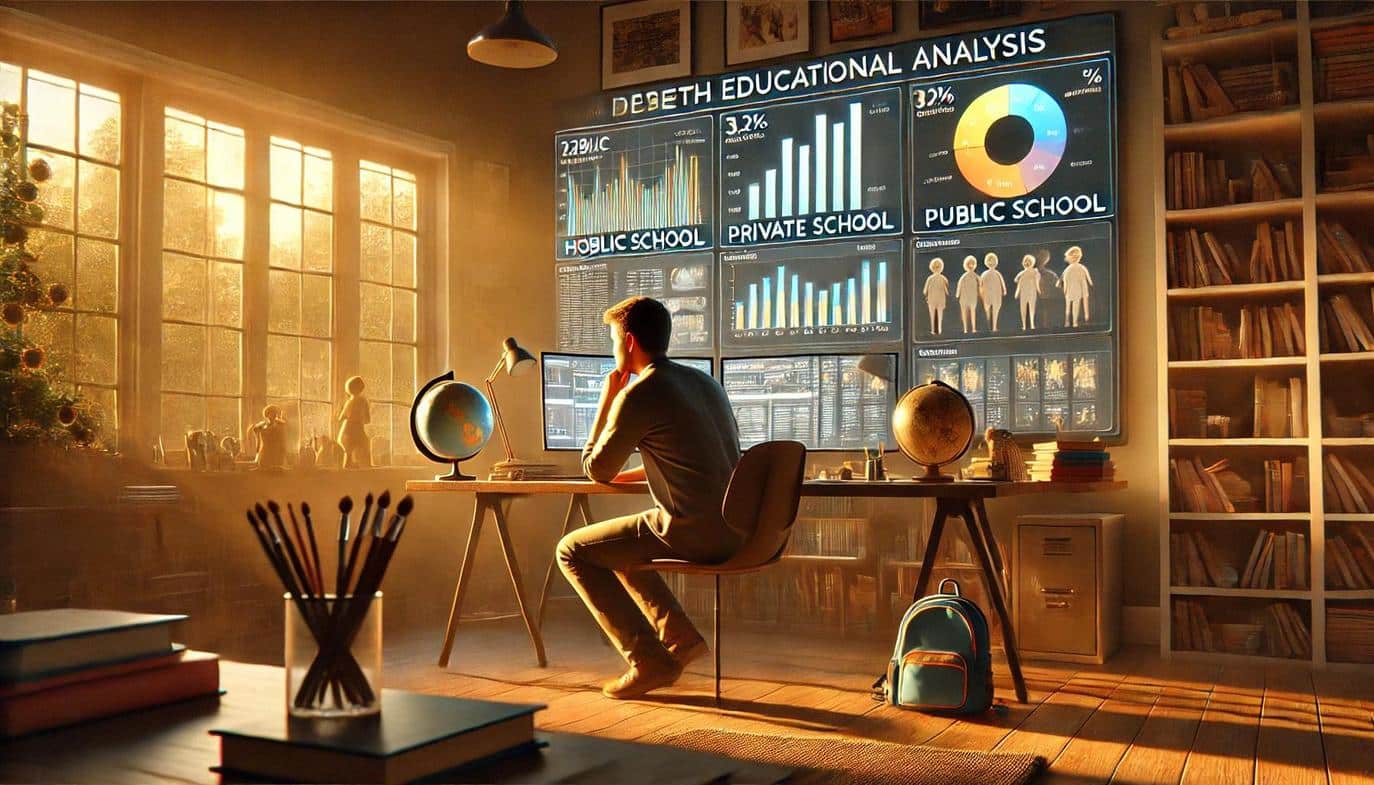
How to Read Schooling Research Like a Researcher (Data vs Dogma)
What Studies Actually Measure
Claims that one model makes children “smarter” rarely reflect innate intelligence metrics. Researchers usually compare academic achievement, such as standardized reading, math, and science scores, and sometimes ability batteries. They also track social outcomes, which can include teacher or parent rating scales, participation in clubs, volunteering, or mental‑health indicators.
Long-run work looks at higher education entry, persistence, and completion, then career outcomes like earnings and occupational status. These are shaped by networks as much as instruction, a point that surfaces in wage‑progression studies where social capital shows up in the numbers.
Common Biases and Caveats to Watch For
Selection bias can make one sector look stronger than it is. Private schools often enroll more affluent families, and homeschooling studies often recruit through homeschool organizations. This means both groups can start with advantages that are difficult to strip out statistically. OECD equity chapters lay the matter out for general readers, where performance is charted alongside socio‑economic background.
Non‑representative samples are a second challenge. Many widely cited homeschool studies rely on voluntary test submissions or parent‑reported outcomes, which inflate results relative to population norms. This aspect is precisely why independent aggregators like the Coalition for Responsible Home Education maintain balanced summaries that explain the limits of small or self‑selected samples.
Controls and model choices can change conclusions. Once analysts control for SES, prior achievement, and school composition, public–private score gaps often shrink considerably. PISA materials and country-specific reassessments document this pattern, including new work that reweights PISA samples to mirror real enrollment distributions, such as Colaço and co‑authors who revisit the private–public gap with post‑stratification methods.
A Three‑Question Filter for Any Claim
Before trusting any headline statistic, ask three questions that scientists use every day.
- Who was measured, and how were they recruited? If families volunteered or were contacted via advocacy groups, treat results as descriptive of that slice rather than all families. This is a key limitation in many homeschool reports that rely on self‑selected testing cohorts, such as those highlighted in NHERI’s roundups.
- What did the study adjust for, and what did it ignore? If socioeconomic status and prior achievement are missing, raw score gaps mostly reflect who enrolls where rather than what schools do.
- Does the result generalize beyond this sample and time? Findings from one country, year, or subgroup may not hold in others. Authors who revisit PISA with careful reweighting are useful for separating pattern from artifact, as the Portugal re‑analysis shows where methodology explains much of the story.

Academic Outcomes Across Homeschool, Private, and Public Schools
Homeschool Versus Public: Why Structure Matters More than the Label
Summaries often report homeschoolers outscoring public‑school peers. Only specific families, typically from highly engaged, college-educated households, can submit scores with this accuracy. The most careful comparative study divides homeschooling into structured and unstructured approaches, then shows structured homeschoolers outperforming public‑school peers while unstructured homeschoolers perform worse. This points to curriculum design and consistent instruction as the real difference makers in that evidence base (Martin‑Chang, Gould, and Meuse 2011 detail the methodology that produced those split results).
Balanced aggregators also warn that reading out a universal homeschool advantage is unsafe because many datasets are small or non‑representative. The Coalition for Responsible Home Education explains this in plain language about what the research says on socialization, where variability within homeschooling is a central takeaway for parents who want realistic expectations.
Public Versus Private: Raw Gaps Shrink After Adjusting for Background
International tests often show private‑school students ahead on raw scores. These gaps narrow significantly after analysts control for socioeconomic status and peer composition. This is a core point of the OECD’s short brief on sector differences that plots enrollment sorting and explains why sector means do not automatically reflect classroom quality and how public and private schools differ in OECD countries where selection patterns are the first thing to evaluate.
New country studies are also updating how we read the data. One example revisits Portugal’s public–private performance convergence and shows how reweighting the PISA sample to match real enrollment distributions changes the size and certainty of the gap. This study is a good reminder that headline rankings can be artifacts of sample design rather than sector effects, as discussed by Colaço and colleagues, where post‑stratification raises caution flags for overconfident comparisons.
What Matters Most for Academic Growth
Across models, the strongest predictors are consistent instruction, aligned curriculum, parental education, and a stable environment. That is why families with the time, resources, and structure to support learning tend to produce high scorers in any setting. This is also why well-resourced public schools often match or outperform many private schools when background factors are considered, a theme highlighted in the OECD equity analyses on education in PISA 2022, which consistently link performance to socio-economic context rather than school sector labels.
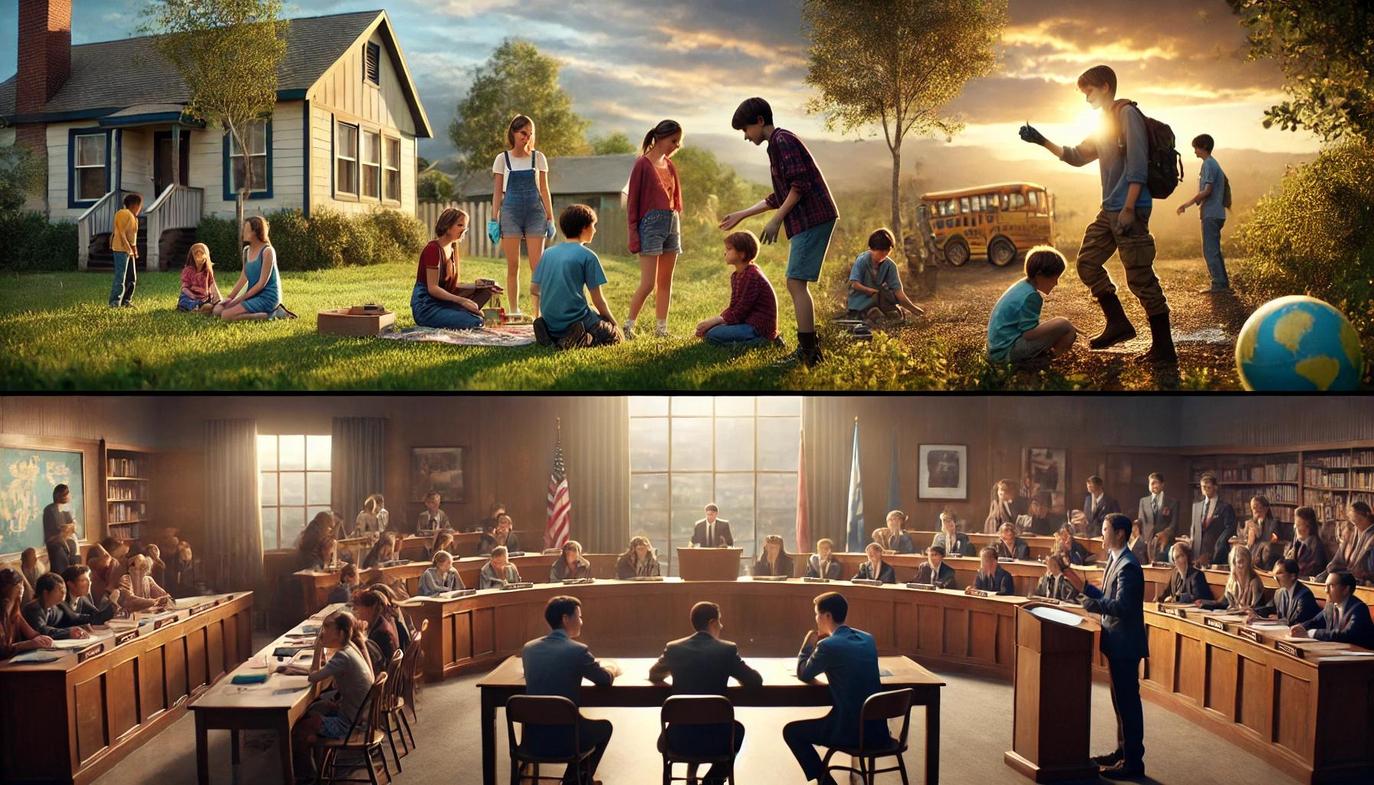
Social and Civic Outcomes: Socialization, Isolation, and Planetary Awareness
What the Socialization Research Really Shows for Homeschoolers
The stereotype that homeschoolers lack social skills fails to hold up across literature. Reviews indicate that homeschooled children typically score average or above on social skills scales, although experiences vary widely by family, community, and access to organized peer activities. The CRHE synthesizes this information for non‑specialists, where both strengths and risks are mapped in one place.
Newer work that follows adults who were homeschooled finds mainstream life outcomes across income, college going, and well-being. This suggests that the presence or absence of isolation as a child depends more on how families build peer networks than on the word “homeschool,” a point advanced through mixed‑methods research that looks at both interviews and survey data at scale in Homeschooling, Perceived Social Isolation, and Life Trajectories, available at University of Arkansas ScholarWorks for readers who want to see how researchers tested those ideas.
Social Worlds Inside Public and Private Schools
Public schools offer broad peer diversity and access to specialist staff. This is relevant for children who benefit from counselors, special education services, or mandated reporters who can spot problems early. These institutional supports are part of the equity discussion inside the OECD reporting on equity in education in PISA 2022, where inclusion and background sit alongside test scores in the core indicators.
Private schools often cultivate tight communities with active alumni networks that support internships and first jobs. This shows up later in wage studies and university placement statistics. For a structured look at these claims, an overview of Why Private Schools Help Students Thrive—Academically and Beyond frames benefits like small classes and holistic development without assuming automatic superiority.
From Peer Groups to Planetary Citizenship
Social awareness extends to caring for places and people beyond one’s own bubble. Experiences that widen perspective, such as travel, outdoor projects, and service learning, can strengthen empathy and global literacy in ways classrooms alone may not. Time away can deepen skills that transfer back into school. A reflection on 16 Reasons Why a Student Should Take a Break and Travel treats real‑world navigation as a teachable part of education.

College Admissions and Career Earnings by Sector
Private Schooling, Selective Universities, and Earnings
Private schooling in Britain and similar systems is associated with increased chances of admission to selective universities and a subsequent earnings premium. Researchers attribute a meaningful share of that advantage to networks, expectations, internships, and targeted guidance, not only to classroom instruction.
This helps explain why wage differences can widen with age as alumni move into leadership tracks. These findings sit alongside evidence that prior attainment and family background explain part of the premium, which is why careful models report smaller but still notable effects once those factors are included.
What We Know About Homeschooled Graduates in College
Studies that follow homeschooled students into university typically observe comparable or slightly higher GPAs and persistence once admitted. The pattern is encouraging, but readers should remember that college‑going homeschoolers are a self‑selected subset who have already cleared admissions and testing hurdles. The safer interpretation is that well‑prepared homeschooled students can thrive in higher education when their preparation is structured and comprehensive. For practical readiness, families often focus on writing across the curriculum, lab science access, and pre‑calculus or calculus before matriculation.
Public Schools, Inequality, and Mobility
Public schools educate the full distribution of society, which makes averages sensitive to broader inequalities in housing, health, and income. Within that constraint, well‑resourced public schools match or exceed many private outcomes and often supply the most robust special‑education, counseling, and college‑advising infrastructures. The point is reinforced by recent case studies, including one Bogotá public school that cut bullying to zero and dropout below 1 percent by replacing punishment with a school-wide socio-emotional model. Mobility rises when students gain access to rigorous coursework, stable teaching teams, and real guidance on admissions and financial aid.
For readiness, students can adopt effective study habits for college success and focus on extracurricular paths that impress college admissions.
Building 21st‑Century Learners in Flexible Learning Ecosystems
Families increasingly assemble education from multiple sources. Key components include:
- Core Academic Literacy: Coherent curricula and cumulative review drive gains more than labels.
- Digital & AI Literacy: Graduates must prompt, verify, and critique tools like GPT-4 while protecting privacy.
- Social & Civic Competence: Teamwork and service habits reduce friction and increase belonging.
- Planetary Literacy: Teaching students to design low-carbon, resilient solutions.
- Hybrid Models: Using microschools or co-ops as hubs for relationships and projects.
To understand current tools, examine how AI and GPT‑4 are being used to make learning more inclusive and personalized. Campus experiments like Harvard’s early experiment with AI physics tutors show retention gains, while broader applications appear in AI and machine learning in modern education systems.
Microschools offer a nearby hub, such as Edefy’s neighborhood‑based learning ecosystems, which center relationships and projects.
Design a Custom Mix Around Your Child
Map academic goals, emotional supports, social outlets, and logistics. Allocate time across nodes that meet those needs. Review quarterly and adjust the mix when gaps appear.

Choosing Conditions and Reading Statistics Without Getting Spun
What to Look for in Any Setting
- Instruction and structure: explicit curriculum, realistic pacing, timely feedback, and planned practice.
- Adult capacity and support: stable, knowledgeable teachers and mentors with time to help.
- Peer environment and safeguards: healthy norms, extracurriculars, counseling access, special‑education services, and clear reporting pathways.
- Alignment with the modern skill stack: cognitive mastery, AI‑aware digital skills, social and civic habits, and planetary literacy.
A Pocket Guide to Claims
- “Homeschooled students are far ahead on national tests.” These results are often based on self-selected submissions. To be honest, certain cohorts excel when they receive structured instruction and have highly educated parents. It is not a universal rule.
- “Private schools consistently beat public schools internationally.” This statement holds true for many raw averages. Honest reading: much of the gap reflects family background and peer composition. After adjustments, differences shrink and sometimes disappear.
- “Public schools are failing, so privatization is the only fix.” Sector is not destiny. When instruction is coherent, adults receive support, and students have safe, diverse peers and strong guidance, the outcomes improve.
Simple Heuristics for Readers
- Prefer large, representative datasets over small, volunteer samples.
- Check whether analysts controlled for socioeconomic status and prior achievement.
- Look for pre-registered analyses or public codes and data when possible.
- Treat causal language with caution when studies are observational.
- Read at least one critical source alongside any advocacy summary before forming a view.
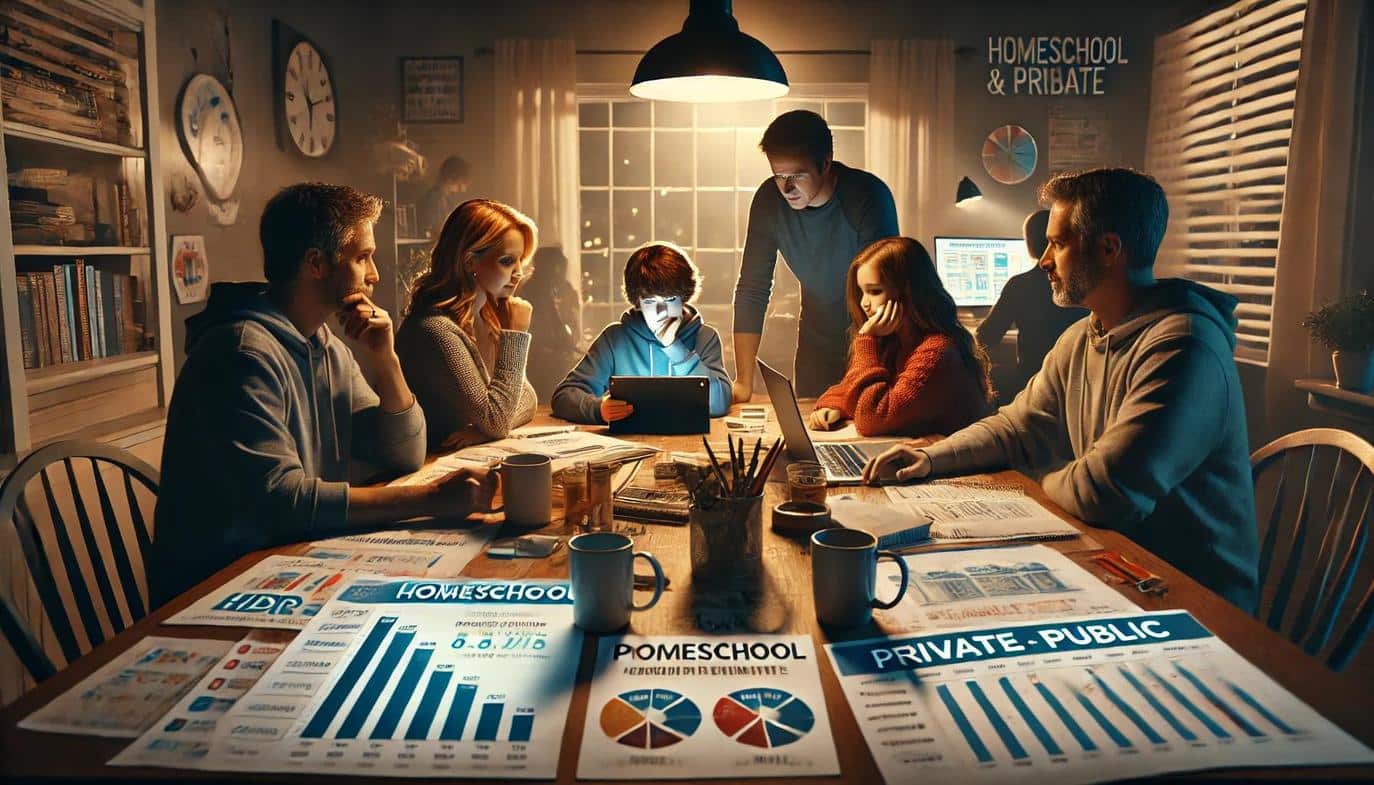
Navigating School Choice with Evidence
No single winner exists between homeschool, private, and public schooling. Outcomes track with structure, adult capacity, social context, and the opportunities a child can access year after year. The practical path is to choose conditions, not labels. Families who build environments where instruction is clear, feedback is steady, and peers are healthy see strong results regardless of the sector.
As education evolves, flexibility becomes the new standard. Adjusting the mix of schooling models as a child grows allows parents to respond to changing academic and social needs. By focusing on evidence-based factors—like curriculum coherence and supportive mentorship—families can quietly produce resilient graduates who think for themselves in a crowded information world.
Frequently Asked Questions About Schooling Outcomes
Does Private School Guarantee Better Grades?
Not automatically. While raw scores are often higher, much of the gap disappears when researchers adjust for family income and parental education. A well-resourced public school often matches private school outcomes for students with similar backgrounds.
Is Homeschooling Better for Socialization?
Research shows homeschooled children typically score average or above on social scales, but results depend entirely on parental effort. Kids who participate in organized activities and co-ops develop strong social skills, while those who are isolated may struggle.
Do Public Schools Offer Enough Individual Attention?
Public schools vary widely. While class sizes can be larger, public systems often provide the most robust access to special education services, counselors, and diverse peer groups, which are critical for social development.
Which Schooling Type Is Best for College Admissions?
Colleges accept students from all sectors. Homeschoolers with rigorous transcripts, private schoolers with strong counseling, and public schoolers with high class rank all fare well. The key is a challenging curriculum and demonstrated passion, not just the school’s name.


