
In the near future, home components like lights, floors, and even walls may not be things you own; they’re services you subscribe to. The concept might sound futuristic, but it’s already happening across Europe and is rapidly gaining traction as cities and developers reimagine how to build sustainably.
Traditional homeownership perpetuates a cycle of inefficiency where materials are used once, homes are demolished after a few decades, and valuable resources are ultimately consigned to landfills. By contrast, “housing-as-a-service” turns that waste into opportunity. Under this model, homeowners or tenants pay for performance in key areas, such as:
- Light
- Heating
- Flooring
- Air quality
Meanwhile, suppliers retain ownership of materials and take them back for reuse when upgrades are needed.
The idea borrows from the subscription economy (think streaming platforms or car sharing) but applies it to physical spaces. Forward-thinking firms have shown that service models can slash waste and improve profitability. For example, Philips/Signify created Light-as-a-Service for Schiphol Airport, and Interface pioneered carpet leasing programs. Applied to housing, this could transform not only how buildings are made but also how they’re financed, maintained, and valued.
This approach forms part of a broader circular housing movement, where materials are reused, components are leased, and entire structures are designed for disassembly rather than demolition. The benefits extend far beyond environmental sustainability to reshape economic incentives, business models, and the fundamental experience of home life.

The Future of Circular Housing: Key Facts You Need to Know
- Buildings consume half of all raw materials extracted globally. Service-based ownership could dramatically reduce this footprint by incentivizing reuse rather than disposal, according to the Ellen MacArthur Foundation’s real-estate circularity report.
- Circular construction could reduce CO₂ emissions from building materials by up to 38% by 2050.
- Material passports are being tested in Amsterdam and other EU cities to digitally track building components for future reuse through platforms like Madaster.
- Product-Service Systems (PSS) are already viable in building contexts: Schiphol’s lighting service cut energy use by over 50% and eliminated replacement waste.
- Co-living models in Sweden, the Netherlands, and Japan demonstrate that shared spaces reduce material intensity and energy demand while lowering rent costs.
Together, these data points indicate a shift in how the next generation of homes will be valued. Success will be measured not just in square meters, but in how intelligently each material, fixture, and service can be reused or repurposed.

Why Traditional Homeownership is Misaligned with Circularity
For most of modern history, owning a home has been seen as the ultimate investment. Yet the linear “take-make-dispose” pattern embedded in real estate directly conflicts with sustainability goals. Once construction is complete, materials are locked inside the building and lose value over time. When that structure is eventually replaced or renovated, its valuable contents are discarded instead of reused, including:
- Steel
- Glass
- Concrete
- Wood
Conventional ownership models make this waste inevitable because no one retains responsibility for the materials themselves. A builder sells, a buyer occupies, and the system ends there. There is no incentive to design for reuse, modularity, or deconstruction.
The financial system reinforces the problem: mortgages and depreciation schedules reward new construction over long-term adaptability.
A 2023 study on circular construction from MDPI Sustainability found that the greatest barrier to a circular economy in housing is ownership fragmentation. This means multiple stakeholders own different parts of a property with no shared accountability for end-of-life recovery. Add to this the lack of regulatory support for take-back contracts and digital material passports, and it becomes clear why the current model stalls progress.
Bridging the gap between the traditional homeowner’s focus on permanence and the circular model’s emphasis on adaptability requires a fundamental re-engineering of both business incentives and public perception.
The Service Solution: The Rise of the “Home-as-a-Service” Model
The concept of Home-as-a-Service (HaaS) draws inspiration from the Product-as-a-Service (PaaS) approach revolutionizing sectors like technology, transportation, and manufacturing. Instead of selling physical goods, companies sell the function those goods provide. Philips/Signify, for instance, doesn’t sell bulbs at Schiphol Airport; it sells “light hours.” Interface doesn’t sell carpets; it provides “flooring performance.”
Translating this to housing means that building components, such as lighting systems, HVAC units, kitchen fixtures, or even entire façades, can be leased instead of owned.
Manufacturers maintain responsibility for upkeep and end-of-life recycling, which incentivizes them to design longer-lasting, upgradeable products.
According to research published in Business Models for Circular Economy and Sustainable Development: The Case of Lease Transactions, lease-based models often achieve comparable or superior profit margins compared to outright sales, especially when products have high reuse potential. In housing, this means a company might lease you an energy-efficient kitchen that it later refurbishes and installs elsewhere, reducing waste and capital costs.
Government initiatives are beginning to support this shift. The EU Circular Economy Action Plan encourages performance-based contracts and long-term service agreements in public construction projects. Urban planners in Amsterdam, Copenhagen, and Helsinki are piloting modular “housing shells” with leased interiors that can be swapped out without demolishing the structure.
Given that consumers are already accustomed to leasing cars and subscribing to digital services, it would be logical to extend this model to our physical environments by charging for thermal comfort, air quality, or lighting output.

Circular Finance: How Innovative Leasing Models Are Redefining Real Estate Economics
Traditional mortgages reward ownership and short-term profit, while circular models demand patience and durability. The key lies in rewriting how financial systems value materials and maintenance.
In essence, these circular finance tools turn sustainability from a moral imperative into a practical business strategy. When a wall panel or ventilation system retains financial value after installation, waste becomes economically irrational. Key shifts include:
- Shifting From Asset Sale to Service Revenue: The supplier’s income stems from long-term contracts, not single transactions, ensuring predictable cash flow and incentivizing durability.
- New Accounting and Legal Frameworks: Regulatory clarity is being developed for assets remaining on manufacturers’ balance sheets, with some banks exploring loans that treat retained material value as collateral.
- Residual Value and Secondary Markets: Digital material passports make the residual value of components visible and tradable, allowing demolition to become a revenue event.
- Policy and Investment Catalysts: The circular transition in real estate is projected to unlock billions in economic gains, attracting institutional investors to the stable revenue streams of service-based models.
Building Smarter: How Digital Material Passports Unlock Circular Housing
One of the most powerful but underappreciated innovations behind circular housing is the rise of the digital material passport, a detailed online record that tracks every major component within a building, from its concrete slabs to its interior fixtures. These passports function as digital IDs for materials, recording their origin, use history, and potential for future applications.
This technology transforms how developers, architects, and investors view the life cycle of buildings. Instead of seeing construction materials as sunk costs, material passports allow them to become assets: traced, valued, and potentially resold. The approach was pioneered by projects such as Buildings as Material Banks (BAMB) and platforms like Madaster, which catalog thousands of material types and their environmental performance. Amsterdam’s municipal program has already begun integrating these passports into new public buildings to quantify embodied carbon and future reuse potential.
From a sustainability standpoint, the benefits are immense. When every brick, panel, and cable has a digital record, deconstruction becomes a resource harvest rather than a demolition expense. It’s a radical inversion of the waste hierarchy, promoting reuse at scale.
From a financial perspective, these digital passports establish a new category of measurable and tradable building assets, thereby creating secondary markets for certified reused components.
At a policy level, the European Commission’s Circular Economy Action Plan recognizes material passports as foundational to the built environment’s transition, connecting to broader frameworks such as Level(s) and CB’23 for standardized environmental reporting. These integrations mean that circular buildings will increasingly have better financing opportunities, lower insurance premiums, and measurable compliance advantages.
In short, digital tracking converts buildings from static shells into transparent ecosystems. Each material becomes part of an intelligent network: one that records value, ensures accountability, and powers a smarter, more circular future for housing.
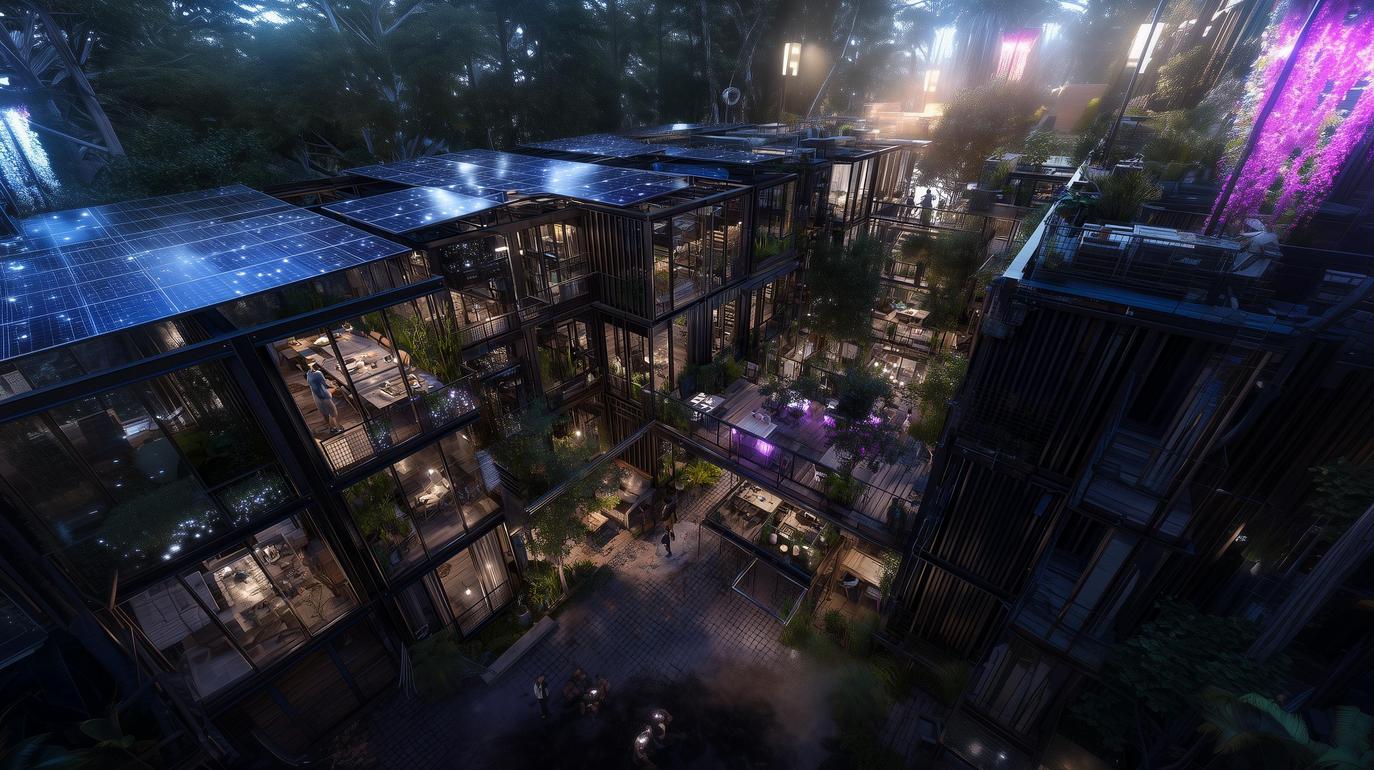
Living Together Sustainably: How Co-Living and Shared Spaces Boost Circular Housing
Circular housing isn’t just about materials and technology; it’s also about how people live. Co-living and shared space models are redefining urban housing by reducing material intensity per person while fostering community-driven sustainability. These “demand-side amplifiers” complement supply-chain circularity by cutting waste at the source: overbuilt, underused private spaces.
Modern co-living developments in Sweden, the Netherlands, and Japan demonstrate how shared amenities, such as laundry rooms, kitchens, coworking lounges, or even tool libraries, can reduce total floor area per occupant without sacrificing comfort. Studies published in Energies (MDPI) show that this shared-space design reduces both embodied emissions and operational energy by improving utilization efficiency.
From a business perspective, these models operate on hybrid revenue structures that combine leasing with community-based subscriptions. Instead of each resident purchasing individual appliances, shared ownership and leasing agreements distribute costs more fairly while extending product lifespans. This fits naturally with Product-as-a-Service models already transforming housing systems such as lighting, climate control, and furniture.
The social advantages are equally transformative. Shared living spaces foster collaboration, reduce loneliness, and build resilient micro-communities, benefits that align with the vision of technology serving humanity. By merging social and environmental design, co-living becomes an expression of circularity at the human scale, enabling richer lives with fewer resources.
The Circular Revolution: How Policy, Capital, and Industry Standards Are Fueling Change
The transition toward circular housing isn’t a niche trend; it’s now part of a rapidly expanding policy and investment movement. Across Europe and beyond, governments, financiers, and developers are aligning to make reuse, leasing, and longevity the new normal in construction.
The European Union’s Circular Economy Action Plan (CEAP) anchors this shift by promoting waste prevention, modular construction, and digital building documentation. National frameworks such as Level(s) provide common metrics for environmental performance, while CB’23 standardizes data for materials and product passports. These regulatory frameworks collectively reduce risk and enable transparent tracking, cornerstones for future green financing.
Financially, the momentum is equally strong. The Ellen MacArthur Foundation and the World Economic Forum have reported that circular practices have the potential to generate hundreds of billions in net profits in the real estate sector by 2050.
Circular business models such as Buildings-as-a-Service, Material Passports, and Component Leasing already attract institutional investors who favor long-term service contracts over volatile asset sales.
Insurance firms and banks are beginning to treat retained material value as collateral, an entirely new asset class born from circular design. Meanwhile, pioneering developers in the Netherlands, Denmark, and Finland are proving that modular, service-oriented housing can meet both profitability and sustainability benchmarks.
This convergence of policy, capital, and standards creates the essential infrastructure for an economic paradigm shift. By embedding reuse into law, finance, and construction, the circular housing movement gains permanence and credibility, paving the way for mass adoption.

From Blueprint to Action: Supporting the Circular Housing Movement
Every major change begins with informed choices. Whether you’re a homeowner, investor, or city planner, there are tangible ways to support the transition toward circular housing.
For Homeowners and Tenants:
- Seek homes that integrate modular or replaceable systems, such as energy-efficient lighting or leased appliances.
- Support developers experimenting with service-based housing models, especially those using verified material passports.
For Builders and Developers:
- Implement take-back contracts with manufacturers and suppliers.
- Adopt transparent supply-chain documentation using platforms like Madaster or BAMB to prepare for upcoming EU reporting requirements.
- Partner with circular-economy certified suppliers to strengthen brand credibility and access new capital.
For Policymakers and Urban Planners:
- Incentivize reuse with tax credits or regulatory fast-tracks.
- Mandate digital material tracking in public projects to set an industry standard.
- Encourage co-living zones that balance density, affordability, and sustainability.
For Investors:
- Evaluate real estate portfolios for circular value retention.
- Explore “green lease” instruments and circular service contracts that provide predictable, long-term returns.
- Utilize energy aware AI IoT efficiency mechanisms to monitor and optimize usage.
Every step toward circularity, whether at the individual or systemic level, multiplies impact. Each building documented, each product leased, and each shared space created brings the industry closer to sustainable permanence.

The Future of Homeownership: What if You Could Lease Your Lifestyle?
As housing transforms from static property into a living service, one question emerges: what happens to our sense of ownership? In the circular economy, value isn’t in possession but participation. Materials, components, and spaces flow through networks that prioritize access, longevity, and adaptability.
This transformation challenges deeply held cultural norms. Yet, it also invites a new kind of freedom: the ability to upgrade, adapt, and evolve without waste. If the past century was defined by mortgages and maintenance, the next may be defined by service contracts and sustainability.
Circular housing doesn’t eliminate ownership; it redistributes it. Responsibility shifts from individuals to systems, from short-term profit to long-term value. The home of the future will be less about what we own and more about how intelligently we live.
The next time you flip on a light, consider that it might not belong to you, and that’s precisely what makes it sustainable.


