
Moving from small Mimosa root bark textile tests to larger projects requires supply planning based on recorded results rather than assumed dye performance. From hand-dyed scarves and decorative fabrics to larger textile collections, botanical dyeing offers creative possibilities for businesses interested in natural materials.
However, moving from small experimental batches to larger textile projects requires careful planning. Purchasing the right quantities, evaluating suppliers, understanding product labels, and organising inventory can significantly influence workshop efficiency.
Unlike standardised industrial dyes, botanical materials may vary depending on plant species, harvesting conditions, processing methods, and storage practices. These differences make supplier transparency and material testing especially valuable.
Whether you operate a small textile studio or are preparing to expand production, understanding how to plan botanical dye supplies can help reduce waste, control expenses, and support a more organised workflow.
Why Dye Supply Planning Matters for Growing Textile Workshops
Small-scale natural dyeing often begins with experimentation. Artists may test different botanical materials on cotton, linen, wool, or silk to explore their characteristics.
As production increases, however, purchasing decisions become more complex.
A workshop preparing a few fabric samples has different requirements from a business producing hundreds of textile items.
Without proper planning, studios may experience material shortages, inconsistent inventory records, unnecessary purchasing costs, and storage difficulties.
Effective dye supply planning helps workshops:
- Estimate material requirements for upcoming textile projects.
- Compare small and bulk purchasing options.
- Maintain consistent supplier documentation.
- Reduce unnecessary waste and unused inventory.
- Prepare for seasonal production increases.
- Track botanical material batches and storage conditions.
These practices become increasingly important as a workshop moves from occasional craft projects to regular commercial production.
Understanding Botanical Dye Materials and Their Formats
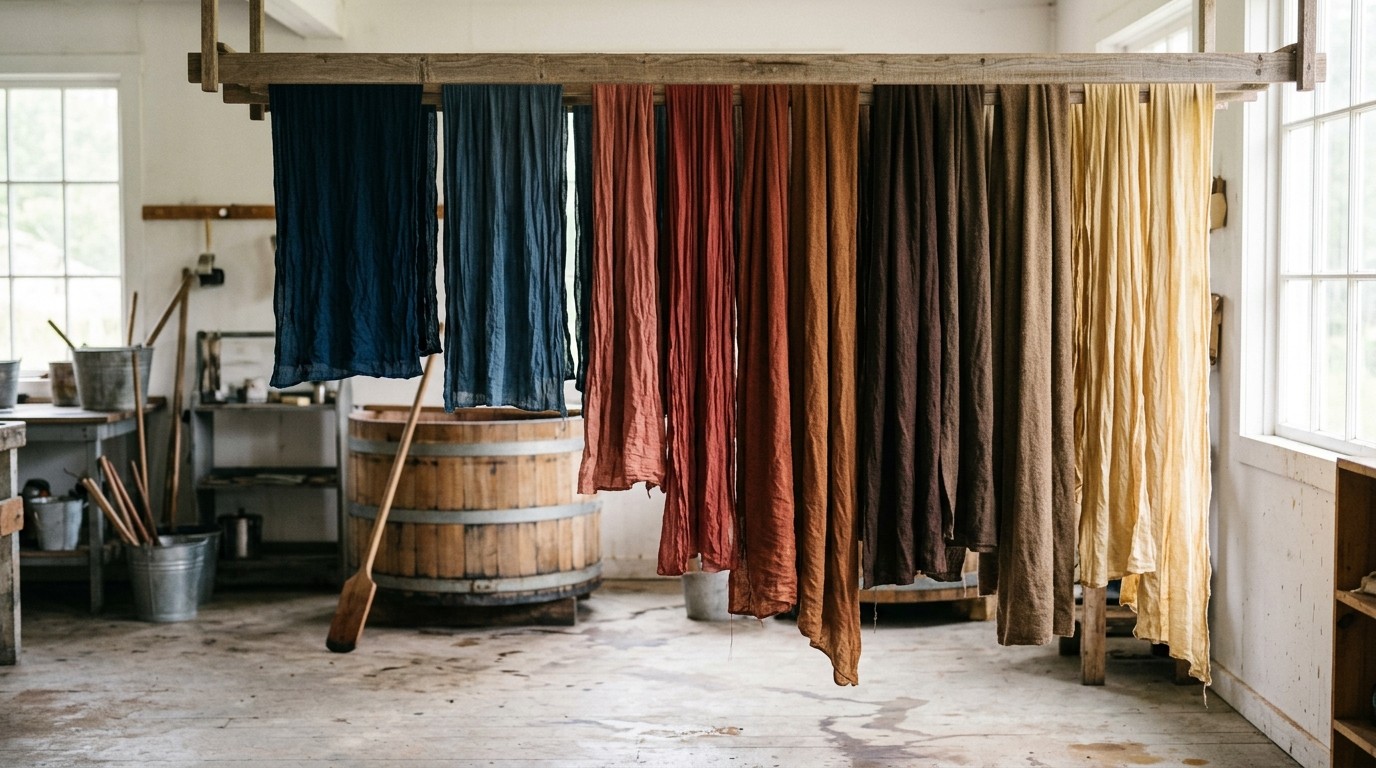
Botanical dye materials come from various plant sources, including roots, bark, leaves, flowers, seeds, and fruits.
Common examples include madder root, which yields reds from its roots, indigo, whose leaves give blues, walnut hulls for browns, onion skins for yellows, and selected botanical bark materials.
Because these materials behave in different ways, suppliers and studios often follow established practice in plant-based dyes in textile production.
Different plant materials contain different naturally occurring compounds, meaning their suitability for textile colouring varies.
Powdered Botanical Materials
Powdered materials consist of dried plant ingredients that have been milled into smaller particles.
They are often convenient to measure and divide into smaller quantities.
However, fine powders may produce airborne dust and can require careful handling or filtration.
Shredded Bark and Root Materials
Shredded materials retain larger plant fragments.
They may appeal to textile artists who prefer working with recognisable botanical pieces during traditional craft preparations.
Depending on the project, larger fragments may also be easier to separate from liquids.
Whole Botanical Materials
Whole roots, bark pieces, and dried leaves require different preparation and storage considerations.
They may be suitable for experimental projects, educational workshops, or traditional craft demonstrations.
Choosing the appropriate format depends on the studio’s equipment, preparation method, and documented material requirements.
Moving From Trial Batches to Larger Textile Production
Expanding a natural dye workshop should be a gradual process supported by practical testing and accurate recordkeeping.
Stage 1: Small-Scale Material Testing
Begin with small quantities of unfamiliar botanical ingredients.
During initial testing, document the plant species, supplier, material form, textile fibre, and preparation conditions.
These records help determine whether the material is suitable for further evaluation.
Stage 2: Repeatable Workshop Samples
Once a material has been evaluated, repeat the process under controlled conditions.
Compare the results across multiple samples rather than relying on a single experiment.
Textile artists should also assess colourfastness and fabric compatibility where appropriate. For natural dyes, resistance to light and to repeated washing are the fastness properties that usually matter most, and both vary with the dye source and the fibre.
Stage 3: Limited Production Runs
Before committing to a large order, consider producing a limited collection using previously evaluated materials.
This helps identify workflow challenges, material consumption patterns, and equipment limitations.
Stage 4: Larger Commercial Projects
Larger production should begin only after the studio understands its actual material requirements.
At this stage, inventory management, supplier communication, and purchasing schedules become essential.
Evaluating Wholesale Botanical Dye Suppliers
Selecting a dependable supplier is particularly important when purchasing larger quantities of botanical materials.
Wholesale buyers should examine product descriptions, botanical identification, available documentation, packaging specifications, and purchasing policies.
For example, craft buyers researching larger Mimosa hostilis root bark packages may review the wholesale page on mimosahostilis.shop.
This product page is associated with a 10kg root bark package, making it relevant for buyers comparing larger botanical material quantities.
Before placing a wholesale order, buyers should verify the exact material form, package weight, available stock, shipping eligibility, and current purchasing terms.
A large package should not automatically be considered suitable for textile production without appropriate material evaluation.
Important Questions to Ask Wholesale Suppliers
Before ordering, consider asking:
- What is the scientific name of the botanical material?
- Which part of the plant is included?
- Is the material powdered, shredded, or supplied in another form?
- Are batch numbers or origin records available?
- What packaging is used to protect the material?
- Are there any documented storage recommendations?
- What shipping restrictions or additional charges apply?
- What happens if a shipment arrives damaged or incorrect?
Clear answers can help workshop owners avoid purchasing problems and maintain better material traceability.
How to Read Botanical Dye Product Labels
Accurate labelling is essential when sourcing botanical materials for craft applications.
A useful product label should identify the material clearly and provide enough information for safe handling and inventory management.
Botanical Name and Plant Part
Common names can vary between suppliers and geographic regions.
Scientific identification helps buyers distinguish between different plant species.
The label should also clarify whether the product contains root bark, stem bark, leaves, or another plant part.
Net Weight and Material Form
Confirm whether the listed weight refers to the botanical material itself and whether the product is sold as powder, shredded bark, or whole pieces.
These details matter when estimating storage space and project quantities.
Batch and Origin Information
Where available, batch numbers and sourcing documentation help workshops compare deliveries and maintain purchasing records.
Quality and Sustainability Claims
Descriptions such as “premium,” “organic,” or “sustainably harvested” should not automatically be treated as independently verified.
Buyers should request appropriate supporting documentation when these claims influence purchasing decisions.
Choosing Between 1kg and 10kg Botanical Material Packages
Package size is one of the most important considerations when planning workshop supplies.
Smaller packages may be suitable for testing and limited production, while larger packages may appeal to businesses with established requirements.
For example, buyers comparing different quantities may consider 1kg of mimosa hostilis root bark powder as a smaller purchasing option, subject to confirming that the powder format is currently available for the selected product.
A 1kg package can be easier to manage for sample development and smaller textile projects.
A 10kg package, by comparison, requires greater confidence in material suitability, storage capacity, and expected usage.
| Consideration | 1kg Package | 10kg Package |
|---|---|---|
| Purchasing commitment | Lower quantity | Higher quantity |
| Storage requirements | Generally easier to manage | Requires more space |
| Trial projects | More manageable | Greater inventory commitment |
| Production planning | Small or limited runs | Established larger-scale needs |
| Financial exposure | Lower material commitment | Higher upfront commitment |
The most appropriate package size depends on actual workshop requirements rather than the assumption that buying more is always better.
Estimating Dye Material Requirements for Textile Projects
Estimating botanical material quantities begins with understanding the total amount of fabric being processed.
Calculate Total Textile Weight
For example, a studio preparing 40 scarves weighing 200g each would have:
40 × 200g = 8,000g
This equals 8kg of textile material.
However, the fabric weight alone does not establish the quantity of botanical dye material required.

Use Documented Workshop Testing
Material requirements should be based on previously tested procedures.
Different botanicals, textile fibres, and preparation conditions may produce different outcomes, and research on natural dyes shows how much the result depends on the dye source, the mordant used, and the fibre being dyed. The USDA Forest Service, for example, explains how different plant sources and mordants affect the final colour.
There is no reliable universal ratio that applies to every botanical material and fabric combination.
Include a Reasonable Material Allowance
Workshops may need additional material for testing, handling losses, or repeat samples.
This allowance should be based on actual studio records rather than arbitrary assumptions.
Shipping and Storage Considerations for Bulk Botanical Supplies
Shipping becomes increasingly important when purchasing larger botanical material packages.
Before ordering, confirm the supplier’s delivery destinations, shipping charges, processing estimates, and applicable restrictions.
A supplier’s advertised shipping service does not guarantee delivery to every location or establish an exact arrival date.
For international orders, buyers should also examine import rules, customs requirements, and relevant plant-material regulations.
Proper Storage Practices
Botanical materials should be stored in suitable containers that protect them from excessive moisture, contamination, and direct sunlight.
Clearly label every package with its botanical name, purchase date, and batch information where available.
Maintain separate storage areas for textile materials and food-related products.
Creating an Inventory System for Natural Dye Workshops
A simple inventory spreadsheet can make purchasing and production planning much easier.
Useful columns include:
- Botanical material name.
- Supplier and product format.
- Package size and purchase date.
- Batch identification.
- Quantity used per project.
- Remaining inventory.
- Storage location.
- Expected reorder date.
Reviewing these records regularly helps studio owners identify purchasing patterns and reduce unnecessary stock accumulation.
Frequently Asked Questions About Planning Dye Supplies
How much botanical dye material should a textile workshop purchase?
The appropriate quantity depends on the botanical ingredient, fabric weight, preparation method, and planned production volume. Small-scale testing should guide larger purchases.
Is buying botanical dye materials in bulk more economical?
Bulk packages may offer lower unit costs, but savings depend on supplier pricing, shipping charges, storage expenses, and actual material usage.
What should buyers check before ordering a 10kg botanical package?
Confirm the botanical species, material form, package weight, supplier documentation, shipping eligibility, storage requirements, and return policies.
Why are product labels important for natural dye materials?
Accurate labels help identify botanical ingredients, distinguish material formats, manage inventory, and maintain traceability between purchases.
Can the same botanical dye material be used on cotton and wool?
Some botanical colourants can be used on different textile fibres, but their behaviour may vary. Fibre-specific testing is important before commercial production.
How should large quantities of botanical materials be stored?
Store materials in clearly labelled, suitable containers in a cool, dry environment away from excessive moisture, contamination, and direct sunlight.
Conclusion
Moving from trial batches to larger textile projects requires thoughtful purchasing decisions and reliable material planning.
Small studios benefit from evaluating botanical ingredients carefully before increasing order quantities, while established workshops need organised inventory systems and dependable supplier information.
Whether comparing smaller packages or larger wholesale quantities, buyers should prioritise accurate product descriptions, transparent labelling, appropriate storage, and verified shipping policies.
By combining careful testing with practical supply management, natural dye workshops can reduce waste, control purchasing costs, and support more organised textile production.


