
Brain-computer interfaces (BCIs) are very promising. We have seen them being used for research, restoring lost capabilities to the disabled, Brain-To-Text technology that lets paralyzed users type by thinking, and a mind-controlled mouse that enables people with paralysis to use a tablet. However, they could soon be much more effective, thanks to the development of tiny new sensors.
Many existing BCIs involve implanting electrodes directly into the brain. The standard practice is to implant a couple or more, with each one monitoring and/or stimulating the electrical activity of a few hundred neurons in a specific area.
A few hundred may sound like a lot, but it’s not – there are up to 86 billion neurons in the brain. With this in mind, scientists in the U.S. have been exploring ways to cover more of them at once – in more areas – without cluttering a patient’s brain with conventionally sized electrodes.
In 2017, scientists from Texas’ Baylor University, the University of California at San Diego, Rhode Island’s Brown University, and semiconductor company Qualcomm started developing a higher-resolution alternative. The resulting sensors, called neurograins, are much smaller than traditional implanted electrodes – each one is somewhat the same size as a grain of salt, as the name suggests.
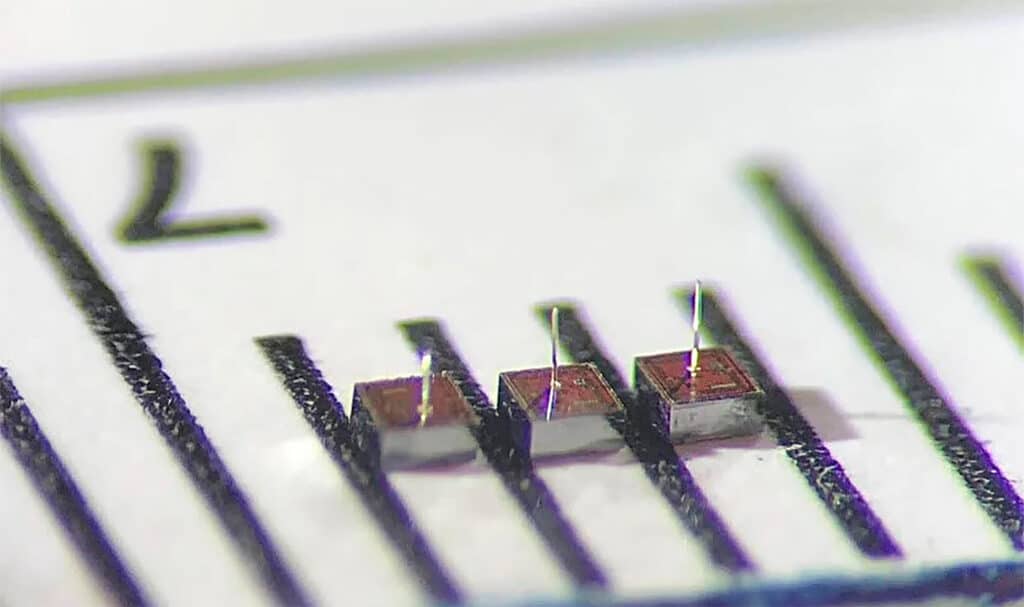
How does it work? Once implanted, a network of several neurograins is wirelessly powered by a thin and flat “thumbprint-sized” electronic patch that sticks to the patient’s scalp. In addition, that patch receives electrical signals from the sensors, and it can also send alerts to them, causing them to stimulate neighboring neurons.
The technology was recently demonstrated in experimental tests, which involved 48 of the neurograins being implanted onto a live rat’s cerebral cortex. Using these sensors, scientists stimulated the cortex in specific regions and recorded characteristic neural signals associated with spontaneous brain activity. According to the team, the technology can create networks of as many as 770 neurograins within one patient’s brain in its current form.
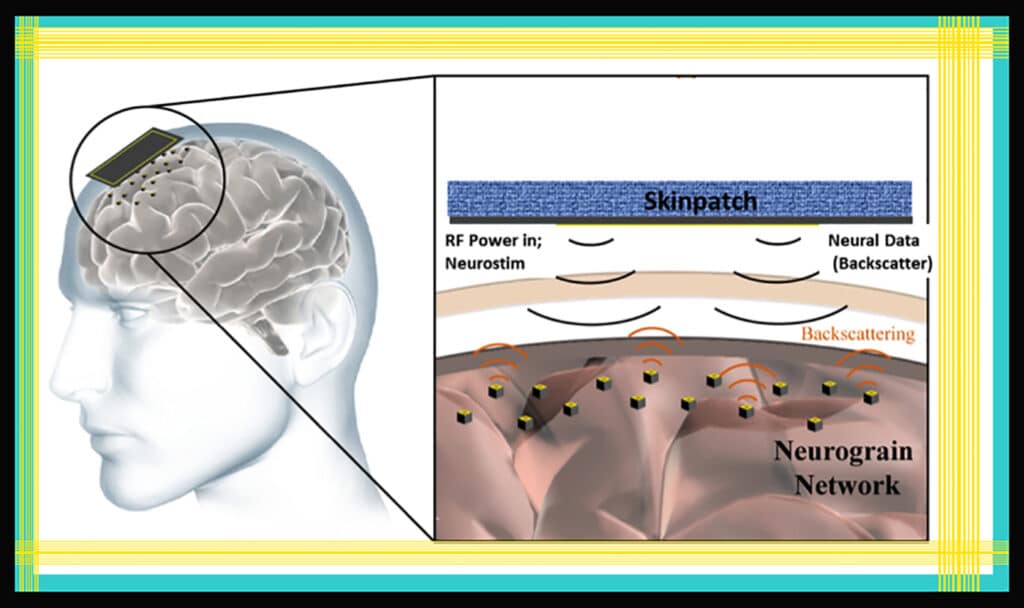
The scientists believe that eventually, it may be possible to implant thousands of the sensors for a currently impossible degree of neurostimulation and neural monitoring. “Our hope is that we can ultimately develop a system that provides new scientific insights into the brain and new therapies that can help people affected by devastating injuries,” concluded Prof. Arto Nurmikko, the senior author of a paper on the study, published on August 12, 2021, in the journal Nature Electronics.


