
Environmental concerns are now central to global discussions. Whether you’re a young individual determining your career path or someone exploring new opportunities after a job loss, numerous roles exist to contribute to healing our planet. Online education has become a critical tool for fostering sustainable careers in this evolving landscape. It accommodates those who prefer to avoid traditional university settings or wish to balance work with evening studies. For a grounding in the field itself, this guide to environmental sustainability covers the careers and education paths available.
This article explores how online education fosters sustainable career opportunities, highlighting the synergy between advancing technology and curriculum shifts that focus on sustainability. Stay with us to discover how you can engage with this dynamic movement and shape a career that supports our planet’s well-being.
Online Education’s Role in Fostering Sustainable Careers
Online education provides unmatched flexibility and accessibility, key components in fostering eco-friendly career paths. Unlike traditional classrooms, online platforms empower individuals to learn at their own pace from the comfort of their homes. This adaptability proves especially valuable for those seeking to transition into sustainability-focused careers while managing other responsibilities, such as family commitments.
Several online learning platforms and universities now offer courses explicitly designed for sustainable careers. For instance, Coursera, edX, Udemy, and Faulkner have partnered with top universities to provide courses on renewable energy, environmental management, and sustainable development. Some also offer an online degree program.
These platforms make it easier for learners worldwide to access high-quality education without the constraints of geographical location.
Online education significantly lowers the carbon footprint by eliminating the need for commuting to physical classrooms. This reduction in transportation-related emissions supports a more sustainable world and aligns seamlessly with the objectives of eco-friendly careers.
Technological Advances in Online Learning for Sustainability
Innovative teaching methods and tools are revolutionizing online education, making it more effective in imparting knowledge on environmental topics.
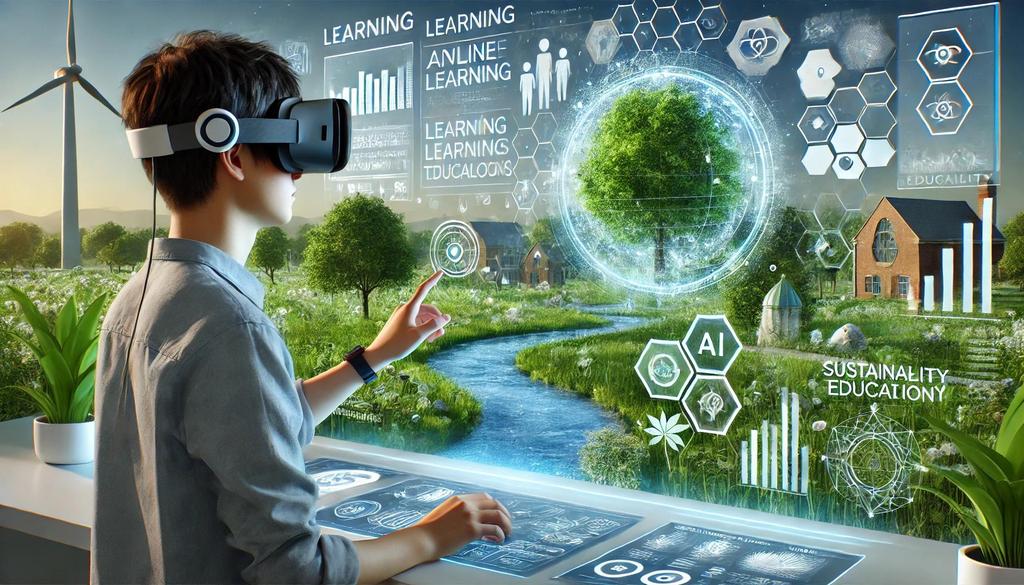
One such advancement is the use of virtual reality (VR) and simulations. These tools create immersive learning experiences that allow students to explore ecosystems, conduct virtual field studies, and understand complex environmental processes in a hands-on manner.
Online platforms use AI to personalize learning experiences with AI tutors. Algorithms analyze students’ progress and tailor content to their needs, ensuring a more efficient learning process. This personalization is particularly useful in sustainability education, where students may have varying levels of understanding and interest.
Curriculum Adjustments to Meet Sustainable Career Demands
Traditional courses are being adapted to include sustainability, reflecting the growing importance of eco-friendly practices in various fields.
For instance, business schools can incorporate modules on sustainable entrepreneurship, teaching students how to build businesses that prioritize environmental and social responsibility.
An example of such a curriculum adjustment is the MBA in Sustainability offered by the Yale School of Management. This program combines traditional business education with a strong emphasis on environmental stewardship, preparing graduates to lead organizations toward sustainable practices.

Challenges and Future of Online Education for Sustainability
Despite its many advantages, integrating sustainability into online education comes with its own set of challenges. One significant obstacle is the lack of hands-on experience, which is crucial for fields like environmental science and sustainable engineering. While VR and simulations offer valuable alternatives, they cannot entirely replace real-world experience.
Ensuring the legitimacy of online courses remains a crucial challenge. With countless programs available and new ones emerging constantly, along with the prevalence of scams, choosing accredited courses from reputable institutions is vital. This step guarantees that the education you receive is both recognized and respected in the job market.
As awareness of environmental issues continues to rise, the demand for sustainable careers will increase, further embedding sustainability into educational curricula. Seizing the opportunity to pursue the right education now, while the field is still growing, can significantly impact your future success.
Embracing Online Education for Sustainable Career Growth
Online education is swiftly establishing itself as a cornerstone for developing sustainable careers. It provides accessible, flexible, and innovative learning opportunities. As people aspire to transition into roles focused on environmental stewardship, online learning platforms offer the essential tools and resources to prepare future leaders for sustainable development.
In our current landscape, where sustainability plays a crucial role, embracing the potential of online education enables both existing professionals and newcomers to navigate and influence a world committed to ecological and social responsibility.


