
Nepali native Anuradha Koirala grew up with the humble teachings of Mother Teresa. Koirala was always inspired by the angelic woman and always knew that she was also destined to serve people in need. She was a teacher for twenty years educating young children until she decided to step it up and pursue an even higher calling. She started protecting children and women from abuse, trafficking, and exploitation.
What Motivated Koirala To Start Helping People?
Koirala would walk by Kathmandu’s Pashupatinath Temple every morning in the early 1990s. She regularly encountered women begging on the street, then one day, she struck up a conversation with them. The women told her that they were all survivors of some gender-based violence.
Koirala felt like she could relate to them. Previously, she was also a victim of extreme physical and emotional trauma at the hands of her ex-husband. At that moment of connection, she decided to switch careers, and that’s when her path to becoming Nepal’s Mother Teresa began.
She recalled when her husband abused her:
Every day, there was a battering. And then I had three miscarriages that I think were from the beating. It was very difficult because I didn’t know in those days where to go and report it who to talk to.
Koirala’s First Project
Koirala began with educating the women from the street about gender-based violence and the empowerment of women. She gave them an offer – if they stopped begging on the streets, she would help them support themselves. Only eight women took her up on her offer. Koirala gave them 1,000 rupees each from her meager earnings to start small street shops. Once they started making money, Koirala would collect two rupees per day from each of them. She saved the money for providing security and economic opportunities to other women who need it.

Maiti Nepal
In 1993, Koirala founded the non-profit Maiti Nepal and focused her attention on sex trafficking in Nepal. Koirala explains that the traffickers would show families the dreams of employment or money while hiding the reality of sex trafficking from them.
She said:
These are poor regions with high illiteracy rates. If a relative or friend turns up offering someone a job, it is often the girls’ parents themselves who encourage them to go, without realizing what is really happening. It is the perfect breeding ground for traffickers.
Young girls and women are taken from underprivileged sections of Nepal and sold into sex slavery in India. Therefore, Koirala devised a plan to start rescuing these women. Her efforts were more than necessary. The border between Nepal and India is entirely open and unsecured. Since 2013, human trafficking across that border has risen by 500%, with over 23,000 women and girls trafficked in 2016 alone. According to NGOs in the field, that number could quickly rise to 40,000 per year.

Maiti Nepal works in collaboration with the local law enforcement to conduct rescue operations regularly and patrol 26 points on the India-Nepal border to stop trafficking. The organization runs 11 transit homes that operate as immediate shelters for recently trafficked women. Thanks to Koirala’s assistance with catching trafficking criminals, over 700 traffickers were prosecuted.
Koirala explained:
When I see their pain — their mental pain as well as physical pain — it is so troubling that I cannot turn myself away. This gives me the strength to fight and root this crime out.
Over the years, Maiti Nepal has expanded. Now, it runs awareness campaigns, empowerment programs, vocational training initiatives for survivors, and a formal school. It also runs three prevention homes for at-risk girls to educate them on the dangers of trafficking. Additionally, it caters to over 1,000 children and runs two hospices that treat children and women infected with HIV/AIDS.
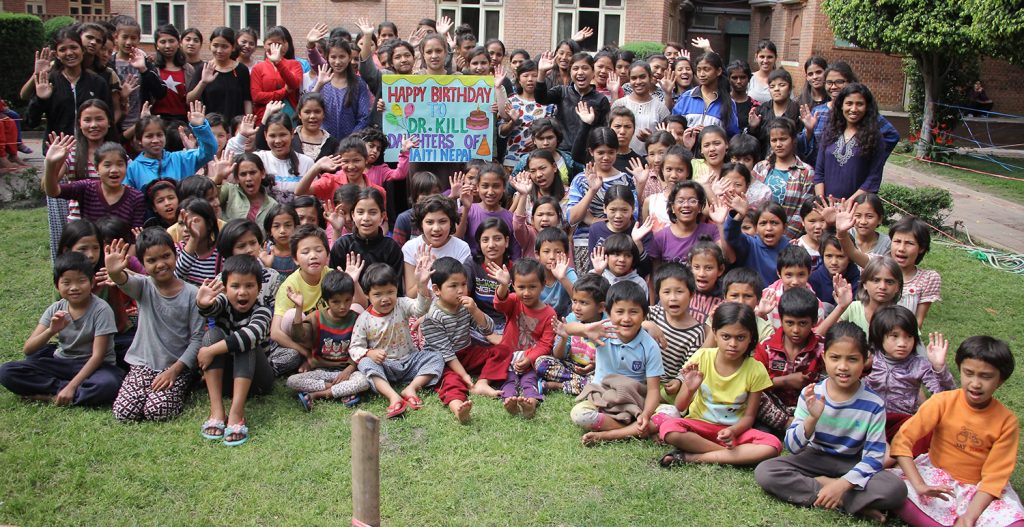
Koirala doesn’t only want the girls to be safe and educated, but she also wants to ensure that the women can live independent, productive lives in society. The organization employs former victims to participate in searches at the border transit points, in which they can identify possible trafficking victims. Recently, Maiti Nepal also started a café in Kathmandu, where previous victims work as cashiers, chefs, and waitresses.
Awards
Koirala’s heroic work is widely recognized. She won 38 national and international awards, including the Padma Shri, which is India’s fourth-highest civilian award. In 2010, CNN named her Hero of the Year, for which she won $125,000 to further her work.
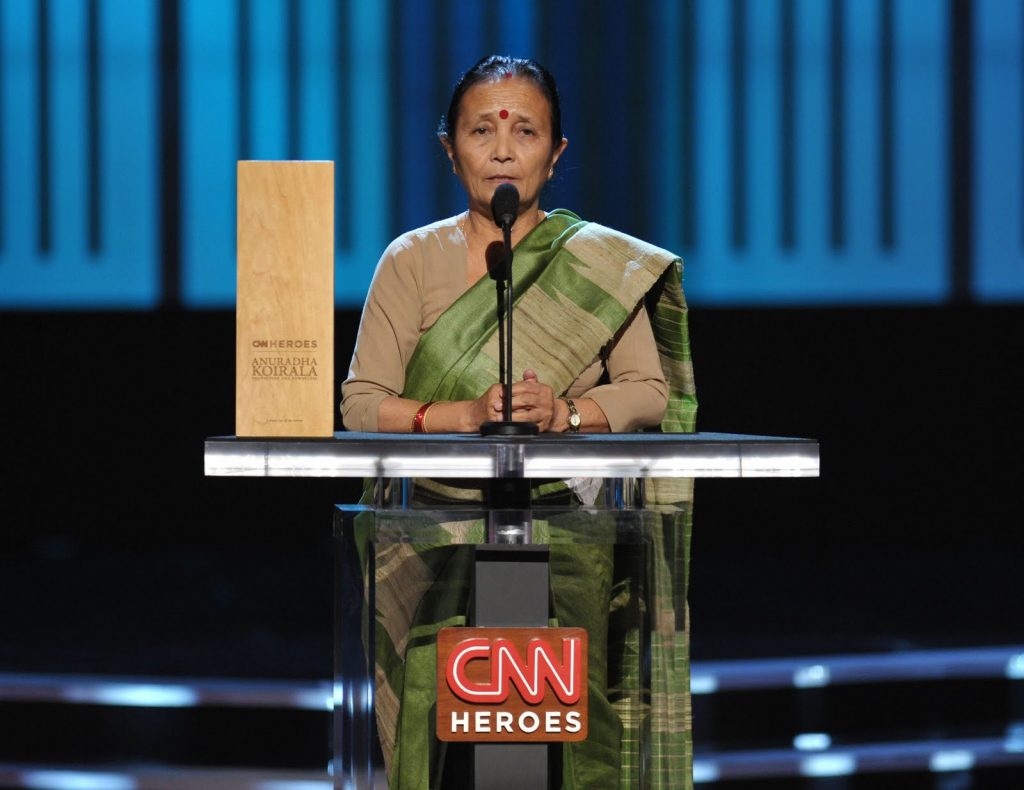
Koirala said:
I want a society free of human trafficking. I hope I will make it happen one day.
Since the founding of Maiti Nepal, the organization has rescued over 18,000 women and children. Today, Koirala is 70 years old and known as Nepal’s Mother Teresa. She continues to work relentlessly for this cause and doesn’t plan to give up anytime soon.
You can check out Maiti Nepal’s website for more information and updates on rescued victims.


