
Lady Gaga spent six years quietly sitting on the board of a biotech startup. In August 2026, she finally revealed it: Outer Bio, a Cambridge, Massachusetts, company that keeps donated human skin alive outside the body for four weeks to discover safer skincare. The positive twist most coverage missed is what this means for animals, people, and science: real human skin paired with AI could help replace animal testing in beauty, cut wasted lab work, and speed up cures for skin problems.
What Are Outer Bio and Yuna?
Outer Bio, legally named Outer Biosciences, was founded in 2020 by CEO Michael Polansky alongside chief scientist Kyung-Jin Jang, chief technology officer Chris Hinojosa, and chief business officer Stanley King. Lady Gaga, born Stefani Germanotta, serves on the board and introduced the company on Instagram on August 21 with the message, We are building the future of skin health.
The company has raised approximately $23 million from backers, including Wing Ventures, Initialized Capital, and Polansky’s own firm, Hawktail. It employs just 19 people outside Cambridge and is already generating revenue through research collaborations.
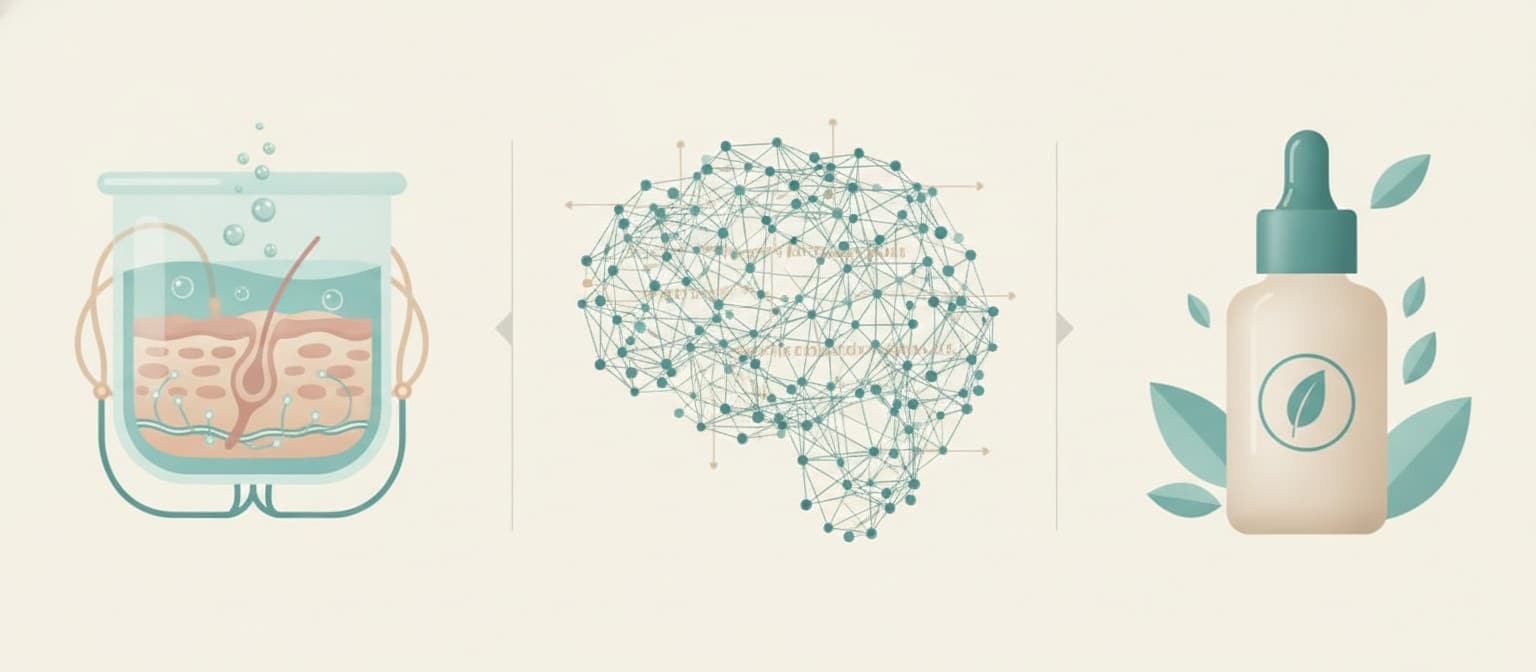
Its core invention is Yuna, an ex vivo human-skin platform that keeps full-thickness skin alive and measurable for four weeks. “Ex vivo” simply means tissue studied outside the body while still living and functioning.
How Keeping Skin Alive for Four Weeks Works
Normally, skin removed from the body dies within about a week. Yuna extends that window to four weeks or more while preserving native structure and immune function.
The tissue comes from skin that would otherwise be discarded after surgery, mostly plastic surgery, sourced through biobanks under institutional review board oversight and documented donor consent. To date, Outer Bio reports more than 300 donors across ages, sexes, and Fitzpatrick skin types I through VI, with over 10,000 treatments and 10 terabytes of data.
Each compound tested on a skin sample generates more than 30,000 data points from transcriptomics, histology, and secreted proteins. That growing dataset is what trains the AI.
Why This Could Replace Animal Testing in Beauty
This is the biggest reason for optimism. Cosmetic animal testing is already banned in the EU, UK, India, and many other regions, yet developers still struggle to prove safety without animals. Human skin that lives for a month gives researchers something better than a mouse or a petri dish: real human biology over time.
With Yuna, scientists can induce UV damage and watch stress, inflammation, collagen remodeling, and barrier repair unfold over weeks, not days. That makes it possible to answer the question searchers ask most: what is a better alternative to animal testing, with a direct answer: long-lived human tissue combined with AI screening.
- Real human biology instead of mouse skin that often fails to predict human reactions.
- Longer testing windows that capture slow processes like aging and chronic inflammation.
- Diverse donors across skin types I to VI for more inclusive skincare.
- Fewer wasted formulas, which means less chemical waste and faster safe ingredients.
- Reusable data: every test trains the AI to make the next search smarter.
Similar non-animal approaches, like lab-grown organ models for drug safety testing without animals, show the wider shift toward human-relevant models. Outer Bio applies the same logic specifically to skin.
From AI Screening to Safer Skincare Ingredients
Outer Bio says its system can computationally pre-screen around 750 million compounds a year, then test shortlisted candidates on living tissue. Results feed back into the model, improving each round.
Polansky says the loop now produces a new candidate roughly every six weeks, up from a couple of leads every 18 months with manual research. The company reports six current leads, with four already moving through OECD safety clearance for cosmetic ingredients.
Outer Bio chases cosmetic bioactives, not drugs, so it does not go through FDA drug approval. It still must meet safety testing under OECD test guidelines for chemicals before a partner brand can license an ingredient for a serum or cream.
| Feature | Standard Skin Explant | Outer Bio Yuna |
|---|---|---|
| Viability window | Less than 7 to 10 days | 28 days or more |
| Tissue type | Often partial or short-lived | Full thickness with immune function |
| Donor diversity | Limited | 300+ donors, skin types I to VI |
| Data per test | Single endpoint | 30,000+ data points over time |
| Discovery pace | Manual, months per lead | AI-assisted candidate every 6 weeks |
Beyond Beauty: Eczema, Aging, and Cancer Rashes
The benefits go beyond cosmetics. Outer Bio says it has a pharmaceutical collaboration studying why certain cancer drugs trigger severe skin rashes. Long-lived skin could also help researchers study chronic inflammation, cellular aging, and wound healing in ways short assays cannot.
For people interested in healthy aging and skin, this matters because collagen loss and barrier damage happen slowly. A four-week living model lets scientists test ingredients that support repair.
Other areas that could benefit include:
- Chronic eczema and inflammation triggers tested on living tissue over weeks.
- Age-related collagen loss and barrier repair across diverse skin types.
- Cancer-drug rashes, through Outer Bio’s reported pharma collaboration.
- Wound healing and UV recovery without animal models.
Much like research into live bacteria woven into clothing to promote healthy skin explores gentler ways to care for our largest organ, Yuna points to a kinder path forward.
Frequently Asked Questions
What is Outer Bio?
Outer Bio is a Massachusetts biotech founded in 2020 that uses donated human skin and AI to discover new skincare ingredients. Lady Gaga sits on its board.
What is Yuna?
Yuna is Outer Bio’s platform that keeps full-thickness donated human skin alive outside the body for four weeks or more, generating data to train AI models.
Does Outer Bio test on animals?
The company says it tests candidates on donated human tissue and cell assays rather than animals, which positions it as a cruelty-free discovery method.
When will Outer Bio ingredients reach products?
Four of six current leads are moving through OECD safety clearance. No consumer product or launch date has been announced, as partner brands would license finished ingredients.
Is the science proven?
A bioRxiv preprint from April 2026 documents Yuna reproducing skin biology across four weeks, but it has not yet completed peer review, and the AI discovery engine still needs independent validation.
Why This Story Gives Reason for Hope
Celebrity startups often sell hype. This one sells a tool that could make beauty kinder and smarter: less animal testing, ingredients tested on diverse real human skin, and faster answers for conditions like rashes and aging. If Yuna validates at scale, the future of skin health could be both high-tech and more humane.


