
Robot dogs learned to walk. Now they are learning to carry us. Kawasaki’s four-legged Corleo concept and a wave of rideable quadrupeds from China, led by DaxAI’s Qiji X1 Cyber Horse, point to a strange new vehicle category: part motorcycle, part robot, part horse.
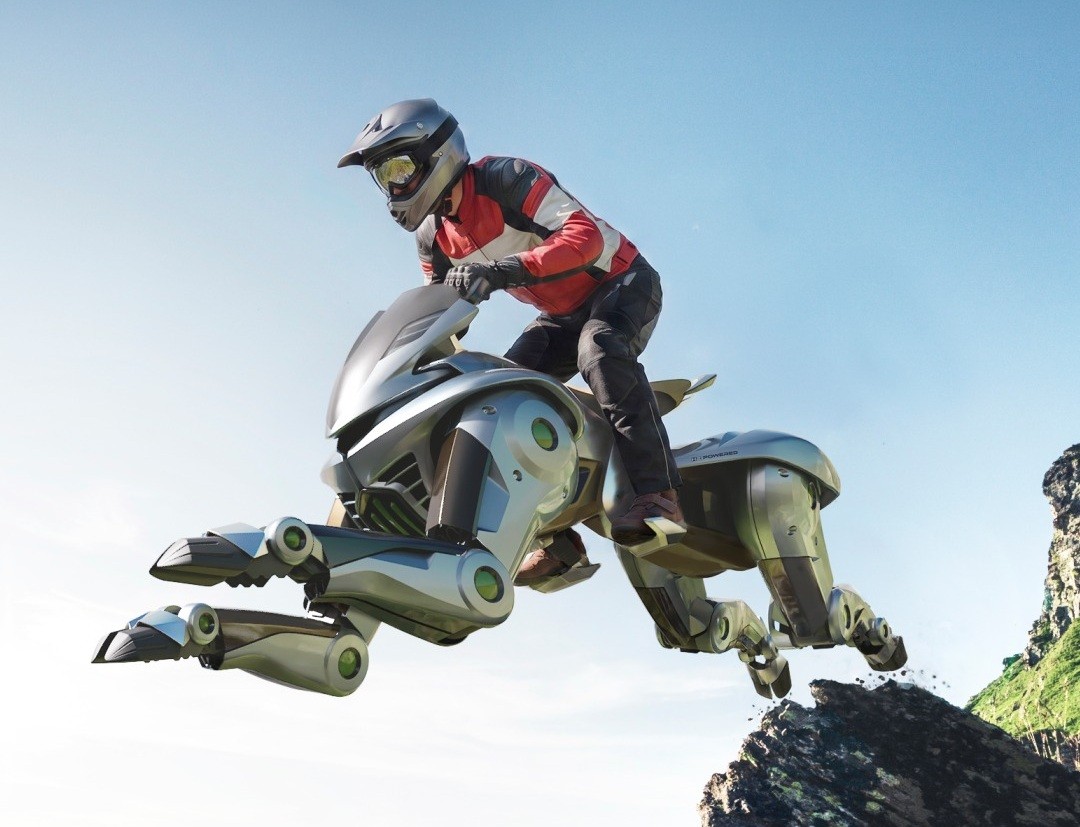
Before you sell your motorcycle, know this: none of these machines are products you can buy and ride home today. The dramatic videos of the Kawasaki Corleo leaping across crevasses are CGI concept visuals, and the Chinese machines that visitors actually sat on are exhibition prototypes. Still, the direction of travel in 2026 is unmistakable.
Kawasaki Corleo: hydrogen horse with a 2035 target
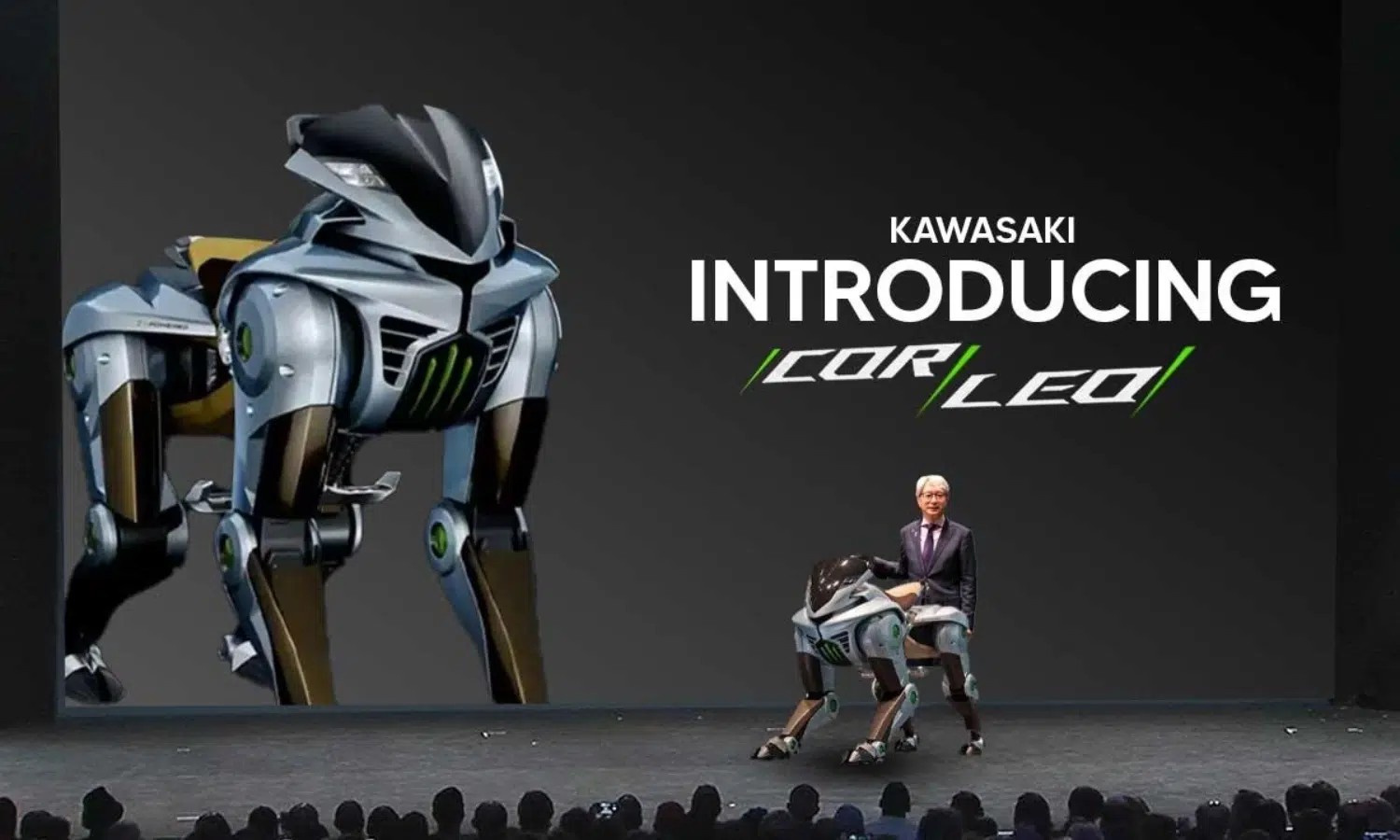
Unveiled at Expo 2025 in Osaka, the Kawasaki Corleo is now an official development program, not just a design exercise. Kawasaki created a dedicated Safe Adventure Business Development Team in December 2025, reporting directly to the president, with a goal of running functional prototypes at Expo 2030 in Riyadh and commercialization around 2035.
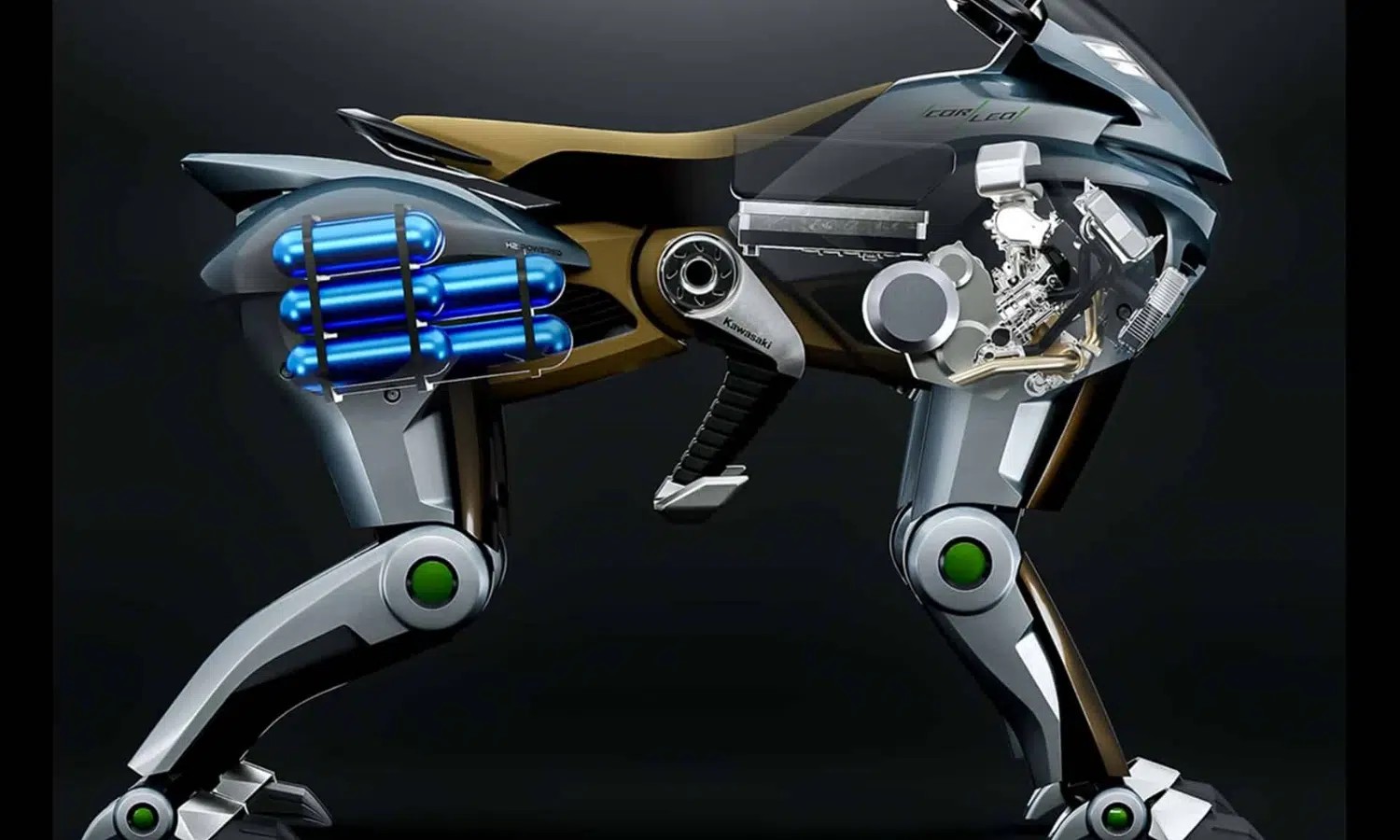
Corleo is a Robotic Multi-legged Vehicle. A rider straddles it like a horse and steers by shifting body weight, while AI and sensors keep balance. Power comes from a 150cc hydrogen-fuelled engine that generates electricity for the leg drive units, with hydrogen stored in rear canisters. Rear-leg suspension borrows Kawasaki’s motorcycle swing-arm knowhow, and split rubber hooves are meant to grip rock, snow, and forest trails.
What Corleo has not shown: a walking prototype carrying a person, or published specs for speed, payload, range, or climbing ability. The full-scale model displayed at gamescom in Cologne, where around 6,100 visitors sat on it, and at EICMA 2026 in Milan, is a non-walking mock-up.
China’s rivals: rideable today, barely
At the 2026 World Robot Conference in Beijing, visitors actually mounted DaxAI Robotics’ Qiji X1, also called the Cyber Horse or All-Terrain Intelligent Mount. Video shows adults riding the saddle-and-handlebar machine as it takes slow, jerky steps across the show floor. State media describes autonomous navigation over slopes, gravel, and mud, aimed at premium off-road leisure, load carrying, and rescue support.
DaxAI claims a maximum payload around 300 kg (660 lb), far above industrial quadrupeds like the Unitree machines covered previously on Intelligent Living. Circulating range and speed figures differ and are not confirmed by the manufacturer, so treat 25-mile range or 6 mph claims with caution. Availability is quotation-based, not a buy-now product.
For context, Unitree’s industrial B2 quadruped weighs about 60 kg, carries 40 kg while walking, tops 21.6 km/h, and sells enterprise-only for roughly $85,000 to $180,000 depending on configuration. It is built for inspection, not riders. The Qiji X1 is a much larger, rider-first machine, while DEEP Robotics has shown a horse-styled quadruped tied to the 2026 Year of the Horse.
Corleo vs. Chinese rideables: concept vs. prototype
Think of it this way: Kawasaki offers vision plus a powertrain bet, while China offers rideable hardware minus refinement.
- Power: Corleo plans a hydrogen-engine hybrid for long off-road excursions. Chinese rideables use large battery-electric quadruped platforms with limited endurance under a human load.
- Control: Corleo promises weight-shift steering like a real horse. The Qiji X1 uses handlebars and a saddle, closer to an ATV.
- Maturity: Corleo is a mock-up with a 2035 horizon. The Qiji X1 has carried people at exhibitions but moves slowly and unsteadily.
- Purpose: Both target mountain trails, farms, patrol, and rescue ground where wheels fail, plus the sheer novelty of riding a robot.
Payload and range: why riders break the spec sheet
Carrying an adult plus gear over rough ground is brutally energy intensive, and a rider is the hardest payload of all because the load moves, shifts, and panics. Industrial quadrupeds quote endurance unloaded or at 20 kg, not at maximum payload. Add a 70 to 100 kg rider and runtime collapses, while heat, balance, and fall safety become serious engineering problems.
DaxAI’s figures illustrate the confusion. The company claims around 300 kg dynamic load for the legged X1 at walking pace (roughly 7 to 10 km/h), while the wheel-legged XS sibling is quoted at 320 kg machine weight and up to 40 km/h on wheels, with range claims varying between sources. Treat every figure as a manufacturer claim until an independent test confirms it, and always separate walking payload from static standing load.
That is why hydrogen matters to Kawasaki’s story: batteries alone struggle to deliver hours of legged riding. But hydrogen canisters, refueling, cost, and safety add their own hurdles, which is one reason Kawasaki gives itself until the mid-2030s. Note Kawasaki already built something closer to rideable: the BEX ibex-style quadruped demonstrated in Tokyo in 2022, which carried about 100 kg on legs and knee wheels with handlebar steering. Corleo is the later, more ambitious hydrogen concept. BEX works as a demo; Corleo does not walk yet.
Buying guidance: what to demand before money changes hands
DaxAI opened pre-sale listings on JD.com in August 2026, with the X1 reported around 289,000 yuan (about US$43,000), but a listing is not a delivery. Before paying anything, demand an independent video of the exact configuration walking untethered with an adult aboard, a written spec sheet stating walking payload, speed, range, slope, and runtime at rider weight, plus warranty, spare parts, service, and fall-safety terms. Anyone claiming a long-range, fast, rider-ready robot horse for sale now deserves skepticism. Check whether figures come from the manufacturer, whether video shows autonomous riding or a staged demo, and whether the seller or only a reseller stands behind the machine.
Who is this actually for?
Near term, almost nobody as a consumer product. Likely first users are exhibition venues, mountain resorts, ranches, search and rescue teams, utilities, and military logistics researchers who already use legged robots and can tolerate handlers, tethers, and short missions. Premium leisure riding, like the walking vehicle concepts such as Hyundai’s TIGER, comes first where novelty justifies cost.
Longer term, if Corleo or its Chinese counterparts mature, the audience widens to trail riders, farmers, patrol rangers, and riders with mobility needs who cannot mount a real horse but could board a kneeling robot. That future depends on proven fall safety, weatherproofing, service networks, and regulations that do not exist yet.
What to watch next
Watch for three milestones: a Corleo prototype walking untethered with a rider aboard, independently verified payload and endurance numbers from DaxAI or rivals, and a real price with delivery terms rather than quotation-only listings. Until then, the rideable robot horse is real enough to sit on and too early to buy.
Kawasaki turned a viral rendering into a funded program with a deadline. China turned a quadruped into something you can straddle. The race between a careful 2035 hydrogen horse and scrappy ride-today prototypes will define whether this becomes a vehicle category or remains the world’s most exciting mock-up. For more on separating demo hype from deployable machines, see our breakdown of viral Chinese robot videos.


