
Rotary hydroponics is a style of farming that was initially developed by NASA for use on the International Space Station. Now, a brilliant new company called Bace, founded in 2018, has created a rotary hydroponics system for people’s homes called Rotofarm.
It is similar to all hydroponic systems in the sense that it works without soil and uses mess-free nutrient and water reservoirs to feed its plants. However, everything else about it is new and futuristic, like an evolved version of the traditional hydroponic system.
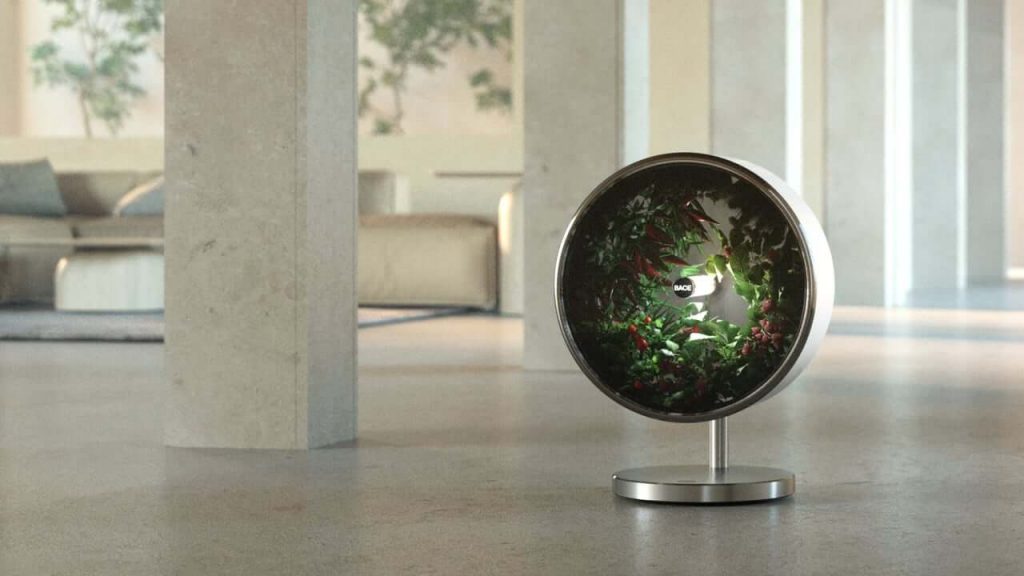
It’s made from stainless steel, silicone and strengthened, smoked glass. Yet, as beautiful and mesmerizing as it is, “It was paramount that Rotofarm not be treated as decor,” said its creator. “It’s designed to be used. We went to great lengths to ensure it fit seamlessly into any kitchen.” This wonderful hydroponic system puts a whole garden on your countertop but it’s not just a patch of plants, it is a work of art.
The founder of Bace, Australian Toby Farmer, refined the principles of rotary hydroponics, resulting in the manifestation of Rotofarm, a beautiful device that he calls the “easiest-to-use and most automated planter in the world”. Farmer believes “rotary hydroponics is the answer to growing vegetables faster, easier and more efficiently.
What makes rotary hydroponics so much better? Its rotating design turns the plants in a full circle every hour meaning that half the plants spend their time in negative gravity. According to Bace, this accelerates their growth as much as twice over. Furthermore, since the plants can grow all along the surface of the circle, people can enjoy nearly 5 feet (1.5 meters) of an indoor vegetable patch while only using up only 11 inches (30 centimeters) of counter space.
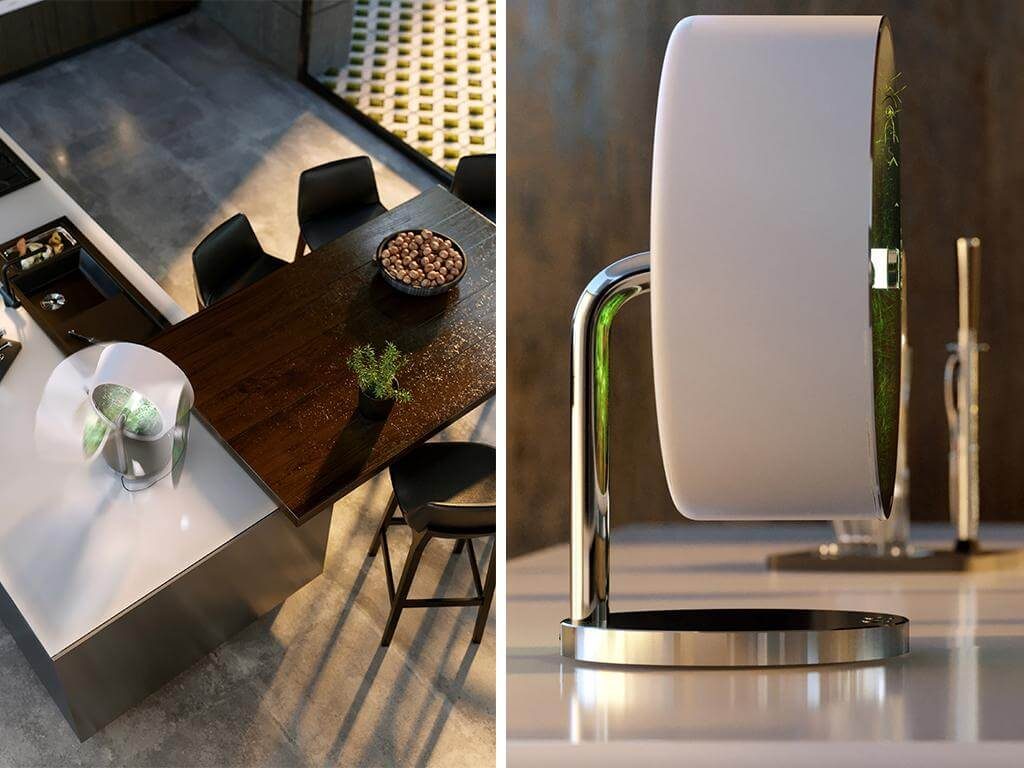
Special features of the design include an automated LED light tube at the center of the farm-bed that shines out onto the tops of all the plants and can be adjusted differently in each quadrant. What that means is that the light tube is divided into four zones that can be dimmed and timed differently to provide the optimal level of light for different plants.
The color of the light is similar to sunlight, but with a hint more red to increase the rate of photosynthesis, stimulating even faster plant growth. To eliminate the issue of glare in the house from the bright light emitted by the rotary garden, there is an optional magnetic cover that reduces the brightness while still allowing the plants inside to be visible.

While testing the prototype, Farmer’s approach to eating and cooking had changed for the better. It’s also a much more sustainable option than store-bought vegetables. He said:
By growing produce at home without preservatives or pesticides, the produce doesn’t expire until its cut, you’re not spending as much money on groceries and a lot of space is saved in your refrigerator. Perhaps most importantly, we help to reduce carbon emissions produced by mass farming, transport and plastic packaging into supermarkets.
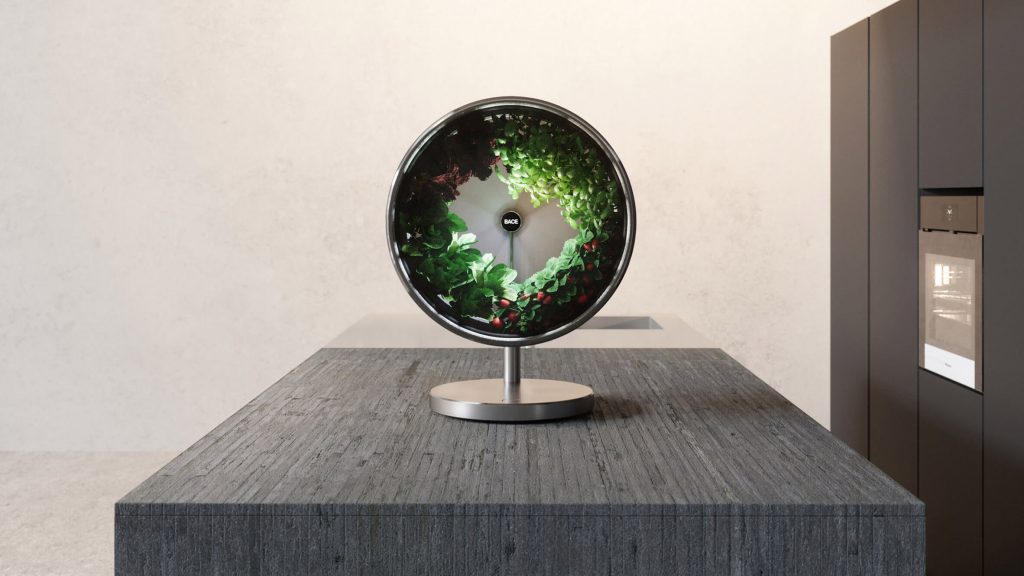
Rotofarm is a “truly set-and-forget” machine as it can even notify the user when produce has overgrown and requires harvesting.
Rotofarm is about to launch on Kickstarter in September.


