
Engineering a robotic end-effector that seamlessly adapts to unpredictable environments remains a paramount objective in modern robotics. Heavy-duty industrial manipulators excel at automotive assembly and structural welding with unerring accuracy, yet they consistently fumble when confronted with the delicate geometry of organic fruit or fragile glassware.
Advanced robotics applications already optimize logistics and healthcare networks, yet the physical link between digital intelligence and tactile reality has often been the weakest part of the chain. The emergence of SharpaWave represents a pivotal shift in this technological landscape, offering a human-scale solution that merges high-fidelity vision with sophisticated touch sensing.
This coordinated system leverages 22 degrees of freedom and integrated fingertip cameras to navigate complex environments that once baffled traditional automation. As a mass production line begins to scale, this visuo-tactile hand is positioned as the essential bridge between lab-based prototypes and the next generation of productive humanoid workers.

The Evolution of Human-Ready Robotics and Dexterous Manipulation
Industrial environments and everyday tools are meticulously optimized for human anatomy, creating a natural barrier for traditional robotics. Human-centric design dominates our physical environment, ensuring that standard interfaces remain accessible to biological hands. Most everyday objects require high-dexterity manipulation, including:
- Ergonomic door handles and locking mechanisms
- Precision hand tools and industrial equipment
- Complex consumer packaging and fragile containers
These designs underscore why robot hands must emulate human articulation to be truly effective in shared spaces. Effective human-robot collaboration necessitates end-effectors capable of manipulating the diverse array of objects that populate our daily lives.
Overcoming the Dexterity Barrier
Dexterity remains the final frontier of general-purpose automation, a mechanical hurdle that separates static industrial arms from truly collaborative partners. A humanoid platform may excel at locomotion or visual recognition; however, lacking the ability to manipulate complex shapes or modulate pressure, it fails to provide meaningful assistance in real-world scenarios. Mass-produced visuo-tactile hardware facilitates human-level robotic manipulation and closes the gap between AI commands and physical execution.
Until now, these platforms lacked a reliable tactile interface capable of navigating a world optimized for fingers rather than rigid grippers. This new generation of robot hands enables the rise of humanoids like the Unitree R1 humanoid platform and the Walker S2 24-7 humanoid worker, which are moving toward Atlas deployments in Hyundai’s factories. These platforms prioritize utility in logistics, healthcare, and manufacturing over mere acrobatic stunts. SharpaWave aims to provide that missing link between AI-driven intelligence and physical adaptability.
Scaling Dexterity: Inside the SharpaWave Visuo-Tactile Hardware
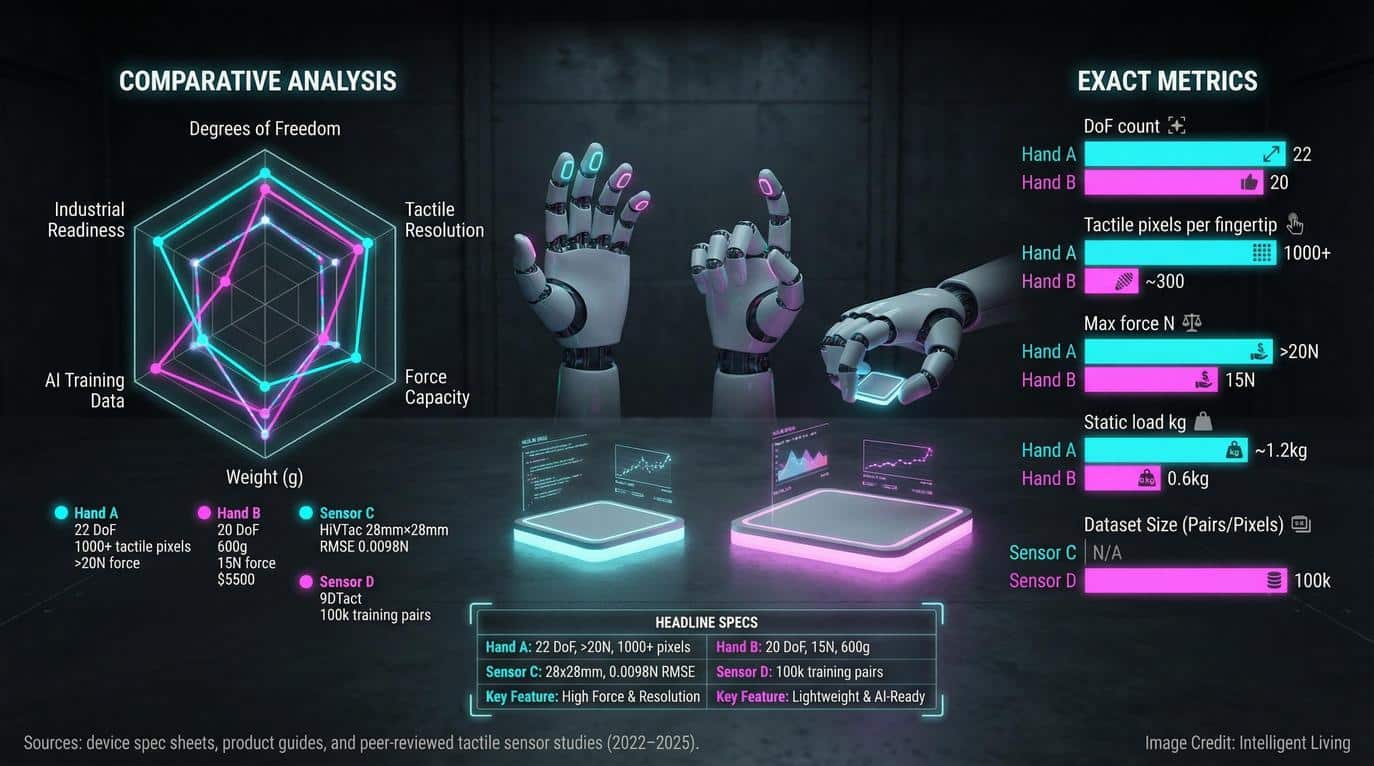
SharpaWave represents the technological culmination of iterative efforts to achieve lifelike robotic dexterity. The hand mirrors human proportions with 22 active degrees of freedom that bend and rotate to mimic finger and wrist articulation. Engineers designed SharpaWave as a human-scale robotic hand with a proprietary Dynamic Tactile Array to reproduce the subtle control found in biological fingertips.
Proprietary Sensor Fusion and Tactile Resolution
Integrating a Dynamic Tactile Array, each fingertip utilizes a hybrid sensor matrix of over one thousand tactile pixels and an embedded micro-camera to allow the hand to both see and feel the objects it touches. The fingertips can detect forces as low as 0.005 newtons, capturing real-time data at 180 frames per second with sub-millimeter precision.
This extraordinary sensitivity empowers the hand to peel an egg or thread a needle, maintaining precise force modulation to avoid damaging delicate substrates. The system captures high-fidelity haptic data to track surface texture changes, an essential capability for sorting materials and managing fragile industrial components. Automated manufacturing updates confirm that these hands meet mission-critical standards as they move through rolling production cycles.
Validation Standards and Industry Recognition
Signaling recognition of its mechanical design and ultra-responsive sensing, SharpaWave earned honors in the CES 2026 robotics category, distinguishing it from earlier lab-only hands like Shadow or Allegro. Global partners are now evaluating the platform as a standard component for next-generation humanoids.

Engineering Robotic Senses through Visuo-Tactile Feedback
Human perception relies on the seamless synchronization of visual and tactile inputs. During object manipulation, the visual system estimates geometry while fingertip mechanoreceptors gauge pressure and frictional forces. Standard robotics historically lacked a dual feedback loop, operating with a sensory deficit that hindered complex manipulation. AI-powered robotic guidance systems improve accessibility in complex city environments by tackling similar embodied intelligence challenges.
Adaptive grip control relies on this integrated feedback system to adjust interactions in real-time. The hand responds to environmental changes through specific triggers:
- Tactile data initiates immediate corrective adjustments if an object begins to slip.
- Micro-cameras detect light deformation in the fingertip skin to provide cues about contact geometry.
These synchronized signals enable the hand to safely navigate irregular shapes that typically exceed the operational limits of traditional parallel-jaw grippers. Ambient AI sensors in smart homes react to human presence using similar non-invasive feedback loops. Research labs in Japan have demonstrated vision-based tactile concepts for years, using soft sensor skins and embedded cameras to estimate contact forces and slip.
Commercial Ecosystem and Tactile Competitors
These specialized industrial grippers currently sort delicate organic produce and assemble electronic components with sub-millimeter accuracy. Touch-sensitive tooling allows warehouse robots to pick varied items from cluttered environments, unlocking complex tasks that historically required human employees.
Standardizing Simulation and Training Workflows
SharpaWave’s software suite, SharpaPilot, connects this visuo-tactile data to major simulation tools such as Isaac Gym, MuJoCo, and PyBullet. This methodology mirrors reinforcement learning systems that leverage large language models to refine robot skills. As generative AI models revolutionize industrial workflows and redefine human expertise, embodied platforms like SharpaWave give those models a physical interface, allowing artificial intelligence not only to plan and reason but also to touch, sense, and adapt.
Bridging Viral Demonstrations and Industrial-Grade Reliability
Rigorous reliability engineering serves as the foundation for transforming visually impressive demonstrations into consistent, industrial-grade performance. Autonomous robot walk tests demonstrate the endurance thresholds required for next-generation humanoids.
Sharpa uses automated rigs to drive more than one million continuous grip cycles, validating long-term wear on gears, cables, and sensor housings. Every joint, motor, and sensor undergoes stress testing under extreme industrial conditions, simulating years of field operation to move beyond the limitations of lab-based validation.
Safety Protocols and Collaborative Design
Integrated collision detection and fault monitoring architectures provide essential safety buffers when these hands operate on humanoid platforms alongside human coworkers. This aligns with the reliability expectations currently transforming production lines within the electronics contract manufacturing sector. Engineered with backdrivable joints, the hand yields under unexpected resistance rather than rigidly fighting obstacles.
Establishing a Developer Platform for Embodied Artificial Intelligence
SharpaWave is more than a piece of hardware; it is a developer platform. Through its SharpaPilot software and compatibility with simulation tools, the hand allows roboticists to experiment, train, and deploy new manipulation skills. SharpaWave’s software integration parallels how CUDA unlocked parallel GPU computing, transforming specialized hardware into a ubiquitous foundation for AI milestones that power the 2026 robotics revolution.
Transferable Policy Weights and Learning Libraries
By standardizing this hardware across global research facilities, neural network policy weights and control strategies can transfer seamlessly between platforms. Generative AI systems are starting to influence industrial automation strategies, and SharpaWave gives those models a high-fidelity hand to control. In that sense, the platform is a candidate for a CUDA-style moment in embodied AI: a standardized hardware layer that allows creativity to shift into software and policy design.
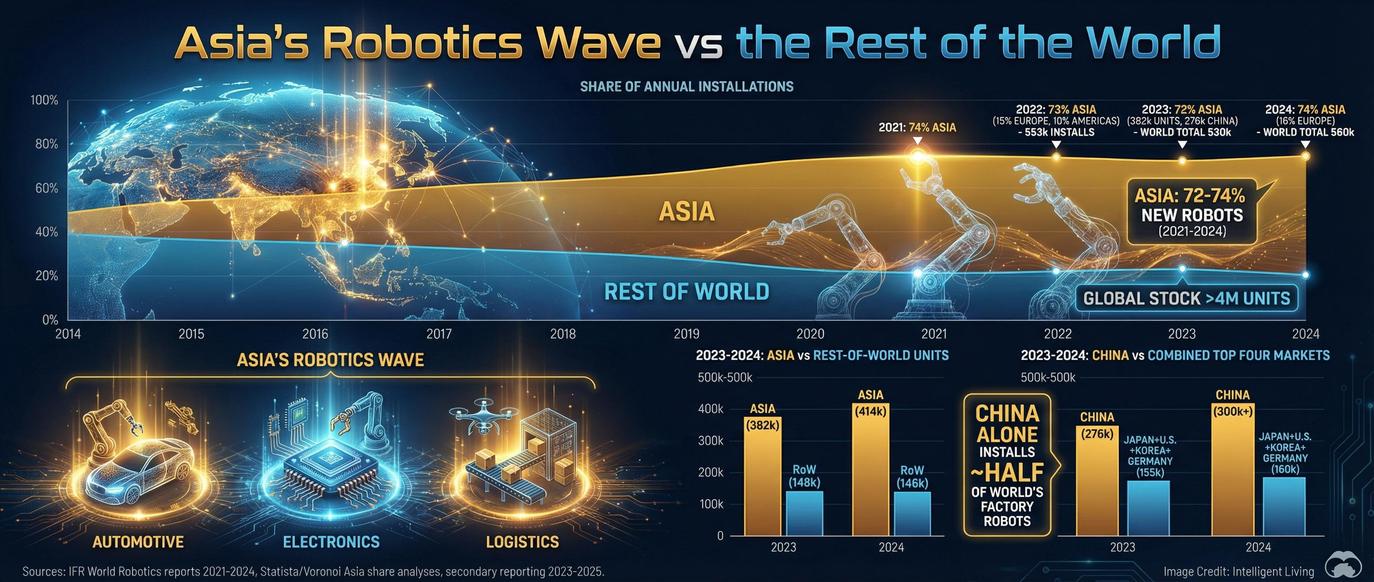
Asia’s Robotics Triangle: Singapore, Japan, and China Build the Hands of the Next Economy
The rise of SharpaWave also highlights how Asia has become a center of gravity for next-generation robotics.
Singapore: Precision Engineering and Commercialization
Sharpa Robotics anchors a thriving cluster of advanced manufacturing and AI startups in Singapore. This ecosystem drives the region’s aggressive push toward commercialized humanoid technology. The city’s emphasis on precision engineering and global commercialization has helped Sharpa move from lab prototypes to mass-produced units that can ship to research institutions and robotics companies around the world.
Japan: Legacy Research and Tactile Innovations
Commercial products are finally emerging from Japan’s deep legacy of human-robot interaction research, transforming lab theories into tactile reality. Tactile sensor platforms use soft skins to handle fragile objects, while optical tactile sensing systems estimate force and contact distribution for fine manipulation. These technologies are already being demonstrated on humanoid and industrial robots for tasks such as packing food boxes and assembling electronics.
China: Strategic Scale and Humanoid Deployment
Faced with an aging population and mounting industrial labor demands, Chinese manufacturers and regional governments have positioned humanoid robotics as a critical pillar for sustaining economic growth. Lightweight, dexterous robotic hands with twenty active degrees of freedom are being deployed across research labs and emerging service robot platforms in logistics and retail.
The Economics of Dexterous Hands and Market Adoption
Commanding a high five-figure investment, the SharpaWave hand occupies a premium niche within the global robotics market. In robotics economics, early adopters pave the way for broader affordability. Industrial robot arms once cost six figures before volume manufacturing brought prices down and opened new markets.
Economic Trends and Volume Manufacturing
Just as industrial arms became ubiquitous, dexterous hands will likely follow a downward price curve as production scales, supply chains mature, and market competition accelerates innovation. Advanced hands will likely become commonplace in hospital logistics, rehabilitation devices, and even high-end consumer robots. This shift mirrors how automated modular factories combine standardized building modules to reduce housing costs.
For now, hands like SharpaWave act as a benchmark. They show what is technically possible when sensing, mechanics, and AI are tightly integrated. As the ecosystem grows, more affordable hands will inherit lessons from these early flagships.
Collaborative Robotics and the Preservation of Human Expertise
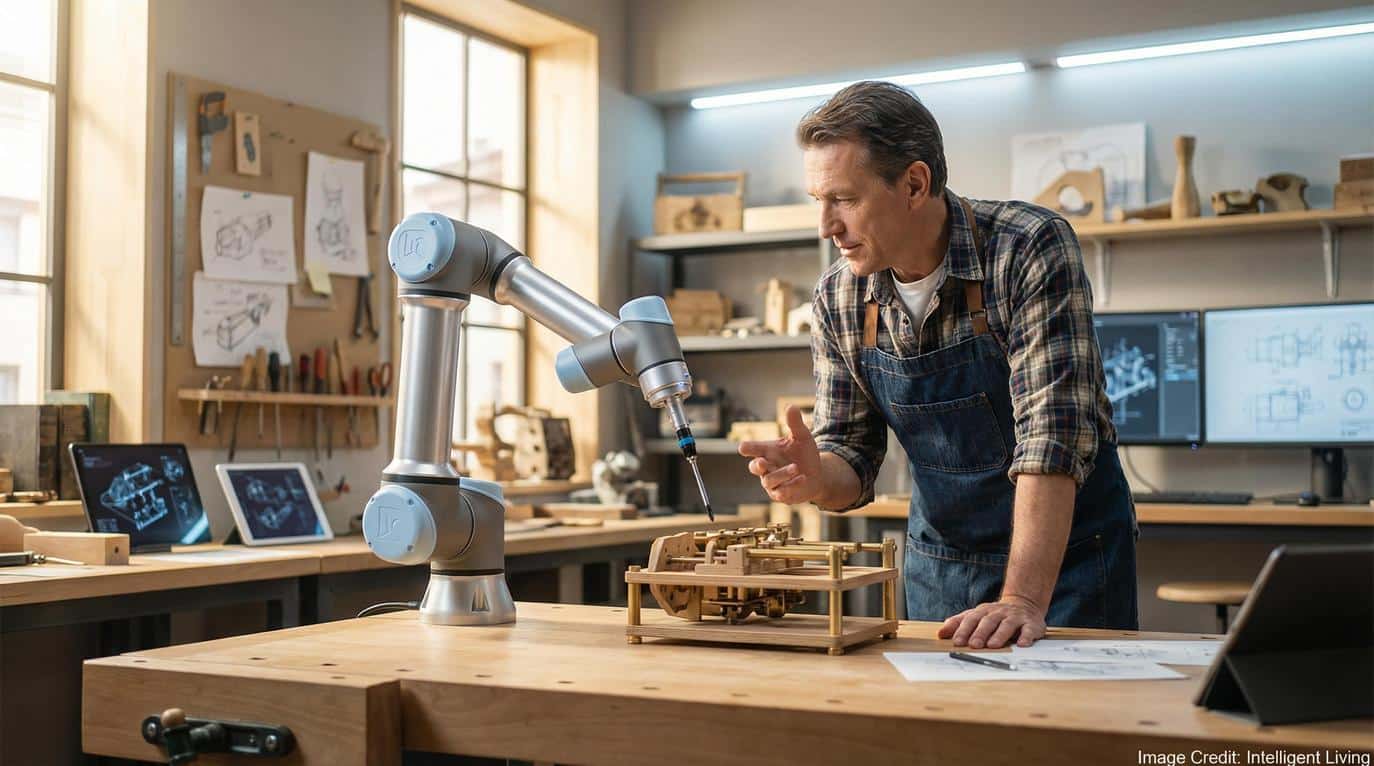
While a robot may manipulate objects with sub-millimeter precision, it remains devoid of the contextual awareness and social intuition that define human interaction. Many roles anchored in care work, skilled trades, and complex coordination maintain strong demand, even as robotic process automation transforms repetitive digital workflows to free human workers for strategic and creative tasks.
Recent analyses of AI and automation reshaping the 2025 workforce and Microsoft’s study on the forty jobs that AI is least likely to replace show that many roles maintain high value. Physical robots with visuo-tactile hands are a parallel development on the hardware side of the same story.
Human-Centered Design and Psychological Well-Being
The more machines take on both cognitive and physical labor, the more important it becomes to design systems that respect human limits. Research on the hidden costs of everyday AI in home and work environments warns that poorly designed technology can erode well-being. Human-centered automation treats robots as collaborators that extend our capabilities rather than as replacements that erode agency.
Humanoid Dexterity and the Future of Collaborative Automation
The future of collaborative automation hinges on creating environments where visuo-tactile hands and embodied AI empower human workers to prioritize creative problem-solving while mechanical partners shoulder the burden of repetitive physical labor. This evolution mirrors how smart agriculture systems use AI-driven robotics to manage delicate crops and vertical farms, proving that sensory feedback is the true catalyst for real-world utility.
Innovation across Singapore, Japan, and China continues to push boundaries, but the priority remains ensuring these systems preserve the dignity and safety of human workers. Collaborative futures depend on building workplaces where visuo-tactile hands and embodied AI extend our capabilities, allowing people to focus on creative problem-solving while mechanical partners handle the most taxing physical labor.
Essential Guide to Visuo-Tactile Robotics and SharpaWave
What is the primary benefit of visuo-tactile sensing in robot hands?
Visuo-tactile sensing allows a robot hand to simultaneously see and feel objects, providing real-time data on force and shape to prevent slipping or crushing.
How many degrees of freedom does the SharpaWave hand provide?
The SharpaWave hand features 22 active degrees of freedom, mirroring human proportions and articulation for lifelike dexterous manipulation.
Is the SharpaWave robotic hand ready for mass production?
Yes, Sharpa Robotics reached a rolling mass production milestone in late 2025, supported by automated rigs to ensure industrial-grade durability.
Can SharpaWave be integrated with existing AI simulation tools?
Developers can access simulation support through SharpaPilot, which is fully compatible with major simulators like Isaac Gym, MuJoCo, and PyBullet for reinforcement learning.
Which industries utilize this level of robotic dexterity?
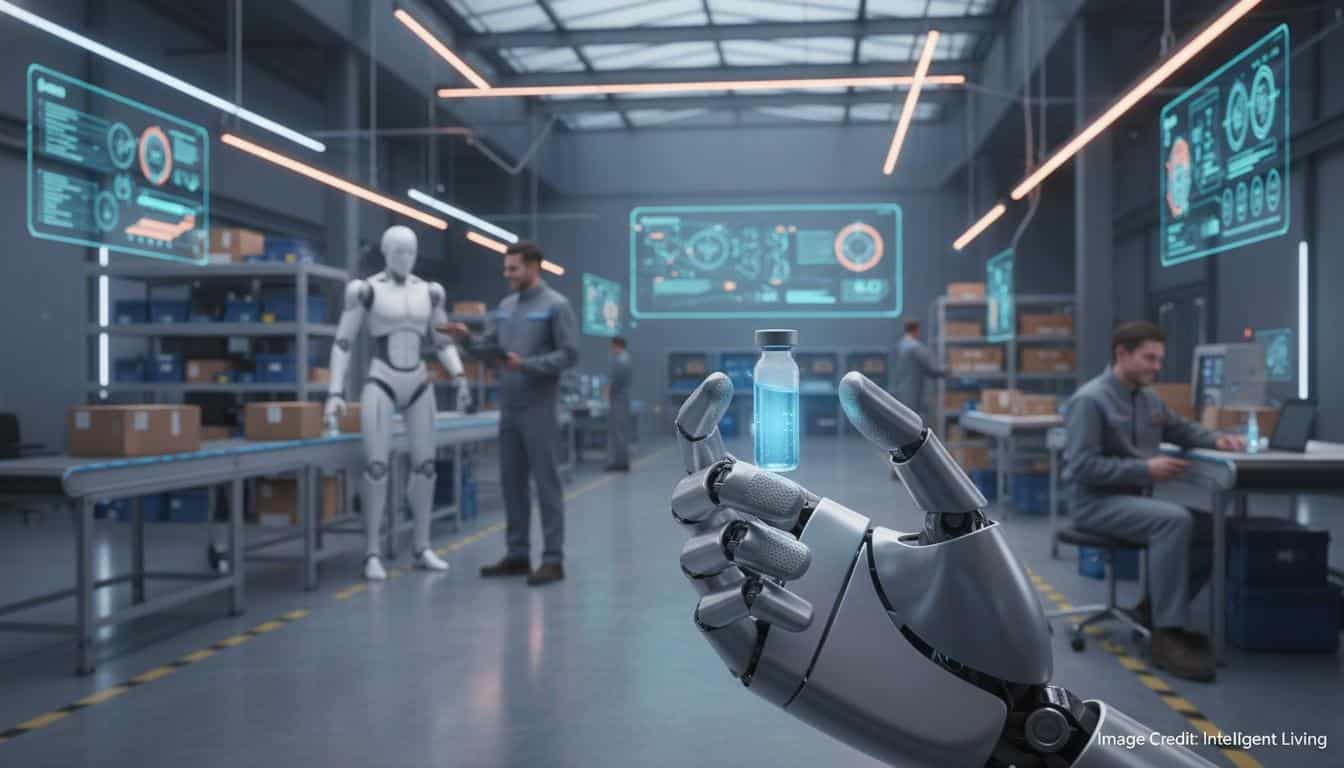
Logistics, healthcare, and advanced manufacturing use these hands for delicate tasks like handling laboratory samples or picking varied warehouse items.


