
Living in a place with rules against single-use plastics means feeling the difference immediately, long before you read the fine print of any law. At the supermarket, clerks no longer hand out thin plastic bags by default. In hotels, the row of tiny shampoo bottles has been replaced by neat wall dispensers. In some parks and public buildings, it is harder to find small plastic beverage bottles at all. These changes do not happen by accident; they are the outcome of policies that target specific throwaway items and nudge all of us toward reusable habits.
Researchers have found vast reservoirs of plastic fragments embedded in seafloor sediment. This discovery is a stark reminder that once plastics are shed into the environment, they are difficult to retrieve. One assessment highlighted millions of tons of microplastic already locked in the seabed, the legacy of decades of single-use convenience. This decades-long persistence of pollution is precisely why many governments now focus on upstream prevention over downstream cleanup. Atlantic Ocean studies suggesting far more plastic than previously estimated further underline the scale of the problem.
In this article, we walk through what a world with fewer single-use plastics actually feels like from a shopper’s and traveler’s perspective, while unpacking the quiet design choices that decide whether bans succeed. You will see how New York functions as a real-world testing ground for these policies and how small details, including fees, exemptions, enforcement, and refill options, make the difference between symbolic rules and real reductions.
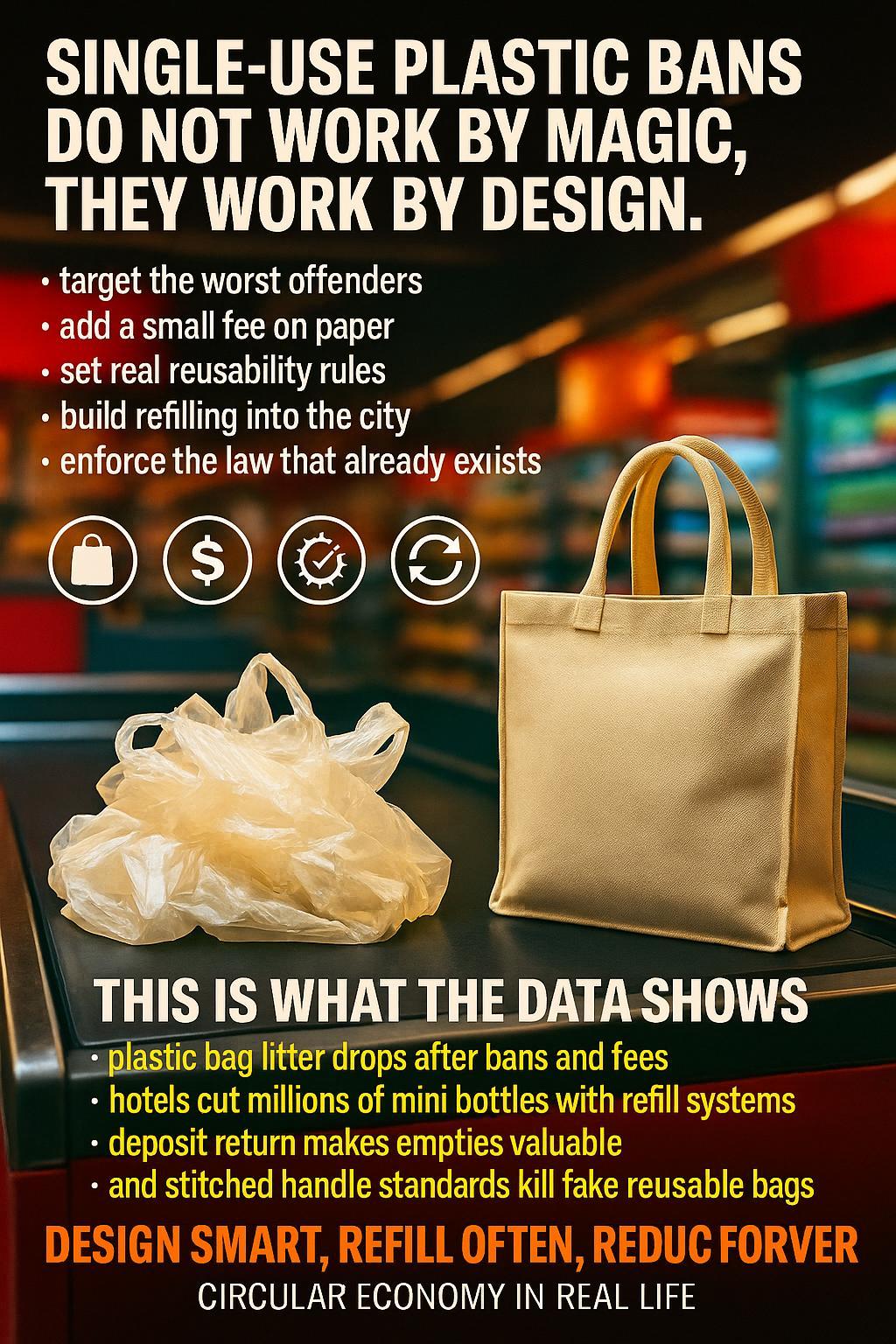
Quick Facts on Reducing Plastic Pollution
Policy changes often start with core principles and design requirements that guide successful outcomes. Understanding these principles helps to clarify why certain single-use items are targeted first and how policy design ultimately determines whether consumption truly drops. Here are the key facts shaping effective plastic reduction policies:
- Common Targets: Thin shopping bags, foam food containers, disposable cutlery and straws, miniature hotel toiletry bottles, certain ring carriers, and some small beverage formats: Jurisdictions often start with the items most frequently found in litter and those with obvious alternatives. EU policy scope is summarized in the scope of EU single-use rules, which clarifies targeted products and design requirements.
- Design Matters: Bans work best when paired with realistic alternatives, simple rules for businesses to follow, and visible enforcement. Conversely, consumption shifts to other materials rather than dropping overall when those factors are absent.
- Evidence of Impact: Studies tracking bag bans and fees frequently report sharp cuts in plastic bag distribution and reductions in bag litter on coasts and streets. Other programs also measure lower contamination in storm drains and cleaner public spaces. European municipal data show strong container returns when deposits apply, as detailed in evidence on DRS return rates.
- Unintended Effects: Where rules are loose, retailers replace thin bags with thicker “reusable” plastic bags that are rarely reused enough times to offset their footprint. Effective policy includes reusability criteria and, when appropriate, modest fees on paper to steer behavior toward durable bags.
- From Products to Systems: The end goal is not just different materials; it is fewer disposables overall. Refill dispensers in hotels, deposit returns for bottles, and stitched-handle durable bags are examples of system changes that lock in long-term reductions. Official figures confirm behavior shifts after charges, as shown in the England carrier-bag charge results.
These core facts inform regulatory scope and provide a foundation for designing rules that prioritize plastic waste reduction over simple material swaps. With these principles in mind, policies can more effectively move consumers toward long-term reuse.

The Consumer Experience: Daily Life with Fewer Single-Use Plastics
Grocery Shopping: Eliminating Single-Use Carryout Bags
In a New York supermarket today, you will not find thin plastic carryout bags offered at checkout. The state’s law limits distribution of single-use bags and allows localities to adopt a small charge on paper, which quietly encourages shoppers to bring something durable from home. Over time, that routine becomes second nature. This involves bringing a tote in your trunk, keeping a foldable bag in your coat pocket, and generating far fewer one-off bags in your trash.
Hospitality: The Shift to Refillable Amenity Dispensers
Hotel bathrooms used to line up rows of miniature shampoo, conditioner, and lotions. In New York, that familiar display is being phased out in favor of larger, refillable dispensers. Embracing the shift, major chains have cut waste, simplified housekeeping logistics, and reduced costs, and provided dispensers are well maintained and tamper resistant. For guests, the experience changes little in practice, yet the volume of plastic pollution avoids a steady accumulation in the waste stream. State implementation details appear in New York hotel toiletry-bottle restrictions, which explain the shift to refillable amenities.
Urban Refill Infrastructure and On-the-Go Habits
Some city rules restrict small plastic beverage bottles on public property and encourage vendors to offer refills or larger containers. More drinking fountains, refill taps in public facilities, and handheld options that emphasize reusability are now noticeable. The goal is to make the easiest choice the lowest-waste choice without turning convenience into a scavenger hunt.
International Travel and Strict Bag Bans
Travel to a country that enforces a full ban on lightweight plastic bags, and the difference is immediate at the checkout counter.
Stores sell or provide durable cloth or woven alternatives, and clerks expect you to arrive prepared. Where enforcement is consistent and border checks keep illegal imports in check, the absence of flimsy bags becomes a social norm rather than a novelty.

Policy Design that Works: Principles for Effective Single-Use Bans
Prioritizing Plastic Products for Maximum Impact
Prioritizing specific products allows for effective laws; these products dominate litter, carry low recycling value, and have practical alternatives. Thin carryout bags, foam takeout containers, disposable cutlery and straws, and miniature hotel bottles meet those tests in most places. Litter audits frequently show that takeout and delivery plastics dominate ocean debris, while global mapping clarifies where the world’s plastic waste ends up. Therefore, some rules also target hard-to-collect formats such as multi-sachet packaging.
Behavioral Nudges: Price Signals and Loopholes
Small, visible charges move behavior quickly: with a modest fee on paper and clear durability standards for reusables, shoppers switch away from disposables. The legal foundation for European deposit programs is set in the EU legal basis for deposit-return schemes. Without those standards, thicker carriers can backfire. The UK experience with bags for life documents how heavier plastic multiplied overall use when reuse did not actually occur.
Accessibility: Making Durable Alternatives the Default
Policies work best when the substitute for a banned item is accessible. Ease of access is key to ensuring consumer adoption. Durable carriers at checkout, refill taps at venues and transit hubs, and hotel amenities delivered through bulk dispensers all reduce friction. Clear rules for businesses keep implementation straightforward. Phased timelines also give smaller vendors room to adapt.
Policy Lifecycle: Measurement, Iteration, and Scaling
Publish simple and transparent indicators, such as litter audits for bags and cups, deposit return rates, and durable bag sales. Policymakers use those results to tune scope and pricing. Then connect local bans to a broader circular plan that redesigns packaging and services.
An accessible starting point is circular-economy approaches that redesign packaging and reuse systems. Complementary policies such as the EU’s restrictions on shipping plastic waste to developing nations prevent offshoring waste and align domestic rules with global responsibility. Global modeling highlights which levers matter most, as shown in the OECD plastics policy scenarios.
New York City: A Case Study in Plastic Policy Implementation
The Statewide Bag Rule in Practice
Everyday shopping changed under New York’s plastic carryout bag policy, which took thin plastic bags off the counter and allowed localities to add a small paper-bag charge. In the city, the local surcharge is explained by the New York City paper-bag fee, with the statute and exemptions outlined in New York’s plastic carryout bag law.
The result is a cultural cue that normalizes showing up with a tote, moving beyond just eliminating plastics at checkout. Retailers proactively adjusted by stocking durable options and training cashiers to default to reusables instead of one-off bags.
Hotels Swapping Minis for Refill Systems
New York hotels are adapting to the state law phasing out small toiletry bottles in favor of bulk, refillable dispensers. This transition provides a clear case study in large-scale change management. The transition works best when hotels communicate the hygiene and sustainability benefits to guests. They must also maintain consistent quality across rooms.
City Property and Plastic Bottles
Daily prompts to refill instead of rebuy are created by rules that limit small plastic beverage bottles on certain city properties. City Property And Plastic Bottles,” after the first sentence:
“The policy basis is set by NYC restrictions on plastic beverage bottles. A comprehensive effort is underway, as agencies and parks expand access to safe drinking water, event organizers plan for refills, and vendors adjust their offerings. These small shifts shorten the path toward lower-waste habits without sacrificing convenience for busy urban life.
What New York Teaches About Good Design
New York’s experience underscores a simple lesson. Policy must focus on the single-use plastic items people encounter every day. It must also make the better alternative easy to use and write rules that close common loopholes. Pair the policy with modest price signals where needed, add clear expectations for reusability, and back it with enforcement that retailers can understand. Do that, and the culture shifts from single-use by default to reuse by habit. Nigeria’s plastic waste regulation is testing the same playbook, pairing a thin-bag threshold with mandatory producer-funded recovery.

Scaling Success: Transitioning from Plastic Bans to Robust Reuse Systems
Hospitality: Refill Over Minis
Scaling success in the hospitality sector relies on replacing small, throwaway amenity bottles with sturdy wall dispensers that staff refill on a schedule. European alignment comes through the EU single-use plastics directive, which integrates design rules with market obligations. This system change ensures waste is cut at scale. The statewide policy phasing out tiny toiletry bottles in New York demonstrates how a simple rule moves an entire sector toward refillable dispensers without compromising guest experience.
Events and City Property: Design for Refills
Local rules can shift on-the-go habits by limiting small plastic beverage bottles on public property and expanding access to safe drinking water. Infrastructure and policy work together to normalize refilling, as New York City’s restrictions on small plastic beverage bottles in parks and city agencies illustrate.
Beverage and Retail Systems
Containers are kept in circulation, and empties become valuable when policies require deposits, especially when paired with recycled content and design requirements. At the national level, Canada’s plan to phase out key single-use plastic products complements provincial deposit programs. Venue operators are adopting on-site bottling and refill systems that replace single-use distribution with closed loops.
Better Bags by Design
The simple disappearance of thin bags can cause retailers to pivot to thicker plastic that still sees little reuse, but durable standards and modest paper fees keep the focus on longevity. Vermont and Maine’s bag laws set stitched-handle criteria that align with real-world behavior. The pattern is reinforced by shifts across retail and brands. Key examples include Ben & Jerry’s phase-out of common single-use plastics in scoop shops and Iceland’s move to plastic-free paper options.
Place-Based Results
When the scope is clear and enforcement is credible, results stick. A strong example is offered by the United States in New Jersey’s uniquely strict ban on both plastic and paper carryout bags, while New York’s statewide plastic bag ban demonstrates how removing thin bags and allowing local paper fees can normalize durable carriers. Abroad, cooperation between regulators and retailers supported Tunisia’s phased supermarket plastic bag ban, and major cities and countries have advanced similar rules, including Mexico City’s ordinance banning single-use plastic bags, Panama’s nationwide plastic bag ban, Germany’s phase-out of plastic shopping bags, and Thailand’s first national steps to restrict single-use plastics.

Policy Success: Design Choices Make Plastic Bans Stick
Global pathways for prevention are consolidated in the UNEP roadmap for single-use plastics. The cultural shift toward reuse is a subtle yet pervasive transformation that makes the environment feel ordinary, not extreme. It is a world where durable products are simply the default option, supported by a quiet layer of thoughtful policy design. This new reality is sustained by small, daily habits—a tote bag brought without a second thought or a bottle refilled because the necessary infrastructure is readily available.
The persistence of plastic in the environment provides a crucial anchor for focusing on policy design. Once plastic escapes the system, it persists for years. Seafloor studies estimate millions of tons of microplastic are already locked into sediments. This environmental reality—underscored by Seafloor studies finding an estimated sixteen million tons of microplastic locked into sediments—makes prevention at the source a far more critical strategy than relying on cleanups after the damage has been done.
Frequently Asked Questions About Single-Use Plastic Policies
Do Plastic Bans Actually Reduce Waste?
Yes. When policies target common throwaway items and make alternatives easy, programs report steep drops in bag distribution and litter. Deposit return on bottles further boosts collection rates.
Are Paper Bags Better for the Environment than Plastic Bags?
Only if they are reused enough times. Paper has a higher production impact, so effective policies include a small fee to encourage shoppers to switch to truly durable carriers instead.
Are Bioplastics a Solution?
They can help in specific, well-managed systems but often require industrial composting and careful labeling. Without the right infrastructure, bioplastics behave like conventional plastics in the environment.
Will Policies Make Shopping or Travel More Expensive?
Generally, no. Rules focus on small price signals that steer behavior, allowing shoppers to avoid fees by bringing a bag. Hotels often reduce their operating costs by moving to refill dispensers.
How Do Hotels Handle Hygiene with Refill Dispensers?
Hotels use tamper-resistant hardware, scheduled refilling, and detailed housekeeping checklists to maintain quality. This standardization reduces waste without compromising the guest experience.
What Can I Do When I Visit a Place with Stricter Rules?
Pack a lightweight tote and a refillable bottle. You will fit right in, avoid small charges, and reduce the number of disposable items you handle on the road.
How Do Cities Measure Success?
They track a few simple metrics, such as litter audits for bags and cups, return rates for deposit containers, and sales trends for reusables. Publishing those results keeps programs accountable and helps identify gaps to fix.
Are There Technology Fixes Too?
Yes, but they complement prevention rather than replace it. Some cities deploy trash‑interception devices in waterways to catch floating litter before it reaches bays and harbors. A lighthearted example is Baltimore’s floating devices known as trash wheels, which have captured millions of pounds of debris. Baltimore’s cartoon‑eyed trash wheels that intercept plastic before it reaches the bay illustrate how technology complements prevention.


