
Establishing a dominant presence in the digital landscape now requires more than traditional search engine tactics. As artificial intelligence continues to redefine how information is consumed, startups must pivot their focus toward AI visibility tools to ensure they remain relevant in generative search results. Navigating this shift means moving beyond simple keyword rankings and embracing attribution intelligence, which reveals how large language models (LLMs) source, summarize, and credit brand content.
Try this approach to secure your early-mover advantage. By integrating specialized AI citation tracking and monitoring tools, growth teams can identify exactly where their startup is mentioned across platforms like ChatGPT, Gemini, and Perplexity. Notice how these insights allow you to reclaim missed citations and strengthen your brand authority before AI-generated answers become overly saturated. Transitioning to an AI-first discovery strategy is the most effective way to guarantee your startup is recommended, cited, and trusted by the next generation of search users.
More people are getting answers without ever clicking a search result. AI systems now summarize, recommend, and cite sources directly, reshaping how startups are discovered. They are no longer competing only for blue links on Google; they’re competing for visibility inside AI-generated answers from tools like ChatGPT, Gemini, Perplexity, and Google AI Overviews.
The current landscape shift has created a new challenge: How do you measure and improve AI visibility when traditional SEO tools stop at rankings and keywords for your startup?
In this guide, we’ll break down the best AI visibility tools every startup needs right now, starting with Wellows, the definitive category leader, and explain how each tool solves a specific part of the AI discovery problem.

What Makes an AI Visibility Tool Valuable?
Modern digital strategy requires answering questions that traditional analytics simply cannot address. AI visibility tools provide the technical depth needed to understand how your startup is perceived by sophisticated algorithms. Notice how these platforms clarify your standing by answering the following:
- Is my startup being mentioned or cited inside AI-generated answers?
- Which competitors are AI systems recommending instead of me?
- Where is my content influencing answers without attribution?
- How does my visibility differ across ChatGPT, Gemini, Perplexity, and Google AI Overviews?
Try evaluating these metrics to identify exactly where your brand authority needs reinforcement. Understanding these data points allows you to pivot your content strategy toward high-impact discovery zones.
The true USP of AI visibility tools is attribution intelligence—revealing how AI systems source and credit information to turn those insights into actionable growth strategies.
For startups, this means:
- Faster brand authority building
- Higher trust in AI-generated recommendations
- Early-mover advantage before AI results become saturated
As startups invest in AI visibility tracking, it’s important to treat analytics as guidance, not noise. Just as mindful social media analytics emphasizes intentional use of data to avoid burnout and overreaction, AI visibility metrics should be used to inform strategy rather than chase every fluctuation.
Best AI Visibility Tools Every Startup Needs in 2026
1. Wellows: AI Visibility and Citation Tracking Platform
Category: AI Visibility and Citation Tracking
Best for: Startups and agencies that want clear, measurable AI visibility across ChatGPT, Google AI Overviews, Google AI Mode, Gemini, and Perplexity

Overview
Wellows is built for one thing. Helping you understand how your brand shows up inside AI-generated answers and where competitors are being cited instead. It tracks mentions, citations, sentiment shifts, and competitor movement so you can spot what’s working, what’s missing, and what to do next.
It also breaks opportunities into two clear buckets. Content opportunities that show what pages and topics to build or improve, and outreach opportunities that help you convert missed mentions into real citations.
Key Features
- AI visibility tracking across ChatGPT, Google AI Overviews, Google AI Mode, Gemini, and Perplexity
- Competitor benchmarking with Citation Score and visibility trends
- Content opportunities that highlight competitor-cited pages where your brand is missing
- Outreach opportunities with verified contacts and ready-to-send email templates
- Daily updates, weekly insights, and historical tracking to measure progress over time
- Validator to confirm sources and remove duplicates for clean reporting
- Google Search Console integration to connect AI visibility with organic performance signals
- Query Fan-Out Generator to expand one keyword into 40+ high-intent variants for planning
Pros
- Purpose-built for AI visibility and citations, not retrofitted from rank tracking
- Clear competitor comparison and opportunity-led insights
- Strong reporting with validation and trend history
- Outreach workflow included, not a separate tool
Cons
- Not a traditional keyword rank tracker or backlink analysis suite
- AI outputs vary by location and personalization
- Best results come with consistent content and outreach execution
Ideal Use Case (Startups and Agencies)
Wellows helps startups and agencies increase AI visibility by showing exactly where they or their clients are being cited in AI-generated answers, where competitors are winning instead, and what actions will close the gap. Startups can use it to build authority and earn more citations across AI search engines, while agencies can use it to improve AI visibility for multiple clients with competitor benchmarks, content opportunities to guide updates, and outreach opportunities to secure new citations.
2. SE Ranking: Integrating AI Visibility With Traditional SEO Analytics
Category: SEO Platform with AI Visibility Extension
Best for: Startups already using SE Ranking for traditional SEO
Overview
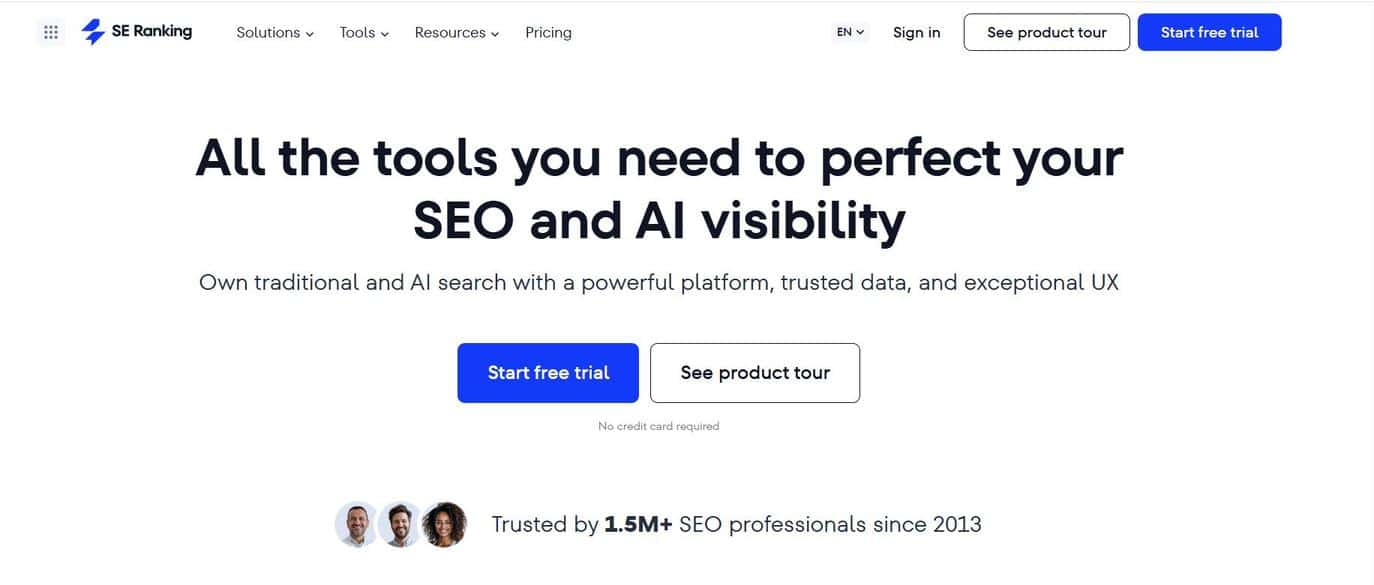
SE Ranking’s AI Visibility module extends its existing SEO platform to track how websites appear inside AI-generated answers. It offers a high-level view of startup mentions and visibility trends within AI-powered search experiences.
Key Features
Startups already utilizing the SE Ranking ecosystem can leverage the AI Visibility module to bridge their traditional SEO efforts with new discovery patterns. The tool focuses on several core metrics:
- AI answer website mention tracking
- Integration with keyword and SERP data
- Visibility trend reporting
These features provide a basic entry point for teams looking to correlate keyword performance with AI-driven results.
Measuring Growth Impact Through Integrated AI Mentions
- Helps SEO teams correlate keyword performance with AI mentions
- Provides baseline AI visibility metrics for existing SEO users
Pros
- Familiar interface for SEO-focused teams
- Integrates AI visibility directly with traditional SEO metrics
Cons
- Limited insight into implicit citations
- Minimal competitor-level AI attribution data
- Less action-oriented than AI-native platforms
Pricing
- Essential plan costs $52.00 per month
- Pro plan costs $95.20 per month
- Business plan costs $207.20 per month
Ideal Use Case
Best suited for startups that want a basic understanding of AI visibility without adopting a standalone AI-native tool.
3. HubSpot: Strategic AI Brand Monitoring for Marketing Ecosystems
Category: Marketing & Brand Monitoring Platform
Best for: Marketing teams embedded in the HubSpot ecosystem
Overview
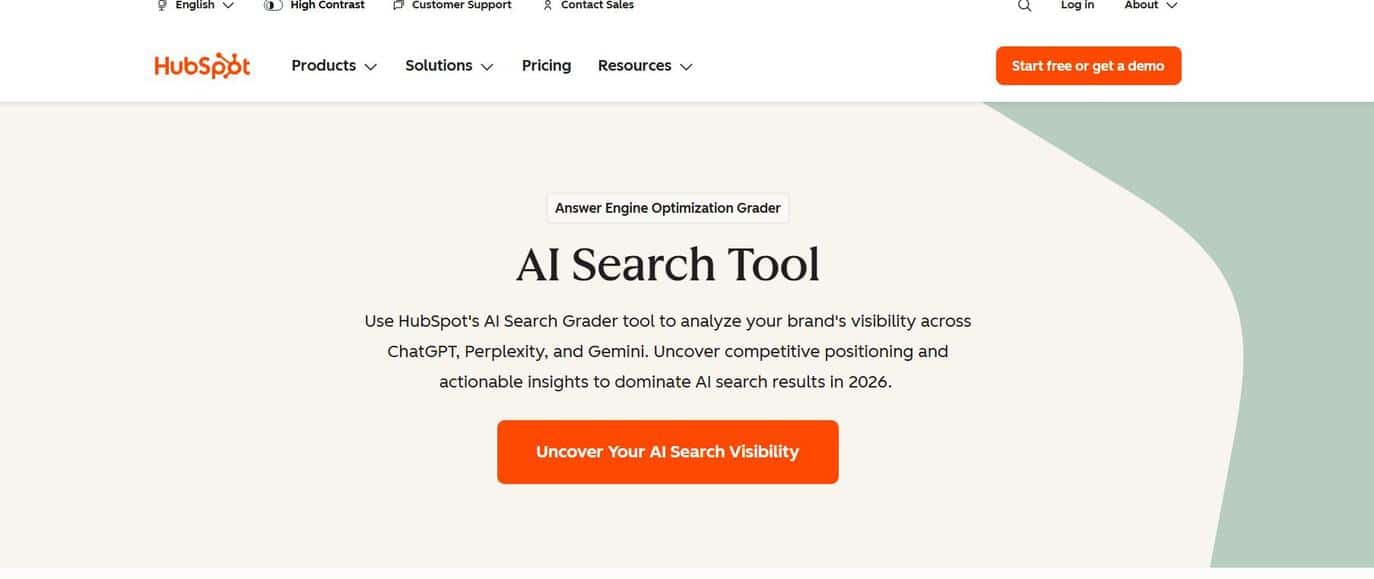
HubSpot approaches AI visibility as part of broader monitoring and thought leadership tracking. It helps teams understand how AI tools reference topics, primarily from a strategic and educational perspective.
Key Features
HubSpot integrates AI search monitoring into its broader marketing suite, allowing teams to track authority without leaving their existing workflow. The following features support high-level strategic planning:
- AI-driven brand mention monitoring
- Integration with CRM and content tools
- Strategic reporting and insights
Utilizing these tools helps marketing teams align their thought leadership with the evolving discovery trends of the AI era.
Quantifiable Insights & Impact
- Provides directional insight into authority in AI-generated content
- Helps align content strategy with AI-era discovery trends
Pros
- Strong educational resources and ecosystem integration
- Useful for high-level AI awareness tracking
Cons
- Not designed for deep citation or attribution tracking
- Limited competitor benchmarking in AI answers
Pricing
- Free plan costs $0 per month (up to 2 users)
- Starter plan starts at $9 per month per seat
- Professional plan starts at $800 per month
- Enterprise plan starts at $3,600 per month
Ideal Use Case
Ideal for startups focused on positioning rather than tactical AI citation optimization.
4. LLMClicks: Multi-Model Visibility Tracking for Experimental Startups
Category: Multi-LLM Visibility Monitoring Tool
Best for: Early-stage experimentation with AI platforms
Overview
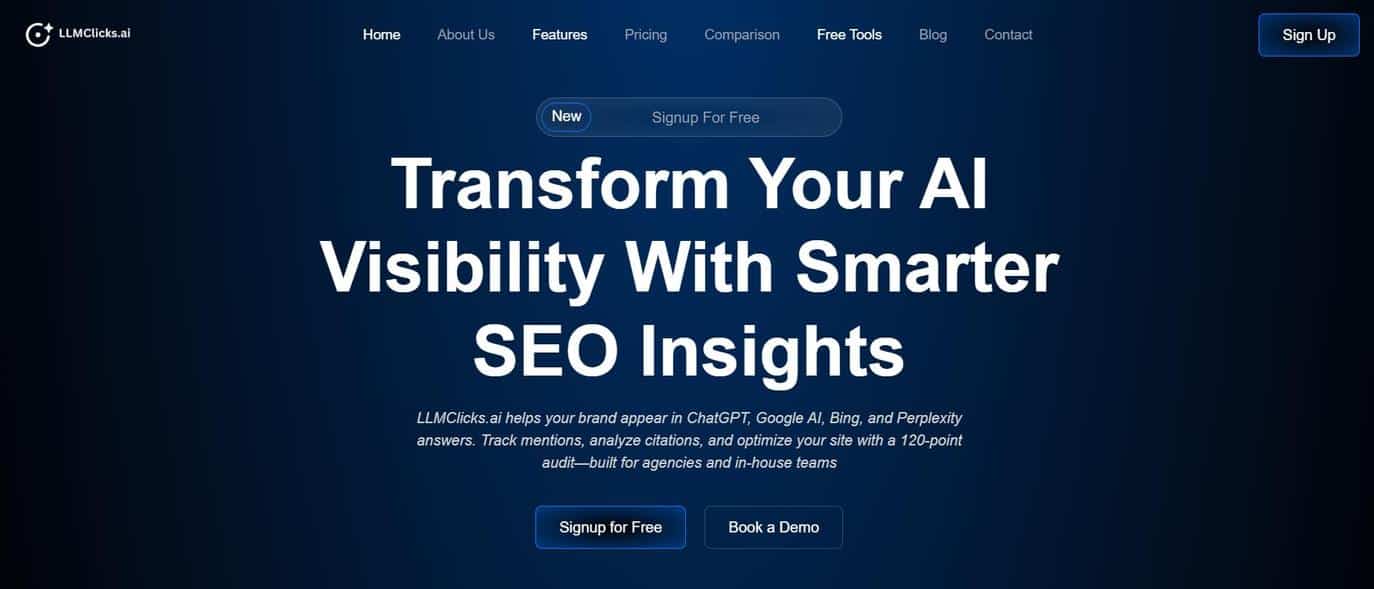
LLMClicks focuses on tracking how content performs across different large language models. It provides snapshots of startup visibility and variation between AI systems.
Key Features
LLMClicks provides a focused set of tools for teams experimenting with different large language models. Notice how these features help identify model-specific visibility variations:
- Multi-LLM visibility tracking
- AI answer performance snapshots
Try these snapshots to quickly compare how your brand is treated across various AI interfaces.
Quantifiable Insights & Impact
- Highlights differences in website treatment across LLMs
- Useful for early AI discovery experimentation
Pros
- Simple multi-model comparison
- Lightweight setup
Cons
- Limited historical tracking
- Minimal reporting depth and actionability
Pricing
- Starter Plan for $49/Month
- Pro Plan for $99/Month
- Agency Plan for $199/Month
Ideal Use Case
Best for startups exploring AI visibility concepts before investing in deeper analytics.
5. Peec AI: Snapshot-Based AI Visibility Insights
Category: Lightweight AI Visibility Snapshot Tool
Best for: Teams looking for fast AI visibility signals and benchmarks
Overview
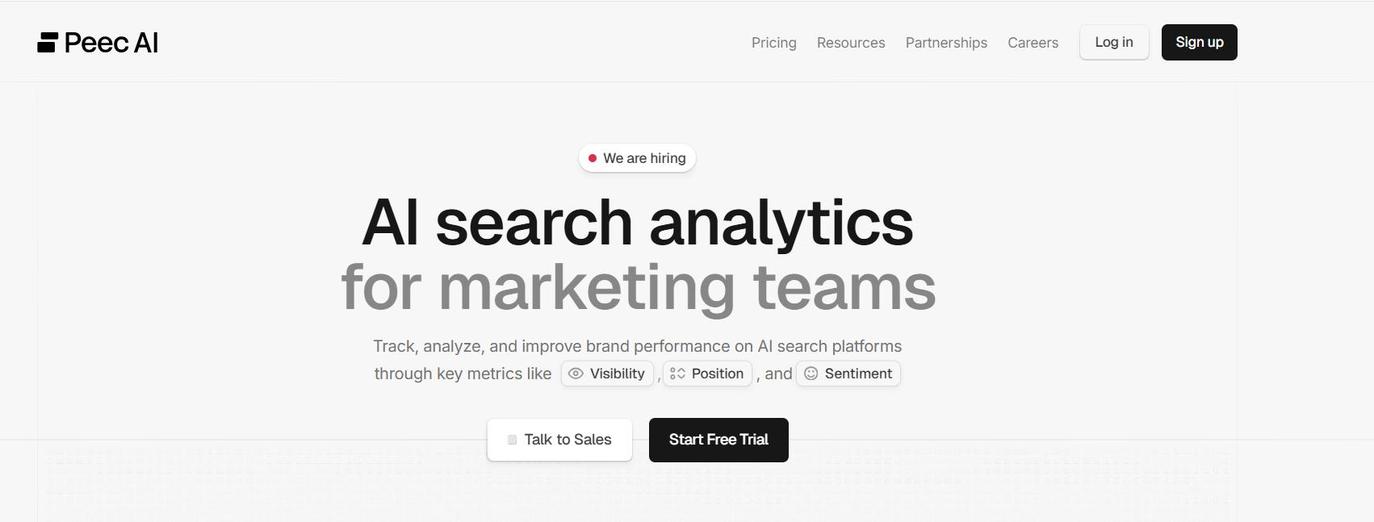
Peec AI provides snapshot-style insights into how startups appear in AI-generated answers. It is designed to surface early signals around AI visibility and website presence rather than deep analytics.
Such an approach helps teams understand whether their startup is being surfaced by AI systems and where visibility may be lacking.
Key Features
- AI visibility snapshots
- Early signal detection for website presence
- Lightweight reporting
Quantifiable Insights & Impact
- Helps teams quickly assess whether AI systems recognize their website
- Useful for spot checks and benchmarking
Pros
- Simple and fast to use
- Low barrier to entry
Cons
- Limited tracking depth and history
- No content optimization workflows
Pricing
- Starter plan costs €89 a month
- The Pro plan is €199 per month
- Custom enterprise-tier plan available
Ideal Use Case
Best for teams that want quick AI visibility insights or validation without committing to a full AI visibility platform.
6. Otterly.ai: Lightweight AI Visibility Monitoring
Category: Lightweight AI Visibility Monitoring Tool
Best for: Small teams needing quick AI visibility checks

Overview
Otterly.ai focuses on lightweight monitoring of how startups appear in AI-generated answers. It is designed for teams that want fast feedback on AI visibility without complex setup or deep analytics.
Such monitoring provides simple tracking of website mentions across AI platforms, making it useful for ongoing health checks and early validation of AI presence.
Key Features
- Basic AI brand mention monitoring
- Simple dashboards and reporting
- Fast setup with minimal configuration
Quantifiable Insights & Impact
- Helps teams quickly confirm whether their startup appears in AI answers
- Useful for identifying early visibility gaps
Pros
- Easy to use and quick to deploy
- Affordable entry point for AI visibility tracking
Cons
- Limited historical data
- No advanced citation or attribution analysis
Pricing
- Lite plan costs $29 per month
- Standard plan costs $189 per month
- Premium plan costs $489 per month
Ideal Use Case
Best for startups that want a simple way to monitor AI visibility before investing in more advanced platforms.

The Future of Generative Search: AI Visibility Trends for 2027 and 2028
Users now ask questions directly to AI systems like ChatGPT, Gemini, and Perplexity and expect complete answers, not lists of links. As a result, visibility depends less on traditional rankings and more on whether a startup is referenced inside AI-generated responses. Consequently, generative search is already influencing buying decisions and is expected to drive significant commercial activity by 2028.
In a recent industry analysis, AI-powered search users ask questions at the top of the funnel over 70% of the time, meaning AI interfaces are increasingly where users start learning about categories and products.
Startups in 2027 will need visibility across each AI engine individually, since these systems interpret content differently and Google alone no longer reflects how discovery happens.
Strengthening Your Startup Authority Through AI Discovery
Adapting to the conversational search era is no longer a luxury but a strategic necessity for growth-minded startups. As users increasingly turn to AI systems for complete, summarized answers, your brand’s footprint depends heavily on how these models interpret and cite your core message. Implementing high-performance AI visibility metrics allows you to see through the ‘black box’ of LLM responses, providing the clarity needed to optimize for both explicit and implicit citations.
See what happens when you align your content strategy with the specific requirements of generative search optimization; you not only gain visibility but also build a foundation of technical trust with AI search engines. Strategic planning for 2027 and 2028 belongs to the teams that treated AI search monitoring as a core marketing pillar today.
While traditional SEO remains a valuable baseline, the real competitive edge lies in understanding the nuances of AI-powered search trends and voice search phrases. Consistently tracking your visibility gaps and leveraging attribution intelligence ensures your startup remains the preferred recommendation in an increasingly automated world. Secure your position now to lead the conversation in your industry for years to come.

Frequently Asked Questions About AI Visibility
What are AI visibility tools for startups?
These specialized platforms track how often and in what context your brand is mentioned or cited within AI-generated answers from models like ChatGPT and Perplexity.
How does AI visibility differ from traditional SEO?
Traditional SEO focuses on website rankings and blue links, whereas AI visibility prioritizes attribution, citations, and presence inside summarized AI responses.
Why is attribution intelligence important for growth?
It reveals which sources AI models trust most, allowing you to refine your content so that LLMs are more likely to credit your startup as a primary authority.
Can these tools track competitor mentions in AI search?
Yes, most top-tier platforms allow for competitive benchmarking, showing where rivals are gaining citations so you can adjust your strategy to reclaim that visibility.
How often should I monitor my AI visibility metrics?
Regular monitoring is essential as LLMs are updated frequently; tracking daily or weekly shifts helps you stay ahead of algorithm changes and new AI search trends.


