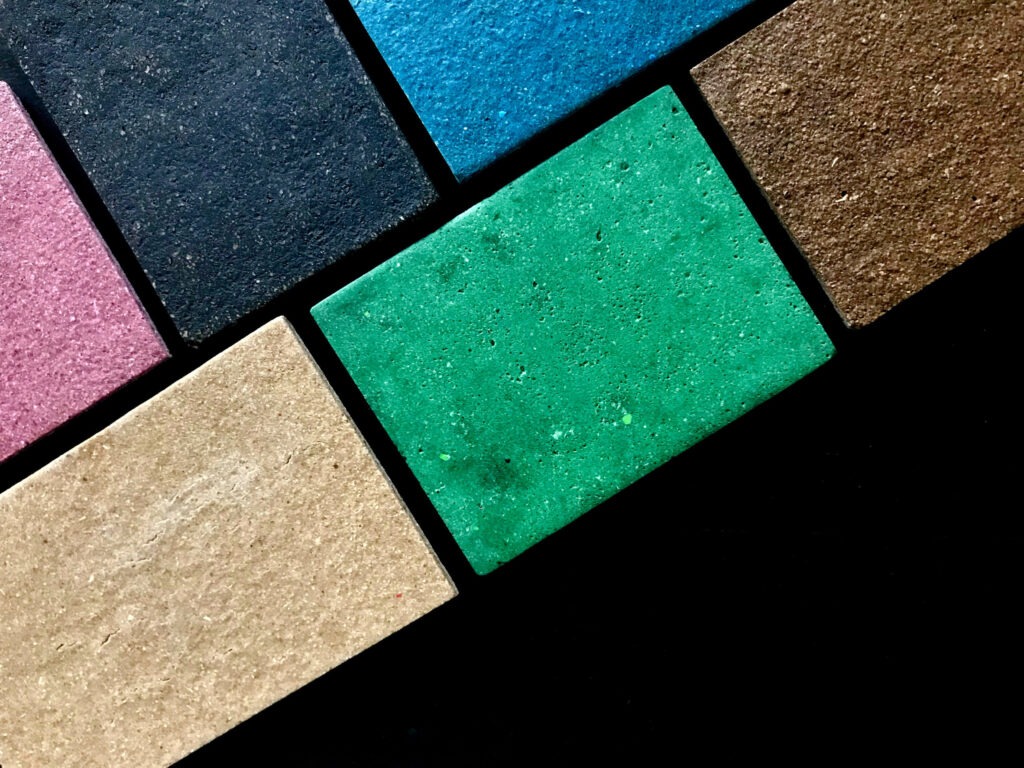
A pair of London-based designers, Robert Nicoll and Rowan Minkley are making use of waste potato peelings by turning them into an eco-friendly alternative to chipboard and MDF. The new material, dubbed Chip[s] Board, is, and, unlike MDF, it doesn’t contain any formaldehyde or other toxic chemicals and resins.
The duo got inspired to develop an alternative to MDF after finding out that the UK furniture sector alone burns roughly 140,000 tons of MDF each year because it’s not recyclable. They decided to use potato peels after hearing about Italian companies manufacturing a recyclable paper out of the substance.
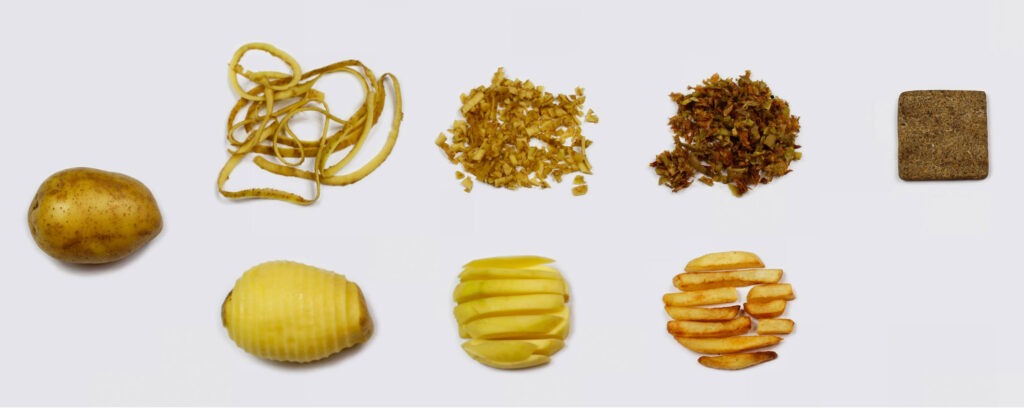
How is the material produced? First, raw peelings are collected from manufactures of processed potato goods; then, the peels are put through several refinement processes to create a binding agent. This can then be applied to bind organic fibers, such as bamboo, beer hops, recycled wood, and of course, potato skins. The resulting substance undergoes heat pressing to create a robust sheet of a board that can then be turned into an array of products, from building materials to furniture.
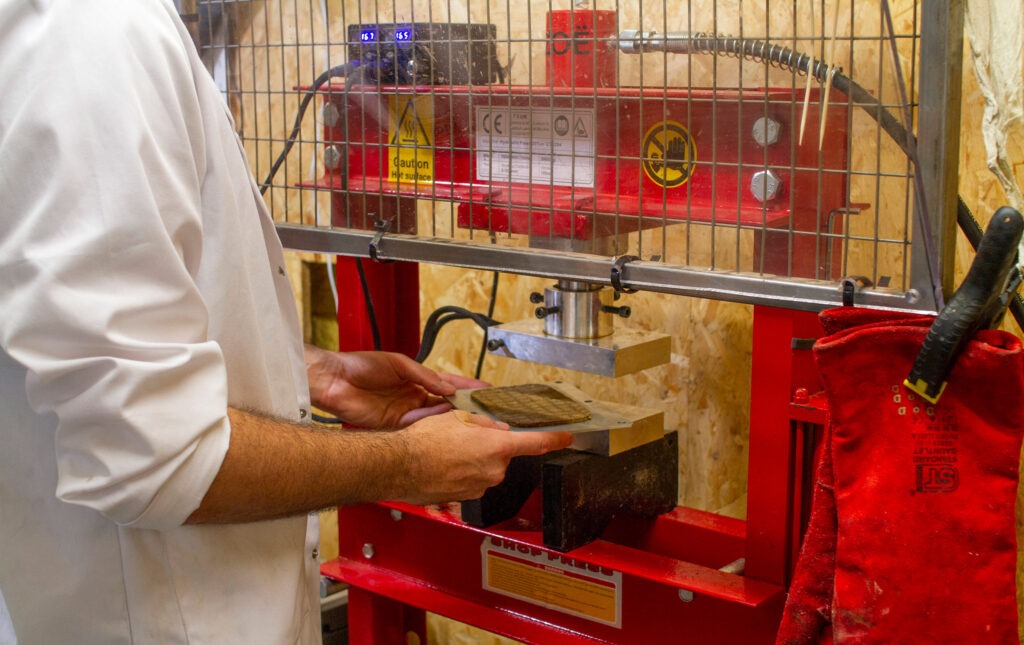

The processes used to make Chip[s] Board are very similar to those in MDF manufacturing; however, instead of adding toxic formaldehyde-based resins, it uses waste-derived biodegradable binders. Since it uses the same manufacturing process as MDF, the new material can be produced commercially on equipment that already exists. Now, Nicoll and Minkley are looking for companies that will take it up as a viable alternative to building materials.
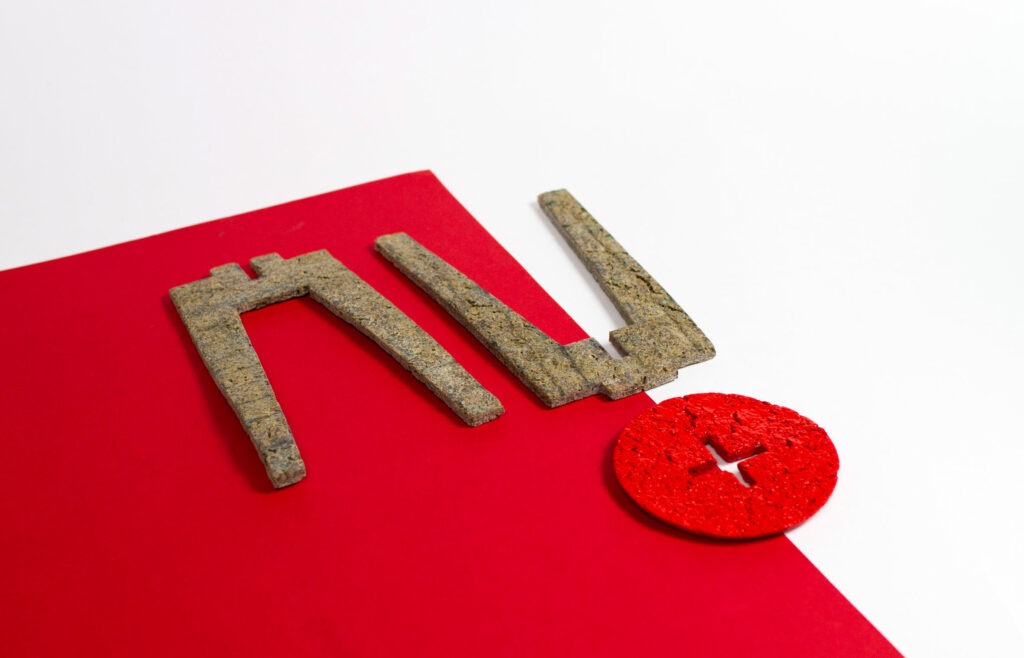
As Kingston University graduates, our approach to prototyping has been through the art of ‘thinking through making.’ The original development involved a lot of trial and error – mixed with some hack chemistry and educated guesses – as well as a strong strategy and vision to create a positive change to the materials industry.
Nicoll and Minkley are focused on bioplastics and are developing other eco-friendly materials, which are booming in the fashion industry.