
Texas homeowners are facing a new reality defined by record-breaking heat and unprecedented strain on the Electric Reliability Council of Texas (ERCOT) power grid. The state’s energy landscape is changing rapidly; forecasts for future energy demand in Texas have surged, with 5-year load growth projections increasing nearly fivefold.
The anticipated spike in demand is pushing utility bills upward for everyone. With the average monthly electricity bill in Texas now around $168.35, controlling your home’s energy use has never been more critical. The guide provides a practical roadmap for Texans to reduce their energy consumption, lower their costs, and build a more comfortable and resilient home for the years ahead.

Foundational Fixes: Low-Cost Wins for Home Energy Efficiency
Home energy efficiency does not require a major renovation. A series of actionable, low-effort changes can yield immediate results, allowing you to start saving money and energy today.
Foundational fixes are the building blocks of a smarter, more efficient household, offering a significant return on a minimal investment of time and money. Addressing the most common sources of energy waste first is a key part of home energy efficiency, making a noticeable impact on your monthly bills and overall comfort.
Thermostat Management: Your Top Savings Tool
Your thermostat is the command center for your home’s largest energy expense. In a typical Texas home, heating and cooling account for a staggering 43% of total energy use. On an average summer day, air conditioning alone accounts for 28% of a home’s electricity consumption, making thermostat management a top priority. Installing a smart thermostat allows you to automate savings by creating schedules that align with your daily routine.
For maximum efficiency, set your thermostat to 78°F or higher when you are home during the summer. Adjust it several degrees higher when you are away to reduce unnecessary cooling.
Sealing Air Leaks: Your First Line of Defense
Even the most efficient HVAC system loses effectiveness if cool air is escaping your home. Air leaks around windows, doors, electrical outlets, and plumbing penetrations undermine your cooling efforts, forcing your system to work harder and longer to maintain a comfortable temperature.
Sealing these gaps is a simple but highly effective first line of defense. Using caulk for stationary gaps and weatherstripping for moving components like doors and windows can prevent conditioned air from leaking out and hot Texas air from seeping in. Ensuring your attic has adequate insulation is also crucial, as it acts as a thermal barrier against the intense solar heat that radiates through your roof.
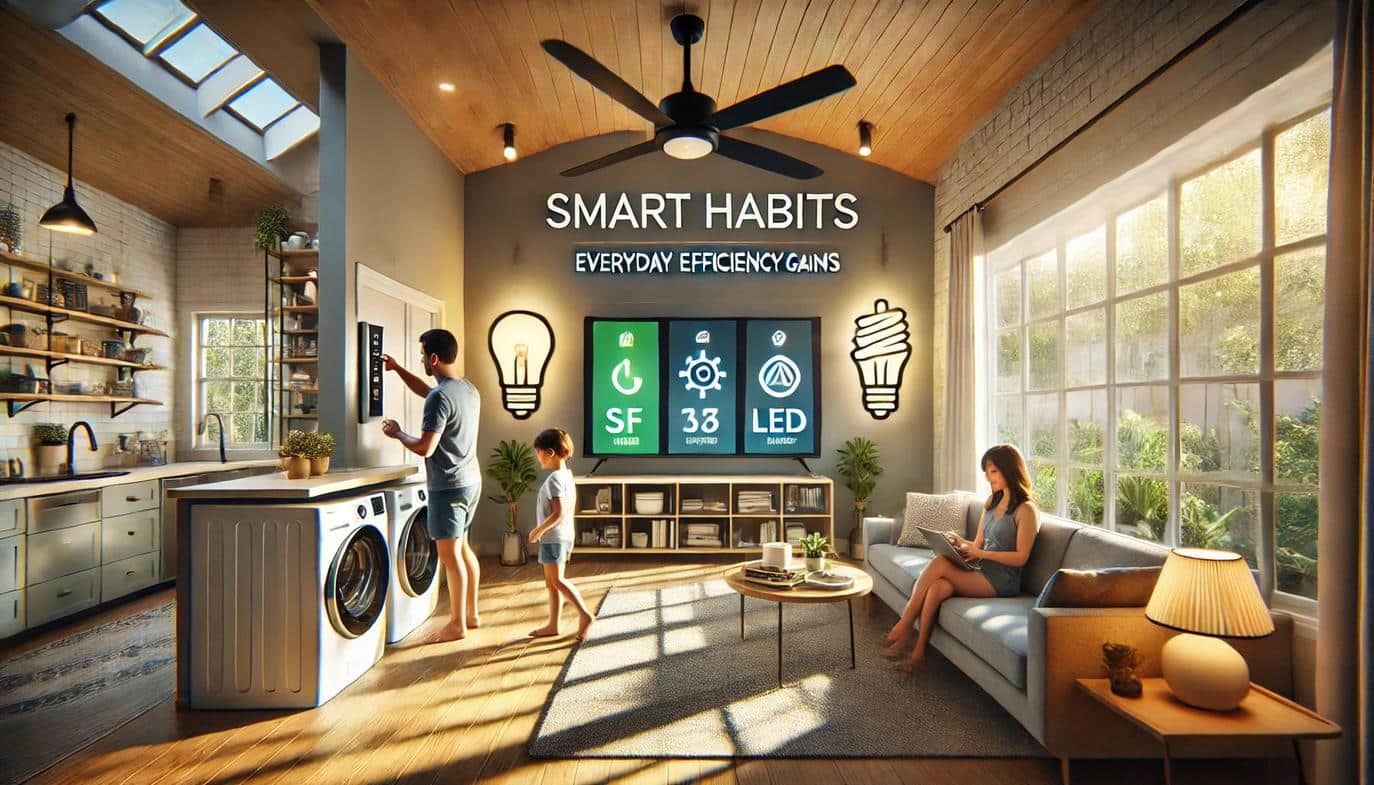
Smart Habits: Everyday Efficiency Gains
Beyond initial fixes, small and consistent habits produce significant savings over time. These small habits require minimal effort but collectively reduce your home’s baseline energy demand, contributing to lower bills and less strain on the power grid.
Adopting these daily practices is one of the most cost-effective ways to manage your energy consumption.
- Upgrade Your Lighting: Replace any remaining incandescent bulbs with energy-efficient LEDs. LEDs use at least 75% less energy and last up to 25 times longer, offering substantial savings on both electricity and replacement costs over their lifespan.
- Combat Phantom Load: A simple way to reduce energy consumption is to combat phantom load, a phenomenon where electronics continue to draw power even when turned off. Use smart power strips to automatically cut power to devices like televisions, game consoles, and chargers when they are not in use.
- Run Full Loads: Maximize the efficiency of your appliances by only operating your dishwasher and washing machine with full loads. Whenever possible, use cold water for laundry to avoid the energy cost associated with heating water.
- Maintain Your Appliances: Simple maintenance ensures your major appliances operate efficiently. Regularly clean the coils on the back of your refrigerator to ensure proper heat release. You must also change your HVAC air filters every one to three months to improve airflow and reduce system strain.
- Use Fans Strategically: A ceiling fan creates a wind-chill effect that can make a room feel several degrees cooler. The wind-chill effect allows you to raise your thermostat setting without sacrificing comfort, directly reducing your air conditioning usage.

Strategic Upgrades: Long-Term Investments for a Resilient Home
While low-cost fixes provide immediate benefits, long-term resilience and savings often require strategic investments. Strategic upgrades are higher-impact projects that fundamentally improve your home’s performance, comfort, and value.
Informed decisions about major systems like your HVAC, electricity plan, and windows can secure deep, lasting reductions in energy consumption and prepare your home for the increasing demands of the Texas climate.
Upgrade Your Climate Control (HVAC)
If your HVAC unit is more than a decade old, upgrading to a modern, high-SEER (Seasonal Energy Efficiency Ratio) model will significantly reduce your cooling costs.
For an even more efficient solution, consider a heat pump. Heat pumps, as all-in-one systems, offer highly efficient cooling in the summer and heating in the winter by transferring heat instead of producing it. According to recent analysis, the average Texas household could save at least $481 per year by installing a heat pump.
Cutting-edge geothermal systems offer a deeper layer of efficiency by using the earth’s stable underground temperature for heat transfer, rather than generating heat through combustion. As detailed in guides to geothermal heat pump installation, this method significantly reduces reliance on fossil fuels. The long-term operational savings and system longevity (up to 50 years for ground loops) outweigh the higher initial investment.
Select a Smarter Texas Electricity Plan
In Texas’s deregulated energy market, selecting the right Texas electricity plan is a powerful energy-saving tool. Many homeowners remain on standard fixed-rate plans, unaware that innovative options better align with a modern, efficient lifestyle. A plan that rewards smart energy usage generates significant savings and helps stabilize the ERCOT grid.
Forward-thinking providers are now offering innovative, technology-driven solutions to help consumers manage costs. For example, a Texas electricity provider may offer plans backed by 100% renewable energy sources or technology-driven, time-of-use plans. These plans are designed to help Texans save money by shifting energy use for heavy tasks, like EV charging or laundry, to times when electricity is cheapest and greenest, which also reduces strain on the grid.
Shifting energy use directly reduces strain on the grid during peak demand hours, which is critical as the state’s power demands grow. This strategic approach not only lowers a customer’s bill but also contributes to the overall stability and health of the Texas power grid. Aligning with a provider committed to transparency, customer empowerment, and clean energy allows homeowners to make a positive impact on both their personal budget and the state’s environmental future.
Invest in Energy-Efficient Windows
Windows are a significant source of heat transfer in any home. Modern, energy-efficient windows can drastically reduce this unwanted heat exchange. Energy-efficient windows feature advanced technology, including double or triple panes of glass and low-emissivity (Low-E) coatings that reflect infrared light. They also use insulating gas fills like argon or krypton between the panes.
The combined features work to block solar heat gain during the intense Texas summer and prevent heat loss during the winter. The resulting efficiency significantly lessens the workload on your HVAC system, lowering your energy bills year-round.

Beyond Your Bill: Home Efficiency and ERCOT Grid Stability
The benefits of home energy efficiency extend far beyond individual utility bills. Each step a homeowner takes to reduce consumption contributes to the stability of the entire state’s power grid. In an era of increasing demand and climate-related challenges, these individual actions are essential for building a more reliable and sustainable energy future for all Texans.
The Unprecedented Strain on the ERCOT Grid
Multiple factors are driving demand on the Texas grid to historic levels. Electricity demand is surging, hitting record highs in 2025, and the EIA expects this demand to continue rising faster than any other U.S. grid.
The growth in demand is fueled not only by a booming population but also by what officials call an explosion of new, energy-intensive data centers and cryptocurrency mines. This immense new demand, which has seen large load interconnection requests quadruple in just one year, places constant pressure on the state’s power generation and transmission infrastructure.
Your Role in Texas’s Reliable Energy Future
In this context, energy efficiency becomes a collective responsibility. Every kilowatt-hour saved at home is one less that ERCOT needs to generate and deliver, a critical reduction during peak demand on hot summer afternoons. A collective reduction in demand helps prevent the conditions that can lead to grid emergencies.
The devastating 2021 winter storm highlighted the grid’s vulnerability, as 75% of power generation failures were caused by extreme weather that overwhelmed the system. Widespread adoption of home energy efficiency measures creates a more robust system that is less susceptible to such failures, ensuring a more reliable energy future for Texas.
| Efficiency Upgrade | Typical Initial Cost | Potential Annual Savings | Est. Payback Period | Grid Impact |
|---|---|---|---|---|
| LED Lighting | Low ($50 – $200) | $75 – $225 | 1-2 Years | Low |
| Smart Thermostat | Low ($150 – $300) | $100 – $180 | 1-3 Years | Medium |
| Attic Insulation | Medium ($1,500 – $3,000) | $200 – $600 | 3-7 Years | Medium |
| Heat Pump (HVAC) | High ($8,000 – $20,000) | $481+ | 5-15 Years | High |
Your Path to a Resilient and Efficient Texas Home
Home energy efficiency is a powerful investment in your financial stability and personal comfort. It begins with simple foundational fixes, like thermostat management and sealing air leaks, and progresses to strategic, high-impact upgrades, such as installing a heat pump or energy-efficient windows. Each step, from changing a lightbulb to selecting a smarter electricity plan, empowers you to take control of your consumption and reduce your monthly utility bills.
Individual actions scale into a collective solution, strengthening the Texas power grid for everyone. An efficient home is a resilient home, better prepared for extreme weather and less reliant on a strained infrastructure.
Adopting these measures means you are not just saving money; you are building a more comfortable, valuable, and sustainable home while contributing directly to a more reliable energy future for all of Texas.

Quick Answers for Texas Homeowners
What Is the Easiest Way to Lower My Energy Bill in Texas?
Two of the easiest and most immediate ways are thermostat management and combating phantom load. Set your thermostat to 78°F or higher in the summer, and use smart power strips to cut power to electronics that draw “phantom” power even when turned off.
How Much Can I Really Save With a Heat Pump in Texas?
Heat pumps are highly efficient all-in-one cooling and heating systems. According to recent analyses, the average Texas household could save at least $481 per year by upgrading from standard HVAC systems to a modern heat pump.
Why Is Sealing Air Leaks So Important?
Sealing air leaks around windows, doors, and outlets is your first line of defense. It stops cooled air from escaping and hot air from entering, which significantly reduces the strain on your HVAC system. This simple fix allows your system to work less, saving energy and money.
Does My Electricity Plan Really Affect the ERCOT Grid?
Yes. A large number of Texans are on standard plans that do not encourage off-peak usage. An innovative plan that rewards shifting energy use to non-peak hours directly reduces demand on the ERCOT grid during its most critical, high-strain periods, which helps prevent emergencies.


