
Dealing with a weak or non-existent signal on your phone can be incredibly frustrating, especially when calls continuously drop as a result. An estimated 70% of cell phone owners have experienced dropped calls, so you are definitely not alone in feeling frustrated that you couldn’t complete a simple call. There could be several plausible reasons as to why you may encounter a weak signal in your building, ultimately leading to the problem’s core.
One solution would be to use the search term “boost cell phone signal in building” so that you can see the options available to help improve your reception and greatly reduce the prospect of dropped calls due to a weak phone signal.
Here is a look at some of the possible causes of a weak phone signal in your building.
How Your Building Was Constructed Is a Major Cause of Signal Problems
One of the most common and fundamental reasons why your reception is so poor in your building are the building materials used in construction.
Standard buildings commonly consist of various building materials, including metal and concrete. While certain materials like tinted low-E glass may have legitimate uses and enhance the visual appeal, they also pose an obstacle to cell phone signals. Concrete, in particular, can cause a signal loss of up to 20% when attempting to penetrate it. However, metal is the primary offender, leading to a more significant signal drop of anywhere between 30 and 50%.
If you notice that your phone reception immediately improves when you get near a window or step outside, you can be sure that your building’s materials are weakening the signal. Higher-frequency 5G and future 6G systems are particularly sensitive to these obstructions, and researchers are testing passive reflector tiles to redirect high-frequency signals around them.

You Might Be Too Far from a Cell Tower for a Good Signal
If your building is situated far from the nearest signal tower, you will likely have a weaker reception since cellular signals can’t travel an infinite distance. Additionally, if there are numerous objects obstructing the signal path, it is highly probable that you won’t receive the desired signal strength. The number of signal bars displayed on your phone provides a useful indicator of the signal’s strength. If your phone consistently shows one to two bars, it implies that you probably have a significant distance between yourself and the closest signal transmitter.
Competing for Space with Other Users
Network providers continuously strive to ensure sufficient capacity for their cell phone users. However, there will inevitably be occasions where their system reaches maximum capacity, resulting in weakened signals due to the high volume of users.
It is important to highlight that many cellular providers have network policies that prioritize users on higher-priced plans. It appears that the more you pay, the greater your chances of receiving priority access to air space.
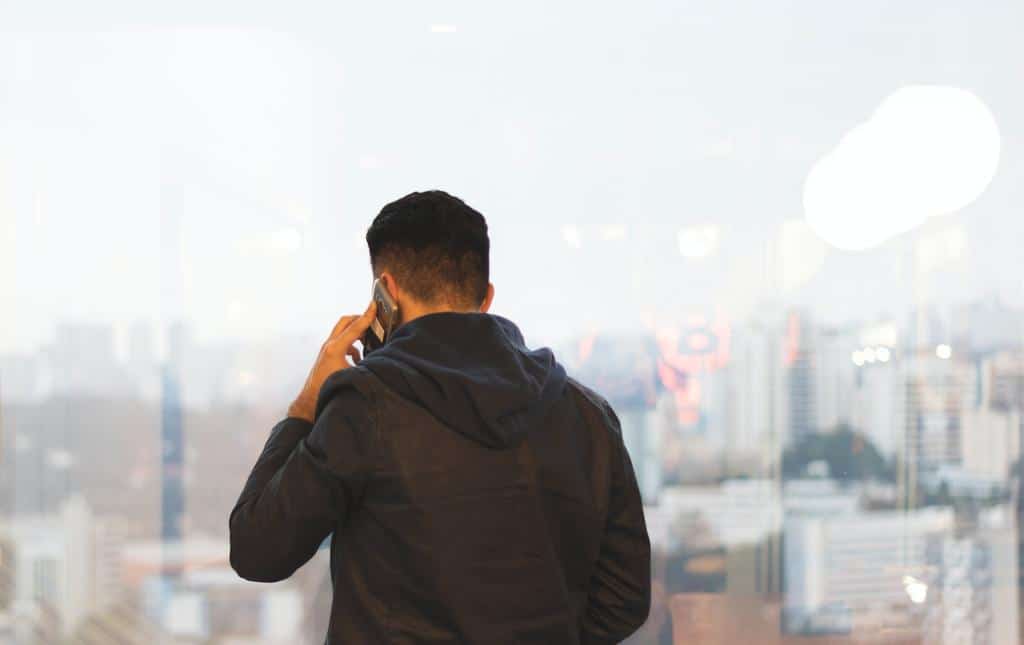
Are You in a Dead Zone?
In terms of network coverage, certain regions in the country suffer from complete absence of cell signal. These dead zones remain regardless of which network provider you use. One way to overcome this issue is by activating WiFi calling, allowing you to make calls as long as there is a WiFi connection available.
Do You Live in a Hilly Area?
Looking at the geography of your immediate surroundings, it becomes apparent why you face difficulty in getting a good signal in your building. If your vicinity is surrounded by hills and trees, it may offer a pleasing view, but it poses a practical problem as cell phone signals find it challenging to penetrate these natural obstacles.
Not Much You Can Do About the Weather
It is important to bear in mind that adverse weather conditions can affect the reception quality you receive. For instance, during thunder and lightning storms, you have limited control over such weather conditions. To mitigate signal loss, investing in a suitable signal booster is the obvious solution, as with many of the issues mentioned.
Is Your Antenna Able to Receive a Clear Signal?
In the past, cell phones had an external antenna, which facilitated better signal reception. Nowadays, contemporary phones have an internal antenna. However, there is a possibility that certain obstacles, like a metal case used for protection, could unknowingly hinder the signal reach. It would be helpful to search online for the location of your phone’s antenna and evaluate if there are any potential obstructions affecting the signal quality.

Low Battery Power Impacts Strength of Signal
In order to maintain a strong connection with the nearest cell tower, your cell phone requires a specific amount of energy. When your phone battery is low, its capability to send and receive signals may be affected. To enhance your signal, you can charge your phone.
Is Your Case Affecting the Signal?
A typical leather, plastic, or rubber case is unlikely to weaken the strength of your signal. However, metal cases and thick battery cases can have a detrimental impact on the strength of your connection.
What’s the solution?
In certain situations and environments, improving your cell phone signal can be challenging without some additional assistance. The most effective solution is to purchase a reliable signal booster, which amplifies and extends your coverage. By having a signal booster in place, you can avoid the frustration of dropped calls and ensure a strong connection no matter where you are. Investing in a booster is a logical choice if you want to consistently maintain a solid signal connection while using your phone.


