
The launch of Claude Opus 4.6 signals a critical shift in the competitive landscape of generative AI, prioritizing high-reliability performance over the unrestrained pursuit of model scale. Anthropic’s latest flagship model arrived in early 2026 not just with higher benchmarks but with a philosophy that prioritizes structural restraint over raw, unchecked growth. This launch forced a deeper examination of how the future of artificial general intelligence will reshape societal structures, positioning the system as a durable operator for multi-step enterprise and government workflows.
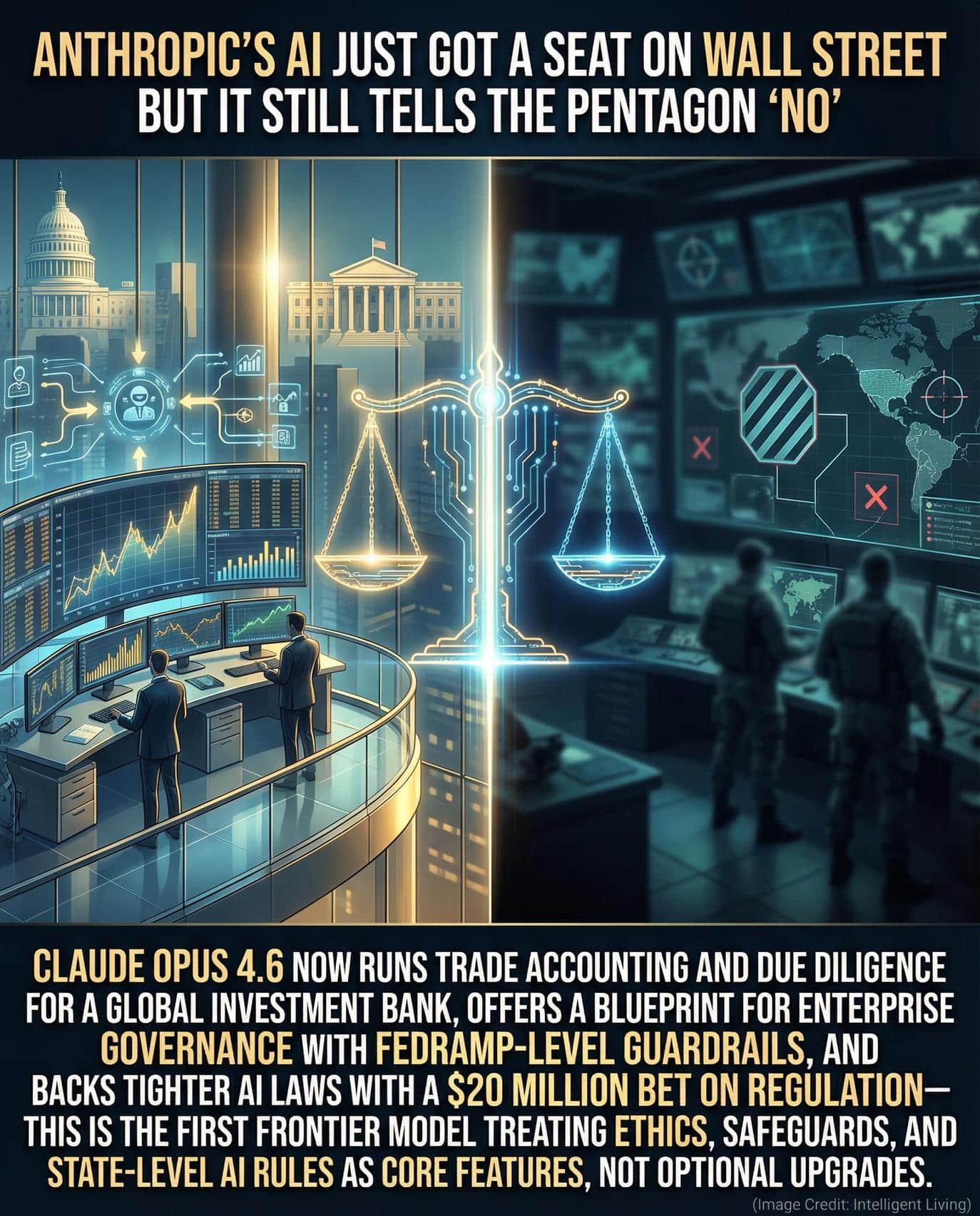
Drawing firm lines against mass domestic surveillance and autonomous weapons targeting allows Anthropic to codify a new industry standard where ethics act as a product feature rather than an afterthought. These maneuvers effectively reframe the global competition. It is no longer enough to build a model that mimics human speech; the new frontier requires pairing frontier-level capability with enforceable governance. This shift encourages organizations to view audit trails and corporate sustainability governance as fundamental components of the modern tech stack.
The Evolution of Claude Opus 4.6 and Global AI Ethics
Essential Technical Specs and Key Anthropic Partnerships
Rapid developments in the artificial intelligence sector have made it difficult for organizations to track the latest performance benchmarks. To provide immediate clarity on the current state of the industry, here are the core technical achievements and partnerships defining Anthropic’s current trajectory:
- Claude Opus 4.6 is Anthropic’s most capable publicly available model, designed for advanced reasoning, coding, and long-horizon tasks, according to Anthropic’s official release.
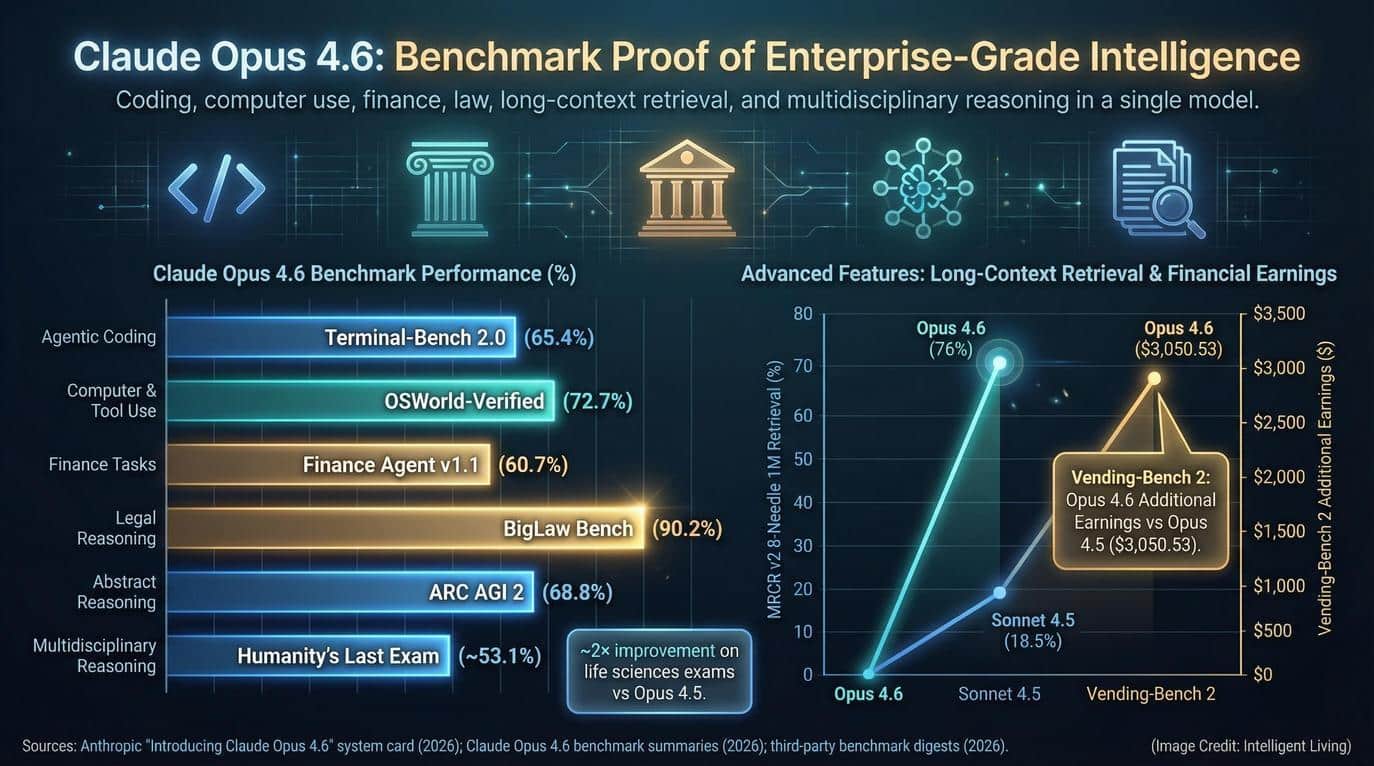
- The model supports a context window of up to one million tokens in beta through the Claude Developer Platform, allowing it to process extremely large documents and datasets in a single session.
- Reuters reports that Goldman Sachs is working with Anthropic on AI agents for trade and transaction accounting, onboarding, and due diligence tasks, deepening the broader shift toward conversational AI in finance and enterprise banking.
- Anthropic has expanded access to Claude for Government, including workloads aligned with FedRAMP High standards, which apply to sensitive federal data and hint at how public institutions may eventually pair these systems with sustainable energy management tools.
- Reports detail a dispute between the Pentagon and Anthropic over the use of AI in military contexts, particularly around autonomous weapons targeting and mass domestic surveillance.
- In February 2026, Anthropic pledged $20 million to Public First Action, a political group supporting AI regulation at the state level.
These milestones reflect a broader push toward high-compliance environments where raw processing power is balanced by rigorous oversight. As these partnerships mature, they will likely serve as blueprints for how other sectors integrate frontier-level intelligence. Anthropic is also reportedly exploring custom chip manufacturing with Samsung, part of a trio of deals covered in our Samsung Mistral AI partnership roundup.

The Week Anthropic Shifted the Global AI Narrative
Notice how this momentum shifted—not through a solitary press release, but through a sequence of high-impact headlines that reshaped the industry within a single week.
Strategic Product Milestones and Technical Leaps
Anthropic recently unveiled Claude Opus 4.6, describing it as optimized for advanced coding, enterprise workflows, and sustained reasoning across complex tasks. In its own Claude Opus 4.6 model benchmarks, the company highlights benchmark results and enterprise-grade features that position Opus 4.6 as a high-reliability system rather than a casual assistant.
The official product launch announcement further emphasizes longer planning horizons and stronger coding performance. This rollout also introduced a one-million-token context window in beta, representing a significant technical leap for enterprise data processing.
Institutional Integration and Sector-Wide Influence
Then came confirmation that Goldman Sachs was working with Anthropic to automate internal banking workflows. According to a Reuters report summarizing CNBC coverage, the bank is building AI agents to assist with accounting, onboarding, and due diligence processes. That story signaled that large financial institutions are moving beyond experimentation and into operational integration.
Ethical Frictions in Military and Defense Applications
Within the same news cycle, Reuters reported tension between the Pentagon and Anthropic over the scope of permissible military uses for AI. The dispute centers on safeguards around autonomous weapons targeting and domestic surveillance. This recent reporting confirms that the debate over AI safeguards has shifted from theoretical speculation to immediate operational reality.
Active Participation in the AI Regulatory Arena
Finally, Reuters reported that Anthropic committed $20 million to Public First Action, a political organization supporting stronger AI regulation at the state level. That move placed the company openly inside the regulatory debate rather than outside it.
Taken together, capability, enterprise adoption, military boundary setting, and political spending created a new narrative arc. The question shifted from “Can AI do this?” to “Should it, and under what constraints?”
Inside Claude Opus 4.6: Advanced Features for the Modern Enterprise
Claude Opus 4.6 excels at managing sustained, intricate workflows while maintaining a high level of semantic coherence. This reliability is where the large context window becomes significant for real workplaces already adjusting to the ways AI is redefining work across major industries.
What is a One-Million-Token Context Window?
A context window determines how much information a model can consider at once. Tokens are fragments of words and punctuation. When Anthropic says that Opus 4.6 supports up to one million tokens in beta, it means the system can ingest very large documents, codebases, or data collections within a single session, instead of relying on short snippets.
Organizations can now leverage high-capacity processing to manage data at scale without sacrificing detail. In practical terms, this allows a model to review several types of complex data within a single session:
- Long-form financial reports
- Intricate legal contracts
- Deeply nested technical documentation
Maintaining this level of continuity ensures that critical nuance is preserved across even the most massive datasets. According to Anthropic’s release materials, the extended context window is available in beta via its developer platform.
The Power of Large-Scale Data Ingestion
Anthropic describes Opus 4.6 as supporting hybrid reasoning modes. In simple terms, users can select faster responses for lightweight tasks or allow the system to spend more computational effort on complex reasoning. That flexibility matters in enterprise settings where reliability and traceability are more important than speed alone.
The company also reports benchmark improvements in areas such as coding and agent-style tasks. While benchmarks do not perfectly predict real-world performance, they offer measurable comparisons across models to help developers gauge potential efficiency.
The larger implication is that Claude Opus 4.6 is engineered for multi-step workflows, not just single-question responses.
The Autonomy Leap: Transforming AI Assistants into Workflow Operators
Actually, the most profound transformation here isn’t just about larger vocabularies or smoother phrasing—it’s about the sudden leap in machine autonomy.
Anthropic’s tooling and documentation position Claude as capable of acting within structured workflows. Through systems like the Model Context Protocol, Claude can connect to external tools and data sources, enabling it to retrieve information, run calculations, and iterate across steps.
Transitioning from a conversational assistant to a workflow operator fundamentally alters the risk profile, mirroring the digital transformation of labor today. When a model can draft a memo, reconcile a spreadsheet, query a database, and revise its output in a loop, it starts to resemble a digital coworker rather than a search engine. Anthropic reinforced that shift in August 2026 by unifying Claude’s memory across chat and Cowork, so context built in one surface carries over to the other without rebriefing.
That framing has appeared in enterprise reporting. Reuters’ coverage of Goldman Sachs described AI agents embedded with engineering support, working across back-office functions. The phrase “digital coworker” is no longer marketing shorthand. It reflects how large institutions are structuring deployments.

Market Impact: Anthropic’s Multi-Billion-Dollar Economic Influence
Beyond product features and policy disputes, capital markets are sending their own signals.
Reporting on the latest funding round noted that the company raised $30 billion in a funding round that valued it at approximately $380 billion. Such numbers reflect investor belief that frontier AI systems will underpin major economic sectors.
At the same time, market reactions to new AI agent tools have contributed to volatility in software stocks, as investors reassess which services may be automated and how those workloads intersect with innovative data center cooling strategies.
When funding scale, enterprise adoption, and regulatory conflict converge, AI stops being a niche technology story. It becomes a macroeconomic force.
Goldman Sachs and Anthropic: A Blueprint for Wall Street AI Integration
Accounting is not glamorous, but it is structured, rule-bound, and audit-driven. That makes it a natural proving ground for AI agents.
According to reporting on the Goldman Sachs partnership, the bank is developing systems with Anthropic that assist with trade and transaction accounting, client onboarding, and due diligence processes. These are not experimental chat features. Instead, these specific functions remain tied to compliance and financial reporting requirements.
If AI agents can reliably reconcile transactions, flag discrepancies, and generate structured documentation, the ripple effects extend across the banking sector. Other institutions will observe error rates, cost savings, and productivity changes before deciding whether to follow.
This is where broader conversations about job displacement must be handled carefully. Automation in accounting does not mean the disappearance of financial professionals. Instead, it likely shifts human roles toward oversight, exception handling, regulatory interpretation, and systems supervision.
This shift sits alongside broader conversations regarding the ethics of generative AI in coding, which ask organizations to decide which tasks should remain under human judgment even as software agents become more capable.

Anthropic’s $20M Political Commitment and the Future of AI Regulation
In February 2026, Reuters reports on political funding that Anthropic committed $20 million to Public First Action, a political group advocating for AI regulation at the state level and opposing federal preemption of stricter state rules.
Anthropic’s own public statement frames the move as support for transparency, export controls, and enforceable safeguards. Regardless of interpretation, the decision places the company directly inside the policy arena.
AI governance is no longer confined to academic panels and white papers. It now involves campaign funding, lobbying coalitions, and state-level legislation. That evolution signals that ethical positioning is becoming part of competitive strategy.
Claude for Government: Securing Public Sector AI with FedRAMP High
Government adoption is often slower than private enterprise, but it carries deeper institutional consequences.
Anthropic has expanded Claude access across the federal government, including offerings aligned with FedRAMP High. The FedRAMP program standardizes security assessments for cloud services, and its security impact baseline applies to systems handling sensitive federal information where compromise could have serious impact.
By aligning Claude deployments with FedRAMP High requirements, Anthropic signals that its systems are designed for environments where data protection and auditability are mandatory.
High-Security Baselines for Sensitive Federal Data
Public sector leaders are increasingly looking for ways to streamline administrative burdens without compromising security. While autonomous control remains a distant goal, current large language models offer immediate value in several key areas of federal operations:
- Drafting policy summaries from lengthy legislation
- Assisting with procurement document analysis
- Supporting multilingual communication with residents
- Identifying anomalies in large administrative datasets
By focusing on these specific applications, agencies can improve public service delivery while maintaining strict human oversight. These use cases demonstrate that AI is most effective when used to augment human expertise rather than replace it in sensitive decision-making roles.

Human Impact: Navigating the New Era of AI Delegation and Oversight
The rapid evolution of AI agents is already changing the daily experience of workers and citizens across the globe. To navigate this transition successfully, individuals and organizations should pay attention to several emerging trends in technology adoption:
- Delegation will expand: Anthropic’s Economic Index reporting indicates that users are moving toward assigning high-level objectives to their digital assistants.
- Human oversight is non-negotiable: As automation handles larger chunks of the workflow, supervision must pivot toward validation and exception review, providing a clear path for those studying data science in the age of automation.
- Trust requires radical transparency: Long-term adoption depends on how ethically smart systems are designed to manage privacy and user experience.
Monitoring these shifts allows communities to stay ahead of the curve in an increasingly automated world. As the technology matures, the ability to balance autonomous output with human judgment will remain a critical competitive advantage.
The Pentagon Dispute: Negotiating Ethical Boundaries in Military AI
The dispute between Anthropic and the Pentagon illustrates the core tension in modern AI development.
Reporting on the Pentagon safeguards dispute notes that U.S. defense officials have pressed for broader latitude in how AI systems may be used, while Anthropic has resisted loosening certain safeguards, particularly around fully autonomous weapons targeting and mass domestic surveillance.
Current investigative reports substantiate that the debate over AI safeguards has shifted from theoretical speculation to immediate operational reality. While ‘all lawful use’ appears clear on the surface, legality doesn’t always guarantee ethical integrity—particularly as autonomous military drone systems continue to mature. Companies must decide whether to permit technically legal uses that could carry long-term societal consequences.
Anthropic’s position, as reported, suggests that it is attempting to draw bright lines around certain categories of deployment. Whether those lines hold under competitive and political pressure remains an open question.

The New Standard: Balancing Frontier Capability with Ethical Restraint
The arrival of Claude Opus 4.6 signifies that the era of ‘growth at all costs’ in the software world is meeting its most significant challenge yet. As Anthropic embeds itself within the high-stakes environments of Wall Street and federal governance, the company is betting that the market will value predictable safety as much as it values cognitive speed.
The friction between corporate guardrails and government demands proves that the conversation has moved from theoretical ethics to the hard reality of operational deployment. Consider the broader implications: as these systems mature, success will depend on how an AI development company chooses to integrate ethical frameworks with human judgment.
Moving beyond simple Q&A toward running complex banking and policy workflows ensures that the digital coworker remains a permanent fixture of the future economy. Success in this new decade will likely depend on how well we balance the immense power of these systems with the human-centric oversight required to keep them aligned with public interest.
Frequently Asked Questions About Claude Opus 4.6
What are the Primary Enterprise Features of Claude Opus 4.6?
The model excels at long-horizon tasks and complex coding, offering a massive context window for processing large datasets in a single session.
How is Goldman Sachs Using Anthropic AI Agents?
The bank utilizes these agents to automate trade accounting, client onboarding, and rigorous due diligence processes within its internal workflows.
Why is FedRAMP High Compliance Important for Claude?
This security baseline allows sensitive federal agencies to deploy AI while meeting the strictest government standards for data protection and auditability.
What Does a One-Million-Token Context Window Provide?
It enables the system to digest entire codebases or lengthy legal libraries at once, ensuring continuity and coherence across massive amounts of information.
Is Anthropic Opposing Military AI Use?
Anthropic permits lawful use but enforces strict guardrails against fully autonomous weapons targeting and mass domestic surveillance platforms.


