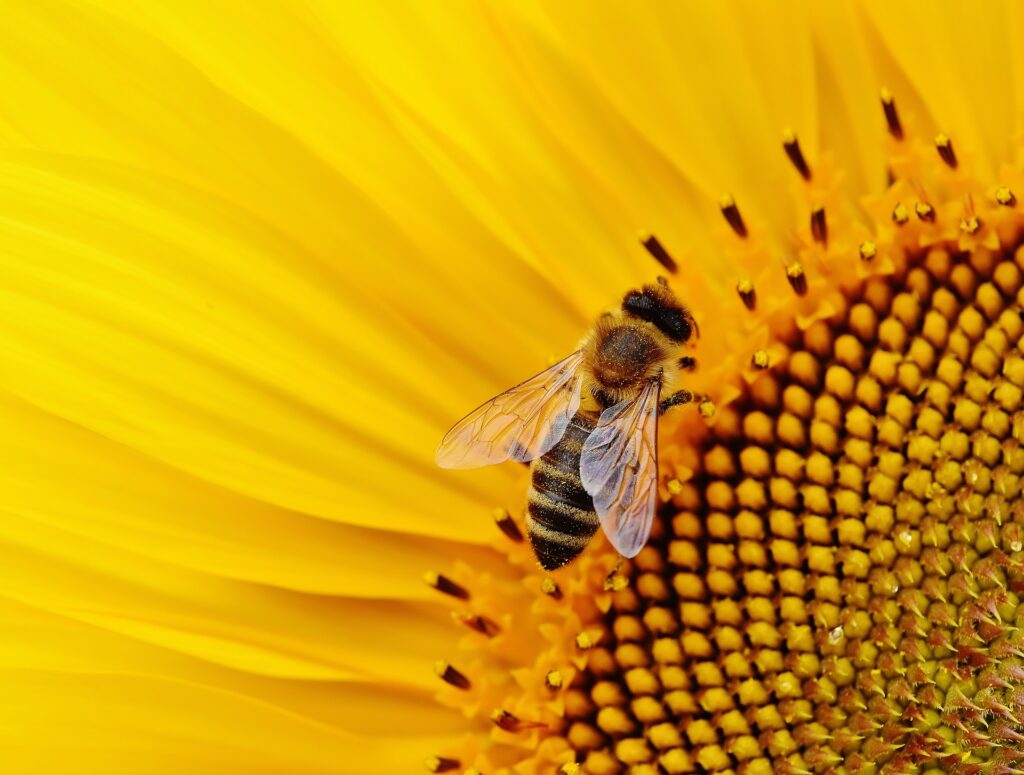
Lightsource BP, a US-based solar developer, is killing two birds with one stone by providing clean energy for thousands of homes while efficiently using land for growing bee-friendly plants to save the bee population.
The developer has recently closed a $20M financing package and is now getting ready to start constructing its Wildflower Solar project at Rio Linda in Sacramento, California. The project will generate 13MW (AC) / 16.5MW (DC) of electricity, which can power up to 2,600 homes.
A community-owned electric utility called Sacramento Municipal Utility District (SMUD) will purchase the power harnessed at Wildflower Solar. SMUD will channel the purchased energy to support its ‘Neighbourhood Solarshares Program,’ which distributes electricity to new housing expansions via an off-site utility-scale solar project.

Kevin Smith, the CEO of the Americas for Lightsource BP, explained:
The affordability of solar, combined with its generation of emissions-free electricity, has made it an ideal source to add to our country’s energy mix. Adding on benefits such as community solar programs that help contribute to affordable housing, along with implementing long-term land management plans that enhance local biodiversity, are all ways that we can work together to multiply solar’s contribution to our nation’s economy and environment.
Lightsource BP has planted pollinator-friendly habitats at the Wildflower Solar farm, and also installed beehives at some of their UK farms to help increase the bee population globally.

This isn’t the only “bee-friendly” solar farm in the US. In August 2020, Eastern Indiana’s Randolph County announced that it had adopted a first-ever solar energy regulation that includes a bee-friendly provision. The move comes ahead of the construction of EDP Renewables’ 200 megawatts Riverstart Solar Park, Indiana’s largest solar farm.
All future solar farms in Randolph County, including Riverstart, will embrace this land stewardship provision that requires the groundcover of the farms to be native meadow grasses, clovers, and pollinator-friendly wildflower plants.
Bees are vital for human existence. In the latest meeting of the Royal Geographical Society of London, the Earthwatch Institute declared bees the most important living species on this planet. “Seventy out of the top 100 human food crops — which supply about 90% of the world’s nutrition — are pollinated by bees,” confirmed Greenpeace USA.
Sadly, humans are mainly responsible for the destruction of the bee population with habitat loss and pesticides. This idea of combining vast lands that would otherwise be considered a part of habitat loss, with a pollinator-friendly habitat, is ingenious and should be encouraged worldwide.