
In the Chernobyl Exclusion Zone, guards are watching for human trespassers. But that’s not all they do. They’ve been befriending and caring for the descendants of dogs abandoned by the tens and thousands of people who had to leave their lives behind to flee when reactor 4 exploded in 1986. BBC reporter Jonathon Turnbull collected and documented their interactions and shared the story. It’s a beautiful tale revealing a spark of humanity returning to a spot long void of it.
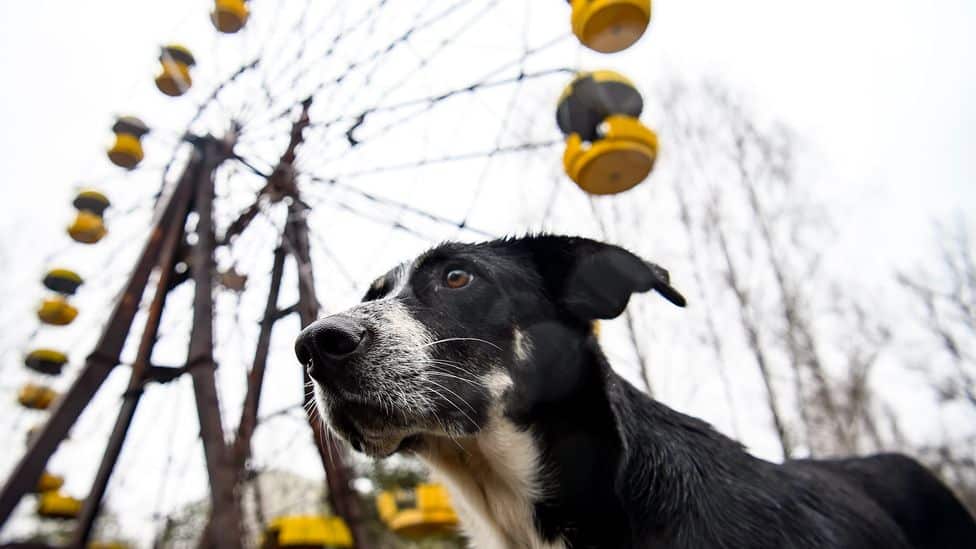
When reactor 4 went 34 years back, the residents of Pripyat were told to leave everything behind, including their pets. Mr. Turnbull, a Ph.D. candidate at the University of Cambridge who lives in Kyiv, has visited the 1,000-mile square Zone many times. During these frequent visits, he met various singular guards, individuals faced with ensuring no one sneaks into the contaminated wasteland. These guards had formed intricate relationships with the semi-wild dogs that inhabited the Exclusion Zone.
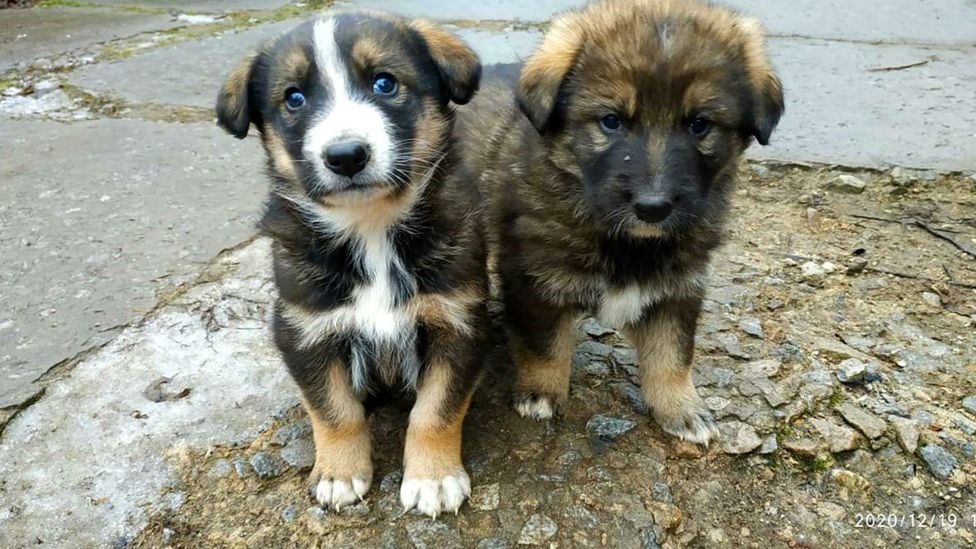
Their tales of naming, feeding, and caring for (and altogether avoiding the temperamental dogs) fascinated Mr. Turnbull. So, the BBC reporter asked the guards if they’d be willing to carry disposable cameras and take pictures of the dogs in their day-to-day lives for his geography research.
Turnbull said:
If I wanted to know the dogs, I needed to go to the people who know them best—and that was the guards.

Their photographs are exceptionally intriguing because they capture various aspects of the lives of millions of ownerless canines worldwide. These animals, not quite wild, not relatively tame, roam cities and settlements searching for food. Interestingly, here in the Exclusion Zone, the environment is entirely different, but the dogs’ characters are still comparable.
However, the Chernobyl stray dogs’ lives differ from city strays for several reasons. While both types have total freedom to roam around, the Exclusion Zone dogs’ lives are more complicated. They’ve been plagued by radiation, have to face hungry bears and wolves, and are exposed to wildfires and human-made hazards.

The guards have given some of the dogs a name. Some dogs linger close to patrol paths; others stay away, unwilling to reveal themselves. There’s Arka, a sausage-like dog, which warms herself by napping atop heating ducts. There’s Tarzan, who presumably does tricks for food. There’s Alpha, which is named after a type of radiation.
One of the guards said:
They give us joy. For me, this is a kind of symbol of the continuation of life in this radioactive, post-apocalyptic world.

The guards provide the dogs with meals, remove ticks, and will even administer rabies vaccines. In most instances, the dogs hang around because they want food, but some act as assistants in a way – reminiscent of early-man domestication. The dogs bark in numerous tones – a specific sound to each thing – warning guards of either a crazy animal, a human trespasser, or perhaps a touring automobile.


