
Long before Sony entered gaming with the original PlayStation or Microsoft launched the first Xbox, Nintendo was already defining what a video game console could be. From a playing card company founded in Kyoto in 1889 to the creator of Mario, Zelda, and Pokemon, Nintendo invented the modern home console market, survived its crash, and reinvented it at least four times since.
Over nearly five decades, Nintendo has released seven home console generations, five major handheld families, and two hybrid systems that blurred the line between them. From the 8-bit Nintendo Entertainment System that revived American gaming to the motion-controlled Wii that sold over 101 million units, and from the brick-like Game Boy to the record-breaking Nintendo Switch and its new successor, the Switch 2, Nintendo has consistently chosen innovation over raw power.
This guide covers every Nintendo console ever released, from the 1977 Color TV-Game to the Nintendo Switch 2 launched on June 5, 2025, complete with detailed specs, model revisions, sales figures, and the stories behind each generation. For comparable deep dives into its rivals, check out our complete guide to PlayStation consoles and our complete guide to Xbox consoles.
The Origins: Color TV-Game and Game & Watch
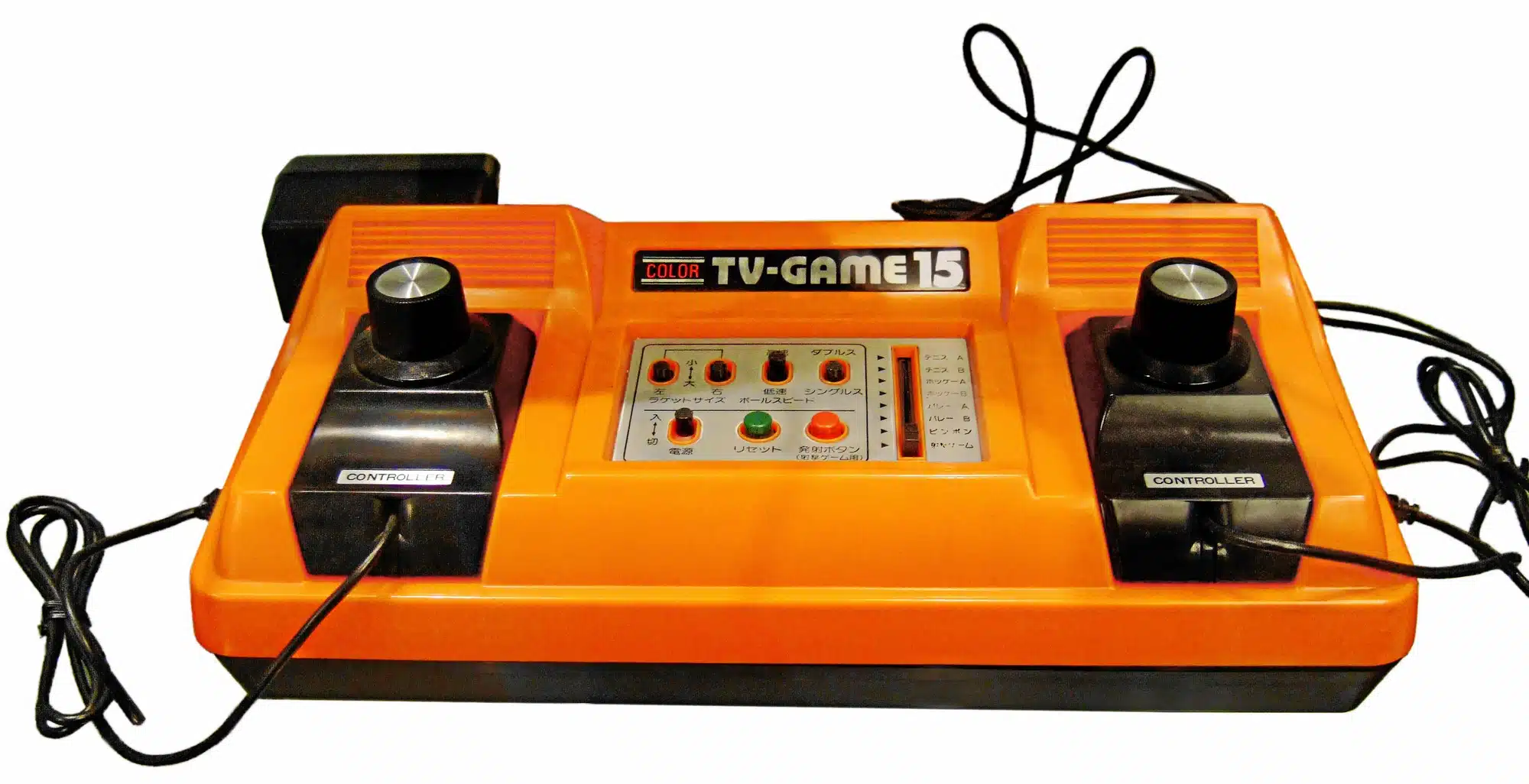
No history of Nintendo consoles can start with the NES. Nintendo’s first home systems were the Color TV-Game series, developed with Mitsubishi and released only in Japan from 1977 to 1980. The line included five models, each with built-in Pong-style games and no interchangeable cartridges. The first unit, Color TV-Game 6, sold for 9,800 yen and contained six variations of Light Tennis. Later models added driving and shooting games, and the series sold around 3 million units combined, making Nintendo the dominant Japanese console maker before the Famicom era.
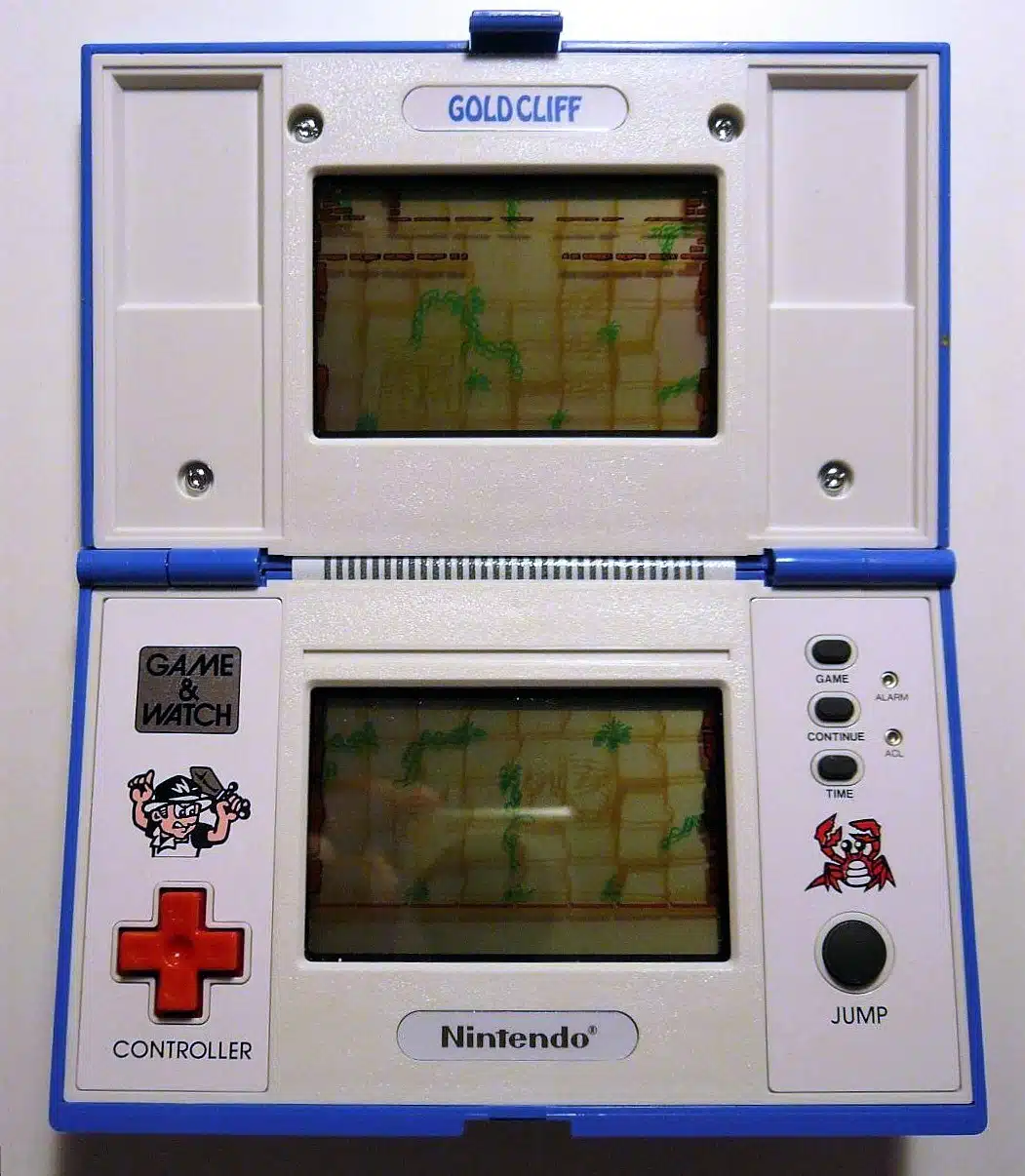
In 1980, designer Gunpei Yokoi created the Game & Watch series after watching a businessman play with an LCD calculator on a train. These pocket-sized handhelds each played a single game, but they introduced two inventions that still shape gaming today: the directional pad (D-pad) on Donkey Kong in 1982 and the dual-screen clamshell design that would later inspire the Nintendo DS. Nintendo sold 43.4 million Game & Watch units through 1991, funding its far bigger ambition: a cartridge-based home console.
The 8-Bit Revival: Nintendo Entertainment System (NES)
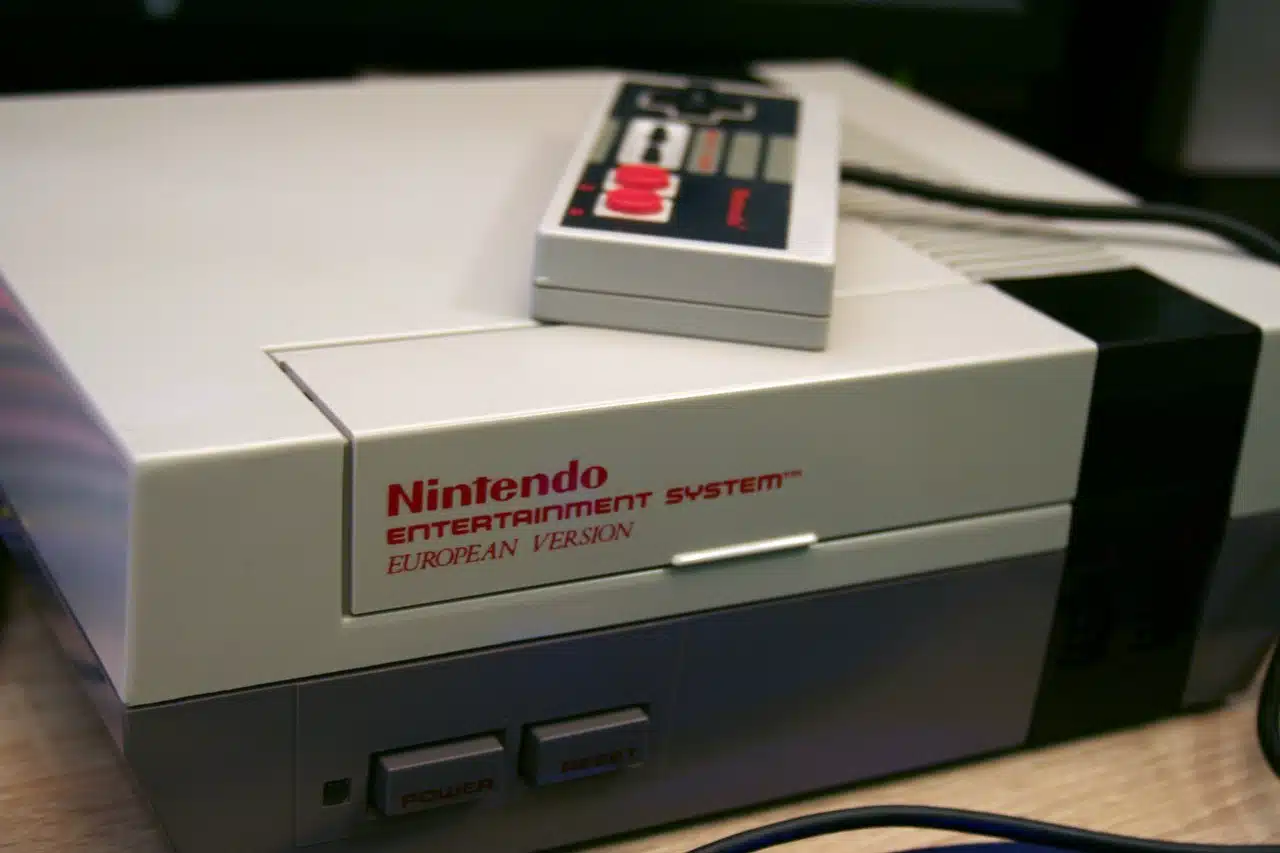
Nintendo released the Family Computer (Famicom) in Japan on July 15, 1983, for 14,800 yen. After the North American video game crash of 1983 destroyed Atari and left retailers refusing to stock game consoles, Nintendo rebranded the system for America as the Nintendo Entertainment System, disguised it as a toy with a gray VCR-like chassis, a light gun (NES Zapper), and a robot companion (R.O.B.), and test-launched it in New York in October 1985 before a nationwide rollout in 1986 at $199.99.
The strategy worked spectacularly. The NES standardized interchangeable cartridges, the D-pad controller with A/B buttons, and the third-party licensing model with the 10NES lockout chip and Nintendo Seal of Quality. Technically, it used a Ricoh 2A03 8-bit CPU at 1.79 MHz, a custom Picture Processing Unit, 2 KB of RAM, and displayed 256 x 240 resolution with up to 48 colors on screen.
Its library defined entire genres: Super Mario Bros. (40.2 million copies, the best-selling NES game), Duck Hunt, The Legend of Zelda, Metroid, Mega Man, Dragon Quest, and Final Fantasy. The NES sold 61.91 million units worldwide, with over 500 million games sold, single-handedly reviving the American home console market.
New-Style NES and AV Famicom (1993)
In 1993, Nintendo released a cost-reduced redesign: the New-Style NES in North America and the AV Famicom in Japan. It replaced the unreliable front-loading cartridge slot with a reliable top-loader, adopted a dog-bone controller, and removed composite video output on the American model to cut costs. It sold modestly as attention had already shifted to the 16-bit generation, but it remains prized by collectors for its reliability.
| Model | Initial Release Date | CPU | RAM | Storage | Notable Changes |
|---|---|---|---|---|---|
| NES / Famicom | July 1983 (JP) / October 1985 (US) | Ricoh 2A03 1.79 MHz (8-bit) | 2 KB RAM | Cartridges up to 768 KB | D-pad controller; 10NES lockout; Zapper and R.O.B. bundles |
| New-Style NES / AV Famicom | 1993 | Ricoh 2A03 1.79 MHz (8-bit) | 2 KB RAM | Cartridges | Top-loading slot; Dog-bone controller; Cost-reduced chassis |
The 16-Bit Wars: Super Nintendo Entertainment System (SNES)
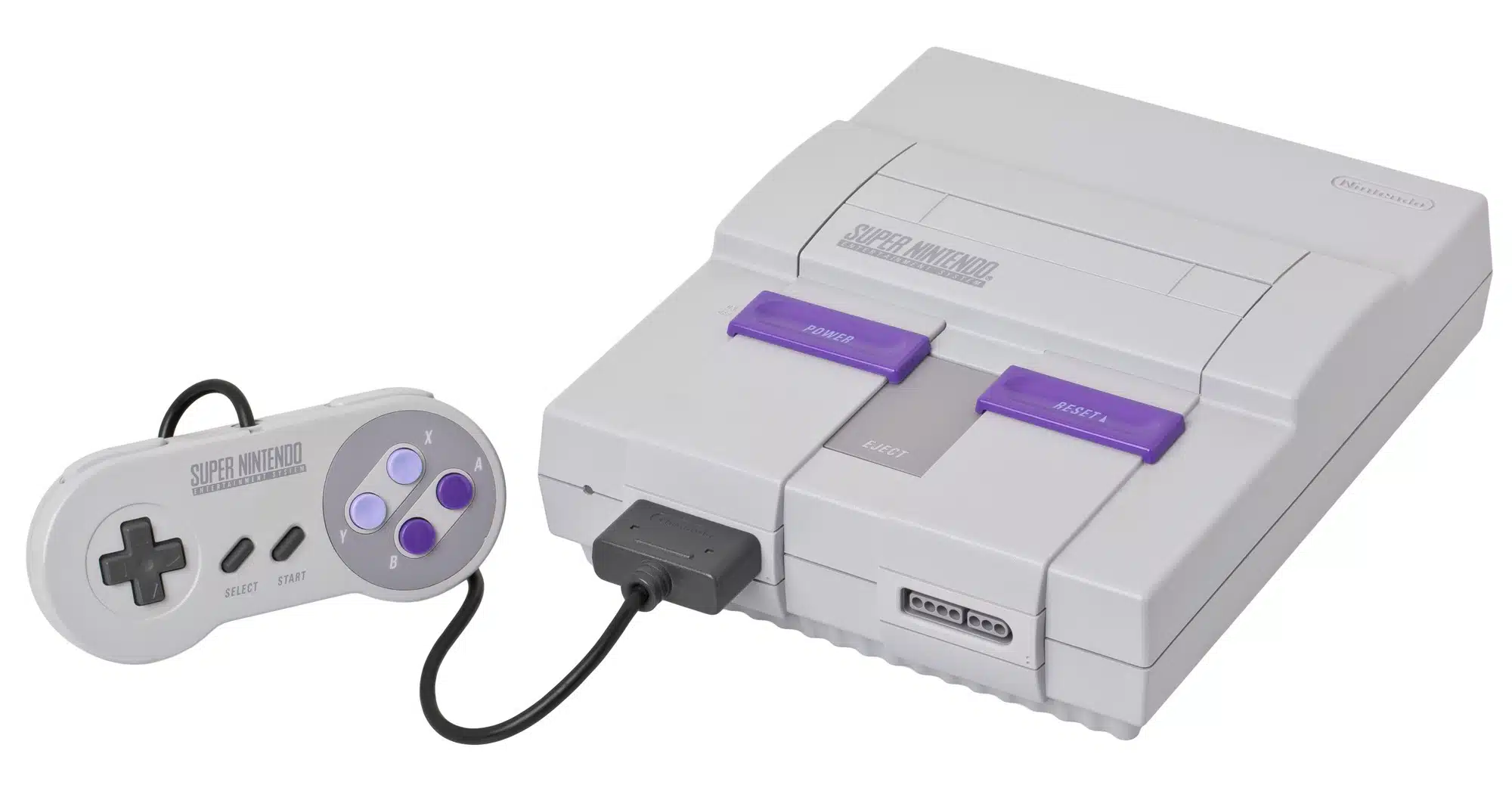
Released as the Super Famicom in Japan on November 21, 1990, and as the Super Nintendo in North America in August 1991 at $199.99, the SNES moved gaming to 16-bit with a Ricoh 5A22 CPU at 3.58 MHz, 128 KB of RAM, a custom PPU capable of 32,768 colors, Mode 7 background scaling and rotation, and Sony-designed SPC700 audio that delivered true stereo sampling.
The SNES fought one of gaming history’s fiercest rivalries against the Sega Genesis. Nintendo’s answer was an unmatched first-party lineup enhanced by Super FX and DSP chips inside cartridges: Super Mario World (20.6 million copies), Super Mario Kart, The Legend of Zelda: A Link to the Past, Super Metroid, Donkey Kong Country, Chrono Trigger, and Final Fantasy VI. The SNES sold 49.10 million units worldwide with 379 million games sold.
New-Style SNES / Super Famicom Jr. (1997)
The 1997 cost-reduced redesign shrank the chassis, removed the eject button and S-Video output, and sold for $99.99 in North America. Like the NES top-loader, it extended the system’s life well into the Nintendo 64 era and is now valued for its compact design.
| Model | Initial Release Date | CPU | RAM | Storage | Notable Changes |
|---|---|---|---|---|---|
| SNES / Super Famicom | November 1990 (JP) / August 1991 (US) | Ricoh 5A22 3.58 MHz (16-bit) | 128 KB RAM | Cartridges up to 120 Mb | Mode 7 graphics; Stereo sampling; Four controller buttons plus shoulders |
| New-Style SNES / Super Famicom Jr. | 1997 | Ricoh 5A22 3.58 MHz (16-bit) | 128 KB RAM | Cartridges | Compact chassis; $99 price; No S-Video or eject button |
Nintendo also released the Satellaview add-on in Japan (1995), a satellite modem for downloading games via broadcast, and in 1998 updated the Game Boy line in parallel. In the West, the SNES Classic Edition miniature with 21 built-in games followed in 2017, alongside the NES Classic Edition from 2016.
The 3D Leap: Nintendo 64
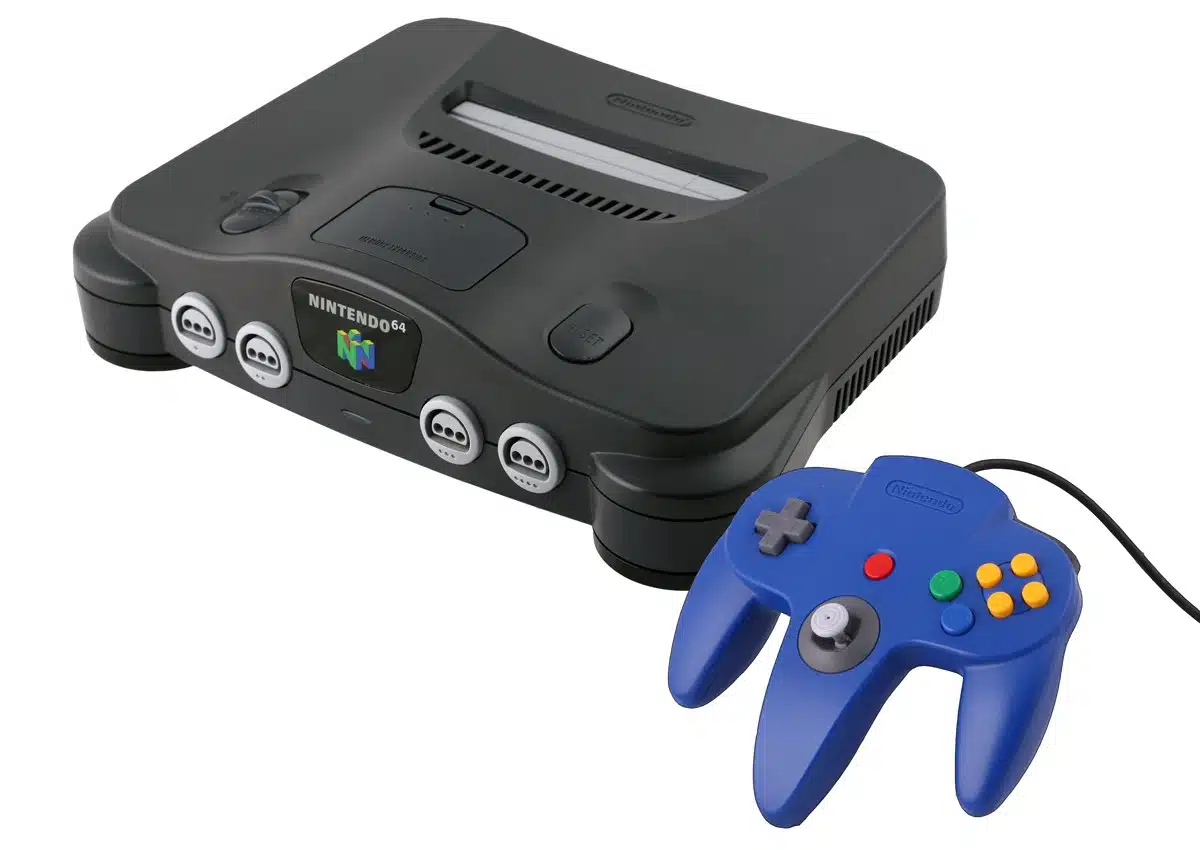
Launched in Japan on June 23, 1996, and in North America on September 29, 1996, at $199.99, the Nintendo 64 was named for its 64-bit NEC VR4300 CPU at 93.75 MHz paired with SGI’s Reality Co-Processor at 62.5 MHz, 4 MB of RDRAM (expandable to 8 MB with the Expansion Pak), and resolutions up to 640 x 480 with 16.8 million colors.
While Sony’s PlayStation bet on CD-ROMs, Nintendo stuck with cartridges for speed and anti-piracy, at the cost of storage space and full-motion video. The trade-off hurt third-party support but produced some of the most influential games ever made: Super Mario 64 (11.9 million copies, the template for 3D platformers), Mario Kart 64, GoldenEye 007, The Legend of Zelda: Ocarina of Time, and Super Smash Bros. The controller introduced the analog thumbstick and Rumble Pak force feedback as standard ideas the whole industry copied.
The N64 sold 32.93 million units with 224.97 million games sold. Its Japan-only 64DD magnetic disc add-on (1999) was a commercial failure but pioneered rewritable expansion content. Funtastic Series translucent color variants in 2000 remain collector favorites.
| Model | Initial Release Date | CPU | RAM | Storage | Notable Changes |
|---|---|---|---|---|---|
| Nintendo 64 | June 1996 (JP) / September 1996 (US) | NEC VR4300 93.75 MHz (64-bit) | 4 MB RDRAM (8 MB with Expansion Pak) | Cartridges up to 64 MB | Analog stick; Four controller ports; Rumble and Controller Pak slots |
| Nintendo 64 Funtastic Series | 2000 | NEC VR4300 93.75 MHz | 4 MB RDRAM | Cartridges | Translucent colors; Same hardware; Late-life refresh |
The Cube Era: Nintendo GameCube
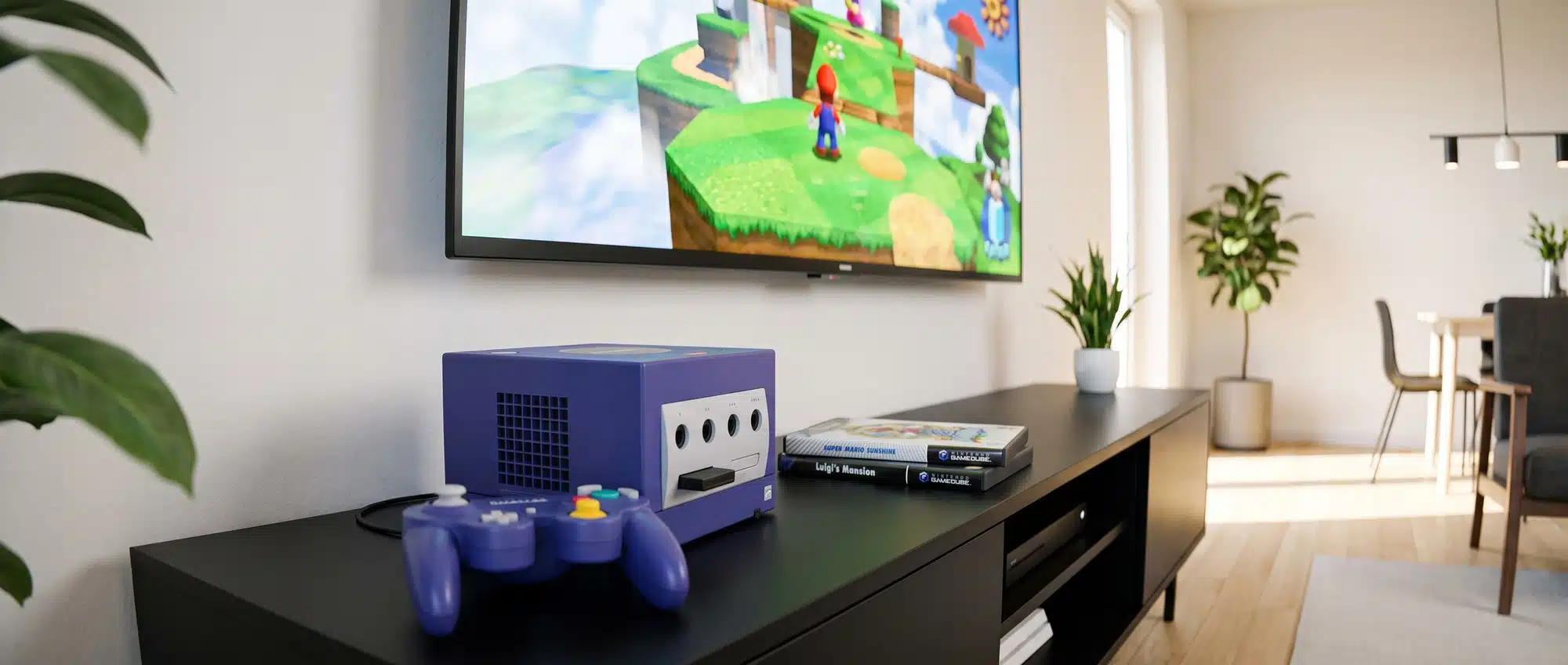
Released in Japan on September 14, 2001, and in North America on November 18, 2001, at $199.99, the GameCube was Nintendo’s smallest home console: a lunchbox-shaped cube with a carry handle. Inside was serious hardware for its time: an IBM PowerPC Gekko CPU at 485 MHz, an ATI Flipper GPU at 162 MHz delivering about 9 GFLOPS, 24 MB of 1T-SRAM plus 16 MB DRAM, and miniDVD-based Game Discs holding 1.5 GB.
The GameCube competed with the PlayStation 2 and original Xbox but finished third despite critical acclaim. Its best sellers were Super Smash Bros. Melee (7.09 million), Mario Kart: Double Dash, Super Mario Sunshine, The Legend of Zelda: Wind Waker, Metroid Prime, and Resident Evil 4. A broadband adapter enabled limited online play, and Game Boy Player and Game Boy Advance link cable accessories tied it to Nintendo’s handhelds.
The GameCube sold 21.74 million units with 208.57 million games sold. The Panasonic Q (2001), a Japan-only DVD-player hybrid with a stainless steel chassis, is now one of the rarest official Nintendo-licensed consoles.
| Model | Initial Release Date | CPU | RAM | Storage | Notable Changes |
|---|---|---|---|---|---|
| GameCube | September 2001 (JP) / November 2001 (US) | IBM Gekko 485 MHz | 43 MB total (24 MB SRAM + 19 MB DRAM) | Game Disc miniDVD 1.5 GB | Carry handle; Four controller ports; Game Boy Player support |
| Panasonic Q | December 2001 (Japan only) | IBM Gekko 485 MHz | 43 MB total | Game Disc + DVD-Video | Full DVD player; Stainless steel; Backlit display |
The Motion Revolution: Wii
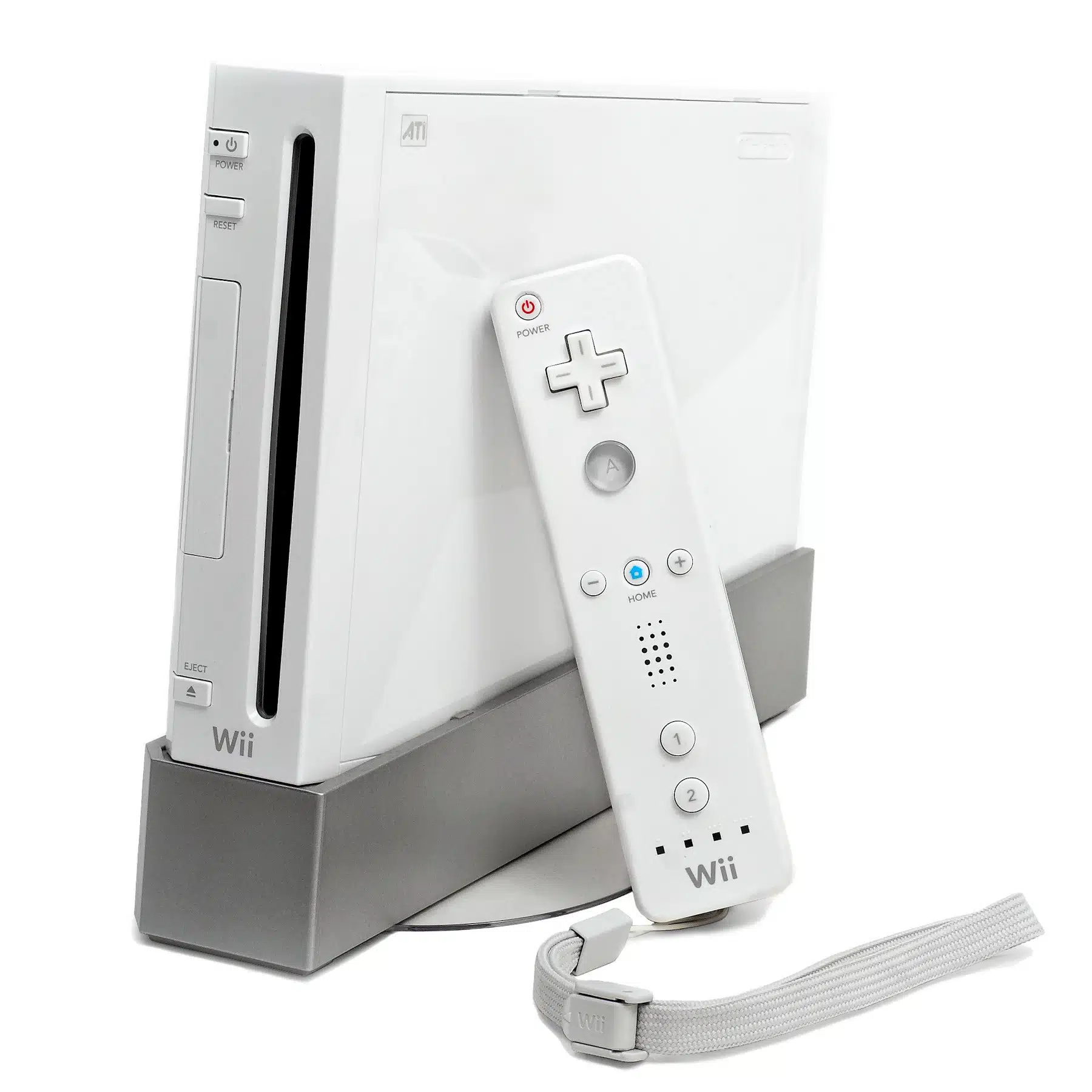
Released on November 19, 2006, in North America at $249.99, the Wii was Nintendo’s Blue Ocean gamble: instead of chasing HD graphics, it chased new players. An IBM PowerPC Broadway CPU at 729 MHz, an ATI Hollywood GPU at 243 MHz, 88 MB of RAM, and 480p output looked modest next to the Xbox 360 and PS3, but the wireless Wii Remote with motion sensing and infrared pointing, plus the Nunchuk, made gaming physical, social, and instantly understandable.
The result was a cultural phenomenon. Wii Sports (82.9 million copies including bundles) became the best-selling Nintendo home console game ever, followed by Mario Kart Wii, Wii Sports Resort with MotionPlus, New Super Mario Bros. Wii, and Super Smash Bros. Brawl. The Wii Shop Channel, Virtual Console retro downloads, Miis, and full GameCube backward compatibility on early models rounded out the package. On backward compatibility: launch Wii models (RVL-001) played GameCube discs natively and included four GameCube controller ports and two memory card slots under a flap on top, so GameCube controllers, memory cards, and accessories like the WaveBird and bongo controllers worked directly. Nintendo removed GameCube support with the 2011 Family Edition and the Wii Mini, which dropped the ports and disc compatibility entirely.
The Wii sold 101.63 million units with 921.85 million games sold, making it Nintendo’s best-selling home console until the Switch overtook it.
Wii Family Edition (2011) and Wii Mini (2012)
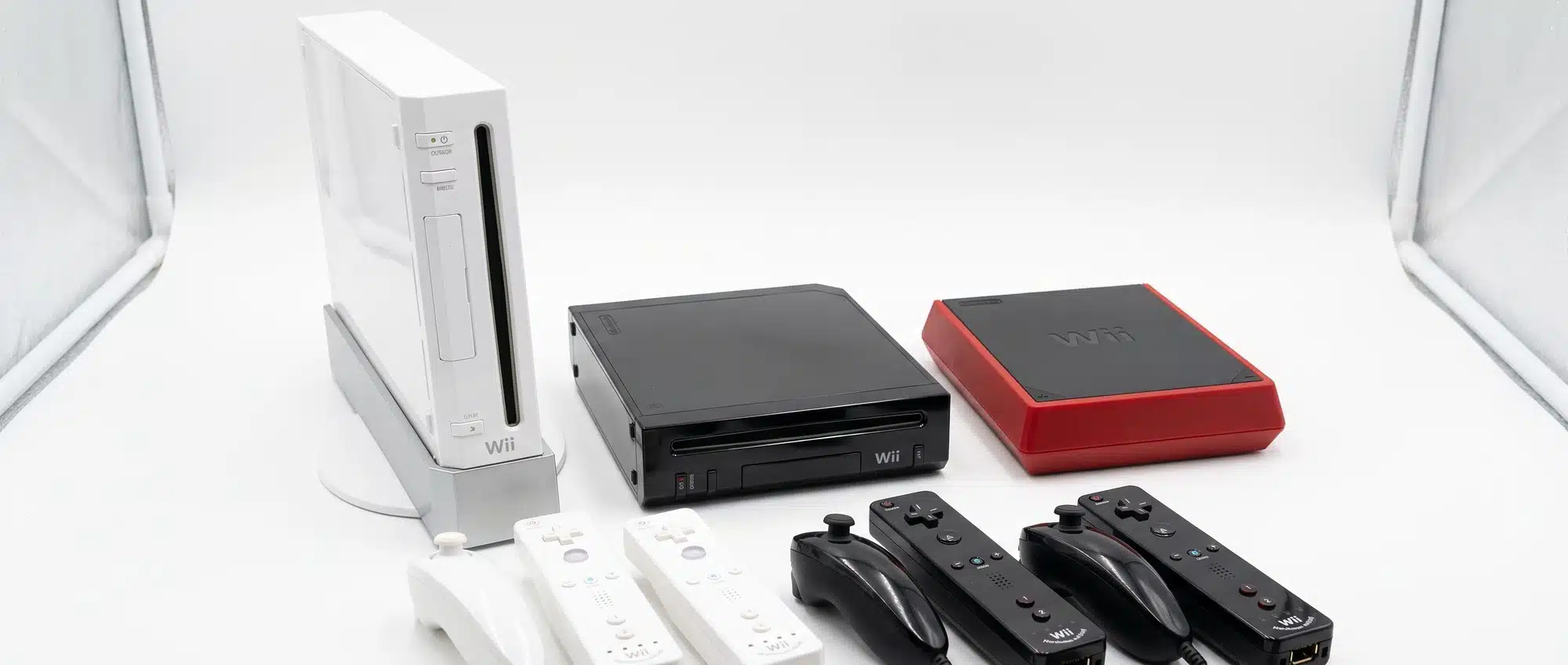
The 2011 Family Edition removed GameCube compatibility and laid the console horizontally. The 2012 Wii Mini, released in Canada, Europe, and later the US for $99.99, used a tiny red-and-black chassis with no Wi-Fi, no SD slot, and no GameCube support. It was a budget end-of-life model that now stands out as a design curiosity.
| Model | Initial Release Date | CPU | RAM | Storage | Notable Changes |
|---|---|---|---|---|---|
| Wii (Original) | November 2006 | IBM Broadway 729 MHz | 88 MB total | 512 MB flash + SD; Wii Optical Disc 4.7 GB | Motion controls; GameCube BC; Virtual Console; Wi-Fi |
| Wii Family Edition | 2011 | IBM Broadway 729 MHz | 88 MB total | 512 MB flash + SD | Horizontal design; No GameCube support |
| Wii Mini | December 2012 | IBM Broadway 729 MHz | 88 MB total | 512 MB flash, no SD | Compact red chassis; No Wi-Fi; No online; $99 price |
The Misunderstood Middle Child: Wii U
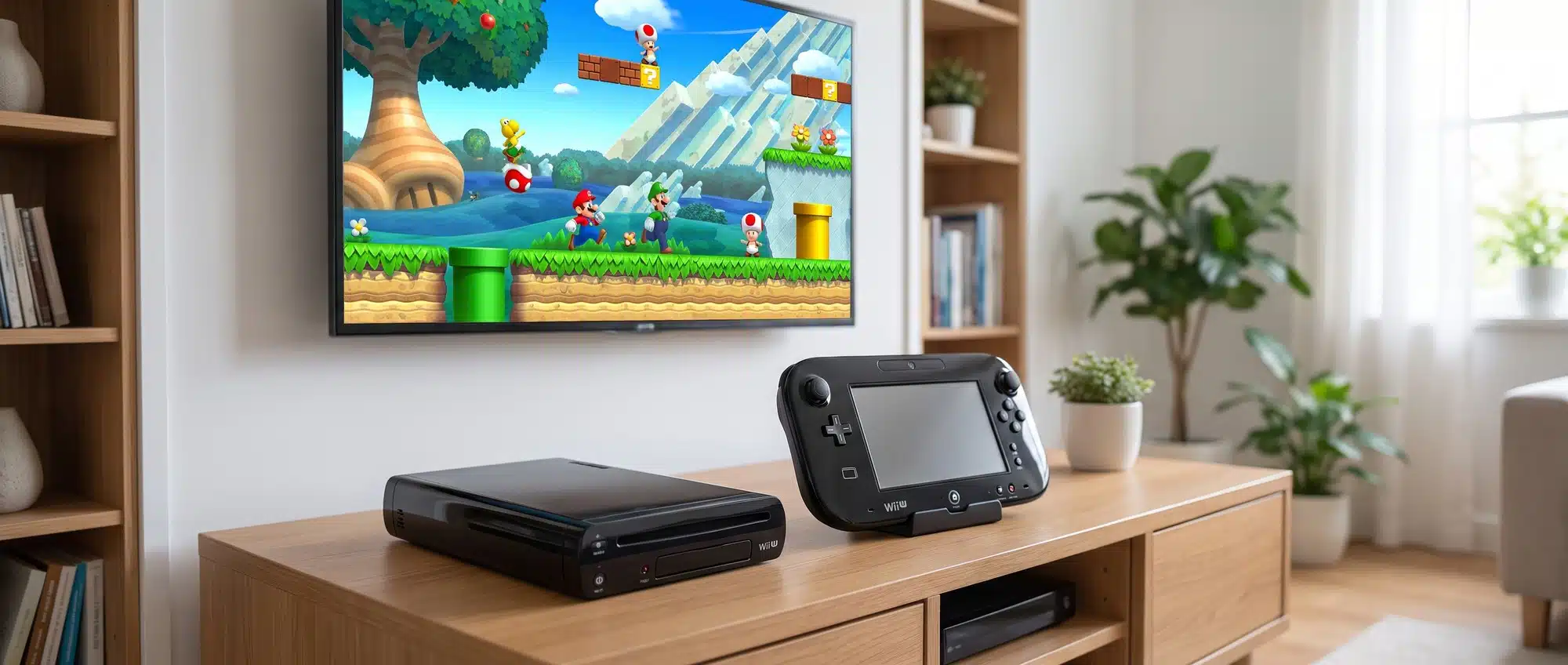
Launched on November 18, 2012, in North America at $299.99 for Basic and $349.99 for Premium, the Wii U was Nintendo’s first HD console: a tri-core IBM Espresso CPU at 1.24 GHz, an AMD Latte GPU at 550 MHz delivering about 352 GFLOPS, 2 GB of DDR3 RAM (1 GB for games), and up to 1080p HDMI output. Its signature was the GamePad, a controller with a built-in 6.2-inch 854 x 480 touchscreen, camera, microphone, and NFC for Amiibo.
Confusing branding that sounded like a Wii accessory, weak third-party support, and a slow start doomed it commercially despite excellent games: Mario Kart 8 (8.46 million), Super Mario 3D World, Splatoon, Super Smash Bros. for Wii U, and The Legend of Zelda: Breath of the Wild as a swan song dual release with Switch. The Wii U sold only 13.56 million units with 103.6 million games sold, Nintendo’s lowest-selling home console, but its GamePad ideas and HD ports directly paved the way for the Switch.
| Model | Initial Release Date | CPU | RAM | Storage | Notable Changes |
|---|---|---|---|---|---|
| Wii U Basic | November 2012 | IBM Espresso 1.24 GHz (tri-core) | 2 GB DDR3 | 8 GB flash | GamePad touchscreen; 1080p HDMI; Amiibo NFC |
| Wii U Premium | November 2012 | IBM Espresso 1.24 GHz (tri-core) | 2 GB DDR3 | 32 GB flash | Black chassis; Extra stand and cradle; Nintendo Network Premium |
Nintendo Handhelds: Game Boy to Nintendo 3DS
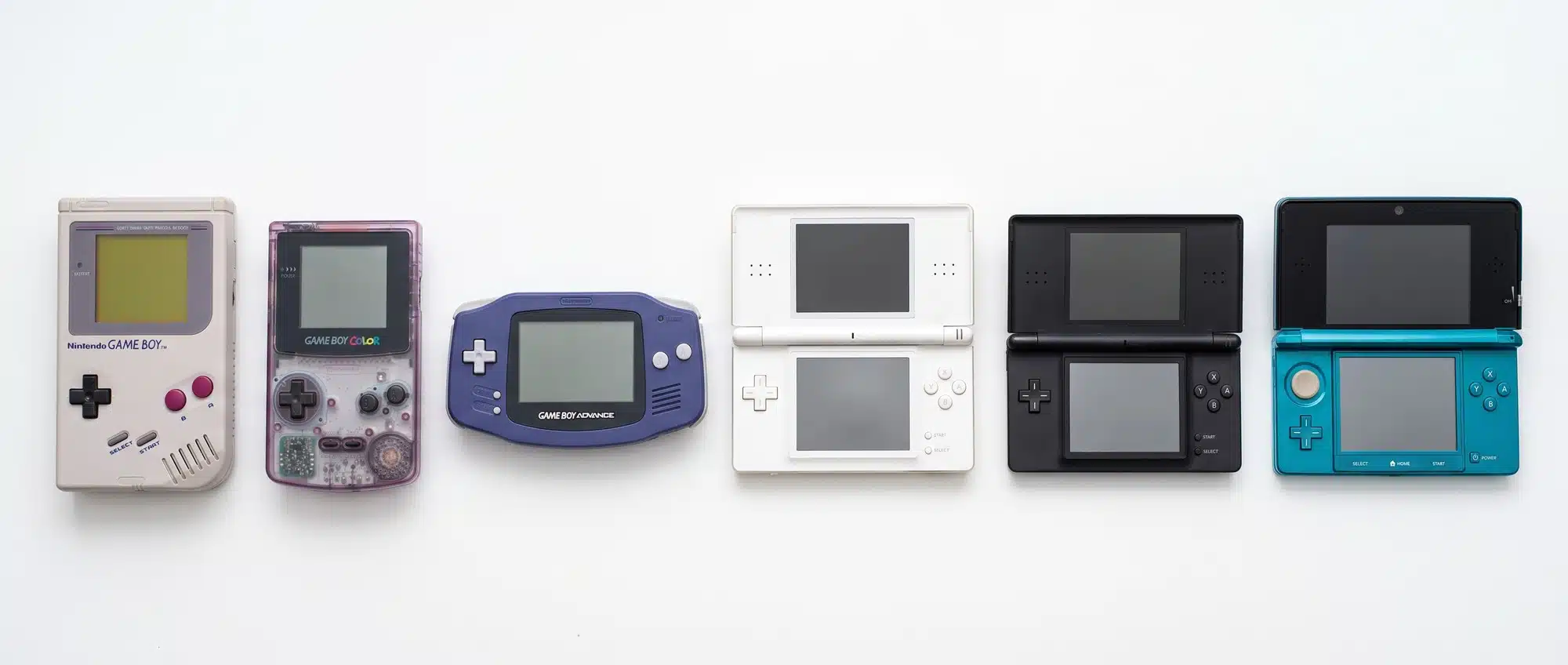
While Sony managed one hit handheld with the PSP and Microsoft never made one, Nintendo owned portable gaming outright for 30 years. Every handheld below is part of why Nintendo survived rough home console years.
Game Boy Family (1989 to 2003)
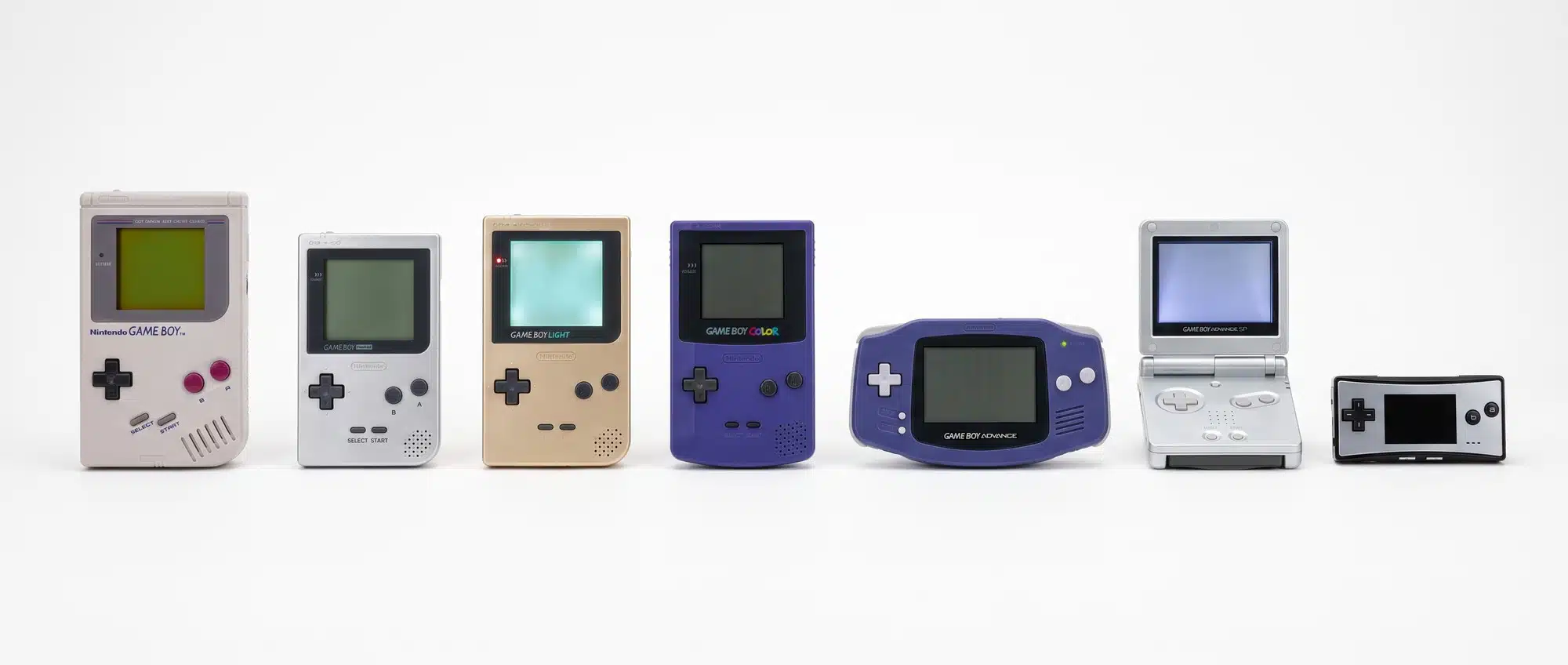
The original Game Boy launched in Japan on April 21, 1989, and in North America on July 31, 1989, for $89.99, with a Sharp LR35902 CPU at 4.19 MHz, 8 KB of RAM, and a green-tinted 160 x 144 reflective LCD. Bundled with Tetris, it outlasted technically superior rivals through battery life and games like Pokemon Red and Blue, Super Mario Land, and The Legend of Zelda: Link’s Awakening. It sold 118.69 million units including Color.
Revisions included the smaller Game Boy Pocket (1996), the backlit Game Boy Light (Japan only, 1997), and the Game Boy Color (1998) with a color screen and 32 KB RAM, which sold 118.69 million combined with the original line. The Game Boy Advance (2001) moved to a 32-bit ARM7TDMI at 16.78 MHz with a 240 x 160 color TFT, selling 81.51 million units, followed by the clamshell backlit GBA SP (2003) and the tiny Game Boy Micro (2005).
Each Game Boy model solved a specific limitation. The original was bulky with no backlight, so the Pocket shrank the chassis by about 30 percent and used AAA batteries. The Japan-only Light added an electroluminescent backlight for night play. The Color added a full color screen, double the RAM, and an infrared link for trading Pokemon. The Advance jumped to 32-bit power with shoulder buttons and a wider screen, the SP added a clamshell design with a rechargeable battery and a frontlight (later a brighter backlight on the AGS-101 revision), and the Micro shrank everything to a pocketable metal body with a sharp backlit screen but dropped backward compatibility with original Game Boy and Color cartridges.
| Model | Release Year | Screen | Key Difference |
|---|---|---|---|
| Game Boy | 1989 | 2.6-inch mono, no light | Original brick; 4 AA batteries; Link Cable multiplayer |
| Game Boy Pocket | 1996 | 2.6-inch mono, sharper | 30 percent smaller; 2 AAA batteries; Clearer display |
| Game Boy Light | 1997 (Japan only) | 2.6-inch mono, backlit | First backlight; Slightly larger than Pocket |
| Game Boy Color | 1998 | 2.3-inch color, no light | Color games; Infrared link; Full original Game Boy compatibility |
| Game Boy Advance | 2001 | 2.9-inch color, no light | 32-bit CPU; Shoulder buttons; Plays Advance, Color, and original games |
| Game Boy Advance SP | 2003 | 2.9-inch, frontlight then backlight | Clamshell; Rechargeable battery; Headphone adapter needed |
| Game Boy Micro | 2005 | 2.0-inch backlit, sharpest | Tiny metal body; Advance games only; No Color or original support |
Virtual Boy (1995)
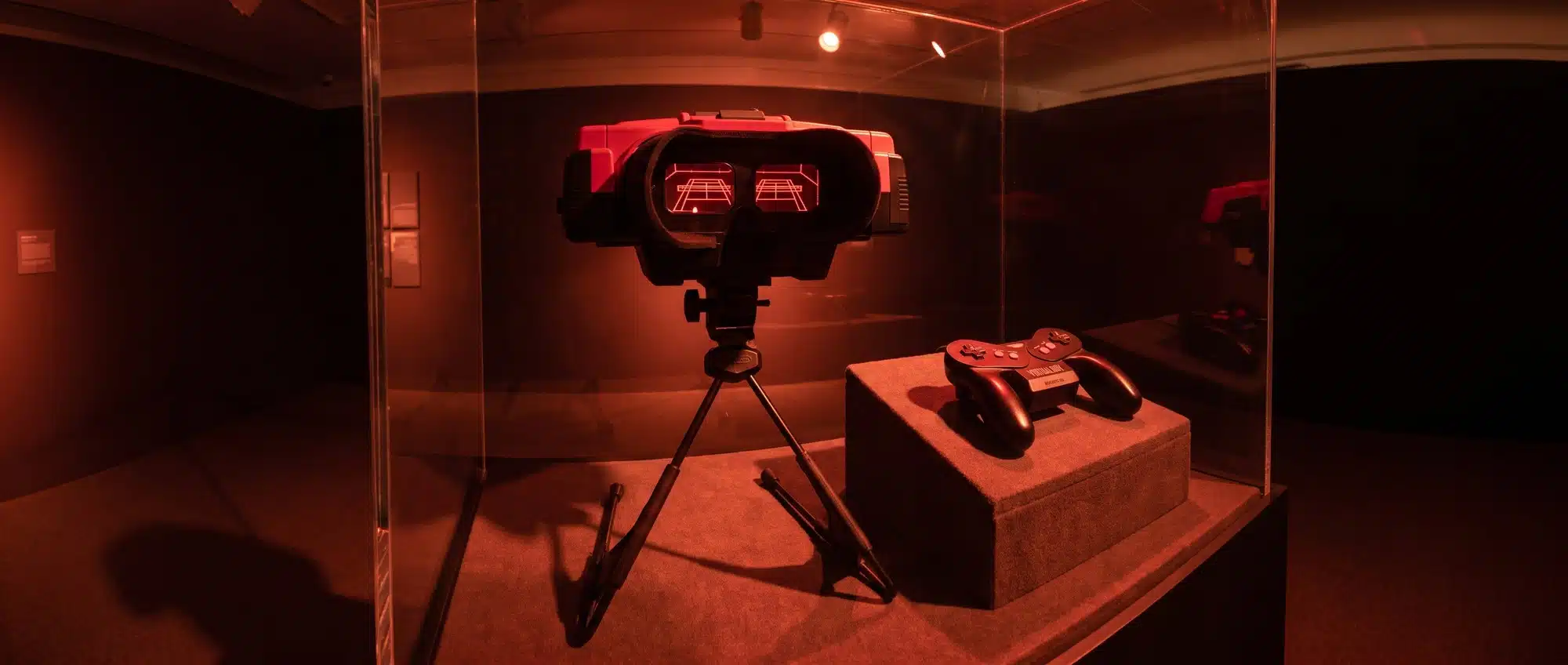
Gunpei Yokoi’s tabletop Virtual Boy, released in July 1995 for $179.99, displayed red-only 3D vector graphics via spinning LED mirrors and caused eye strain and headaches. Only 770,000 units sold before discontinuation in 1996, making it Nintendo’s biggest hardware failure and its only dedicated 32-bit system. It remains a fascinating collector item, not a mainstream handheld.
Nintendo DS Family (2004 to 2012)
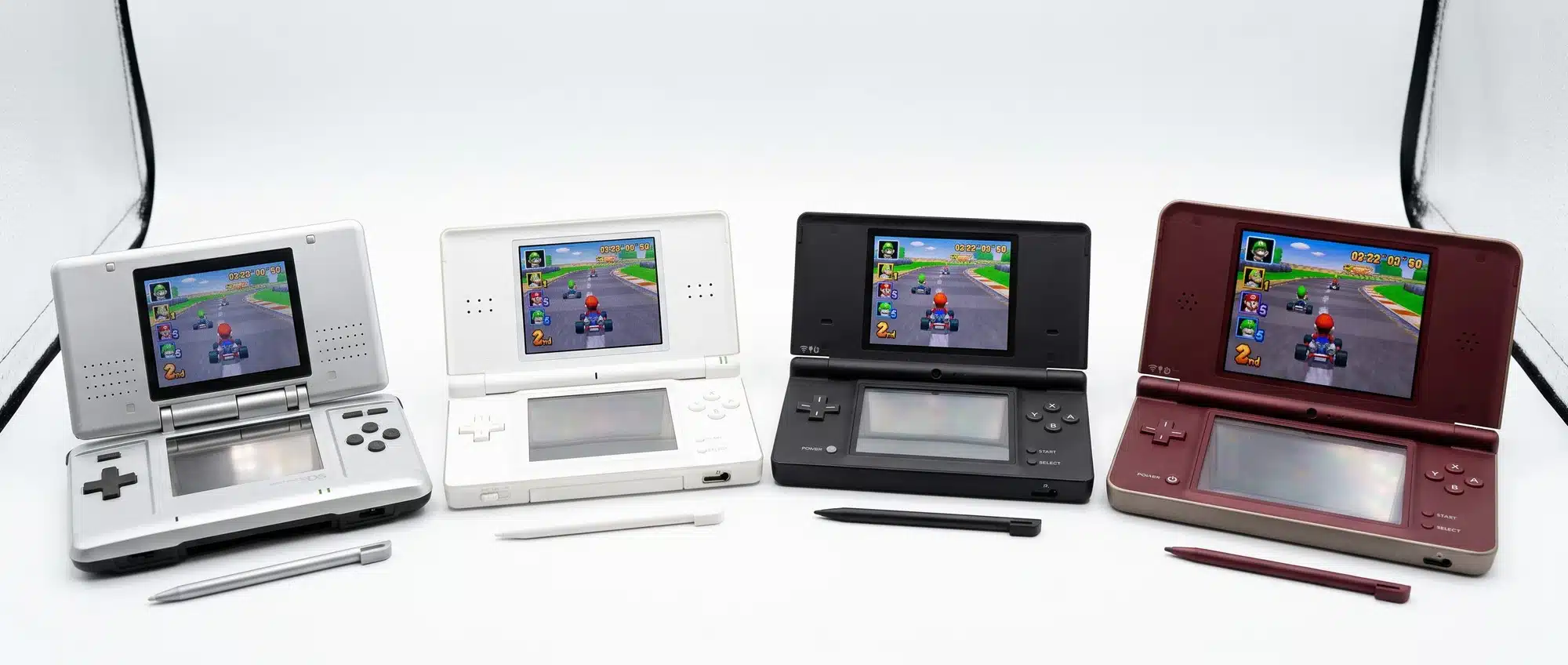
The Nintendo DS launched in North America on November 21, 2004, for $149.99, with dual ARM CPUs at 67 MHz and 33 MHz, 4 MB RAM, dual 256 x 192 screens (one touch-sensitive), Wi-Fi, and a microphone. It competed with Sony’s PSP and won decisively through touch gameplay: New Super Mario Bros., Nintendogs, Brain Age, Mario Kart DS, and Pokemon Diamond and Pearl. Revisions included the DS Lite (2006), DSi with cameras and DSiWare shop (2008), and DSi XL (2009). The DS family sold 154.02 million units with 948.72 million games, making it Nintendo’s best-selling system ever and the second best-selling game console of all time behind the PS2.
Nintendo 3DS Family (2011 to 2020)
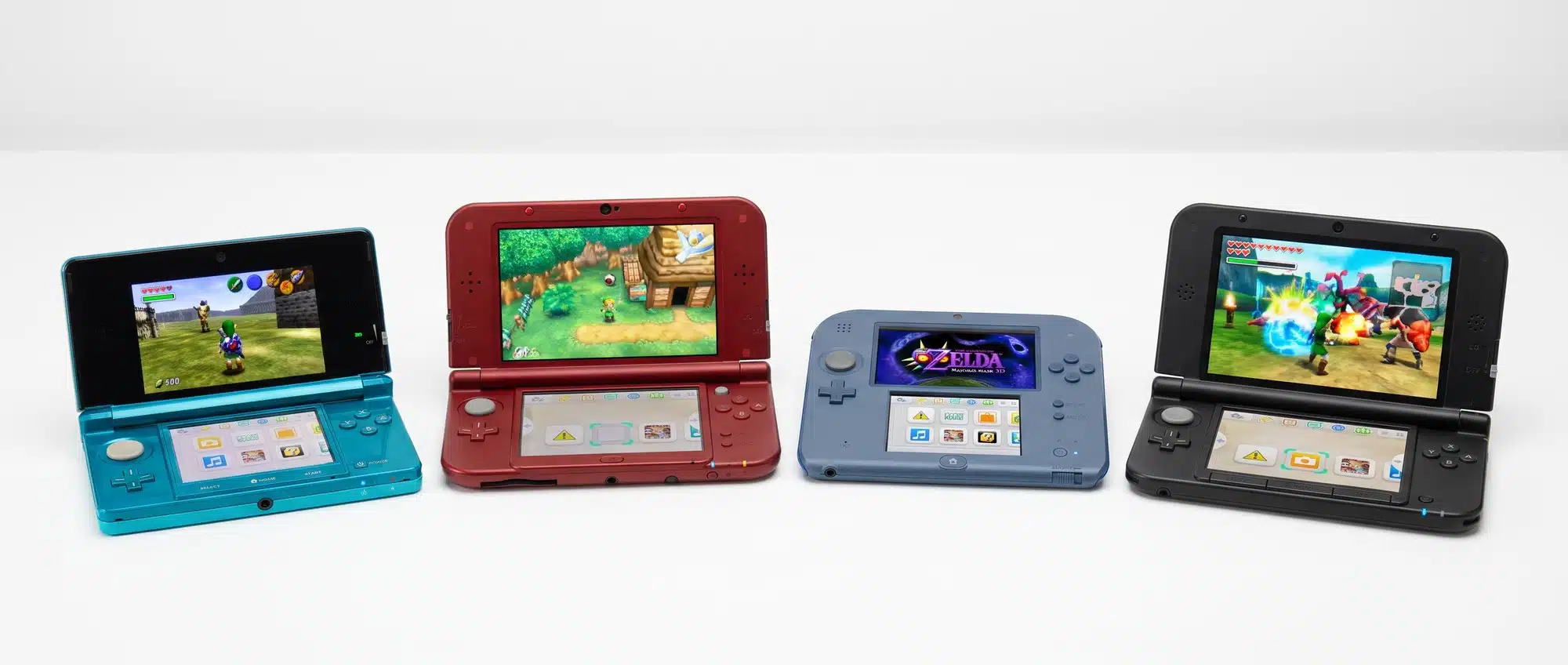
The Nintendo 3DS launched on February 27, 2011, at $249.99 (quickly cut to $169.99), with a dual-core ARM11 at 268 MHz, PICA200 GPU, 128 MB RAM, and a glasses-free 3D top screen at 800 x 240. Key games included Mario Kart 7, Pokemon X and Y, Animal Crossing: New Leaf, and Super Smash Bros. for 3DS. Revisions included the 3DS XL (2012), budget 2DS without 3D or clamshell (2013), New 3DS and XL with faster CPU and head-tracking 3D (2014 to 2015), and the New Nintendo 2DS XL (July 2017). The New 2DS XL kept the clamshell design and larger 4.88-inch top screen of the New 3DS XL, plus its faster CPU, C-stick, ZL/ZR buttons, and built-in NFC for Amiibo, but dropped the 3D display to hit a $149.99 launch price. It became the best-value entry point to the 3DS library and stayed in production until 2020 alongside the rest of the family. The family sold 75.94 million units with 392.99 million games. The 3DS eShop closed in March 2023.
| Model | Release Date | Display | Units Sold | Notable Changes |
|---|---|---|---|---|
| Game Boy / Pocket / Light | 1989 / 1996 / 1997 | 2.6-inch 160 x 144 mono | 118.69M (with Color) | Tetris bundle; Link Cable multiplayer; Pocket shrinks size |
| Game Boy Color | 1998 | 2.3-inch 160 x 144 color | Included above | Color screen; Infrared link; Pokemon Gold and Silver |
| Game Boy Advance / SP / Micro | 2001 / 2003 / 2005 | 2.9-inch 240 x 160 color | 81.51M | 32-bit ARM; Backlit SP; Ultra-compact Micro |
| Nintendo DS / Lite / DSi / XL | 2004 / 2006 / 2008 / 2009 | Dual 3-inch 256 x 192, touch | 154.02M | Touch screen; Wi-Fi; Cameras on DSi; DSiWare shop |
| Nintendo 3DS / XL / 2DS / New 3DS / New 2DS XL | 2011 / 2012 / 2013 / 2014 / 2017 | 3.53-inch glasses-free 3D + touch | 75.94M | Glasses-free 3D; StreetPass; New models add faster CPU and C-stick |
The Hybrid Era: Nintendo Switch Family
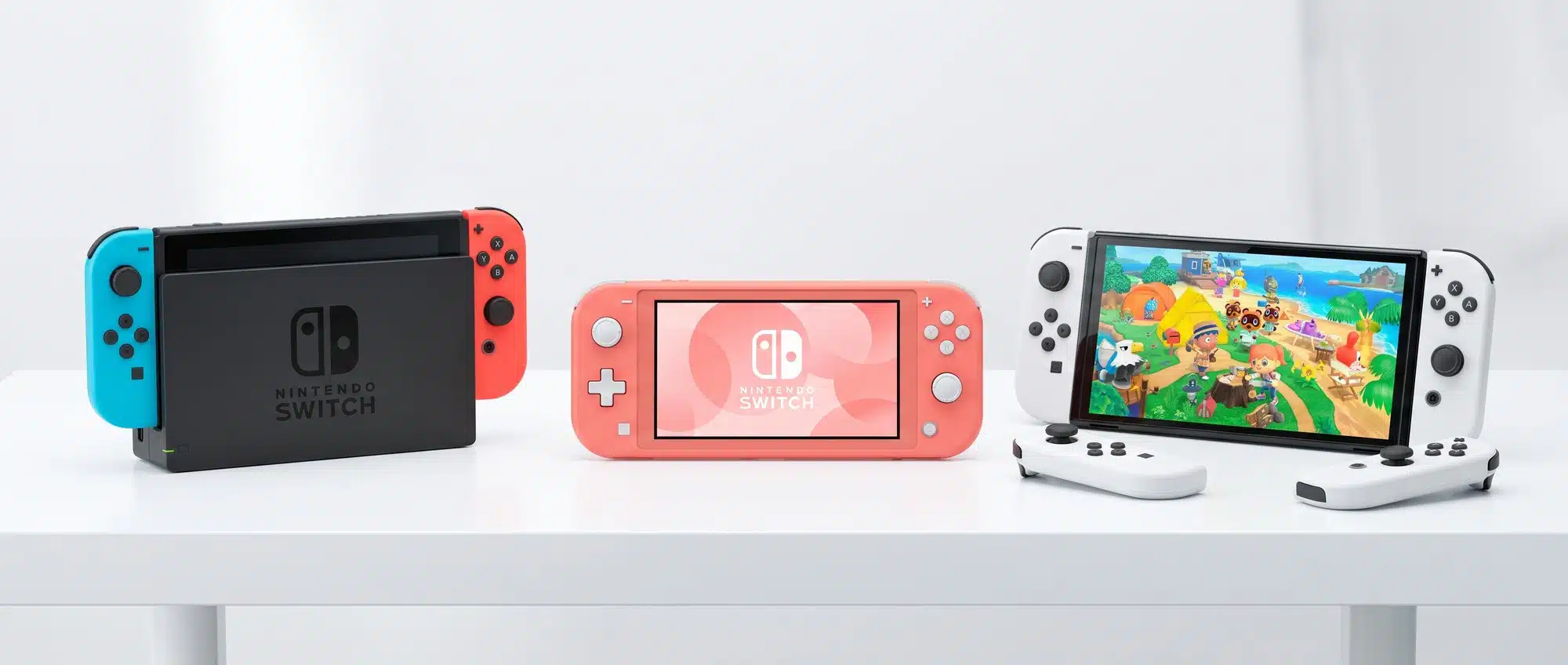
Released worldwide on March 3, 2017, at $299.99, the Nintendo Switch fused home and handheld into one system: a tablet with a 6.2-inch 720p LCD, a custom Nvidia Tegra X1 with 4 GB RAM and 32 GB storage, detachable Joy-Con controllers with HD Rumble and motion, and a dock for up to 1080p TV play. A custom Tegra X1+ revision in 2019 improved battery life.
The Switch became Nintendo’s biggest comeback, overtaking the Wii and Game Boy. Its best sellers are Mario Kart 8 Deluxe (over 67 million), Animal Crossing: New Horizons, Super Smash Bros. Ultimate, The Legend of Zelda: Breath of the Wild, and Tears of the Kingdom. As of mid-2026, the Switch family has sold over 150 million units with more than 1.4 billion games, second only to the Nintendo DS in Nintendo history and ahead of the PS2 era competition in software breadth.
Nintendo Switch Lite (2019) and Switch OLED (2021)
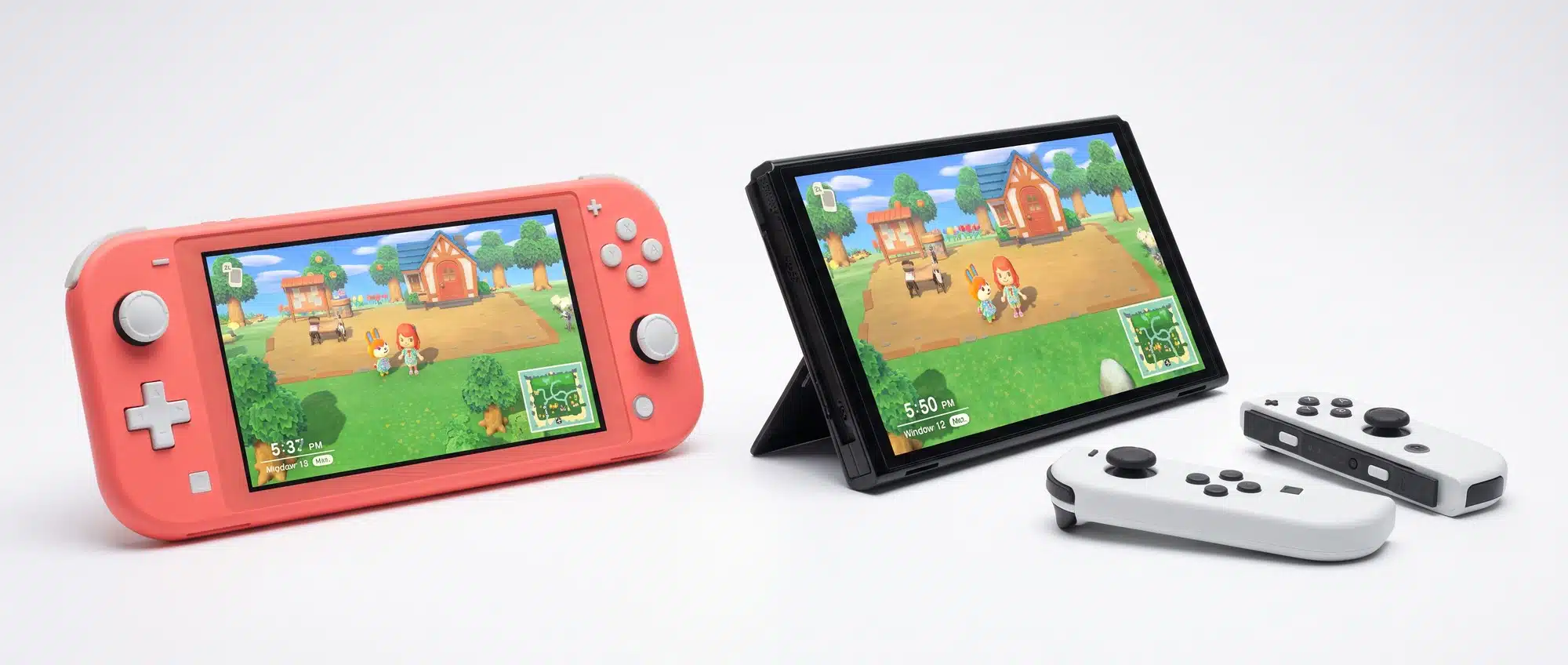
The Switch Lite (September 20, 2019, $199.99) is a handheld-only Switch with a 5.5-inch display, fixed controls, no dock, and no HD Rumble, aimed at portable players and kids. The Switch OLED (October 8, 2021, $349.99) keeps the same CPU and RAM but upgrades to a 7-inch OLED display, 64 GB storage, a wide kickstand, enhanced audio, and a dock with wired LAN. Both play the same cartridges and digital library, excluding Labo and a few motion-only setups on Lite without extra Joy-Cons.
| Model | Initial Release Date | CPU / GPU | RAM | Storage | Notable Changes |
|---|---|---|---|---|---|
| Nintendo Switch | March 2017 | Nvidia Tegra X1 (4-core, 256 CUDA) | 4 GB LPDDR4 | 32 GB + microSD | Hybrid docked/handheld; Detachable Joy-Con; 6.2-inch LCD |
| Nintendo Switch Lite | September 2019 | Nvidia Tegra X1+ | 4 GB LPDDR4 | 32 GB + microSD | Handheld only; 5.5-inch LCD; Fixed controls; $199 price |
| Nintendo Switch OLED | October 2021 | Nvidia Tegra X1+ | 4 GB LPDDR4 | 64 GB + microSD | 7-inch OLED; Wide stand; LAN dock; Enhanced audio |
The Next Generation: Nintendo Switch 2 (2025)
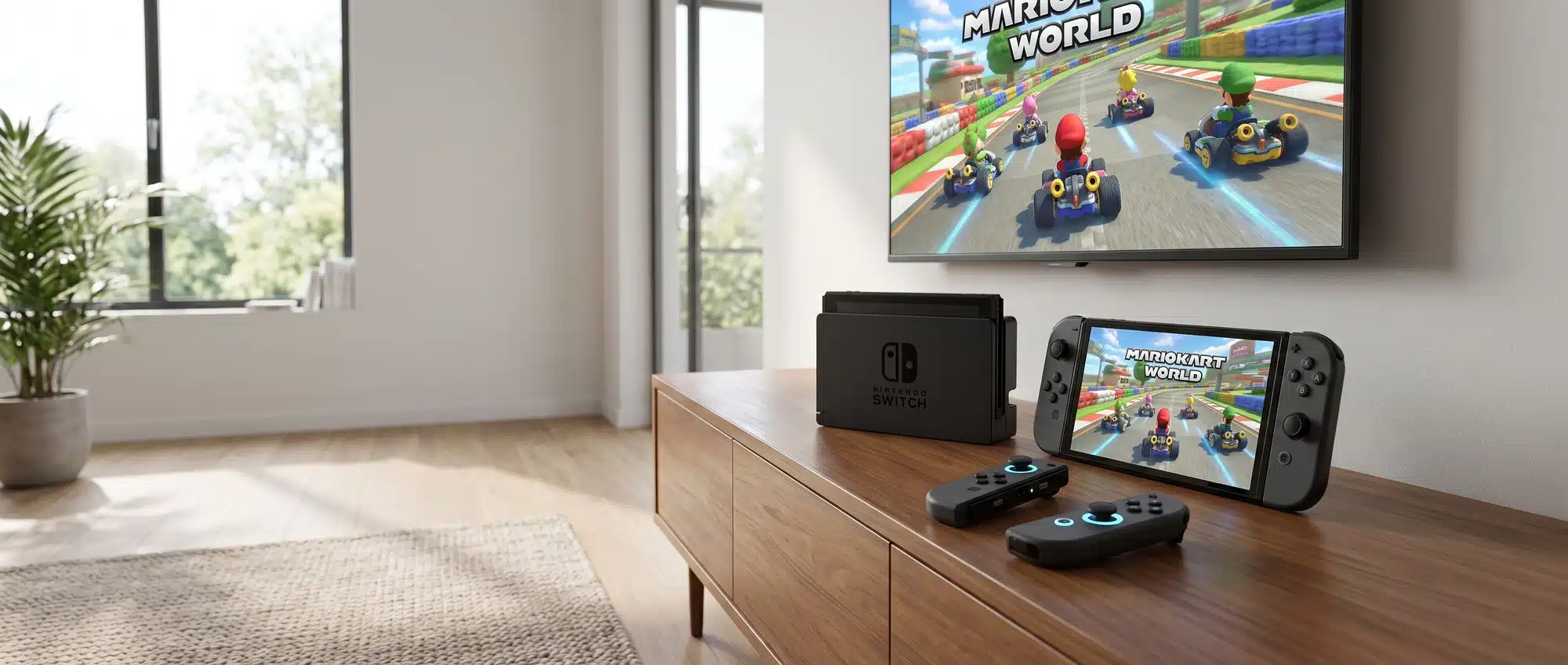
Nintendo officially announced that the Nintendo Switch 2 would launch on June 5, 2025, at $449.99 in the US, £395.99 in the UK, €469.99 in Europe, and ¥49,980 in Japan, with a Mario Kart World bundle at $499.99. It is the first Nintendo system marketed as a direct successor rather than a reinvention, keeping the hybrid concept while fixing nearly every limitation of the original.
The hardware leap is substantial: a custom Nvidia Tegra T239 (Drake) with an octa-core ARM Cortex-A78C CPU and Ampere GPU with 1,536 CUDA cores delivering around 3.07 TFLOPS docked, 12 GB of LPDDR5X RAM (9 GB for games), 256 GB of UFS 3.1 storage (eight times the original), and microSD Express support up to 2 TB. The 7.9-inch 1080p LCD supports HDR10, VRR, and up to 120 Hz in handheld mode, with up to 4K at 60 Hz, HDR, and HDMI 2.1 when docked. It adds Wi-Fi 6, Bluetooth, dual USB-C ports, a built-in microphone with noise cancellation, and a dock with Gigabit Ethernet.
The Joy-Con 2 controllers attach magnetically, add mouse mode on flat surfaces, larger sticks, and HD Rumble 2, while the new GameChat button enables voice and screen sharing for Nintendo Switch Online members. Launch titles included Mario Kart World, Cyberpunk 2077: Ultimate Edition, Donkey Kong Bananza, and Switch 2 Editions of Breath of the Wild and Tears of the Kingdom. Critically, a GameCube classics library for Switch Online + Expansion Pack is exclusive to Switch 2, starting with Wind Waker, F-Zero GX, and Soulcalibur II.
Sales have been historic: Nintendo shipped 19.86 million Switch 2 units by March 31, 2026, beating its forecast, and reached 23.68 million by June 30, 2026, outselling the PS5 over the same quarter. In September 2026, Nintendo raised the US price to $499.99 following tariff and component pressures, a rare mid-cycle increase that has not slowed demand. Full technical specifications for the Nintendo Switch 2 are listed on Nintendo’s official site.
| Model | Initial Release Date | CPU / GPU | RAM | Storage | Notable Changes |
|---|---|---|---|---|---|
| Nintendo Switch 2 | June 2025 | Custom Nvidia T239, 8-core A78C + Ampere 1536 CUDA (~3.07 TFLOPS) | 12 GB LPDDR5X | 256 GB UFS 3.1 + microSD Express | 7.9-inch 1080p 120 Hz HDR; 4K docked; Magnetic Joy-Con 2 with mouse; GameChat; $449.99 launch |
Nintendo Consoles Comparison: All Generations at a Glance
| Console | Release Year | CPU | RAM | Storage | Max Resolution | Units Sold | Launch Price |
|---|---|---|---|---|---|---|---|
| Color TV-Game | 1977 | Discrete logic (no CPU) | Built-in only | Built-in games, no cartridges | Analog TV output | 3M | ¥9,800 |
| Game & Watch | 1980 | 4-bit Sharp SM510 | Built-in only | Single built-in game | Mono LCD | 43.4M | ¥5,800 |
| NES | 1983 / 1985 | Ricoh 2A03 1.79 MHz | 2 KB | Cartridges | 256 x 240 (SD) | 61.91M | $199 |
| Game Boy / Color | 1989 / 1998 | Sharp LR35902 4.19 MHz | 8 / 32 KB | Cartridges | 160 x 144 | 118.69M | $89 |
| SNES | 1990 / 1991 | Ricoh 5A22 3.58 MHz | 128 KB | Cartridges | 512 x 448 (SD) | 49.10M | $199 |
| Virtual Boy | 1995 | 32-bit NEC V810 20 MHz | 1 MB DRAM | Cartridges | 384 x 224 per eye (red 3D) | 0.77M | $179 |
| Nintendo 64 | 1996 | NEC VR4300 93.75 MHz | 4 MB (8 MB w/ Pak) | Cartridges | 640 x 480 (SD) | 32.93M | $199 |
| Game Boy Advance | 2001 | ARM7TDMI 16.78 MHz | 32 KB + 96 KB VRAM | Cartridges | 240 x 160 | 81.51M | $99 |
| GameCube | 2001 | IBM Gekko 485 MHz | 43 MB total | miniDVD 1.5 GB | 640 x 480 (SD) | 21.74M | $199 |
| Nintendo DS | 2004 | ARM946E-S 67 MHz + ARM7 33 MHz | 4 MB | DS Cards | 2x 256 x 192 | 154.02M | $149 |
| Wii | 2006 | IBM Broadway 729 MHz | 88 MB total | 512 MB + Wii Disc | 720 x 480 (ED) | 101.63M | $249 |
| Nintendo 3DS | 2011 | Dual ARM11 268 MHz | 128 MB | 3DS Cards + SD | 800 x 240 (3D) + 320 x 240 touch | 75.94M | $249 |
| Wii U | 2012 | IBM Espresso 1.24 GHz (tri-core) | 2 GB DDR3 | 8 / 32 GB flash | 1920 x 1080 (Full HD) | 13.56M | $299-$349 |
| Switch / Lite / OLED | 2017 / 2019 / 2021 | Nvidia Tegra X1 / X1+ | 4 GB LPDDR4 | 32 / 64 GB + microSD | 1080p docked, 720p handheld | 150M+ (family) | $299 / $199 / $349 |
| Switch 2 | 2025 | Nvidia T239 8-core + Ampere 3.07 TFLOPS | 12 GB LPDDR5X | 256 GB UFS + microSD Express | 4K docked, 1080p 120 Hz handheld | 23.68M+ | $449 |
Nintendo Online, eShop, and Backward Compatibility
Unlike Xbox Live and PlayStation Network, which started in the early 2000s, Nintendo was late to online. The Wii added Wi-Fi and the Virtual Console retro store in 2006, and the Wii U added the Nintendo Network and eShop in 2012, but the modern system began with Nintendo Switch Online in September 2018: cloud saves, online play, and NES and SNES libraries for $19.99 per year, with an Expansion Pack tier adding Nintendo 64, Sega Genesis, Game Boy Advance, and since Switch 2, GameCube games.
Backward compatibility at Nintendo is physical where possible and subscription-based for retro. The Wii played GameCube discs, early Wii U models played Wii discs, the 3DS played DS cards, the DS played GBA cartridges, and the Game Boy Color played original Game Boy cartridges. The Switch broke that chain with cartridges that do not fit Switch 2 slots directly, so Switch 2 uses digital and physical backward compatibility instead: the vast majority of original Switch physical and digital games work on Switch 2, often with free performance patches or paid Switch 2 Edition upgrades, plus cloud saves carried over via Nintendo Switch Online. A handful of Labo, Game Builder Garage, and certain controller-specific titles are exceptions.
As of 2026, you can still buy new Switch 1 models alongside Switch 2, and Nintendo has confirmed continued software support. The Wii U and 3DS eShops closed in March 2023, and the original Wii Shop closed in 2019, so modern retro access now lives almost entirely inside Nintendo Switch Online. Nintendo’s official sales data portal tracks lifetime hardware and software figures for every system above and is updated quarterly.
Switch or Switch 2: Which Should You Buy?
If you are shopping for a Nintendo console in 2026, the choice comes down to two systems that look similar but are now on very different trajectories. Both play the huge Switch library and work as handhelds and TV consoles, but new releases, performance, and price point in opposite directions.
Support and New Releases
The original Switch is winding down as a first-party platform. In 2026, only a handful of Nintendo-published exclusives arrived for Switch 1, including Tomodachi Life: Living the Dream and Rhythm Heaven Groove, widely described as a swan song for the system. Almost every other major Nintendo release, from Yoshi and the Mysterious Book and the Star Fox revival to Fire Emblem: Fortune’s Weave, Splatoon Raiders, and the Ocarina of Time remake, is exclusive to Switch 2. Third parties still ship some cross-generation titles such as Dragon Quest VII Reimagined, but the momentum is clearly with Switch 2, which already hosts over 350 native and Switch 2 Edition titles. The Switch eShop remains open and Nintendo still sells all three Switch 1 models, but expect first-party support to fade further through 2027.
Performance and Display
The Switch 2 is a major step up: roughly eight times the GPU power of the original, 12 GB of RAM versus 4 GB, 256 GB of storage versus 32 GB, a 7.9-inch 1080p 120 Hz HDR handheld display versus 6.2-inch 720p, and up to 4K at 60 Hz docked versus 1080p. Switch 2 Editions of games like Breath of the Wild, Tears of the Kingdom, and Super Mario Bros. Wonder add higher resolutions, smoother frame rates, and new content. The original Switch still runs its vast library perfectly well, but demanding new ports increasingly skip it or run at reduced settings.
Price
The original Switch family remains the budget path: the Lite at $199.99, the standard Switch at $299.99, often discounted in bundles. The Switch 2 launched at $449.99 and rose to $499.99 in the US in September 2026 following tariff and component pressures. That $200 gap buys the larger 1.4 billion-game Switch library at lower prices, but only the Switch 2 plays new exclusives going forward.
Which One Is Right for You?
- Choose the Switch 2 if: You want new Nintendo exclusives, the best performance, 4K docked play, the 120 Hz handheld display, magnetic Joy-Con 2 with mouse mode, GameChat, and the Switch 2-exclusive GameCube classics library.
- Choose the Switch 1 if: You want the cheapest way into Nintendo’s catalog, mostly play older or indie titles, need a second console for kids, or prefer the OLED screen and lighter handheld weight at a discount.
- Upgrade from Switch 1 if: New releases you care about are Switch 2 exclusive, you play docked on a 4K TV, or you want faster load times and Switch 2 Edition upgrades for games you already own. Both run the existing Switch library, but new first-party releases are now overwhelmingly Switch 2 exclusive, so only the Switch 2 stays current. Your digital library and most physical cartridges carry over.
The Future of Nintendo: Switch 2 Revisions
Nintendo has not announced anything beyond the Switch 2, which launched in June 2025 and remains early in its lifecycle. Historically, Nintendo home systems last 5 to 7 years, which points to a successor around 2030 to 2032, but credible 2026 reporting focuses on mid-cycle revisions rather than a new generation.
The strongest rumor is a Switch 2 OLED model: ZDNet Korea reported in July 2026 that Nintendo is considering a rigid OLED panel upgrade to 1080p with Samsung Display as supplier, with development possibly starting in late 2026 and mass production at the end of 2027 or early 2028, though Nintendo has not confirmed it amid rising component costs. A January 2026 datamine of the Nintendo Account portal also surfaced an unfamiliar “OSM” hardware identifier, fueling speculation about a streamlined Switch 2 Lite or a Pro-style model. Separately, Nintendo announced a European Switch 2 hardware revision with a replaceable battery to meet EU repair regulations. Nothing is confirmed, so for now the standard Switch 2 remains the only current-generation buy.
Frequently Asked Questions
How many Nintendo consoles are there?
Nintendo has released seven home console generations (Color TV-Game, NES, SNES, N64, GameCube, Wii, Wii U), two hybrid systems (Switch and Switch 2), and five handheld families (Game & Watch, Game Boy, DS, 3DS, plus Virtual Boy). Counting major redesigns like the SNES Jr., Wii Mini, DS Lite, New 3DS, Switch Lite, and Switch OLED, there are more than 30 distinct Nintendo models. This guide covers every major release from 1977 to 2025.
What is the order of all Nintendo consoles?
In release order: Color TV-Game (1977), Game & Watch (1980), NES / Famicom (1983), Game Boy (1989), SNES / Super Famicom (1990), Virtual Boy (1995), Nintendo 64 (1996), Game Boy Color (1998), GameCube and Game Boy Advance (2001), Nintendo DS (2004), Wii (2006), Nintendo 3DS (2011), Wii U (2012), Nintendo Switch (2017), Switch Lite (2019), Switch OLED (2021), and Nintendo Switch 2 (2025).
What was the first Nintendo console?
The first Nintendo home console was the Color TV-Game 6, released in Japan on June 1, 1977, in partnership with Mitsubishi. It played only built-in Pong variants. The first cartridge-based Nintendo console was the Famicom in 1983, known as the NES outside Japan from 1985.
What is the best-selling Nintendo console?
The Nintendo DS is the best-selling Nintendo system ever at 154.02 million units, followed by the Nintendo Switch family at over 150 million and the Game Boy family at 118.69 million. The best-selling Nintendo home console without counting handhelds or hybrids is the Wii at 101.63 million. The Switch 2 is the fastest-selling Nintendo console ever, passing 23.68 million in just over a year.
Is the Nintendo Switch 2 backward compatible?
Yes, with exceptions. The Switch 2 plays the vast majority of original Switch physical and digital games, supports Switch cartridges directly, carries over digital libraries and cloud saves tied to your Nintendo Account, and offers free patches or paid Switch 2 Edition upgrades for select titles. A small number of games that rely on specific Joy-Con, Labo, or camera setups do not work fully. GameCube, N64, and other retro libraries inside Nintendo Switch Online also carry over, with the GameCube app exclusive to Switch 2.
Can you still buy Switch 1?
Yes. Nintendo continues to sell the original Switch, Switch Lite, and Switch OLED alongside the Switch 2, often at discounted bundles, and has confirmed ongoing software support. New first-party releases are increasingly Switch 2 exclusive or Switch 2 Editions, but the 1.4 billion-unit Switch software library remains fully available new and used.
What is next after the Nintendo Switch 2?
Nintendo has not announced anything beyond the Switch 2, which launched in June 2025 and remains early in its lifecycle. Historically, Nintendo home systems last 5 to 7 years, which would point to a successor around 2030 to 2032, but Nintendo’s pattern is reinvention rather than iteration, so the next system may not be called Switch 3.
Conclusion
From a dedicated Pong clone in 1977 to a 4K-capable hybrid in 2025, Nintendo’s console journey is the longest and most varied in gaming: the 8-bit revival with the NES, the 16-bit artistry of the SNES, the 3D blueprint of the N64, the compact brilliance of the GameCube, the motion phenomenon of the Wii, the handheld dominance of Game Boy, DS, and 3DS, the hybrid triumph of the Switch, and now the polished power of the Switch 2.
With over 800 million home, handheld, and hybrid systems sold combined, plus icons from Mario and Zelda to Pokemon, Animal Crossing, and Splatoon, Nintendo has shaped play itself more than any other company. Whether you are revisiting the pixel charm of the NES or docking a Switch 2 for 4K Mario Kart World with magnetic Joy-Con 2, one thread remains constant: Nintendo wins not by outpowering PlayStation and Xbox, but by changing how we play.


