
It’s no secret that business workspaces and processes are becoming increasingly digitized. Technology is here to stay and is spreading out across every industry and business. As a result, computers and computer networks are essential to productivity for remote and in-person workforces.
The Internet of Things (IoT) allows devices to connect to the enterprise system and collect and assemble meaningful data points for facility managers and their teams. This data can help determine where to prioritize maintenance spending to maximize growth while reducing costs.
New technologies such as Artificial Intelligence (AI), Machine Learning (ML), and other automated systems can handle repetitive tasks, freeing up workers to handle tasks such as customer service.
These platforms can track occupant loads to adjust energy usage and manage security risks. From the facility management viewpoint, finding the right facilities maintenance system that’s robust, incorporates all the latest technologies, and integrates well with other systems improves building performance and sustainability while supporting the digital technologies used by the occupants.
What Are Workspace Technologies?
By definition, workspace technologies are the various tools, systems, and applications an organization uses to enhance productivity, collaboration, and communication. The term also includes building control systems that connect to the enterprise, the IoT, and their related components and products. These systems leverage technology to streamline business processes, automate repetitive tasks, and improve the workspace environment. Here are some of the most common workspace technologies being used.

Communication and Collaboration Tools
The modern workplace has rapidly evolved to accommodate various forms of communication and collaboration, from email and messaging platforms to video conferencing and flexible workspaces. Given these advancements, it’s crucial to delve into facility management programs and applications to ensure seamless operations and optimal resource utilization.
- Email and messaging platforms: facilitate communication between parties within and outside the organization.
- Video conferencing: allows remote or geographically dispersed teams to meet virtually, reducing travel costs while shortening project schedules.
- Collaboration suites: include platforms and programs integrating tools such as document sharing, calendars, and task management duties.
- Flexible workspaces: that can be quickly changed to meet different business needs, such as temporary training areas or office space, improve a company’s ability to respond rapidly to changing staffing needs.
With the tenant’s needs addressed, it’s time to consider facility management programs and applications.

Building Management Systems (BMS)
In a rapidly evolving technological landscape, automated monitoring and control systems are revolutionizing building management, from security enforcement to energy consumption optimization. Moreover, predictive maintenance strategies, ranging from risk-based to condition-based approaches, offer a proactive means to minimize system downtime, reduce repair costs, and extend equipment lifespans. As the demand for smart buildings surges, the role of data collection in shaping operational efficiency and sustainability becomes increasingly vital for businesses and property owners.
- Automated monitoring and control systems: can easily limit building access and enforce security protocols to provide safer workspaces for employees and customers. These systems can also adjust water, power, data, and HVAC usage based on changing occupancy loads to manage energy consumption levels effectively.
- Predictive maintenance: critical systems streamline routine maintenance tasks to minimize system downtime while reducing emergency repair costs for the property owner. Predictive maintenance plans fall into one of four different categories.
- Corrective maintenance: restores equipment functionality once a planned or unplanned fault has been diagnosed or discovered. Most emergency repairs fall into this category, resulting in higher costs for the owner and a more significant inconvenience to the affected workers.
- Preventative maintenance: reduces equipment and component breakdowns by analyzing past data and following a predetermined schedule to expand the equipment’s lifespan and reduce potential repair costs.
- Risk-based maintenance: efficiently safeguards critical equipment by allocating resources to minimize potential risks while improving operational efficiency and cost-effectiveness.
- Condition-based maintenance: utilizes real-time data to detect declines in performance, which triggers a set of predetermined maintenance actions. The key benefit is long-term savings, but the components still require regular monitoring.
Aside from corrective maintenance, the other predictive maintenance options require various sensors and relays to collect, store, transfer, and analyze the collected data. Data collection will become essential for businesses and property owners as the demand for smart buildings and the shift to “smart cities” grow.

Creating a Facility Management RFP
With this list in mind, it’s helpful to identify which workspace technologies will support the business model today and moving forward. A recent International Facilities Management Association (IFMA) presentation by SIMPLAR suggests the following practices to create a better RFP.
- Limit the proposal size: Page limits help increase project focus for contractors, vendors, and suppliers submitting proposals.
- Conduct individual interviews: Individual meetings with key project staff, such as the Project Manager, HR lead, FIN lead, and Implementation lead, can provide insights and perspectives not typically shared in a team meeting.
- Replace the formal RFI: Switch to a Request for Needs (RFN) process that focuses on completing significant decisions and milestones by eliminating proprietary and marketing information from the finished RFP.
The result is a structured process that significantly increases project IQ for the team by asking the right questions, such as:
- What technology applications could be used to simplify existing business and maintenance processes?
- Do the integrators or product suppliers need any other info?
- What needs to be added to the scope of work?
- What needs to be added to background/existing conditions information?
- Have we adequately defined the project’s “fit-gap” phase?
- Who makes the final decision?
- How does this work with the existing building infrastructure?
A well-designed Request for Proposal (RFP) should incorporate a phased or sequenced plan to minimize disruptions to the current workflow and employees. Additionally, it should provide a detailed list of the required hardware and software and evaluate the existing building infrastructure. This comprehensive approach ensures that the implementation of new systems or technologies aligns seamlessly with the organization’s operations and infrastructure.
Infrastructure Requirements for Workspace Technology Solutions
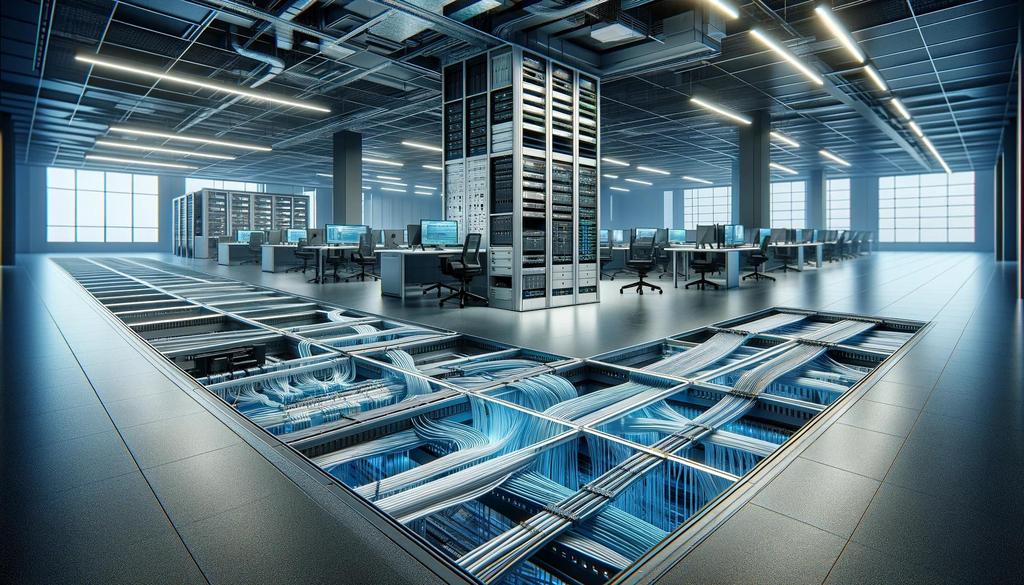
Regardless of the business model, data collection, storage, and sharing are essential for success and continued growth. Increased data demand requires more cabling to accommodate an increased number of devices and users. Unfortunately, technology upgrades are expensive for property and business owners and a significant disruption for workers and customers. Traditional construction methods hide the needed wires and cabling within the walls, underground, or above the ceilings.
Raised access floors create a new space underfoot for the data and power cabling runs to circumvent these challenges. When it’s time for an upgrade or a complete reconfiguration, remove the carpet or tile to access the affected cabling or connections. There’s no dust, mess, or noise. Most projects can be quietly completed within days instead of weeks. Preplanning today for future technology needs will reduce construction costs while shortening project timelines.

Exploration of Facility Management Programs and Infrastructure
As we explore workspace technologies and the imperative role they play in advancing business operations, it’s crucial to delve into the careful consideration needed when creating a Facility Management RFP. A well-thought-out RFP not only includes a comprehensive list of hardware and software but also assesses the existing building infrastructure and phase plan to minimize workflow disruptions. Moreover, the infrastructure demands of workspace technology solutions drive the need for thoughtful planning to support the increasing data demands without imposing excessive costs or disruptions.
As businesses navigate the evolving landscape of workspace technologies and facility management programs, the integration of advanced systems necessitates a strategic and comprehensive approach. From carefully crafted RFPs to infrastructure planning, prioritizing seamless implementation and infrastructure readiness is paramount. Embracing these considerations not only supports operational efficiency and sustainability but also lays the groundwork for continued technological advancement in the business environment.
As we move forward, the effective convergence of innovative workspace technologies and facility management solutions will undoubtedly shape the future of modern workplaces, optimizing productivity, collaboration, and overall business success.

