
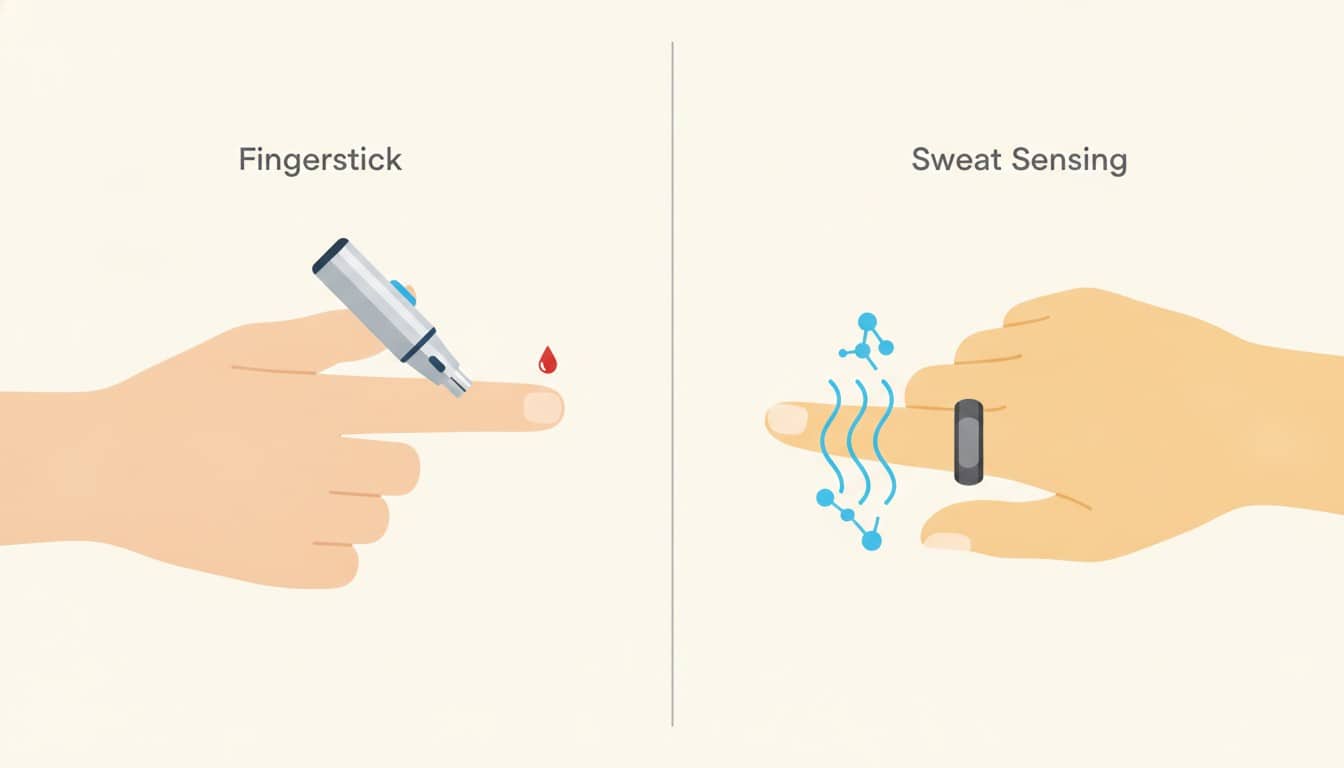
Checking your blood sugar has always meant breaking the skin, either with a fingerstick meter or a continuous glucose monitor threaded just beneath it. Engineers at the University of California San Diego now believe they have built the first fully integrated alternative you can wear on your finger. Their prototype, called CHARM, continuously reads chemical biomarkers from finger sweat, tracking up to four markers at once from a panel that includes glucose, ketones, vitamin C, uric acid, lactate, and alcohol. The team published its results in Nature Communications on July 23, 2026.
“Commercial rings only provide biophysical information, but they lack molecular information about biochemical markers that offers deeper insights about an individual’s health status,” said study first author Tamoghna Saha, a postdoctoral researcher at UC San Diego, in the university’s announcement.
In trials with both healthy volunteers and people with type 1 diabetes, this glucose monitoring ring produced readings that closely tracked commercial continuous glucose monitors, while its ketone measurements lined up with standard blood ketone meters. Here is how the device works, how accurate it proved to be, and what stands between this lab prototype and your jewelry box.
Meet CHARM, the First Fully Integrated Biochemical Smart Ring
Consumer smart rings such as the Oura Ring excel at counting steps, tracking sleep stages, and measuring heart rate. All of those are biophysical signals. CHARM, short for Continuous Health Analyzing Ring Module, targets something no commercial ring touches today: the molecular chemistry happening inside your body in real time.
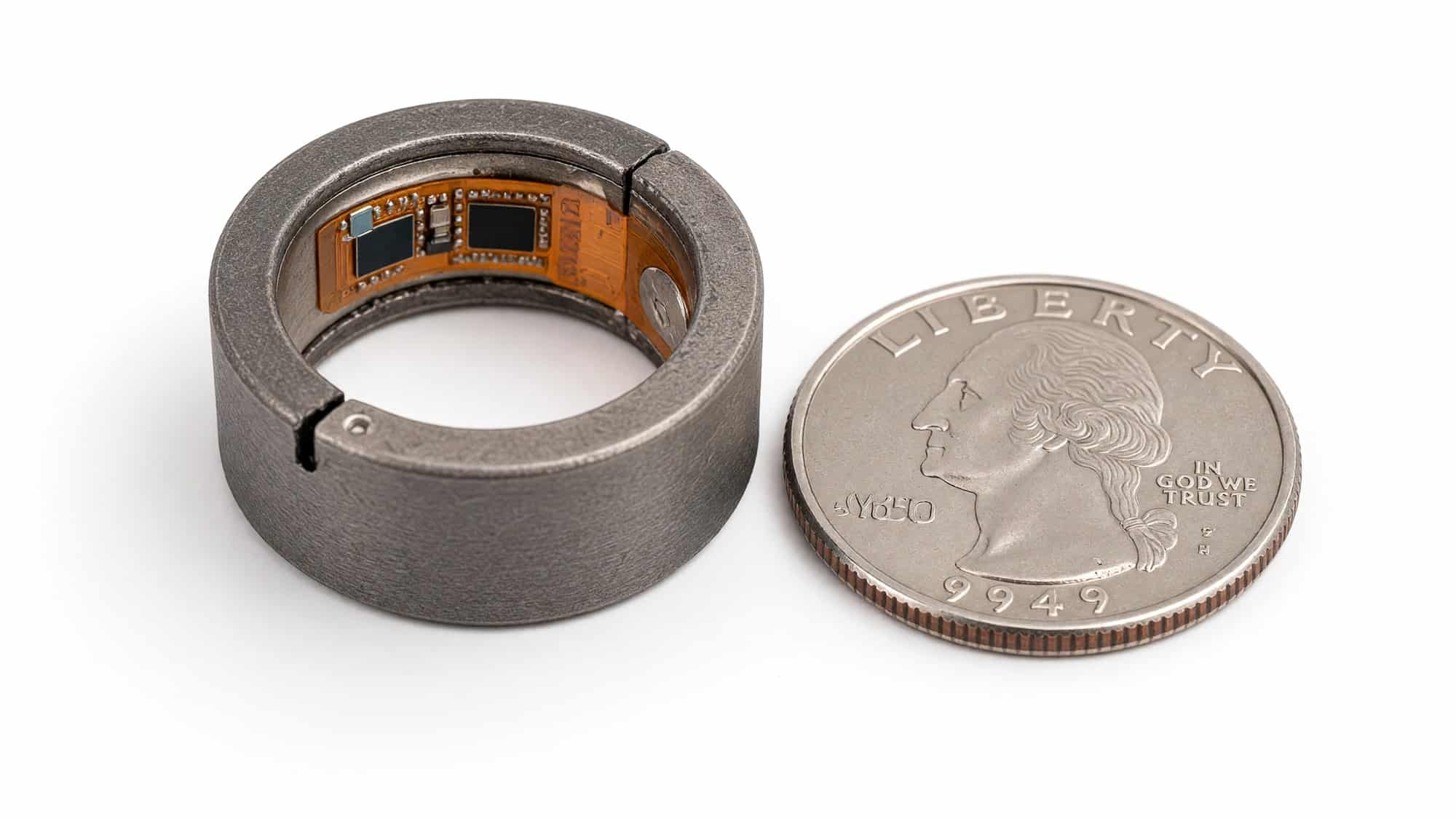
The prototype measures roughly three centimeters across. One half of the ring houses the sensing hardware: an osmotic hydrogel that harvests sweat, a microfluidic channel, and an electrochemical sensor array. The other half contains flexible low-power electronics, including a rechargeable zinc-silver oxide battery that runs for up to 12 hours between charges and a circuit board smaller than a US quarter coin. A 3D-printed polymer shell holds everything together, and results stream wirelessly to a smartphone app.
Moving biochemical sensing onto a finger is part of a broader effort to free health monitoring from needles and bulky cuffs. We have previously covered an experimental earring designed to monitor glucose levels for people with diabetes, and sweat-sensing patches have been shrinking steadily for years. CHARM stands out because nothing like it integrates the full pipeline, from sweat collection through analysis to wireless reporting, inside a ring-sized form factor.
How a Ring Pulls Sweat Without a Workout
Most wearable sweat studies to date required exercise, electrical stimulation, or chemicals like pilocarpine to make subjects perspire. CHARM needs none of that. The trick is an osmotic hydrogel, a soft polymer developed by Saha, that creates a gentle pressure gradient drawing fluid passively out of the skin. The researchers compare it to the way water travels from soil up to the leaves of a plant. Because the process relies on osmosis rather than effort, the ring works while you sit at a desk, sleep, or go about a normal day.
Once collected, the sweat flows through a microfluidic channel to an array of electrochemical sensors. Each sensor produces tiny electrical currents that correspond to the concentration of a specific molecule. Repeated measurements let the system establish subject-specific calibration factors, converting raw current responses into personalized concentration values. According to the paper, these personalized calibrations remained stable for about two months, meaning users would not need constant recalibration.

Six Biomarkers, One Small Ring
The full panel covers six distinct molecules, although the ring monitors up to four simultaneously in any given configuration. Each marker reveals a different slice of your metabolic picture:
| Biomarker | What It Signals | Why Continuous Tracking Helps |
|---|---|---|
| Glucose | Blood sugar dynamics after meals and overnight | Diabetes management and insulin dosing decisions |
| Ketones (beta-hydroxybutyrate) | Fat metabolism and ketosis depth | Keto diet progress and early warning of dangerous ketoacidosis |
| Lactate | Muscle exertion and tissue oxygen debt | Athletic training zones and clinical monitoring |
| Uric acid | Purine breakdown in metabolism | Gout flare risk and kidney-related insights |
| Vitamin C (ascorbic acid) | Nutritional status of a vitamin the body cannot store | Diet quality tracking without lab work |
| Alcohol | Alcohol intake and metabolic load | Objective, real-time intoxication awareness |
The vitamin C capability builds on a growing body of sweat research. A separate UC San Diego team previously demonstrated a skin patch that analyzes sweat to measure vitamin C levels, and CHARM folds similar nutritional sensing into a smaller footprint alongside metabolic markers.
The Accuracy Test: How Closely Did CHARM Match the Lab?
A biomarker reading means little without proof that it reflects reality. The researchers put CHARM through trials involving healthy volunteers and people with type 1 diabetes, comparing its output against established references. Glucose estimates closely followed commercial continuous glucose monitors throughout daily activities, capturing the same mealtime rises and falls. Ketone readings showed strong agreement with commercial blood ketone meters.
The headline number comes from the glucose comparison. Across testing, CHARM’s estimated blood glucose values showed a mean absolute relative difference, or MARD, of approximately 13.7 percent against actual blood measurements. MARD is the standard accuracy metric for glucose monitors, and lower is better: a device scoring 13.7 percent deviates from reference values by that share on average. For context, an analysis of commercial systems found MARD results ranging widely across products and conditions, so a first-of-its-kind sweat-based ring landing in that territory is notable.
Two caveats matter. First, performance varied with conditions: readings were tightest when glucose was steady and widened during rapid swings, and individual tests showed sweat-based estimates trailing blood values by roughly 15 to 20 minutes, a delay inherent to how glucose reaches sweat. Second, the study involved a limited number of participants, and the authors themselves call for larger clinical validation before anything resembling clinical use.
Where It Fits Among Today’s Wearables
The current market splits into three camps. Biophysical trackers such as the Oura Ring measure motion, temperature, and heart signals. Continuous glucose monitors such as Dexcom’s Stelo measure interstitial glucose but require a filament inserted under the skin every 10 to 15 days. Smartwatches generally do neither directly; most simply display data streamed from a separate medical device. CHARM points toward a fourth category, a needle-free chemical tracker, which explains why researchers see it as a genuine counterpart rather than another fitness band.
This momentum toward comprehensive biomarker tracking mirrors the consumer trend we examined when covering a platform promising data-driven preventive health built on broad biomarker panels. The difference is that CHARM aims to make part of that panel continuous instead of episodic.
There is also a regulatory line that matters. In February 2024, the FDA issued a safety communication warning consumers that it has not authorized, cleared, or approved any smartwatch or smart ring intended to measure or estimate blood glucose on its own and urged people with diabetes not to rely on unauthorized devices for dosing decisions. CHARM sits firmly on the research side of that line: it is an investigational prototype validated in academic trials, not a cleared medical device. Until formal regulatory pathways are completed, nobody should substitute a sweat-based ring reading for their prescribed glucose monitoring.
Why Tracking Glucose and Ketones Together Is a Big Deal
Measuring one biomarker well is useful. Watching two related ones change together, continuously, opens new clinical possibilities. Study senior author Joseph Wang, a professor in the Aiiso Yufeng Li Family Department of Chemical and Nano Engineering, highlighted the pairing his team cares about most.
“A ring capturing dynamic molecular information in real time would be extremely useful for making informed decisions regarding health, diet, and lifestyle,” said Wang. “For example, the ring’s ability to track both glucose and ketone continuously and simultaneously would greatly benefit optimal insulin dosing for the management of diabetes.”
The same dual view serves other audiences. Ketogenic dieters get objective confirmation of ketosis alongside its metabolic consequences. Athletes can watch lactate rise through training intervals while tracking fuel use. Anyone monitoring alcohol, hydration, or vitamin status gains a running record instead of occasional snapshots.

What Comes Next for Sweat-Sensing Rings
Several hurdles stand between CHARM and a product you can buy:
- Battery life: 12 hours trails commercial smart rings that run for days, so daily charging or larger flexible batteries would be required.
- Long-term wearability: how the osmotic hydrogel holds up through multi-day wear remains an open question.
- Larger trials: sensor configurations must prove themselves across bigger and more diverse populations before clinical claims.
- Regulatory clearance: any glucose-specific health claims will eventually need to navigate FDA review.
- Commercialization: the team has not announced product plans or a timeline, which is typical for university prototypes at this stage.
Still, the trajectory is clear.
The same lab ecosystem has already pushed sweat sensing from wristbands to earrings to patches, and each generation gets smaller, longer-lasting and more capable. Researchers have even shown that human sweat may soon power wearable devices and replace batteries, which could one day solve the charging problem for chemistry-tracking rings like this one. A ring that quietly reads your body chemistry all day fits neatly into where wearables are heading: less about counting steps, more about understanding you.
Frequently Asked Questions
Is there a wearable ketone monitor?
Yes, but options are limited. Today, most reliable ketone monitoring uses fingerstick blood beta-hydroxybutyrate meters or breath acetone devices. CHARM demonstrates the first fully integrated smart ring able to track ketones continuously in passive sweat, with readings that closely matched commercial blood ketone meters in trials, though it remains a research prototype.
Do any wearables track blood sugar?
Continuous glucose monitors do, but they are worn on the arm or abdomen and use a thin filament under the skin. No smartwatch or smart ring has been authorized by the FDA to measure blood glucose independently. Devices like CHARM estimate glucose from sweat using personalized calibration and tracked commercial CGMs closely in testing, but they are investigational and not approved substitutes.
Are glucose rings accurate?
In UC San Diego’s trials, the CHARM prototype achieved a mean absolute relative difference of about 13.7 percent against blood glucose values, with the closest agreement during stable periods and wider deviation during rapid glucose swings. That is promising for sweat-based sensing, though accuracy still trails the best approved CGMs and larger studies are needed before clinical claims.
What are some wearable sensors used for biochemical sweat analysis?
Common approaches include electrochemical sensor arrays like CHARM’s, which convert molecular concentrations into electrical currents; colorimetric patches that change color as chemicals react; and microfluidic collectors that route sweat to onboard test zones. Newer designs add passive collection methods such as osmotic hydrogels, which remove the need to exercise or stimulate sweating first.
The Bottom Line
CHARM turns a piece of jewelry into a chemistry lab. By harvesting sweat passively and analyzing six biomarkers with accuracy that held up against commercial meters in early trials, UC San Diego’s ring sketches the future of needle-free metabolic monitoring. The prototype still needs bigger studies, longer battery life and regulatory clearance before anyone manages diabetes with it. But the direction is unmistakable, and the next generation of smart rings may know what is happening inside your body, not just how many steps you took.


