
Think about all the retail products you’ve ever bought; most of them came in a box with protective packaging, right? Well, that’s because almost any item on the market today uses packaging to improve a product’s shelf life and handling convenience. That’s all great for the consumer and seller but terrible for the environment because nearly 50% of all packaging materials are plastic due to its lightweight and durable properties. Fortunately, as the plastic pollution crisis escalates, new non-plastic materials have been emerging.
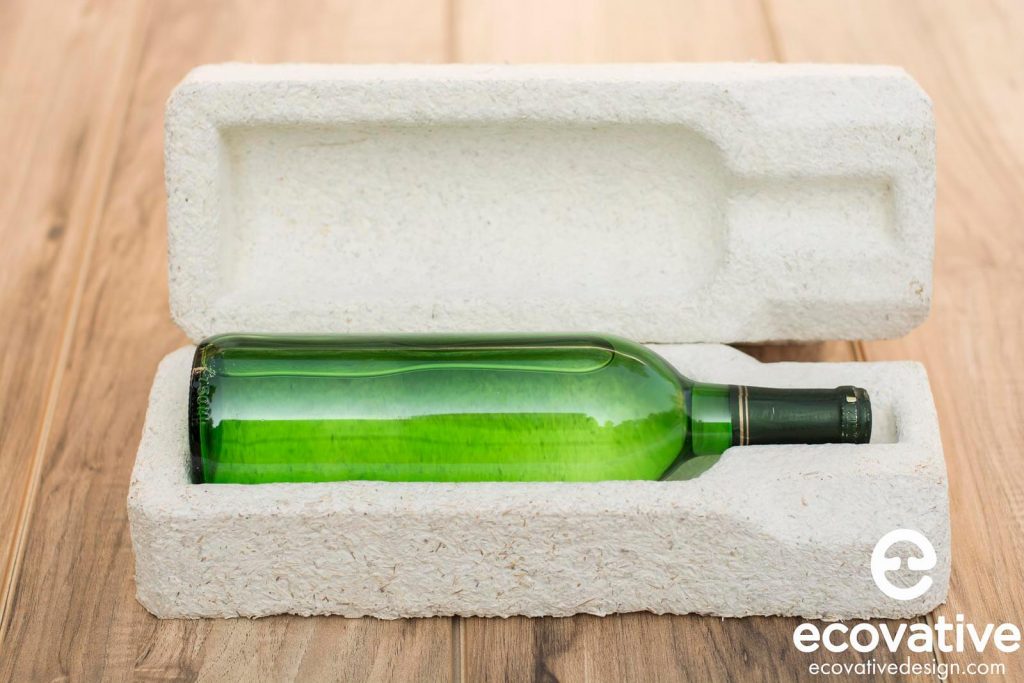 The growing awareness about plastic’s drawbacks, in combination with increasing legislative restrictions on fossil-fuel-based packaging materials, has made it crucial to find (and create) “green” packaging material alternatives to plastic. One of the latest creations is a material called MycoComposite, a mushroom-based packaging material developed by Ecovative Design in 2010 by mycelium technology. It is entirely natural and compostable, so much so that it can be grown in a controlled environment in a week and takes just 30 days to decompose but can be reused if kept dry. In comparison, traditional Styrofoam (polystyrene) packaging can take centuries to decompose and isn’t currently being recycled.
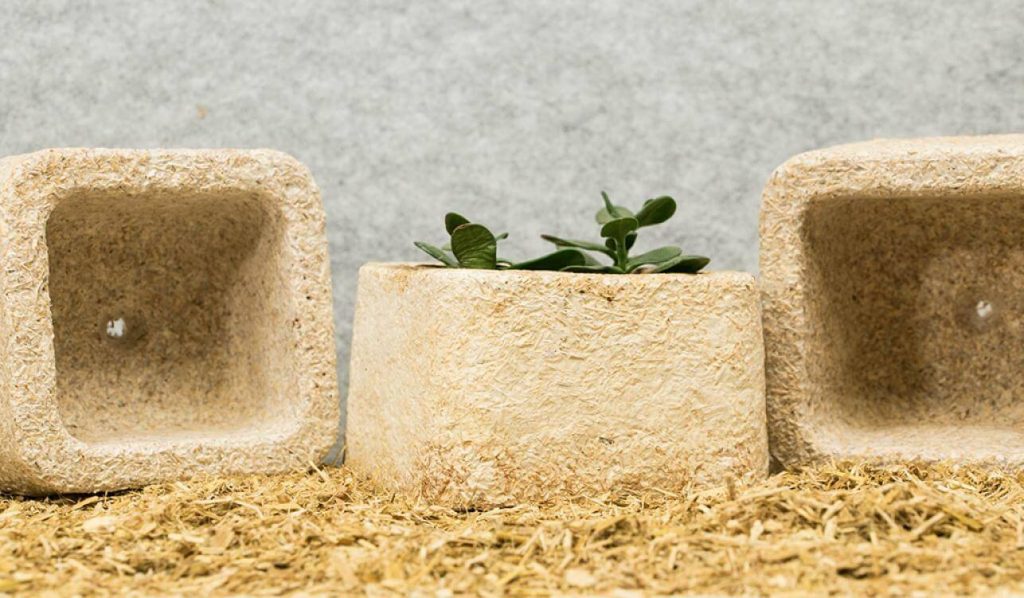 The manufacturing process is quite simple:
- Agricultural byproducts such as hemp, husk, oat hulls, and cotton burrs are pressed into the desired shape that can fit around items as packaging.
- Then, it is seeded with mushroom spores that sprout mycelium (a root structure) after a few days.
- The mycelium threads rapidly through the structure and binds it together to form a shock-resistant and durable packaging material.
- The last step is to heat-treat the material to kill spores in order to arrest further growth of the fungus.
Not only does it fit into the planet’s natural recycling system efficiently, but it is also cost-effective to produce and almost as durable as plastic. MycoComposite has also proved to be as insulating and flame-resistant as polystyrene. However, nobody even knew about this brilliant material until furniture giant IKEA made the mushroom-based packaging mainstream by announcing that it will replace Styrofoam packaging with MycoComposite for all of its products. IKEA’s Head of Sustainability, Joanna Yarrow, said this was the retailer’s “small yet significant step towards reducing waste and conserving ecological balance.”

Hopefully, IKEA’s ingenious initiative will prove to be a motivating factor for other commercial outfits that aim to give back to the society and environment where they exist. The reality is, most people are unaware of the hazards of using Styrofoam. Styrofoam causes pollution during its production from petroleum (a fast-disappearing resource and an emitter of greenhouse gases), and it also wreaks havoc on the organisms that ingest it. For example, in developing countries, cows consume plastic, which eventually causes their death. Furthermore, it is estimated that by 2050, 99% of birds will have plastic in their guts. The scariest part is, according to the Ashland Food Cooperative, packaging forms about one-third of the municipal waste in the United States.
Mushroom-based packaging, on the other hand, uses only 12% of the energy used in plastic production, and it produces 90% fewer carbon emissions than produced during plastic manufacture. Therefore, non-petroleum-based packaging can help reduce human reliance on fossil fuels, decrease carbon emissions into the atmosphere, counter the hazardous impact of plastic waste, and protect the biodiversity of our earth.


