
Commercial labs are bustling hubs, essential for many industries, especially pharmaceuticals. In liquid handling, the newest generation of robots is engineered to eliminate errors and accelerate workflows. These advanced systems automate repetitive tasks prone to human mistakes, ensuring precision.
As a result, lab technicians can concentrate on critical analysis and decision-making. This transformation boosts productivity and significantly shortens the time required to bring new drugs to market. In this article, we explore the inner workings of a cutting-edge liquid-handling robot.
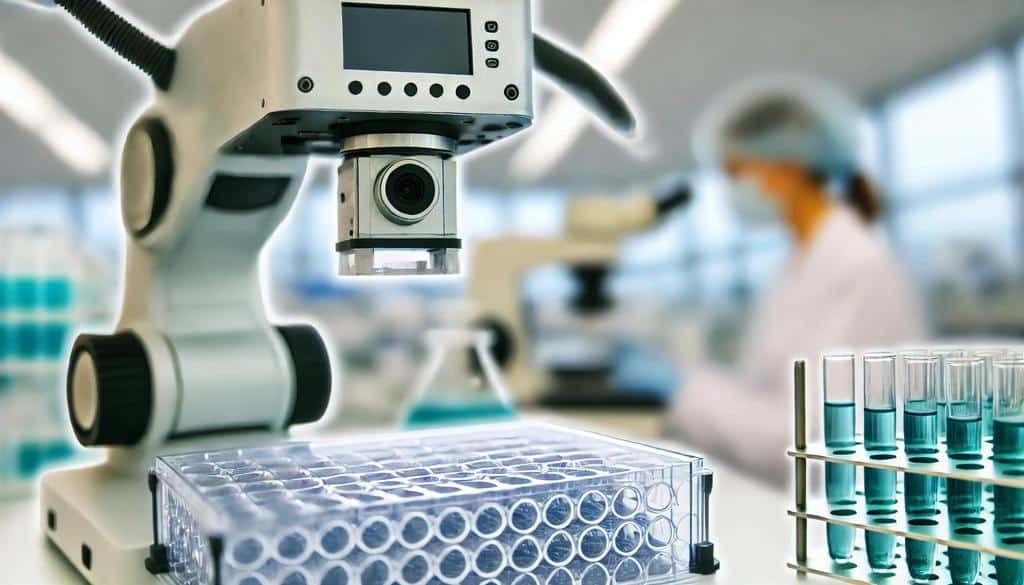
Camera Integrated Calibration
Top-rated liquid handler machines come equipped with an integrated digital camera for calibration. This feature is remarkably precise, with deviations of less than 2% for microliter pipetting volumes. These machines also offer interchangeable heads and 384-well plates, allowing them to handle large tasks efficiently.
Calibration is straightforward: you click on the center of the tube image, and the software takes over. Thanks to this camera-integrated technology, the time-consuming days of manual calibration are now a thing of the past.
Streamlined Processes
Standard lab processes such as qPCR, normalization, pooling, cherry picking, and liquid transfers are easy to set up and calibrate. The user interface for these tasks is both intuitive and straightforward. When it comes to more complex procedures like cell media washing, NGS library preparation, and concentration determination, the system offers robust support. Python-scripted software ensures these advanced tasks are handled with the necessary flexibility and precision.
Space Saving
One notable example of these liquid handling robots is from Myra. Myra’s latest model occupies just 2.2 feet of floor space and weighs less than 10 kilograms. This compact size makes it easy to move and stabilize. Space is always at a premium in labs, and this equipment can be conveniently placed in the ideal location or relocated as needed.

Low Maintenance
Acquiring a liquid handling robot significantly reduces the need for maintenance. The more time this machine remains operational, the higher your productivity, and it’s designed specifically for continuous uptime. Transitioning to automated systems allows you to focus more on critical tasks and less on equipment upkeep.
For those interested in safeguarding their business, there are numerous resources available online that offer valuable business protection tips and strategies. Adopting advanced technologies is just one aspect of future-proofing your operations.
Performance Efficiency
Deviations of less than 2% for microliter pipetting volumes indicate a high level of accuracy. This precision is achieved through closed-loop axis control, which utilizes optical encoders for meticulous path planning. A single calibration can be used for multiple processes, thanks to the automatic pipette heads. Each head comes with its own calibration data, facilitating a variety of tasks.
The rapid movement of the heads significantly speeds up the process. These small, incremental time savings can add up, resulting in overall increased efficiency.
Many Accessories for Your Needs
Multi-purpose blocks have revolutionized lab work by accommodating standard test tube sizes. With 3D printing technology, suppliers can also create custom solutions for unique requirements. A magnetic station facilitates techniques like magnetic bead-based NGS library preparations, adding versatility to the system. Cooling blocks are available for extended batches, ensuring consistent results.
For those using non-standard tubes, the robot manufacturer offers 3D-printed components tailored to fit specific systems. This customization ensures seamless integration and enhanced functionality.

Liquid Handling Robots in Modern Labs
We live in an exhilarating era as digital technology advances and introduces groundbreaking innovative solutions in laboratory settings. Researching Australia’s leading manufacturers is highly recommended for those interested in learning more about liquid handling robots. Their product range is both accurate and efficient, reflecting extensive research and development. These sophisticated devices are meticulously designed for specialized laboratory tasks.
As we navigate this era of rapid technological advancement, liquid handling robots are set to revolutionize laboratory operations, driving efficiency and precision to new heights. Implementing these advanced systems not only enhances the capabilities of lab technicians but also significantly accelerates critical processes. The future of laboratory technology is here, and it holds immense promise for those ready to embrace it.


